Your Mouth Tape Didn’t Work. Here’s Why (And What to Use Instead)
Share
Someone told you that you snore. Maybe it was your partner — exhausted, elbowing you at 3am. Maybe it was a roommate, a family member on vacation, or a sleep tracking app that recorded audio you didn't want to hear.
Now you're googling it. Why do I snore? Is it serious? Can I fix it? Should I be worried?
Here's what's actually happening in your throat while you sleep — and what you can do about it.
What Snoring Actually Is
Snoring is a sound. Specifically, it's the sound of soft tissue vibrating in your upper airway.
When you sleep, the muscles that hold your airway open relax. This is normal — it happens to everyone. But in some people, this relaxation allows the airway to narrow. As air flows through the narrowed space, it causes the surrounding soft tissues — the soft palate, the uvula, the tongue base, the pharyngeal walls — to vibrate. That vibration is the sound of snoring.
The narrower the airway, the faster the air moves through it. The faster the air moves, the more the tissue vibrates. The more it vibrates, the louder the snoring.
Snoring isn't a disease. It's a symptom — a sign that your airway is partially obstructed during sleep. The question is: why is it narrowing?
The 7 Most Common Reasons You Snore
1. Your mouth is open
This is the most common cause of snoring — and the one most people never consider.
When your mouth falls open during sleep, your jaw drops. When your jaw drops, your tongue — which is anchored to the lower jaw — drops backward toward the back of your throat. This narrows the retroglossal space (the airway behind the tongue). Air flowing through that narrowed space vibrates the surrounding tissue.
An estimated 50-60% of adults mouth breathe during some portion of the night. Many of them snore specifically because the open mouth changes tongue position and narrows the airway — not because of any structural abnormality, excess weight, or medical condition.
The test: if your snoring stops or significantly decreases when you sleep with your mouth closed (more on how to do this below), the open mouth was the primary cause.
2. You sleep on your back
Back sleeping (supine position) allows gravity to pull the tongue, soft palate, and surrounding tissues backward and downward into the airway. This narrowing increases airflow resistance and tissue vibration.
Research suggests that 60-80% of positional snorers reduce or eliminate snoring simply by switching to side sleeping. If you only snore on your back — or snore significantly louder on your back — gravity and sleep position are major contributors.
3. You're carrying extra weight
Excess weight — particularly fat deposits around the neck and throat — physically narrows the airway from the outside. The tissue mass presses on the airway walls, reducing the space available for airflow. The more tissue mass, the greater the compression, the louder the snoring.
This doesn't mean only overweight people snore. Thin people snore too — often from mouth breathing, sleep position, or anatomy. But if you've gained weight and your snoring has gotten worse, the correlation is likely real. Research suggests that a 10% reduction in body weight can decrease snoring intensity by approximately 50% in people where weight is a contributing factor.
4. You drank alcohol
Alcohol relaxes muscles — including the muscles that hold your airway open during sleep. After drinking, the airway muscles relax more than they normally would, allowing the airway to narrow further and the tissues to vibrate more.
Even moderate alcohol consumption (1-2 drinks) within 3-4 hours of bed can measurably increase snoring frequency and volume. If you notice that you snore worse on nights you drink, this is the mechanism. The alcohol metabolizes by morning, which is why the effect is temporary — but repeated nightly drinking means repeated nightly snoring.
5. Your nose is congested
Nasal congestion — from allergies, a cold, sinusitis, or dry air — increases resistance to airflow through the nose. When nasal breathing becomes difficult, your body compensates by opening the mouth. Once the mouth is open, the tongue drops, the airway narrows, and the snoring cycle begins.
Seasonal snoring (worse during allergy season or winter) points to nasal congestion as a primary contributor. Year-round congestion may indicate chronic allergies, nasal polyps, or a deviated septum.
6. Your anatomy
Some people are anatomically predisposed to snoring. A naturally narrow airway, a thick or long soft palate, a large uvula, enlarged tonsils or adenoids, a recessed jaw (retrognathia), or a deviated septum can all reduce the space available for airflow — making snoring more likely even without other contributing factors.
Anatomy is the one cause you can't fix with behavioral changes alone. But you can compensate for it — by addressing the modifiable factors (mouth position, sleep position, weight, alcohol) that stack on top of anatomy to make snoring worse.
7. You might have sleep apnea
Snoring is one of the primary symptoms of obstructive sleep apnea (OSA) — a medical condition where the airway doesn't just narrow, it closes completely. The closures (called apneas) last 10 seconds or longer and can occur dozens or hundreds of times per night, each one causing a partial arousal and oxygen desaturation.
Sleep apnea is not the same as snoring. Most snorers don't have sleep apnea. But if your snoring is accompanied by any of the following, get evaluated by a sleep specialist:
Your partner witnesses you stopping breathing during sleep. You wake up gasping or choking. You experience extreme daytime sleepiness despite adequate sleep hours. You have morning headaches that resolve within an hour of waking. You wake up multiple times per night to urinate.
A sleep study (available as an at-home test) can diagnose or rule out sleep apnea definitively. If you have sleep apnea, medical treatment (typically CPAP) is the appropriate intervention. If your sleep study comes back normal, you can address snoring with the methods below with confidence.
How to Stop Snoring
Ranked by how quickly they work and how easy they are to maintain:
Close your mouth
If your mouth is open during sleep — and for most snorers, it is — closing it addresses the most common mechanical cause of snoring: the backward tongue displacement that narrows the airway.
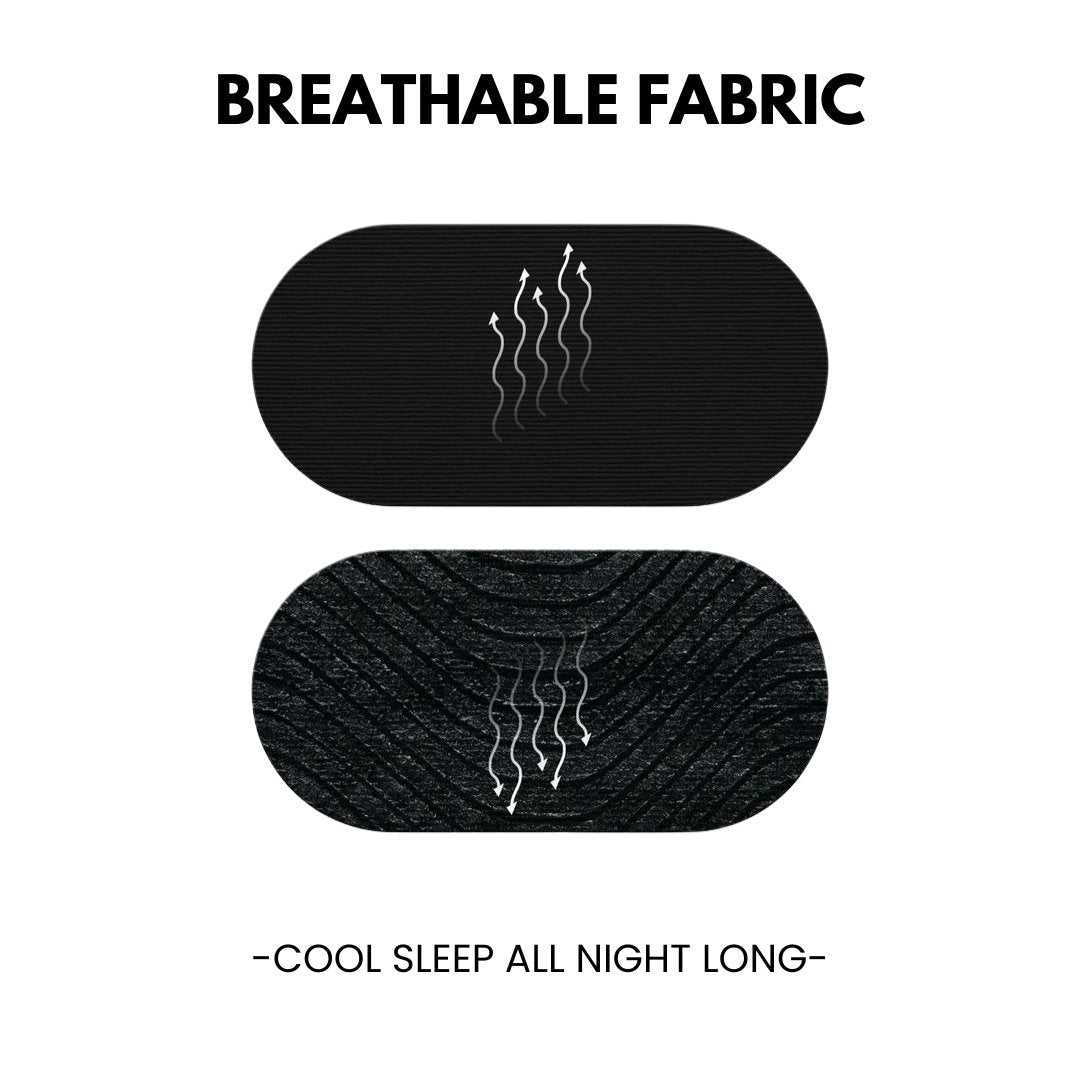
Mouth tape is a strip applied across the lips before bed that holds the mouth gently closed. When the mouth stays closed, the tongue stays forward against the palate, the retroglossal airway stays open, and the tissue vibration that produces snoring may be reduced or eliminated.
Most users and their partners report noticeable snoring reduction on the first night. It's the fastest-acting intervention available because it directly addresses the most common mechanical cause.
For maximum effect, pair mouth tape with a nasal strip — the tape closes the mouth while the strip opens the nose, addressing both sides of the airflow equation simultaneously.
Sleep on your side
If you're a positional snorer (worse or exclusively on your back), side sleeping may reduce or eliminate the problem. A body pillow, a tennis ball sewn into the back of a sleep shirt, or a positional therapy device can help maintain side position throughout the night.
Side sleeping helps — but it doesn't prevent the mouth from opening. Many side sleepers still mouth breathe and snore. Position change works best when combined with mouth closure.
Address nasal congestion
If congestion is forcing your body to mouth breathe: saline nasal rinses clear mucus and reduce inflammation. Nasal corticosteroid sprays (fluticasone, mometasone) treat the underlying inflammation for chronic allergies. External nasal strips physically lift the nostrils and increase airflow. A humidifier maintains nasal moisture in dry environments.
Clear the nose, then close the mouth. In that order.
Reduce alcohol
Stop drinking at least 3-4 hours before bed. The longer the gap between your last drink and sleep, the less alcohol affects your airway muscles. If you notice a direct correlation between drinking and snoring, this is one of the easiest variables to test — skip the alcohol for one week and see what happens to the snoring.
Lose weight (if applicable)
If you're carrying excess weight around the neck and throat, losing weight may reduce the tissue mass pressing on your airway. This takes time — weeks to months — but the effect on snoring can be significant. A 10% reduction in body weight may reduce snoring intensity by up to 50% in people where weight is a contributing factor.
Weight loss helps where weight is the issue. If you're at a healthy weight and still snoring, the cause is elsewhere — likely mouth position, sleep position, or anatomy.
See a specialist
If snoring persists despite addressing mouth position, sleep position, congestion, and alcohol: see an ENT (ear, nose, and throat specialist) or a sleep medicine specialist. You may have anatomical factors — a deviated septum, enlarged tonsils, or a long soft palate — that require evaluation. Or you may have undiagnosed mild sleep apnea that a home sleep test can identify.
Why You Should Care About Snoring (Even If It Doesn't Bother You)
Most snorers don't know they snore. They sleep through it. The partner doesn't.
But snoring isn't just a noise problem. Research published in the European Respiratory Journal found that habitual snoring — even without sleep apnea — is independently associated with increased cardiovascular risk, daytime sleepiness, and cognitive impairment. A study in the journal Chest found that snoring intensity correlated with carotid artery intima-media thickness — an early marker of atherosclerosis.
Snoring also damages relationships. Research from the National Sleep Foundation found that snoring is one of the top reasons couples sleep in separate bedrooms. The snorer loses a bed partner. The partner loses sleep. Both lose intimacy. Addressing snoring isn't just a health decision — it's a relationship decision.
And beyond the cardiovascular and relationship effects, snoring is often a marker of poor sleep quality. The same airway narrowing that produces the sound may also fragment sleep architecture, reduce time in deep sleep stages, and impair the recovery processes that make sleep worth having. If you sleep 8 hours and still feel exhausted, snoring-related sleep fragmentation may be the reason — even if the snoring itself doesn't wake you up.
The Fastest Path From Snoring to Silence
You now know why you snore. The airway narrows, tissue vibrates, sound happens. The narrowing comes from an open mouth, back sleeping, weight, alcohol, congestion, anatomy, or a combination.
The fastest intervention — the one that works on night one for most people — is the simplest one: keep your mouth closed.
A strip of tape across your lips. Five seconds to apply. Your mouth stays closed. Your tongue stays forward. Your airway stays open. The vibration stops. The snoring stops. Your partner sleeps. You sleep better than you have in years.
Start there. Add side sleeping, nasal support, and the other interventions as needed. But start with the mouth — because that's where the airway compromise begins for most snorers, and it's the one variable you can fix tonight.
Doctor Recommended: "As a maxillofacial surgeon and dentist, I recommend Titan Mouth Tape. Nasal breathing during sleep is essential for airway health and deep restorative rest. Titan's bamboo silk design is the most comfortable and effective mouth tape I have tested. If you struggle with snoring, dry mouth, or poor sleep quality, this is the simplest change you can make for your health." — Dr. Francois P., MD, DDS — Maxillofacial Surgeon
Lab-Tested Safety: Titan's adhesive is independently tested to ISO 10993 medical device standards. Non-toxic (95% cell viability). Non-allergenic (0% reaction rate). Non-irritating (score 0.0/8.0). PFAS-free — 501 compounds tested, zero detected. See full test results →
Try it tonight. Bamboo silk. SilkSeal™ adhesive. Beard-friendly. No logo on the tape. Free shipping. 30-night Better Sleep Guarantee. Shop Titan Mouth Tape → · Shop TitanAir →
This article is for informational purposes only and does not constitute medical advice. If you have or suspect a sleep disorder or other medical condition, consult a qualified healthcare provider before making changes to your routine.