How Sleep Affects Memory and Studying
Share
You can read a chapter three times and still blank on it the next morning, or read it once, sleep well, and recall it cold. The difference is what your brain does while you're unconscious. Here is the relationship between sleep and memory in one line: sleep is not downtime for your brain, it is when learning actually gets saved. During the night your brain replays what you studied and moves it from fragile short-term storage into durable long-term memory -- a process called consolidation -- and without enough quality sleep, most of what you learned simply doesn't stick.
This matters far beyond students cramming for finals. Anyone learning a language, a skill, an instrument, or a new job is relying on the same overnight machinery. The takeaway from decades of research is blunt: does sleep help you learn is not really an open question anymore. It does, and skipping sleep to study more is one of the least efficient things a learner can do.
How Memory Consolidation Works During Sleep
Memory isn't formed in a single step. First your brain encodes new information, holding it temporarily in the hippocampus. Then, mostly during sleep, it consolidates that information -- strengthening the neural connections and transferring the memory to the neocortex for long-term storage. Finally you retrieve it when you need it. Sleep is the critical middle step, and different sleep stages handle different kinds of memory.
Deep sleep consolidates facts. Slow-wave sleep (stage N3) is when your brain locks in declarative memory -- the names, dates, definitions, formulas, and facts that make up most academic material. During deep sleep, the hippocampus replays the day's newly encoded memories and hands them off to the cortex for permanent storage. Sleep spindles and slow oscillations coordinate this transfer. This is why the first half of the night, which is rich in deep sleep, is disproportionately valuable for anyone studying fact-heavy material. To understand where deep sleep sits in the bigger picture, our breakdown of the sleep stages walks through each phase and its job.
REM consolidates skills and creative connections. Rapid eye movement sleep, concentrated in the second half of the night, handles procedural memory -- the how-to knowledge behind playing piano, coding, solving math problems, or speaking a new language. REM also integrates new information with what you already know, forging the unexpected links that show up as insight and creative problem-solving. Studies repeatedly find that people who sleep after learning a problem are far more likely to spot a hidden solution the next day than those who stayed awake.
The practical implication is that both halves of the night matter, and they matter for different reasons. Cut your sleep short and you don't lose a random slice of memory -- you lose specific capabilities depending on which stages you sacrificed.
Why Pulling an All-Nighter to Study Backfires
The all-nighter feels productive because you're putting in hours. But it sabotages memory at both ends of the process.
Sleep deprivation cripples encoding before you even start. A tired brain is worse at forming new memories in the first place. Research on sleep-deprived learners shows the hippocampus becomes markedly less able to absorb new information -- one well-known study found roughly a 40% reduction in the ability to encode new memories after a night without sleep. So the student pulling an all-nighter is trying to pour water into a cup that has shrunk. The material going in is already compromised.
No sleep means no consolidation. Even the material you do manage to encode never gets properly filed. With no deep sleep and no REM, the overnight replay that moves memories into long-term storage simply doesn't happen. You walk into the exam with fragile, poorly consolidated fragments and a brain running on fumes.
Recall and reasoning both suffer. Sleep loss slows reaction time, wrecks attention, and impairs the executive function you need to reason through unfamiliar problems. So on top of remembering less, you think less clearly with what you do remember. The trade almost never pays off: the few extra hours of studying are worth less than the hours of consolidation and cognitive sharpness they cost.
The Study-Then-Sleep Advantage
The flip side of the all-nighter is one of the most reliable findings in learning science: study, then sleep. Information reviewed shortly before bed tends to be remembered better than the same information reviewed early in the day and then carried through hours of waking interference.
There are two reasons. First, sleeping soon after learning means the memory heads almost directly into overnight consolidation, with less time awake for new experiences to interfere with it. Second, the brain preferentially replays and strengthens memories it has tagged as important or emotionally relevant -- and material you deliberately studied right before sleep gets flagged for that treatment. This doesn't mean cramming in bed until 2 a.m. It means doing a focused review of your most important material in the evening, then protecting a full night of sleep so your brain can do its half of the work.
A Practical Sleep-Smart Study Strategy
Turning the science into a routine is straightforward. None of this requires more study hours -- it requires arranging them around how memory actually forms.
Sleep after learning, not instead of it. Front-load hard material earlier in the day for encoding, then do a lighter review of key points in the evening. Treat sleep as the final, non-negotiable step of every study session -- the step that saves your work.
Space your studying instead of cramming. Spreading study across several days with sleep between sessions dramatically outperforms one marathon session. Each night of sleep consolidates a layer, and the next day you build on stable ground. Spaced repetition works partly because of the sleep that happens between reps.
Use naps for consolidation. A 60-to-90-minute nap can contain both deep sleep and REM, giving your brain a mid-day chance to consolidate what you learned that morning. Even a shorter 20-minute nap can restore attention for the next study block. Naps are a legitimate learning tool, not just a break.
Protect the quality of your deep sleep. Getting into bed is not the same as getting the deep, uninterrupted sleep that consolidation depends on. If your sleep is fragmented -- by stress, screens, caffeine, or disordered breathing -- you can spend eight hours in bed and still shortchange the exact stages that save your studying. This is where sleep quality, not just quantity, decides how much you actually retain.
How Breathing Quality Protects the Sleep Memory Depends On
Deep sleep is fragile, and one of the most overlooked things that fragments it is how you breathe at night. Mouth breathing tips your nervous system toward fight-or-flight, raises your heart rate, and triggers frequent micro-arousals that pull you up out of the slow-wave sleep where fact consolidation happens. You may never fully wake, but each interruption chips away at the deep sleep your memory was counting on.
Nasal breathing does the opposite. It activates the parasympathetic (rest-and-recover) system, and the nose produces nitric oxide that improves oxygen uptake -- creating the calm, stable physiology your brain needs to descend into deep sleep and stay there. If you want the mechanics, our guide to how to increase deep sleep covers why breathing is such a powerful lever, and how mouth taping supports deep sleep looks specifically at the deep-sleep connection.
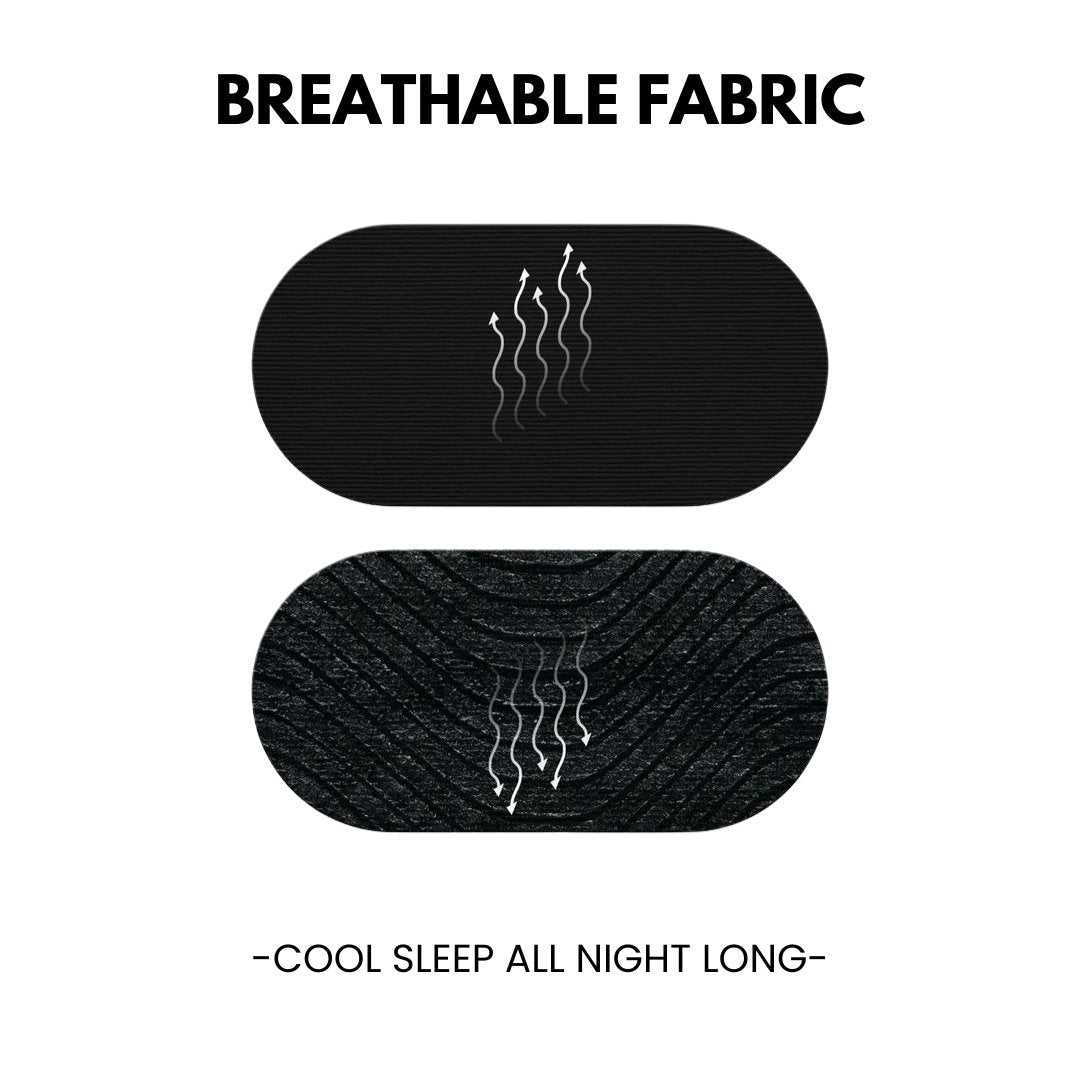
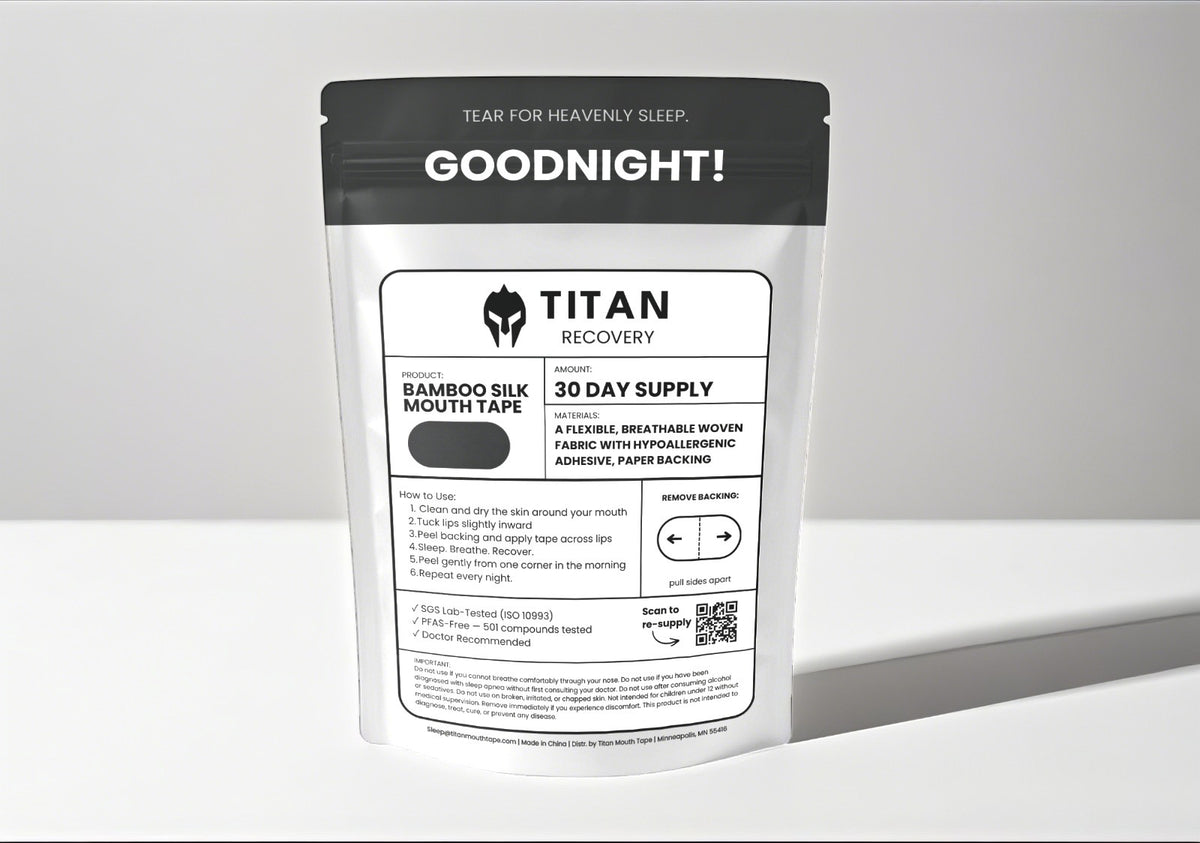
This is why mouth tape has become a simple, practical tool for students and learners who want to protect their consolidation. It keeps the lips sealed so all breathing routes through the nose, encouraging fuller, less fragmented cycles. If congestion makes nose breathing hard, pairing nasal strips with tape opens the airway from both ends -- the Deep Sleep Bundle is built for that combination. For the wider routine around it, these science-backed sleep hacks and this guide on how to sleep better pull the habits together.
Frequently Asked Questions
Should I study or sleep before an exam?
If it's the night before and you're deciding between a few more hours of cramming or a full night of sleep, sleep almost always wins. On the study or sleep before exam question, the evidence is clear: sleep deprivation impairs both recall and reasoning, so you'd walk in remembering less and thinking less clearly. Do a focused review earlier in the evening, then prioritize sleep so your brain can consolidate what you already studied.
Does sleep really help you learn, or is that overstated?
It's well established. Sleep memory consolidation is one of the most replicated findings in neuroscience -- deep sleep locks in facts, REM strengthens skills and creative links, and sleep deprivation measurably reduces your ability to form new memories in the first place. Learning without sleep is like taking notes and then shredding half of them before you file them.
How much sleep do I need for good memory consolidation?
Most adults need seven to nine hours, and the structure matters as much as the total. Deep sleep is front-loaded into the first half of the night while REM stretches longer toward morning, so cutting sleep short at either end sacrifices a specific type of consolidation. A shortened night doesn't just cost you generic rest -- it costs you the exact stage your studying needed.
Can naps improve studying and memory?
Yes. A longer nap of 60 to 90 minutes can include both deep sleep and REM, giving your brain a mid-day window to consolidate morning material, while a 20-minute nap restores attention for your next session. Naps are a genuine part of an effective sleep and studying strategy, not a sign you're falling behind.
Does poor breathing at night affect memory?
Indirectly but meaningfully. Mouth breathing and fragmented, low-quality sleep reduce the deep sleep and REM your brain uses to consolidate memories, so you can log a full eight hours and still retain less. Protecting sleep quality -- through nasal breathing, a consistent schedule, and a calm pre-bed routine -- protects the consolidation that learning depends on.
The Bottom Line
Learning happens in two shifts: the studying you do awake, and the consolidation your brain does asleep. Skip the second shift and most of the first is wasted. Deep sleep files away your facts, REM strengthens your skills and connects ideas, and sleep deprivation quietly sabotages both encoding and recall. The smartest study strategy isn't more hours at the desk -- it's studying, then sleeping, spacing your sessions across nights, using naps to consolidate, and protecting the quality of your deep sleep so your brain can actually save what you worked to learn. For students and lifelong learners alike, a good night's sleep isn't the reward for studying. It's part of the studying.
Doctor Recommended: "As a maxillofacial surgeon and dentist, I recommend Titan Mouth Tape. Nasal breathing during sleep is essential for airway health and deep restorative rest. Titan's bamboo silk design is the most comfortable and effective mouth tape I have tested. If you struggle with snoring, dry mouth, or poor sleep quality, this is the simplest change you can make for your health." — Dr. Francois P., MD, DDS — Maxillofacial Surgeon
Lab-Tested Safety: Titan's adhesive is independently tested to ISO 10993 medical device standards. Non-toxic (95% cell viability). Non-allergenic (0% reaction rate). Non-irritating (score 0.0/8.0). PFAS-free — 501 compounds tested, zero detected. See full test results →
Try the complete system tonight. Titan Mouth Tape (bamboo silk, SilkSeal™ adhesive) + TitanAir Nasal Strips. Free shipping. 30-night Better Sleep Guarantee. Shop Titan Mouth Tape → · Shop TitanAir Nasal Strips →