Your Partner Snores. It’s Hurting More Than Your Sleep.
Share
Nobody talks about this, but bad sleep is quietly destroying relationships.
Not in the dramatic, obvious way. Not like an argument or a betrayal. More like a slow leak. One partner snores. The other lies awake. They move to the couch. Then the guest room. Then it's just how things are — two people who love each other, sleeping apart, pretending it's fine.
It's not fine. And it's more common than you think.
The Numbers Nobody Shares
A 2023 survey from the American Academy of Sleep Medicine found that more than one in three Americans reported sleeping in a separate room from their partner. The top reason: snoring.
Separate bedrooms have become so normalized that there's even a term for it — "sleep divorce." Relationship experts write about it like it's a life hack. Interior designers plan for it. Builders are including two master suites in new homes.
But here's what gets lost in the normalization: sleeping apart has costs. Physical intimacy drops. Emotional connection weakens. Small moments — the half-awake conversation at midnight, the arm that reaches over in the dark — disappear. These moments don't seem important until they're gone. And by then, the distance feels structural.
The root cause, in most cases, isn't incompatibility. It's not even sleep preference. It's one person breathing through their mouth at night.
How Snoring Actually Affects Your Partner
Research suggests that sleeping next to a snorer costs the non-snoring partner an average of one hour of sleep per night. Over a week, that's a full night of lost sleep. Over a year, it's the equivalent of losing two full months.
But it's not just duration. It's quality. The non-snoring partner experiences more frequent micro-arousals — brief awakenings that fragment sleep architecture without fully waking the person. These micro-arousals may reduce time in deep sleep and REM sleep, exactly the stages where emotional regulation, memory consolidation, and stress recovery happen.
Research suggests sleep-deprived people are more reactive, less empathetic, and worse at conflict resolution. Studies show that even one night of poor sleep may increase the likelihood of relationship conflict the following day. Chronic sleep disruption compounds this effect over months and years.
So the pattern becomes self-reinforcing: one partner snores, the other sleeps poorly, both become more irritable and less patient, conflicts increase, emotional distance grows — and neither person connects it back to the breathing happening at 3am.
The Conversation Nobody Wants to Have
Telling your partner they snore is uncomfortable. Telling them their snoring is ruining your sleep is harder. And telling them you want to sleep in separate rooms feels like admitting something is wrong with the relationship.
So most people don't say anything for months. They use earplugs. They nudge. They scroll their phone at 2am waiting for the snoring to stop. They wake up exhausted and resentful, and they don't say why.
When they finally do bring it up, the snorer often doesn't believe them — because they were asleep. They didn't hear it. They don't feel it. To them, everything is fine. This creates a frustrating dynamic where one person is suffering nightly and the other genuinely doesn't understand the severity.
If this sounds familiar, you're not alone. And the solution is simpler than either of you probably expects.
Why the Snoring Is Happening
Most snoring originates from the same mechanical cause: the mouth falls open during sleep, the tongue drops backward, and the airway narrows. Air passing through this restricted space vibrates the soft tissue — that's the sound.
Sleeping position, weight, alcohol, and nasal congestion all play a role. But the single most common contributing factor is mouth breathing during sleep. When the mouth stays closed, the tongue rests against the palate, the airway stays more open, and the vibration may stop — or drop dramatically.
That's why mouth taping works for so many snorers. It addresses the most common mechanical cause of the problem: an open mouth.
What Happens When the Snoring Stops
Couples who address the snoring describe the change in similar terms. It's not just that the noise stopped. It's that something shifted between them.
The non-snoring partner sleeps through the night for the first time in months. They wake up rested instead of resentful. Their patience comes back. The morning isn't tense anymore.
The snoring partner wakes up feeling better too — because mouth breathing was degrading their sleep quality as well. They were spending eight hours in bed without fully entering the deep recovery stages their body needed. Once they switch to nasal breathing, their own sleep may improve even though they never realized it was broken.
And the couple moves back into the same bedroom.
It sounds dramatic to say that a strip of tape saved a relationship. But for the couples who've been through the slow erosion of sleeping apart — who've watched intimacy fade without understanding why — addressing the root cause can feel exactly that significant.
How to Bring It Up
If your partner snores and you've been avoiding the conversation, here's a framework that works better than "you snore and I can't take it anymore."
Lead with your own experience, not their behavior. "I've been having trouble sleeping and I think it's affecting my mood" lands differently than "your snoring is keeping me up." One invites collaboration. The other triggers defensiveness.
Record a short clip. Most snorers genuinely don't know how loud they are. A 30-second audio recording from your phone — played back without judgment — makes the problem real in a way that verbal descriptions can't.
Suggest trying something together. Mouth taping works best when both partners buy in. Frame it as "I read about this and I want us to try it" rather than "you need to fix this." Some couples tape together — even the non-snoring partner benefits from nasal breathing.
Give it a week. One night isn't enough to judge. Most couples notice a significant difference within 3-5 nights. By night 7, the non-snoring partner is sleeping through the night and the conversation shifts from "does this work?" to "why didn't we try this sooner?"
What to Look for in Mouth Tape (From the Partner's Perspective)
If you're the one buying the tape for your partner — which, let's be honest, is usually how this goes — here's what matters:
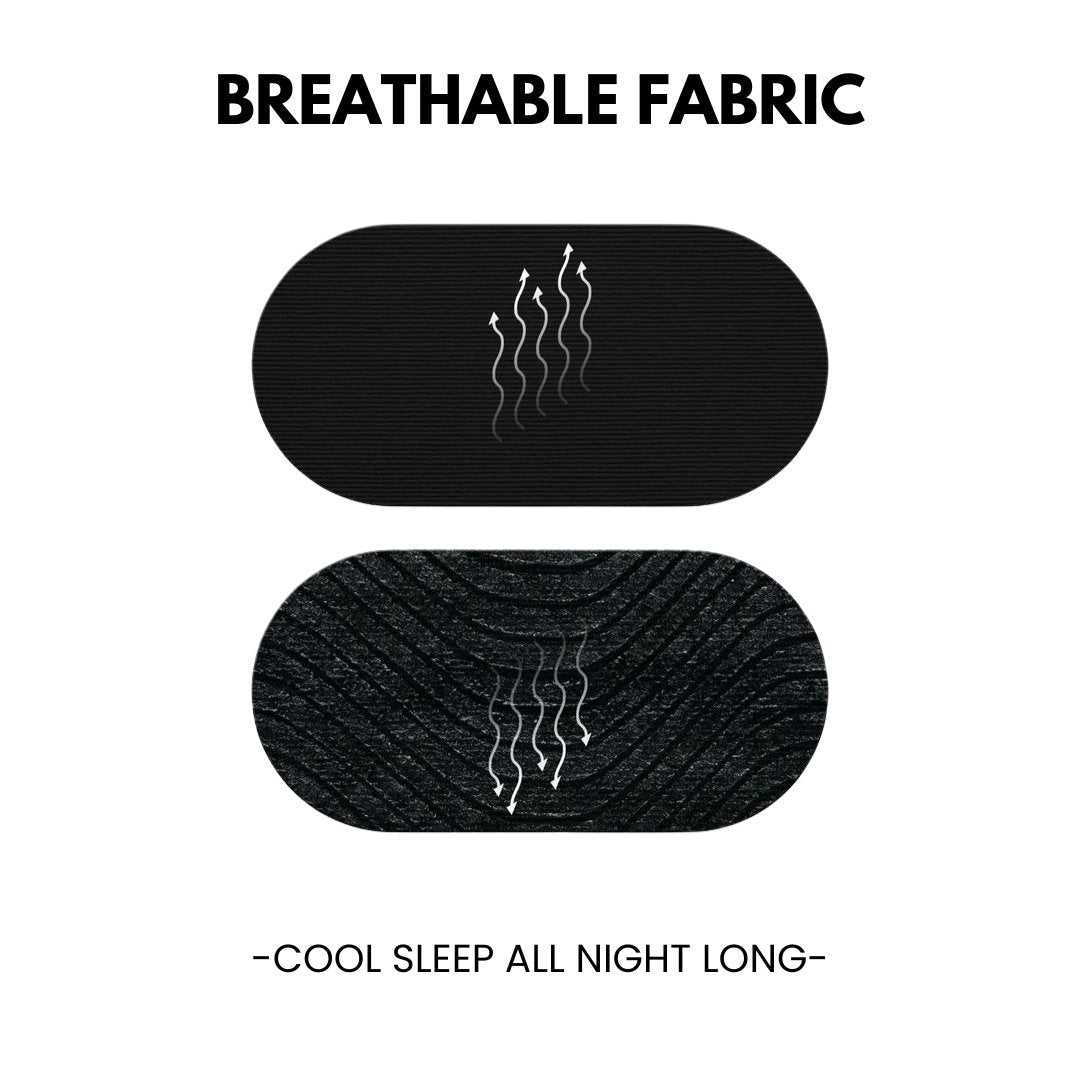
Comfort. If the tape is uncomfortable, they'll rip it off at 2am and you're back to square one. Look for something soft — bamboo silk is significantly more comfortable than kinesiology tape or plastic strips. The tape needs to feel like nothing so they'll actually wear it every night.
Beard-friendly (if applicable). If your partner has any facial hair, most tapes won't stick — or will rip out hair in the morning. This is the fastest way to kill compliance. Make sure the adhesive is designed for facial hair.
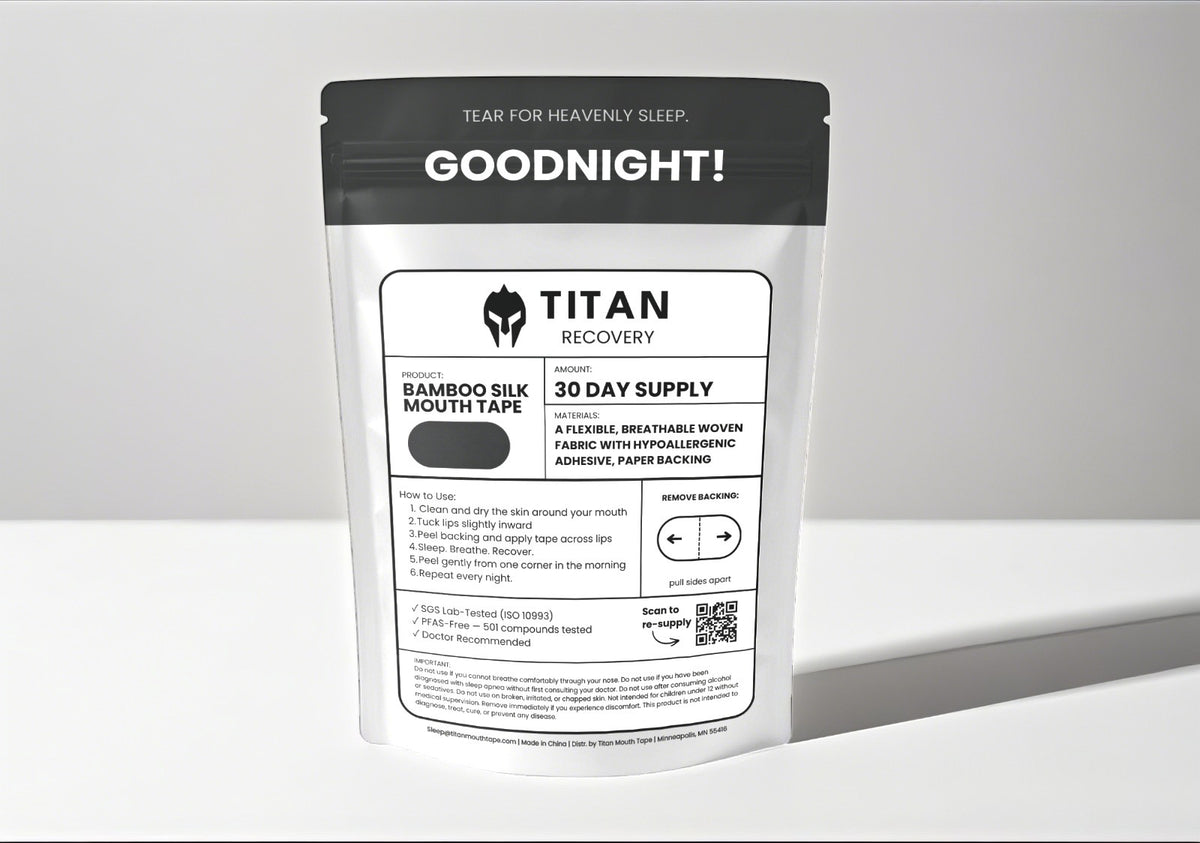
Safety. You're putting this on someone you love. Make sure the brand publishes actual lab testing data — not just marketing language. Look for ISO 10993 biocompatibility testing (cytotoxicity, sensitization, irritation) and PFAS screening. If a brand can't show you lab results, find one that can.
No logo. Your partner is already doing something vulnerable by taping their mouth. A tape with a brand logo stamped across their face makes it worse. Clean, unbranded tape looks intentional and minimal.
Nasal strips for the full system. If your partner also has nasal congestion or narrow nostrils, pair mouth tape with a nasal strip. And if alcohol plays a role in the snoring, see our guide on mouth taping after drinking — one opens the nose, one closes the mouth. Together they address both sides of the airflow equation for maximum snoring reduction.
This Isn't About Tape. It's About Sleep.
Mouth taping is a tool. What it gives you back is something bigger.
It gives you back the same bedroom. It gives you back mornings where neither person is running on empty. It gives you back the patience that disappears when you haven't slept well in months. It gives you back the version of your partner — and yourself — that exists when both of you are actually rested.
Sleep isn't a luxury in a relationship. It's the infrastructure everything else is built on. When it breaks, everything built on top of it starts to crack.
Address the breathing. Improve the sleep. The rest takes care of itself. Still weighing your options? See our head-to-head comparison of mouth tape vs chin straps.
Doctor Recommended: "As a maxillofacial surgeon and dentist, I recommend Titan Mouth Tape. Nasal breathing during sleep is essential for airway health and deep restorative rest. Titan's bamboo silk design is the most comfortable and effective mouth tape I have tested. If you struggle with snoring, dry mouth, or poor sleep quality, this is the simplest change you can make for your health." — Dr. Francois P., MD, DDS — Maxillofacial Surgeon
Lab-Tested Safety: Titan's adhesive is independently tested to ISO 10993 medical device standards. Non-toxic (95% cell viability). Non-allergenic (0% reaction rate). Non-irritating (score 0.0/8.0). PFAS-free — 501 compounds tested, zero detected. See full test results →
Try it tonight. Bamboo silk. SilkSeal™ adhesive. Beard-friendly. No logo on the tape. Free shipping. 30-night Better Sleep Guarantee. Shop Titan Mouth Tape → · Shop TitanAir →