Titan Recovery Results: Your First 30 Days
Share
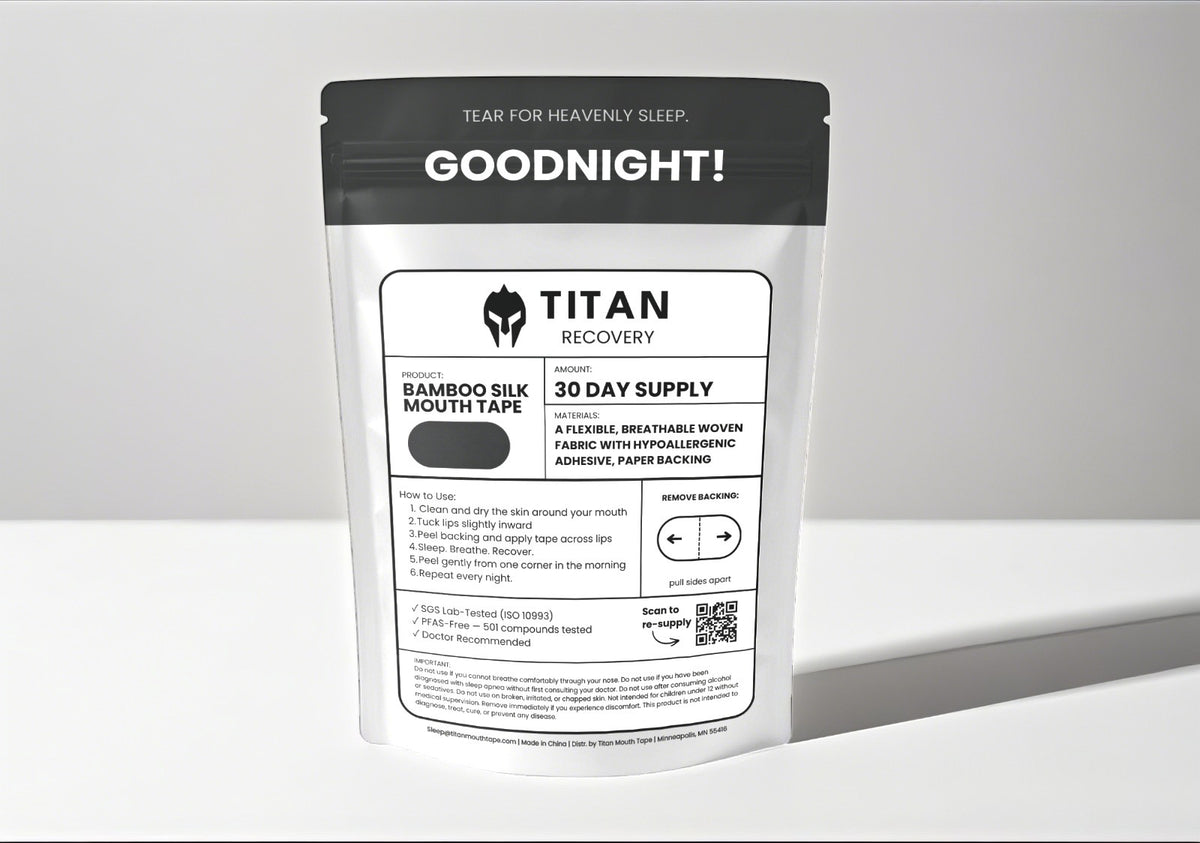
You ordered Titan Recovery mouth tape. The package arrived. Now you're wondering what happens next — how quickly does this work, what's the adjustment like, and what should you realistically expect over the first month? Here's the night-by-night and week-by-week breakdown based on what users consistently experience.
The honest answer: some benefits are immediate, some take a week, and some take the full 30 days to fully develop. Knowing the timeline in advance makes the adjustment period easier because you'll recognize each phase as it happens instead of wondering if something's wrong.
Night One
Your first night with mouth tape is mostly about discovery. You're learning what it feels like, whether your nose is clear enough, and how your body responds to something new on your face during sleep.
What you'll probably notice:
- No dry mouth in the morning. This is the most immediate and dramatic change. If you've been waking up with a parched mouth, sticky saliva, or a sore throat for years, the difference is obvious the moment you wake up. Your mouth feels moist and comfortable. This alone makes most people want to continue.
- Falling asleep takes slightly longer. The tape feels unfamiliar. You're aware of it. You might fidget with it or test whether you can breathe. This is normal and fades quickly — usually by night two or three.
- You may pull it off during the night. About half of first-time users wake up in the morning with the tape on their pillow or nightstand. They removed it in their sleep without any memory of doing so. This is completely normal — your sleeping brain is rejecting something unfamiliar, not signaling danger.
What your partner might notice: Less snoring or no snoring. This is often reported after the very first night, especially by partners who are tuned in to the sound and notice its absence immediately.
Days Two Through Five
The novelty wears off fast. By the second or third night, applying Titan Mouth Tape feels less strange and more routine. The physical sensation of wearing it is already becoming background noise.
What changes:
- The tape stays on longer. If you pulled it off on night one, you'll likely keep it on for more of the night by day three or four. Some people make it through the full night by day two. Others take a full week. Both are normal.
- You stop thinking about it when you lie down. The conscious awareness of "I have tape on my mouth" fades. You put it on, lie down, and fall asleep without the fidgeting or testing from night one.
- Dry mouth is consistently gone. Every morning, your mouth feels comfortable. You start noticing you're reaching for water less in the first hour after waking up.
- Morning breath improves. Saliva flow overnight is doing its job — controlling bacterial growth and keeping the oral environment healthier. The stale, sour morning breath that comes from a dry mouth starts to fade.
If you're having trouble keeping the tape on, this is the time to check the fundamentals: clean dry lips before application, firm pressure for five seconds, nose clear enough for comfortable breathing. Most tape adhesion issues come down to skin prep. If you have any nasal congestion, pair the tape with TitanAir Nasal Strips to make sure the nasal airway is wide open.
Week One Summary
By the end of seven days, the adjustment phase is mostly complete for the majority of users. The tape feels normal. It stays on most or all of the night. Dry mouth is resolved. Snoring is reduced. You're sleeping with your mouth closed and it no longer requires any conscious effort or attention.
If you're tracking sleep with a wearable, you may start to see early signals of improvement — slightly more deep sleep, slightly better HRV — but one week of data is noisy. The trends become clearer in week two and three.
Week Two: The Habit Starts to Form
Week two is where mouth taping transitions from "something I'm trying" to "something I do." The nightly routine — wash face, apply tape, apply nasal strip if using one, lie down — becomes automatic. You don't deliberate about whether to tape tonight. You just do it.
What changes:
- Consistent full-night wear. The tape stays on from bedtime to morning alarm with no unconscious removal. If you were still pulling it off during week one, this is usually when that stops.
- Sleep quality improvement becomes noticeable. Not just the absence of dry mouth — but how rested you feel in the morning. The kind of difference where you don't hit snooze, where you feel alert earlier, where your energy in the first few hours of the day is noticeably better.
- Wearable metrics start trending. Nasal breathing shifts your autonomic nervous system toward parasympathetic dominance during sleep. Over multiple nights, this shows up as better HRV, lower resting heart rate, and more time in restorative sleep stages. Two weeks of consistent data is usually enough to see a clear trend.
- Your partner confirms the snoring change. By week two, the snoring reduction isn't a one-night observation — it's a pattern. Partners who were skeptical after night one are now believers after fourteen consecutive quiet nights.
Weeks Three and Four: Compounding
This is where the benefits compound and the long-term picture comes into focus.
What changes:
- Oral health improvements become noticeable. Two to four weeks of consistent saliva flow overnight starts to shift the bacterial balance in your mouth. Your gums may feel healthier. Your dental hygienist may notice at your next cleaning. The chronic low-grade inflammation that comes from nightly dry mouth begins to resolve.
- Sleep architecture stabilizes. Your body has fully adapted to nasal breathing during sleep. The proportion of deep sleep and REM sleep in your nightly cycle settles at its new, improved baseline. Night-to-night variation decreases — you're consistently sleeping well, not just occasionally.
- Energy and recovery improve. Better sleep compounds into better everything else. More consistent energy during the day. Faster recovery from exercise. Better focus and mood. These aren't direct effects of mouth tape — they're downstream effects of consistently better sleep quality, which is what nasal breathing delivers.
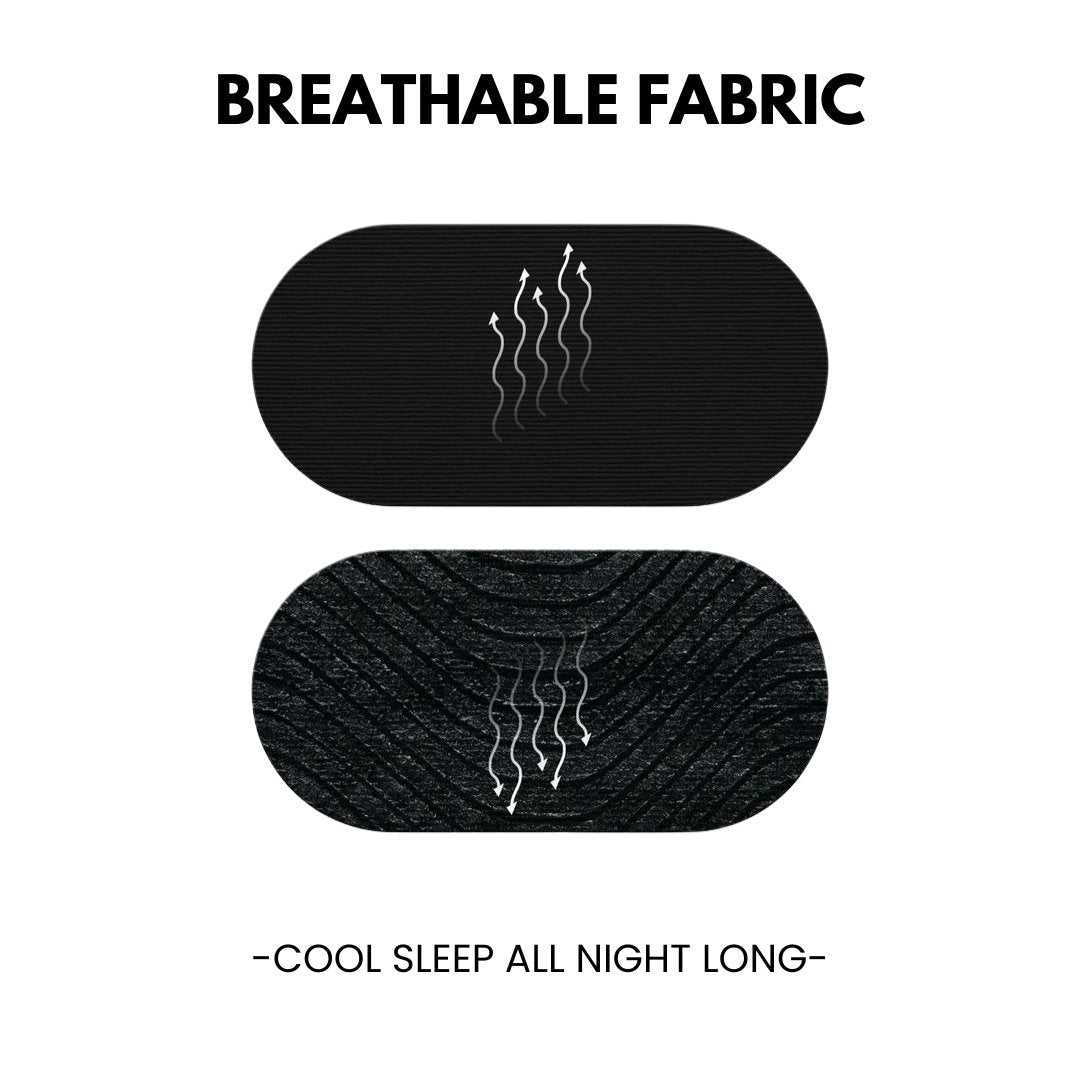
- You forget you're wearing it. The bamboo silk tape is genuinely unnoticeable. You put it on, fall asleep, and it peels off in the morning as part of your routine. There's no adjustment, no awareness, no friction. It's just part of how you sleep.
What If You're Not Seeing Results?
If you're two weeks in and don't feel any different, check three things:
Is the tape staying on all night? If you're pulling it off after two or three hours, you're getting two hours of nasal breathing and five or six hours of mouth breathing. The benefits come from full-night coverage. Keep a spare strip on the nightstand and reapply if you wake up without it.
Is your nose actually clear? Mouth tape redirects breathing through the nose. If the nose is partially blocked — from allergies, a deviated septum, or congestion — the breathing may feel effortful rather than easy. That limits how deeply you can sleep. Add nasal strips to open the airway, or address the congestion with saline rinses.
Are other sleep factors working against you? Mouth tape improves breathing mechanics. It doesn't override a caffeine habit, blue light exposure, an inconsistent bedtime, or a mattress that doesn't support you. If everything else about your sleep hygiene is working against you, mouth tape alone won't overcome it — though it will still eliminate dry mouth and reduce snoring regardless.
After 30 Days
By the end of your first month, mouth taping is either a permanent part of your routine or it isn't. The vast majority of people who make it through the first two weeks — past the adjustment phase — continue indefinitely. The results are too obvious to give up, and the cost and effort are too small to justify quitting.
Some users start tapering off the tape after several months, testing whether their mouth stays closed without it. Many find the habit has been retrained and their jaw stays closed naturally. Others prefer the insurance of the tape and continue wearing it every night. Both approaches work.
The Bottom Line
Your first 30 days with Titan Recovery follow a predictable arc: immediate dry mouth relief on night one, an adjustment period through week one, habit formation in week two, and compounding benefits in weeks three and four. The hardest part is the first five nights. The best part is everything after. The Deep Sleep Bundle gives you mouth tape and nasal strips together — everything you need for the full 30-day test. At as low as $0.75 per night with free shipping and a Better Sleep Guarantee, the only real risk is not trying it long enough.
Doctor Recommended: “As a maxillofacial surgeon and dentist, I recommend Titan Mouth Tape. Nasal breathing during sleep is essential for airway health and deep restorative rest. Titan’s bamboo silk design is the most comfortable and effective mouth tape I have tested. If you struggle with snoring, dry mouth, or poor sleep quality, this is the simplest change you can make for your health.” — Dr. Francois P., MD, DDS — Maxillofacial Surgeon
Lab-Tested Safety: Titan’s SilkSeal™ adhesive is independently tested to ISO 10993 medical device standards. Non-toxic (95% cell viability). Non-allergenic (0% reaction rate). Non-irritating (score 0.0/8.0). PFAS-free — 501 compounds tested, zero detected. See full test results →
Try it tonight. Bamboo silk. SilkSeal™ adhesive. Beard-friendly. No logo on the tape. Free shipping. 30-night Better Sleep Guarantee. Shop Titan Mouth Tape → · Shop TitanAir →