
Why Sleep Gets Worse After 40 (and What to Do)
Share
If you have noticed that sleep feels different than it did ten or fifteen years ago, you are not imagining it. Why sleep gets worse after 40 comes down to a handful of measurable biological changes that happen to everyone — your body produces less of the hormones that drive deep sleep, your internal clock shifts, and your airway literally changes shape. None of this means you are stuck with bad sleep. It means the strategies that worked at 25 need an update.
Here is what is actually changing, why it matters, and the specific things you can do to sleep well through your forties, fifties, and beyond.
What Changes in Your Sleep After 40
These changes are not random. They follow a predictable pattern that starts in your mid-thirties and accelerates through your forties and fifties.
You get less deep sleep. Deep sleep — also called slow-wave sleep — is the stage where your body repairs tissue, consolidates memory, and releases growth hormone. By age 40, most people get roughly 60 percent of the deep sleep they got at 25. By 50, that number drops further. The total hours you spend in bed may not change much, but the quality of what happens during those hours declines. This is one of the main reasons people in their forties say they sleep "enough" hours but still wake up tired.
Melatonin production drops. Melatonin does not knock you out — it signals to your body that it is time to wind down. Your pineal gland produces less of it as you age. By your mid-forties, nighttime melatonin levels may be significantly lower than they were in your twenties, which means falling asleep takes longer and staying asleep becomes harder.
Your circadian rhythm shifts earlier. Many people over 40 notice they get sleepy earlier in the evening and wake up earlier in the morning. This is a real biological shift — the part of your brain that sets your circadian rhythm changes its timing as you age. If you fight this shift by staying up late but still waking early, you compress your sleep window and lose rest on both ends.
Sleep becomes more fragmented. Older adults wake up more often during the night. Sometimes you remember these awakenings, sometimes you do not. Either way, fragmented sleep means less time in the restorative stages and more time in light sleep that does not deliver the same recovery. Stress, a full bladder, temperature sensitivity, and breathing disruptions all contribute — and all of them become more common after 40.
Hormonal Changes That Make It Worse
Beyond the general aging of your sleep architecture, hormonal shifts in both men and women add another layer of disruption.
For men: testosterone decline. Testosterone drops about one percent per year starting around age 30. By your mid-forties, the cumulative decline affects sleep directly. Testosterone and deep sleep have a reciprocal relationship — you need deep sleep to produce testosterone, and lower testosterone makes it harder to get deep sleep. The cycle feeds itself.
For women: perimenopause and menopause. The hormonal transition leading to menopause — typically beginning in the early to mid-forties — is one of the most significant disruptors of sleep. Fluctuating estrogen and progesterone cause night sweats, hot flashes, and increased anxiety, all of which fragment sleep. Progesterone has a calming effect on the nervous system, and as it declines, falling and staying asleep becomes harder. Studies estimate that 40 to 60 percent of women in perimenopause report new sleep problems.
These hormonal changes are not something you can simply push through. They require adjusting your environment, your habits, and — critically — how you breathe during sleep.
Your Airway Changes Too
This is the one that most people do not know about, and it may be the most important.
As you age, the soft tissue in your throat and airway changes. Muscle tone decreases. Tissue becomes more lax. The airway narrows slightly. These structural shifts make sleep-disordered breathing — snoring, upper airway resistance, and obstructive events — significantly more common after 40. Research shows that the prevalence of sleep-disordered breathing roughly doubles between ages 30 and 60.
Even if you never snored before, you may start in your forties. The combination of reduced muscle tone and tissue changes pushes many people toward mouth breathing during sleep. And mouth breathing at night is not just uncomfortable — it dries out your airway, shifts your nervous system toward a more activated state, and makes every other age-related sleep change worse.
The irony is that the people who need nasal breathing the most — those over 40 with changing airways — are the ones most likely to drift into mouth breathing without realizing it. If you wake up with a dry mouth or the sense that you slept but did not rest, your breathing during sleep is worth investigating.
What You Can Do About It
The changes described above are real, but they are not a sentence. People in their forties and fifties can sleep deeply and wake up recovered. It just takes more intention than it did at 25.
Lock in your sleep hygiene. The basics matter more now because you have less margin for error. A consistent bedtime and wake time reinforces your shifting circadian rhythm instead of fighting it. A cool, dark room supports the temperature drop your body needs to initiate sleep. Limiting screens before bed protects whatever melatonin production you still have. These are not optional extras at this stage — they are the foundation. A solid sleep hygiene routine covers the basics.
Exercise regularly, but time it right. Consistent exercise is one of the most effective ways to increase deep sleep at any age. It promotes healthy hormone levels and reduces stress. The key after 40 is timing — intense exercise within three hours of bedtime can raise core body temperature and cortisol enough to delay sleep onset. Morning or afternoon workouts produce the best results.
Manage stress deliberately. Elevated cortisol at night suppresses melatonin and keeps you in light, fragmented sleep. Stress management is not a luxury in your forties — it is a sleep strategy. Whatever works for you — walking, reading, breathing exercises, a deliberate wind-down routine — build it into your evening.
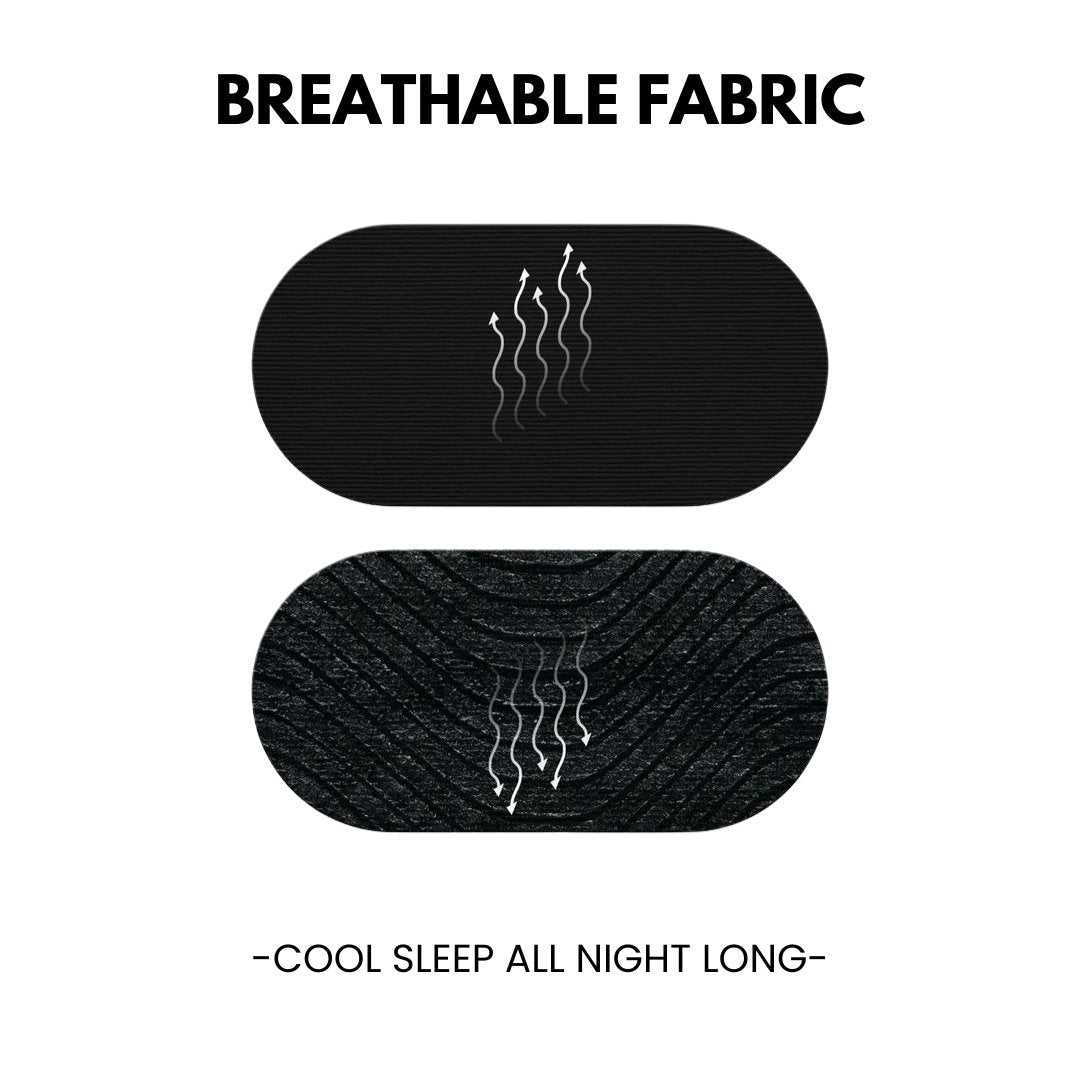
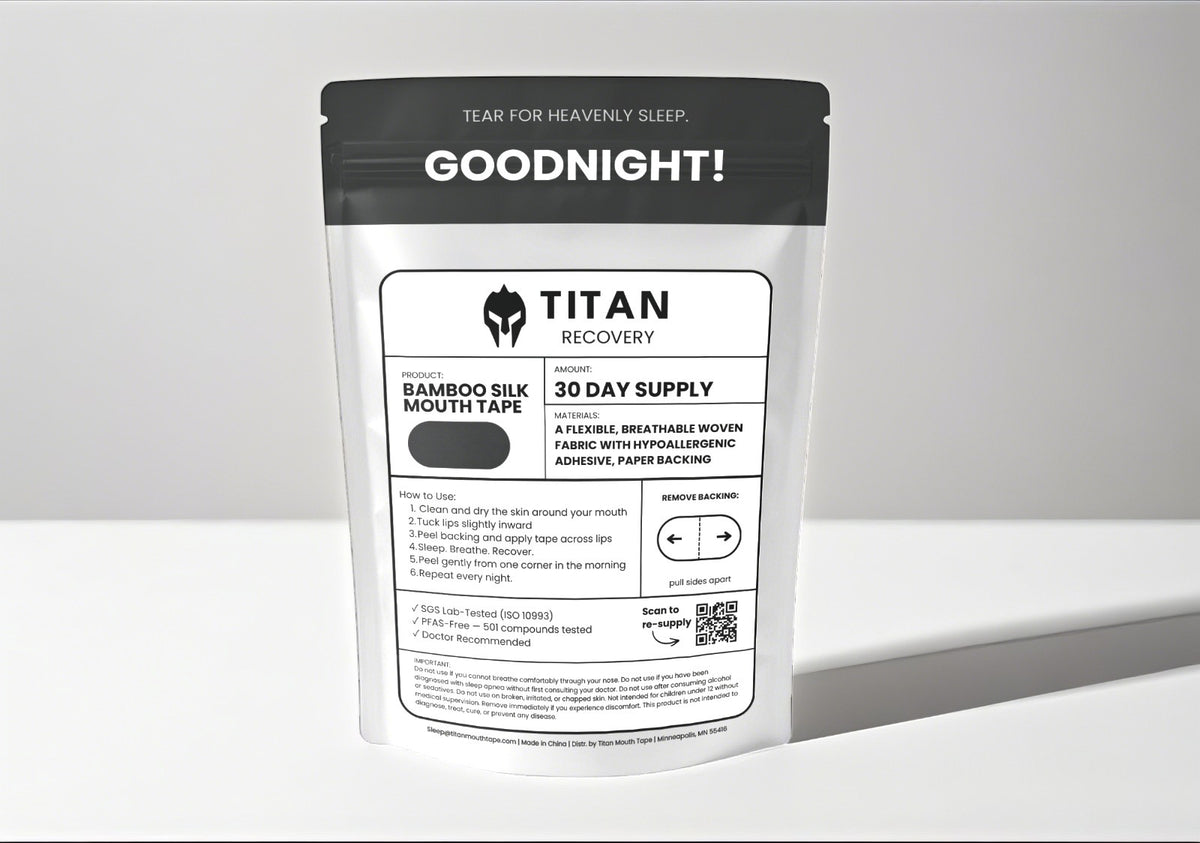
Address how you breathe during sleep. This is where most advice for the 40-plus crowd stops short. People talk about sleep hygiene, exercise, and stress — but almost no one addresses the airway changes that make nighttime breathing worse with each passing year. Mouth tape keeps your lips sealed so every breath passes through the nose, which filters, warms, and humidifies the air. It also supports parasympathetic activation and keeps the airway more stable than open-mouth breathing allows.
For people over 40, mouth taping is not a novelty hack — it is a direct response to the airway changes that come with aging. Keeping the mouth sealed and the jaw gently closed provides mechanical support that your anatomy no longer supplies on its own.
Why Mouth Taping Matters More After 40
At 25, your body compensates for mouth breathing — strong airway muscle tone and robust melatonin production carry you through. After 40, that buffer is gone. Every variable matters more because your margin is thinner.
Nasal breathing keeps the airway more open and stable, directly counteracting the tissue laxity that comes with age. It reduces snoring — which is a marker of partial airway obstruction that fragments sleep — and supports the calmer breathing pattern your body needs to access whatever deep sleep is still available to you.
Pairing mouth tape with a nasal strip makes the combination even more effective. The strip mechanically opens the nasal valve, reducing resistance and making each breath easier. For people whose nasal passages have narrowed with age or who deal with mild congestion, it removes the barrier that might otherwise cause them to open their mouth at night. The Deep Sleep Bundle gives you both in one package.
Think of it this way: you already accept that you need reading glasses after 40 because your eyes changed. Your airway changed too. Mouth tape is the equivalent adjustment — a simple tool that compensates for a real physiological shift.
Frequently Asked Questions
Is it normal to sleep worse after 40?
Yes, but "normal" does not mean "acceptable." Less deep sleep, lower melatonin, and more fragmentation are well-documented biological shifts. But they respond to consistent sleep hygiene, exercise, stress reduction, and tools like mouth tape that address breathing changes. Most people over 40 can still sleep deeply — they just need to be more intentional about it.
Why do I wake up at 3 a.m. every night now?
Several factors converge after 40: cortisol begins rising earlier, body temperature regulation shifts, and even mild breathing disruptions cause micro-arousals. If you consistently wake at the same time, your body may have locked into a self-reinforcing pattern. Improving your overall sleep quality with consistent habits and nasal breathing often reduces these awakenings.
Can mouth tape help with snoring that started after 40?
Often, yes. Snoring that appears after 40 is frequently caused by mouth breathing combined with age-related airway changes. When the mouth opens, the jaw drops back, the tongue falls toward the throat, and the airway narrows. Mouth tape keeps the jaw forward and routes all breathing through the nose, addressing the mechanical cause of most positional snoring. If your snoring is severe or accompanied by gasping, see a doctor to rule out obstructive sleep apnea.
What is the single best thing I can do for sleep after 40?
Keep a consistent sleep-wake schedule, even on weekends. It reinforces your circadian rhythm at a time when that rhythm is shifting. After that, addressing how you breathe at night through mouth taping is the highest-leverage change most people overlook. For a broader list, our science-backed sleep strategies guide covers the fundamentals.
The Bottom Line
Sleep after 40 is different because your body is different. You produce less melatonin, spend less time in deep sleep, wake more often, and your airway is structurally less stable than it was. These are facts, not failures. And every one of them responds to the right adjustments.
The basics — consistent schedule, regular exercise, stress management, a dark and cool room — matter more now because you have less biological buffer. And addressing how you breathe at night matters most of all, because airway changes make mouth breathing more likely, more disruptive, and more damaging to whatever deep sleep you still have.
You adapted when you needed reading glasses. You can adapt here too. The tools exist. Your body is ready to use them.
Doctor Recommended: "As a maxillofacial surgeon and dentist, I recommend Titan Mouth Tape. Nasal breathing during sleep is essential for airway health and deep restorative rest. Titan's bamboo silk design is the most comfortable and effective mouth tape I have tested. If you struggle with snoring, dry mouth, or poor sleep quality, this is the simplest change you can make for your health." — Dr. Francois P., MD, DDS — Maxillofacial Surgeon
Lab-Tested Safety: Titan's adhesive is independently tested to ISO 10993 medical device standards. Non-toxic (95% cell viability). Non-allergenic (0% reaction rate). Non-irritating (score 0.0/8.0). PFAS-free — 501 compounds tested, zero detected. See full test results →
Try the complete system tonight. Titan Mouth Tape (bamboo silk, SilkSeal™ adhesive) + TitanAir Nasal Strips. Free shipping. 30-night Better Sleep Guarantee. Shop Titan Mouth Tape → · Shop TitanAir Nasal Strips →