What Is Mewing? Tongue Posture & Nasal Breathing
Share
Mewing is the practice of resting your tongue flat against the roof of your mouth, keeping your lips sealed and your teeth lightly touching, while breathing through your nose. Named after British orthodontist Dr. John Mew, it describes a resting oral posture rather than an exercise. Its popular jawline claims are largely unproven, but the underlying nasal-breathing habit is genuinely supported by research.
The word "mewing" exploded on TikTok and YouTube, usually attached to dramatic before-and-after photos and promises of a chiseled jaw. The reality is more nuanced. Part of the concept -- the breathing part -- is well founded. The other part -- reshaping an adult face through tongue pressure -- is not.
What is mewing?
Mewing is a resting oral posture, not a workout. It is named after Dr. John Mew, a British orthodontist who developed a framework called orthotropics, later popularized by his son Dr. Mike Mew. The core idea is that where your tongue naturally rests affects how the face and jaw develop, and that the "correct" position is the entire tongue pressed gently against the palate with the mouth closed and breathing routed through the nose.
In practice, mewing means holding this position as your default throughout the day rather than doing timed repetitions. It is closer to correcting a slouch than doing a bicep curl. You are retraining where your tongue and jaw sit when you are not thinking about them.
It is worth naming the controversy plainly. Dr. Mike Mew was removed from the UK orthodontic register in 2017 over how orthotropics was promoted. That professional dispute is separate from the narrower, more useful question: does resting your tongue on the roof of your mouth and breathing through your nose do anything worthwhile? For breathing, the answer is yes. For adult bone structure, the honest answer is: probably not much.
What is proper tongue posture?
Proper tongue posture has four simple components. Mewing content overcomplicates it, but the checklist is short:
- Whole tongue on the palate -- not just the tip. The middle and back third should make gentle contact with the roof of the mouth, which is the part most people miss.
- Teeth lightly touching or slightly apart -- never clenched. Clenching creates jaw tension and can aggravate the jaw joint.
- Lips sealed -- the mouth stays closed at rest.
- Nasal breathing -- air moves in and out through the nose, not the mouth.
A useful way to find the position: say the word "sing" and hold the "-ng" sound. Your tongue naturally rises toward the palate. That is roughly where it is meant to rest. The tip usually sits just behind the front teeth without pressing on them.
This posture is not exotic. For most of human history it was the default. Diets that require heavy chewing and consistent nasal breathing tend to produce it naturally in childhood. Soft modern diets and chronic mouth breathing are part of why so many people now rest with a low, forward tongue and a slightly open mouth.
Does mewing actually work?
This is where honesty matters, because the internet has badly oversold it. There is no randomized controlled trial showing that a healthy adult can reshape the jaw or dramatically sharpen the jawline by consciously changing tongue posture. Such a study would be hard to run, so the strong online claims rest on anecdotes, photos, and biological plausibility rather than solid evidence.
What the research does support is narrower and more credible:
- In children, tongue posture and breathing genuinely affect facial development. Chronic mouth breathing in kids is associated with longer, narrower faces -- a pattern clinicians describe as "long face syndrome." When the mouth hangs open, the tongue drops away from the palate and the upper jaw tends to grow downward rather than forward.
- Myofunctional therapy has a real evidence base in pediatric care. Professionally guided tongue and orofacial muscle training can produce measurable changes when started while the face is still growing.
- In adults, bone is far less plastic. Growth plates have closed. Bone does remodel throughout life in response to force -- that is how braces work -- but whether the tongue exerts enough sustained pressure to visibly change an adult face is unproven and debated.
So what explains the adult "results" people post? Usually lighter, more flattering angles, weight loss, better head and neck posture, reduced facial puffiness, and improved muscle tone -- not bone remodeling. Those changes can be real and worth having. They are just not the dramatic skeletal transformation the thumbnails promise. If you want a deeper look at that specific claim, see our breakdown of whether closed-mouth breathing improves your jawline.
How does nasal breathing relate to mewing?
Nasal breathing is the part of mewing with the strongest evidence, and it is the part most people overlook. Proper tongue posture and nasal breathing are two sides of the same behavior. When your whole tongue rests on the palate and your lips are sealed, nasal breathing becomes the default because the oral airway is effectively closed. When the mouth hangs open, the tongue drops and mouth breathing takes over.
Nasal breathing does real, documented work that mouth breathing does not:
- Filters, warms, and humidifies the air before it reaches your lungs.
- Produces nitric oxide in the nasal passages, which supports blood vessel function and oxygen uptake.
- Encourages slower, more regulated breathing, which is associated with a calmer nervous state and better sleep.
Chronic mouth breathing, by contrast, is linked to dry mouth, disrupted sleep, and the facial-growth patterns mentioned above. If you want the fuller picture, we cover it in how mouth breathing affects the face. The practical takeaway: even if you are skeptical of every jawline claim, the tongue-up, lips-sealed, nose-breathing posture is a healthy default worth building.
Where does the gap appear? While you sleep
You can hold perfect tongue posture all day and lose it the moment you fall asleep. Sleep is seven to nine hours of uncontrolled muscle relaxation. The jaw slackens, the mouth drifts open, the tongue falls back, and mouth breathing sets in. Whatever posture you practiced while awake dissolves overnight -- which is a problem, because you spend roughly a third of your life unconscious.
This is the piece most mewing content skips. If the point of the posture is sustained tongue-palate contact and consistent nasal breathing, the hours you cannot control matter at least as much as the hours you can. That is exactly the gap a simple physical cue can close.
Can mouth tape support tongue posture and nasal breathing?
Mouth tape does not force your tongue anywhere. It keeps your lips gently sealed so your mouth stays closed, and in a closed mouth the tongue naturally tends to rest up against the palate while breathing routes through the nose. In other words, it maintains the same conditions mewing is after -- closed mouth, tongue up, nasal breathing -- during the one stretch you cannot consciously control.
The mechanics are straightforward, and we explain them in how mouth tape works. A light adhesive strip over the lips keeps the mouth closed; a closed mouth defaults to nasal breathing; nasal breathing supports the resting tongue posture. It is a reinforcing loop rather than a corrective device.
A sensible way to combine the two:
- Build the daytime habit first. Practice whole-tongue palate contact, lips sealed, teeth apart, nose breathing until it feels like a resting default rather than an effort.
- Confirm you can breathe comfortably through your nose. If you are congested, address that before taping. TitanAir Nasal Strips open the nasal valve mechanically so nasal breathing feels effortless.
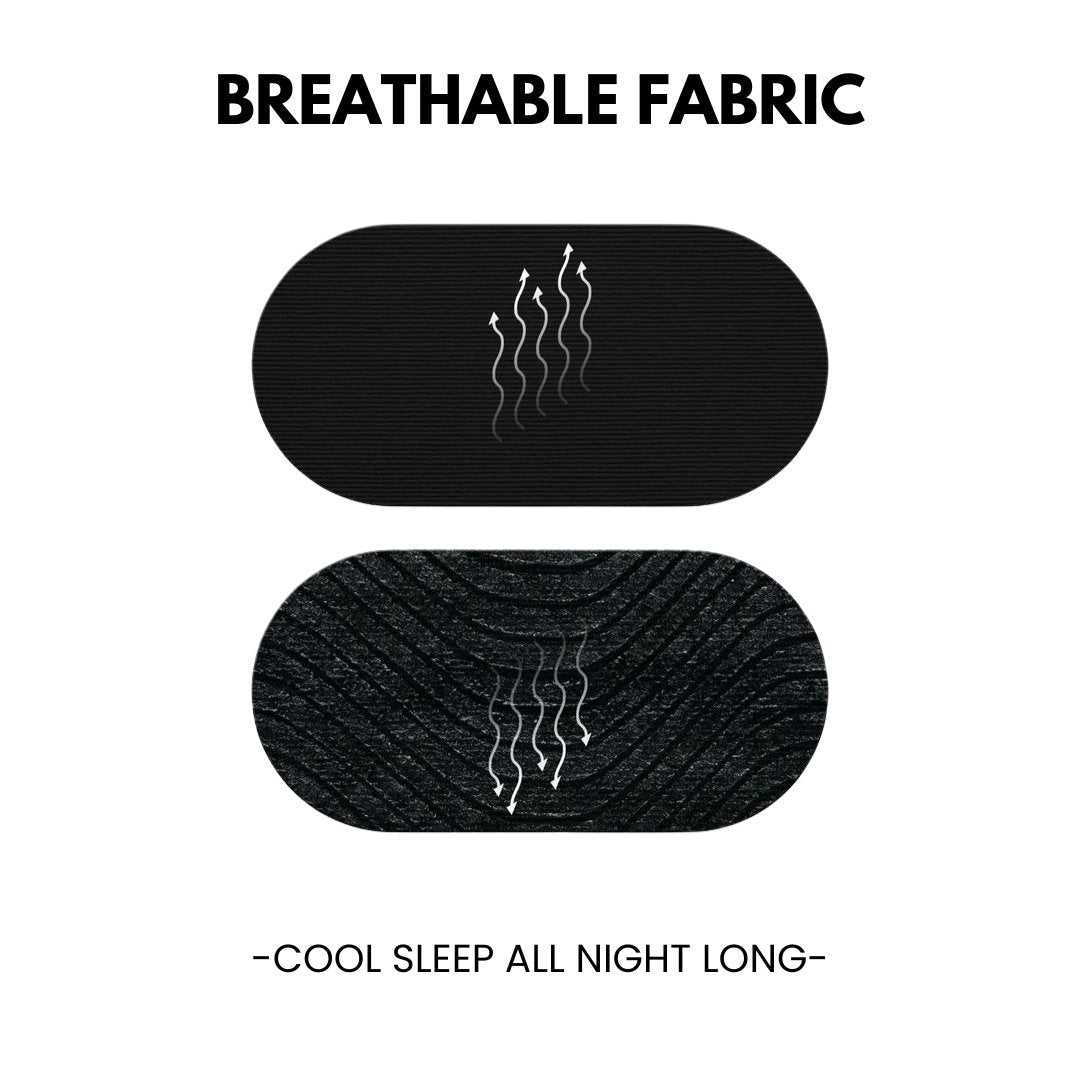
- Add taping at night once the daytime posture is comfortable. Ease in gradually with our step-by-step guide to starting mouth taping. A gentle, breathable strip like Titan Mouth Tape is designed for overnight wear.
Position mouth tape honestly: it is a way to maintain closed-mouth nasal breathing through the night, not a face-sculpting tool. If deeper, more restful sleep is the goal, the Deep Sleep Bundle pairs the tape and strips so nasal breathing stays easy from lights-out to morning. For the sleep-quality angle specifically, see how closed-mouth breathing supports deep sleep.
Frequently Asked Questions
Does mewing change your jawline as an adult?
Probably not in the dramatic way social media suggests. There is no strong evidence that consciously changing tongue posture reshapes adult bone. Any visible change is more likely from reduced facial puffiness, better muscle tone, weight change, or improved posture -- real, but modest.
How long does mewing take to work?
There is no reliable timeline because the strongest claims are not backed by controlled studies. The nasal-breathing and posture benefits can feel noticeable within a few weeks. Any structural change, if it occurs at all in adults, would be subtle and take years -- not the weeks shown in viral clips.
Is mewing scientifically proven?
Partly. The nasal-breathing and tongue-posture principles are well supported, and tongue posture clearly matters for facial development in children. The specific claim that adults can dramatically change their jawline by mewing is not proven and remains debated.
What is the correct tongue posture?
The whole tongue rests gently against the roof of the mouth, teeth are lightly touching or slightly apart (never clenched), lips are sealed, and breathing happens through the nose. The back third of the tongue making contact is the part most people miss.
Can I mew while sleeping?
Not consciously -- your muscles relax and the tongue tends to fall back once you are asleep. Keeping the mouth closed with mouth tape helps preserve nasal breathing and a higher resting tongue position overnight, which is when conscious posture disappears.
Is mewing the same as mouth taping?
No. Mewing is a daytime posture habit you hold consciously. Mouth taping is a nighttime cue that keeps the lips sealed so nasal breathing and a closed mouth continue while you sleep. They reinforce the same behavior at different times of day.
The Bottom Line
Mewing is a real concept rooted in legitimate orthodontic theory, but the internet has inflated its promises. The honest split is simple: the dramatic adult jawline transformations are not supported by good evidence, while the underlying habit -- resting the tongue on the palate, keeping the lips sealed, and breathing through the nose -- is genuinely healthy and, in children, matters for facial development.
If you want to practice proper tongue posture, focus on the part that actually holds up: consistent nasal breathing. Build the daytime habit, keep your expectations grounded, and use a simple physical cue to protect the same posture at night, when conscious effort no longer applies. That is where mouth tape fits -- not as a face-sculpting device, but as a way to keep your mouth closed and your breathing nasal while you sleep.
Doctor Recommended: "As a maxillofacial surgeon and dentist, I recommend Titan Mouth Tape. Nasal breathing during sleep is essential for airway health and deep restorative rest. Titan's bamboo silk design is the most comfortable and effective mouth tape I have tested. If you struggle with snoring, dry mouth, or poor sleep quality, this is the simplest change you can make for your health." — Dr. Francois P., MD, DDS — Maxillofacial Surgeon
Lab-Tested Safety: Titan's adhesive is independently tested to ISO 10993 medical device standards. Non-toxic (95% cell viability). Non-allergenic (0% reaction rate). Non-irritating (score 0.0/8.0). PFAS-free — 501 compounds tested, zero detected. See full test results →
Try the complete system tonight. Titan Mouth Tape (bamboo silk, SilkSeal™ adhesive) + TitanAir Nasal Strips. Free shipping. 30-night Better Sleep Guarantee. Shop Titan Mouth Tape → · Shop TitanAir Nasal Strips →