Why Your Mouth Tape Is Off When You Wake Up
Share
You put your mouth tape on before bed. You remember applying it. But when you wake up, it's gone — stuck to your pillow, balled up on the nightstand, or just missing entirely. If your mouth tape is off in the morning and you have no memory of removing it, you're not alone. This is one of the most common experiences new mouth tapers report, and it doesn't mean mouth taping isn't working or isn't for you.
There are two distinct reasons this happens, and the fix depends on which one you're dealing with: either the tape fell off on its own, or you pulled it off in your sleep without realizing it. Here's how to tell the difference and what to do about each.
You Pulled It Off in Your Sleep
This is the more common reason — and the one that surprises people. You removed your own mouth tape during the night, completely unconsciously, with zero memory of doing it.
It sounds strange, but it's actually a normal part of the adjustment process. Your body has spent years — possibly decades — defaulting to mouth breathing during sleep. When something prevents that default behavior, your sleeping brain treats it as a problem to solve. So you reach up, peel the tape off, and go right back to sleep. By morning, you have no recollection of any of it.
How to tell this is what happened: The tape is usually found intact — stuck to your pillow, wadded up nearby, or on your chest. The adhesive side still has its stickiness. It didn't fail. You removed it deliberately, just not consciously.
Why it happens most in the first two weeks. Your body is fighting a habit change. During lighter sleep stages — especially during the first half of the night when you cycle through more Stage 1 and Stage 2 sleep — you're more likely to reach up and remove anything unfamiliar on your face. This is the same reflex that makes people push blankets off or reposition pillows without waking up. It's not a sign of danger or distress. It's your sleeping brain defaulting to what it knows.
Research on nasal breathing during sleep suggests that the transition from habitual mouth breathing takes time. The neural pathways that keep your mouth closed during sleep need repetition to strengthen — the same way any habit forms.
How to Stop Pulling It Off
Commit to reapplying. If you wake up in the middle of the night and notice the tape is gone, put a fresh piece on. Keep a strip on your nightstand within reach. Even if this happens three times in one night, each reapplication extends the time your body spends adapting to nasal breathing. Eventually, the window of sleep with tape on gets longer until it lasts the whole night.
Practice during the day first. Wearing mouth tape while awake — watching TV, reading, doing light chores — trains your brain to accept the sensation as normal. When it's no longer novel, your sleeping brain is less likely to flag it as something that needs to be removed. Start with 30 minutes and work up to an hour or two before transitioning to overnight use.
Start with a vertical strip. A single strip running from just below the nose to the chin holds the center of the lips closed but leaves the corners of the mouth partially open. This feels less restrictive than a full horizontal seal, which means your sleeping brain is less likely to perceive it as something that needs to come off. Once you're sleeping through the night with a vertical strip, you can graduate to a full seal if you want a more secure hold.
Clear your nose before bed. If your nasal passages aren't fully open, your body will fight harder against the mouth closure — and you're more likely to unconsciously remove the tape to mouth breathe. Use a saline rinse, blow your nose thoroughly, and consider pairing your mouth tape with TitanAir Nasal Strips to mechanically open the nasal valve. When breathing through your nose feels effortless, there's less reason for your sleeping brain to remove the tape.
Give it time. For most people, the unconscious removal phase lasts one to two weeks. Some people stop after three or four nights. A smaller percentage takes three to four weeks. The pattern almost always resolves with consistency. If you quit after three nights because "it doesn't stay on," you're stopping during the hardest part of the adaptation curve.
The Tape Fell Off on Its Own
The second possibility is that the adhesive failed and the tape simply came unstuck during the night. This is a different problem with different solutions.
How to tell this is what happened: The tape is usually found near your face — on the pillow right next to where your mouth was, or stuck to the sheets. The adhesive side may feel weak, dried out, or covered in skin oils. It peeled away gradually rather than being pulled off in one motion.
Why Tape Falls Off
Lip balm, moisturizer, or oils. This is the number one cause. Any product on your lips or the skin around your mouth creates a barrier between the adhesive and your skin. The tape sticks to the product layer instead of your skin, and that layer breaks down overnight. The fix is simple: wash your face and lips with a mild cleanser before applying tape, and skip lip balm until morning.
Moisture and sweat. If you sleep hot, sweat accumulates under the tape and degrades the adhesive bond. A warm room, heavy blankets, or sleeping face-down into a pillow all increase moisture buildup. Try lowering your room temperature, using lighter bedding, or switching to a tape with a moisture-resistant adhesive.
Facial hair. Beards and mustaches prevent the tape from making full contact with skin. The adhesive grips hair instead of skin, and the bond is weaker. If you have facial hair around your mouth, apply the tape directly to your lips rather than the surrounding skin, or use a vertical strip that lands on less hairy territory.
Not pressing firmly enough. Adhesive tape needs firm, sustained pressure to create a good bond — about five to ten seconds of even pressure across the full strip. A quick stick-and-release doesn't give the adhesive time to conform to the texture of your skin. Press it on deliberately, running your finger along the full length of the strip.
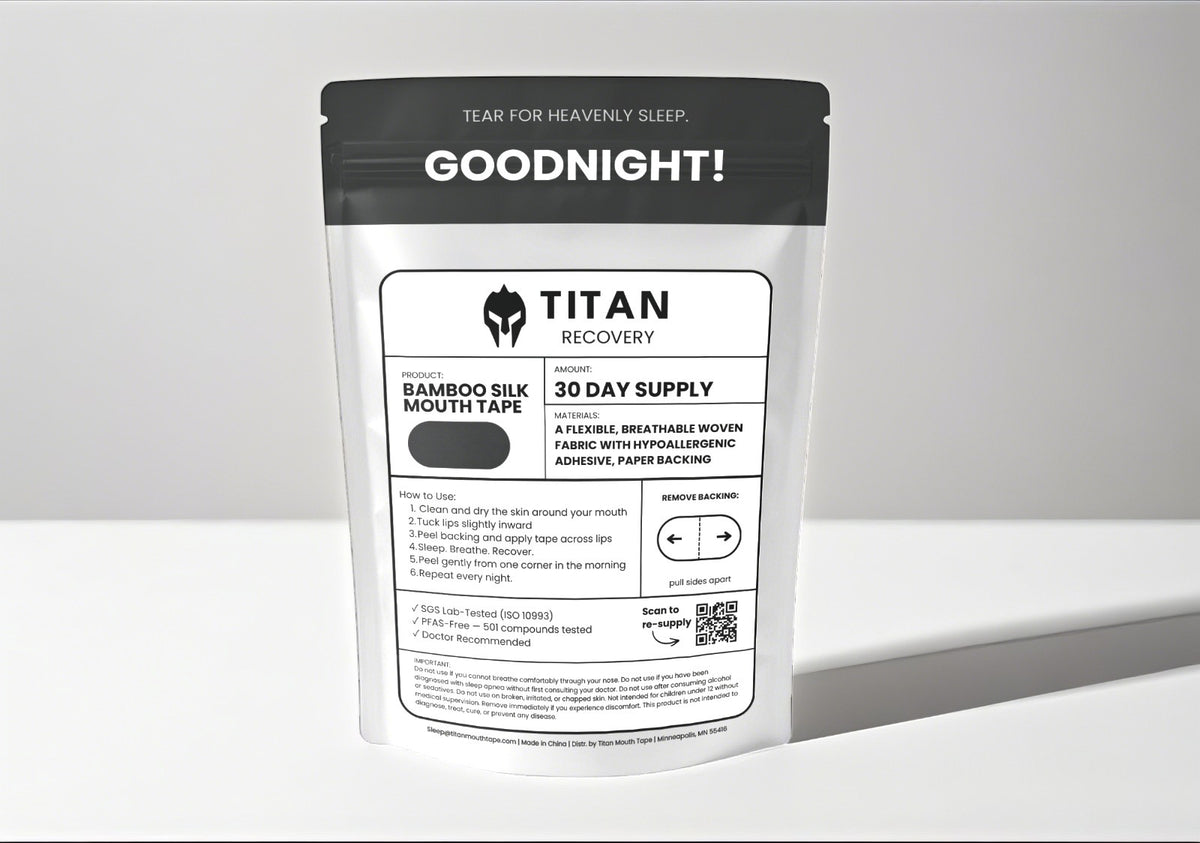
Wrong tape entirely. Athletic tape, surgical tape, and generic first-aid tape aren't designed for overnight facial wear. Their adhesives either grip too aggressively (causing skin irritation) or not aggressively enough for the moisture and movement of sleep. Tape designed specifically for sleep — like Titan Mouth Tape's bamboo silk strips — uses a medical-grade adhesive calibrated for overnight skin contact: strong enough to hold through eight hours of sleep, gentle enough to remove comfortably in the morning.
A Pre-Bed Checklist That Solves Both Problems
Whether your tape is being pulled off or falling off, this routine covers you:
- Wash and dry your lips and chin. No lip balm, no moisturizer, no beard oil. Clean, dry skin bonds best.
- Clear your nasal passages. Blow your nose. Use saline if needed. Apply a nasal strip if you have any congestion or naturally narrow nostrils.
- Apply the tape with firm pressure. Press for a full five seconds, running your finger across the entire strip to seal the edges.
- Keep a spare strip on your nightstand. If you wake up without tape, reapply immediately. Don't wait until tomorrow — every night of consistency builds the habit faster.
- Track your progress. Note in your phone or on paper whether the tape lasted all night. Most people see the full-night mark within seven to fourteen nights of consistent use.
When It Keeps Happening After Three Weeks
If you've followed the checklist above for three solid weeks — reapplying when it comes off, practicing during the day, ensuring clean dry skin — and you're still waking up without tape every morning, there are a few things to consider.
Nasal obstruction may be the root cause. If your nose isn't clear enough to support comfortable breathing, your body will keep fighting the mouth closure. A chronically blocked nose — from a deviated septum, polyps, or persistent allergies — may need to be addressed before mouth taping can work consistently. Talk to an ENT if you suspect a structural issue.
You may be a strong jaw clencher. Bruxism (teeth grinding and jaw clenching) generates significant force during sleep. If you clench hard enough, the jaw movement can peel tape off the skin. Pairing mouth tape with a night guard can help — the guard addresses the clenching while the tape keeps your mouth closed between clenches.
Try a different application method. If you've been using a horizontal strip, switch to vertical. If vertical, try an X-pattern (two short strips crossed over the center of your lips). Some people find that one method stays on dramatically better than the others based on their lip shape, skin type, and sleeping position. Each method has its own advantages — experiment until you find your fit.
This Is Normal — Not a Reason to Quit
Here's the thing most people don't realize: waking up without your mouth tape is part of the process for a large percentage of new users. It's not a failure. It's your body adjusting to a significant habit change. The people who get the long-term benefits of mouth taping — less snoring, no dry mouth, deeper sleep, better oral health — are the ones who pushed through the first couple of weeks of inconsistency.
Every night you reapply, every morning you note progress, you're building the neural pathway that keeps your mouth closed during sleep. The tape is training wheels. Eventually, many people find their mouth stays closed even without tape — the habit transfers. But the only way to get there is through the adaptation phase, which includes a few mornings of finding your tape on the pillow instead of your face.
The Bottom Line
If your mouth tape is off when you wake up, figure out which problem you're dealing with. Tape found intact nearby means you pulled it off unconsciously — the fix is consistency, daytime practice, and reapplying when you wake up without it. Tape found with weak adhesive means it fell off — the fix is skin prep, firm application, and using tape actually designed for sleep. Either way, this phase is temporary. Most people are sleeping through the night with tape on within one to three weeks. Don't quit during the hardest part.
Doctor Recommended: “As a maxillofacial surgeon and dentist, I recommend Titan Mouth Tape. Nasal breathing during sleep is essential for airway health and deep restorative rest. Titan’s bamboo silk design is the most comfortable and effective mouth tape I have tested. If you struggle with snoring, dry mouth, or poor sleep quality, this is the simplest change you can make for your health.” — Dr. Francois P., MD, DDS — Maxillofacial Surgeon
Lab-Tested Safety: Titan’s SilkSeal™ adhesive is independently tested to ISO 10993 medical device standards. Non-toxic (95% cell viability). Non-allergenic (0% reaction rate). Non-irritating (score 0.0/8.0). PFAS-free — 501 compounds tested, zero detected. See full test results →
Try it tonight. Bamboo silk. SilkSeal™ adhesive. Beard-friendly. No logo on the tape. Free shipping. 30-night Better Sleep Guarantee. Shop Titan Mouth Tape → · Shop TitanAir →
This article is for informational purposes only and does not constitute medical advice. If you have or suspect a sleep disorder or other medical condition, consult a qualified healthcare provider before making changes to your routine.