7 Things to Avoid Before Bed for Better Sleep
Share
You've invested in the mattress. You keep the room dark and cool. You go to bed at the same time every night. And yet you still wake up tired, foggy, and wondering what went wrong.
The problem usually isn't what happens while you sleep. It's what happens in the hour or two before you get there. The pre-sleep window is where most people unknowingly sabotage their rest — with habits that feel harmless or even relaxing but actively work against the biology of falling and staying asleep.
Here are seven things to avoid before bed, ranked by how much damage they do and how easy they are to fix. The last one on the list is the habit most people don't even know they have — and it runs all night long.
1. Caffeine Too Late in the Day
Caffeine has a half-life of five to six hours. That means the coffee you drank at 3pm still has roughly 50% of its stimulant effect active at 9pm. By midnight, about 25% remains in your system — enough to reduce deep sleep by 20% or more even if you manage to fall asleep on time.
The issue isn't just the jolt. Caffeine blocks adenosine, the neurotransmitter responsible for building sleep pressure throughout the day. When adenosine can't bind to its receptors, your brain doesn't register the "ready for sleep" signal that triggers natural drowsiness. You lie in bed feeling tired but wired — a hallmark of adenosine disruption.
The fix is straightforward: set a hard caffeine cutoff at 1–2pm. If you're sensitive to stimulants, push it to noon. This gives your body enough time to clear the caffeine before your sleep window opens.
2. Alcohol as a Nightcap
Alcohol is the most misunderstood sleep aid. A glass of wine before bed genuinely does help you fall asleep faster — that part is real. But sedation is not sleep, and the difference matters enormously for what happens to your brain overnight.
Alcohol suppresses REM sleep during the first half of the night. When the alcohol metabolizes — typically three to five hours after your last drink — your brain rebounds aggressively into REM, a lighter stage where you're far more vulnerable to waking. This is why people who drink before bed often wake up at 2 or 3am and can't get back to sleep.
Alcohol also relaxes the muscles of the upper airway more than normal sleep does, which worsens snoring and mouth breathing. If you already breathe through your mouth at night, alcohol amplifies the problem considerably. The combination of fragmented REM, increased airway resistance, and dehydration is why even moderate drinking before bed leaves you feeling exhausted the next morning despite a full eight hours in bed.
3. Eating a Heavy Meal
Your body needs to lower its core temperature and reduce metabolic activity to enter deep sleep. A large meal within two to three hours of bedtime works against both of those requirements.
Digestion generates heat. It elevates your heart rate. It keeps blood flow directed to your gut rather than allowing the general circulatory slowdown that accompanies deep sleep. High-fat and high-protein meals are the worst offenders because they take the longest to break down.
Spicy and acidic foods add another layer: they increase the risk of acid reflux when you lie down, which can cause micro-arousals even when you're not consciously aware of heartburn. And meals that spike blood sugar — heavy carbs, sugary desserts — create a crash-and-rebound pattern that can wake you in the middle of the night as your body releases stress hormones to stabilize glucose levels.
If you need to eat late, keep it small and easy to digest. A handful of nuts, a banana, or a small serving of yogurt won't disrupt sleep the way a full dinner will.
4. Screens and Blue Light
This one is well-known but consistently underestimated. The blue light emitted by phones, tablets, and laptops suppresses melatonin production — the hormone that signals your brain to prepare for sleep. Research has shown that two hours of screen exposure before bed can delay sleep onset by 30 minutes or more and reduce total REM sleep.
But the light is only part of the problem. The bigger issue is what you're doing on the screen. Social media, news, email, and video content all trigger dopamine release — the reward neurotransmitter that keeps your brain alert and engaged. Your prefrontal cortex stays in "active processing" mode rather than winding down toward the quieter neural patterns that precede sleep.
The combination of melatonin suppression and dopamine stimulation is why scrolling in bed is one of the most reliable ways to push your bedtime later without intending to. Night mode and blue-light glasses help with the light component but do nothing about the dopamine-driven wakefulness that keeps you reaching for one more scroll.
A better approach: set a hard screen cutoff 30–60 minutes before bed. Replace it with reading a physical book, gentle stretching, or a simple sleep preparation routine that signals your brain to power down.
5. Intense Exercise Too Close to Bed
Exercise is one of the best things you can do for sleep quality — when the timing is right. Morning and afternoon workouts consistently improve deep sleep duration and overall sleep efficiency in research. The problem starts when high-intensity training happens within two to three hours of bedtime.
Hard exercise raises core body temperature by 1–2 degrees Fahrenheit. It elevates cortisol, the stress hormone. It increases heart rate and sympathetic nervous system activation — exactly the opposite of what your body needs to initiate sleep. The cooldown period after intense exercise takes roughly 90 minutes to two hours, and until your core temperature drops back to baseline, your body won't produce the melatonin signal that triggers drowsiness.
This doesn't mean you have to avoid all evening movement. Light stretching, easy walking, and gentle yoga actually help the transition to sleep by activating the parasympathetic nervous system. The rule is intensity: keep anything within two hours of bed at a conversational pace.
6. Long or Late Naps
Naps are a useful tool when they're short and early. A 15–20 minute nap before 2pm can restore alertness without interfering with nighttime sleep. But napping after 3pm — or napping longer than 20–30 minutes — directly steals from your sleep pressure bank.
Sleep pressure is the accumulation of adenosine in your brain throughout the day. The longer you've been awake, the more adenosine builds, and the stronger your drive to sleep becomes. A long or late nap drains that pressure, leaving you without enough sleep drive to fall asleep at your normal bedtime.
The result is a familiar cycle: you nap late because you're tired, then you can't fall asleep at night, then you're tired the next day, so you nap late again. If you're caught in this loop, the fastest way out is to cut the nap entirely for a few days and let nighttime sleep pressure rebuild naturally.
7. Mouth Breathing — the Bad Habit That Runs All Night
The six habits above are things you do before bed that interfere with falling asleep. This one is different. Mouth breathing is a habit that starts before you're conscious of it and runs for six, seven, eight hours straight while you sleep. And most people have no idea they're doing it.
Here's what typically happens: you fall asleep with your mouth closed. As you move from light sleep into deeper stages, the muscles in your jaw and face relax. Your mouth opens, sometimes just slightly, sometimes fully. From that point forward, every breath you take bypasses the nasal system your body was designed to use during sleep — and the consequences cascade.
Your airway narrows. Mouth breathing positions the tongue lower and farther back in the throat, which partially obstructs the upper airway. This increased resistance forces your respiratory muscles to work harder, elevates your heart rate, and shifts your nervous system toward sympathetic (fight-or-flight) activation. Even without diagnosed sleep apnea, this partial obstruction produces micro-arousals — brief cortical awakenings that fragment your sleep architecture without you consciously waking up.
Oxygen absorption drops. Your nasal sinuses produce nitric oxide, a molecule that dilates blood vessels and enhances oxygen transfer in the lungs. Breathing through your mouth bypasses nitric oxide production entirely, which means less efficient gas exchange with every breath. Your blood oxygen saturation may dip by just one or two percentage points, but your brain monitors oxygen continuously and responds to even small drops with arousal signals.
Your nervous system stays activated. Nasal breathing naturally lengthens the exhale relative to the inhale, which activates the vagus nerve and promotes parasympathetic (rest-and-recover) dominance. Mouth breathing reverses this: the breathing pattern tends to be faster, shallower, and more evenly split between inhale and exhale — keeping the sympathetic nervous system engaged. This is one reason why mouth breathers tend to have lower HRV (heart rate variability) scores overnight, a metric that wearable trackers like WHOOP and Oura use to measure recovery quality.
You wake up with the symptoms and don't connect the cause. Dry mouth. Morning sore throat. Nasal congestion that clears within an hour of waking. Brain fog. Feeling unrested despite a "full night" of sleep. These are the calling cards of nighttime mouth breathing, and they're commonly attributed to allergies, aging, or just being a "bad sleeper" rather than recognized as the downstream effects of breathing through the wrong passage for eight hours.
The clinical pattern behind this — Upper Airway Resistance Syndrome — sits between normal breathing and obstructive sleep apnea. It's characterized by repeated partial arousals from airway resistance that doesn't meet the diagnostic threshold for apnea events. Standard sleep studies often miss it entirely because the events don't register as full apneas or hypopneas, yet the impact on sleep quality is substantial.
What makes mouth breathing particularly insidious on this list is that it amplifies several of the other bad habits. Alcohol before bed? Relaxes the airway muscles further, making mouth breathing worse. Heavy meal and acid reflux? Mouth breathing dries out the protective mucosa and amplifies discomfort. Late caffeine? Your already-shallow mouth-breathing sleep becomes even lighter. Mouth breathing is the compounding variable that turns moderate sleep disruptions into serious ones.
What to Do Instead: The One Habit Worth Adding
Removing bad habits gets you most of the way there. But there's one positive addition that addresses the biggest item on this list — the mouth breathing that runs all night and that willpower alone can't fix, because you're unconscious when it happens.
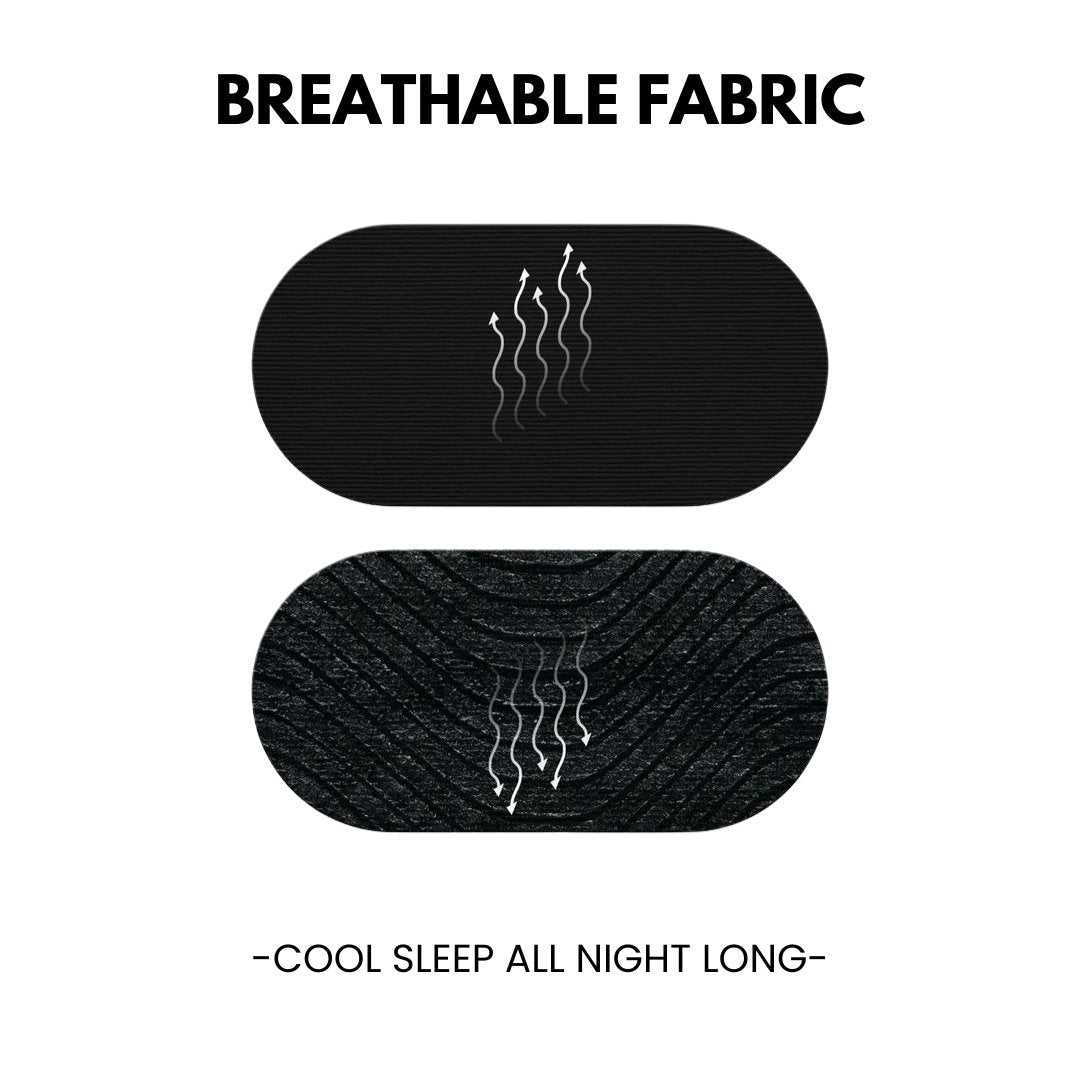
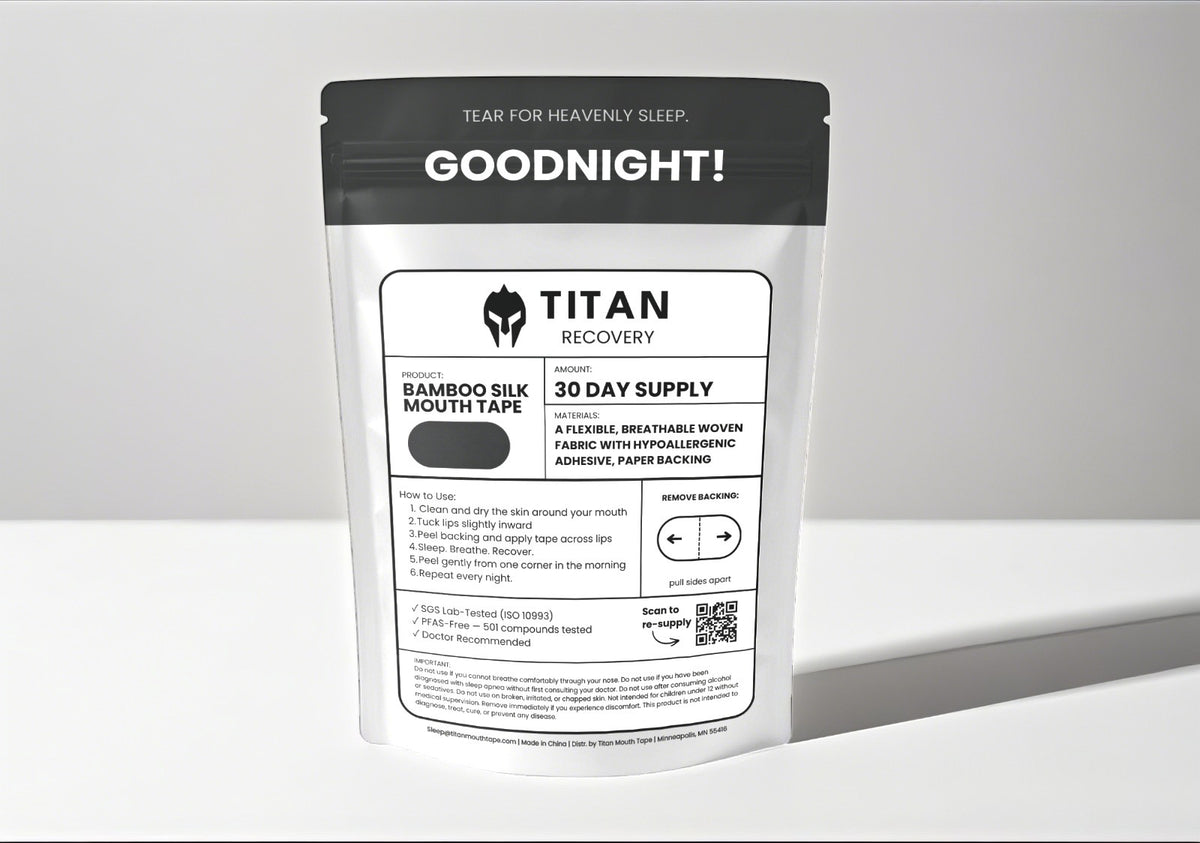
Mouth taping is the practice of applying a gentle adhesive strip over your lips before bed to encourage nasal breathing throughout the night. It works by keeping your mouth closed as your jaw relaxes, so your breathing defaults to the nasal pathway rather than falling open to the mouth.
The shift is measurable. People who switch from mouth breathing to nasal breathing during sleep commonly report fewer nighttime wakings, less morning dry mouth, higher HRV scores, and — the one that matters most — actually feeling rested when they wake up. Deeper, less fragmented sleep is the direct result of removing the airway resistance and nervous system activation that mouth breathing produces.
Titan Mouth Tape is designed specifically for sleep. It uses a medical-grade adhesive that holds through the night but removes cleanly in the morning without irritation. For people with nasal congestion or a deviated septum, pairing it with TitanAir Nasal Strips opens the nasal passage mechanically — no drugs, no dependency. The Titan Sleep System bundles both for a complete nasal-breathing setup at a lower per-night cost, and Subscribe and Save takes an additional 11% off every delivery.
Frequently Asked Questions
How long before bed should I stop eating?
Two to three hours is the standard guideline. This gives your body enough time to move past the most metabolically active phase of digestion, lower your core temperature, and reduce the risk of acid reflux when you lie down. If you need a small snack closer to bed, stick to something light and low in sugar — a handful of almonds or a small piece of fruit.
Does blue light from screens really affect sleep that much?
Yes, but the light itself is only half the story. Blue light suppresses melatonin production, delaying sleep onset by up to 30 minutes in controlled studies. The other half is the dopamine stimulation from engaging content — social media, news, and video keep your brain in an active, alert state that takes time to wind down from. The most effective intervention is a full screen cutoff 30–60 minutes before bed, not just a blue-light filter.
Is it safe to tape your mouth shut while sleeping?
Mouth tape designed for sleep — like Titan Mouth Tape — uses a gentle, medical-grade adhesive that releases easily if you open your mouth with normal force. It does not seal your mouth shut; it provides light resistance that encourages nasal breathing while allowing you to open your mouth, cough, or speak if needed. If you have untreated obstructive sleep apnea, a severe nasal obstruction, or active nausea, consult your doctor before starting. For most healthy adults, mouth taping is a straightforward, non-invasive way to support nasal breathing during sleep.
What's the single worst thing to do before bed?
If we're ranking by total impact on sleep quality, mouth breathing is the worst because it runs for the entire night rather than just the pre-sleep window. Among the controllable pre-bed habits, alcohol is the most damaging — it fragments REM sleep, worsens airway resistance, dehydrates you, and causes early-morning waking. But if you're both drinking and mouth breathing, the two compound each other in ways that make both significantly worse.
The Bottom Line
Most sleep advice focuses on what to add — supplements, gadgets, routines. But the fastest path to better sleep is removing the things that are actively working against it. Cut the late caffeine. Stop using alcohol as a sleep aid. Give your body time to digest before lying down. Put the phone away. Move the hard workout earlier. Skip the late nap.
And then address the one bad habit you can't willpower your way out of: the mouth breathing that starts after you fall asleep and runs all night. That's the compounding variable behind morning fatigue, dry mouth, low HRV, and the feeling that no amount of time in bed translates to actual rest. Fix your breathing and the other changes land harder.
Doctor Recommended: "As a maxillofacial surgeon and dentist, I recommend Titan Mouth Tape. Nasal breathing during sleep is essential for airway health and deep restorative rest. Titan's bamboo silk design is the most comfortable and effective mouth tape I have tested. If you struggle with snoring, dry mouth, or poor sleep quality, this is the simplest change you can make for your health." — Dr. Francois P., MD, DDS — Maxillofacial Surgeon
Lab-Tested Safety: Titan's adhesive is independently tested to ISO 10993 medical device standards. Non-toxic (95% cell viability). Non-allergenic (0% reaction rate). Non-irritating (score 0.0/8.0). PFAS-free — 501 compounds tested, zero detected. See full test results →
Try the complete system tonight. Titan Mouth Tape (bamboo silk, SilkSeal™ adhesive) + TitanAir Nasal Strips. Free shipping. 30-night Better Sleep Guarantee. Shop Titan Mouth Tape → · Shop TitanAir Nasal Strips →