Mouth Tape Before and After: What Actually Changes in 30 Days
Share
The TikTok videos show jaw-dropping transformations. The Reddit threads describe overnight changes. The reviews mention results "from night one."
But what actually changes when you start mouth taping? What's real, what's exaggerated, and what should you expect in your first 30 days?
Here's an honest timeline of what happens before and after mouth taping — based on published research, sleep tracker data patterns, and what Titan's 603+ verified reviewers consistently report.
Before Mouth Taping: The Baseline
If you've never taped your mouth, your baseline probably includes some or all of the following:
Dry mouth every morning. Sticky tongue. Reaching for water before your feet hit the floor.
Sore or scratchy throat that resolves by mid-morning — then comes back tomorrow.
Bad breath that persists despite brushing. Your partner may have mentioned it. Your dentist may have noticed increased cavities or gum inflammation.
Snoring — confirmed by a partner or a sleep app that records audio. Or you sleep alone and have no way to know.
Feeling tired after 8 hours. You sleep enough. You don't feel rested. Coffee is mandatory, not optional.
Drool on the pillow. Cracked or peeling lips. A face that looks puffy and tired in the mirror every morning.
If you use a sleep tracker (Oura Ring, Whoop, Apple Watch, Fitbit), your baseline data likely shows: respiratory rate of 16-18 breaths per minute, HRV that's lower than your age-group average, deep sleep duration under 45 minutes, and a resting heart rate that's higher overnight than you'd expect.
Night 1: The Immediate Changes
The changes on night one are mechanical — and they're the most obvious.
Dry mouth: gone. This is the most immediate and universally reported change. When your mouth stays closed, saliva doesn't evaporate. You wake up with a moist mouth. No sticky tongue. No desperate reach for water. This isn't a subtle improvement — it's a binary switch. Mouth open = dry. Mouth closed = moist. Night one.
Sore throat: gone. No more dry air flowing across throat tissue for 8 hours. The scratchy, irritated feeling that greeted you every morning may disappear completely on the first night.
Morning breath: noticeably better. Saliva was present all night, suppressing the anaerobic bacteria that produce odor. The improvement is often significant enough that a partner notices before you do.
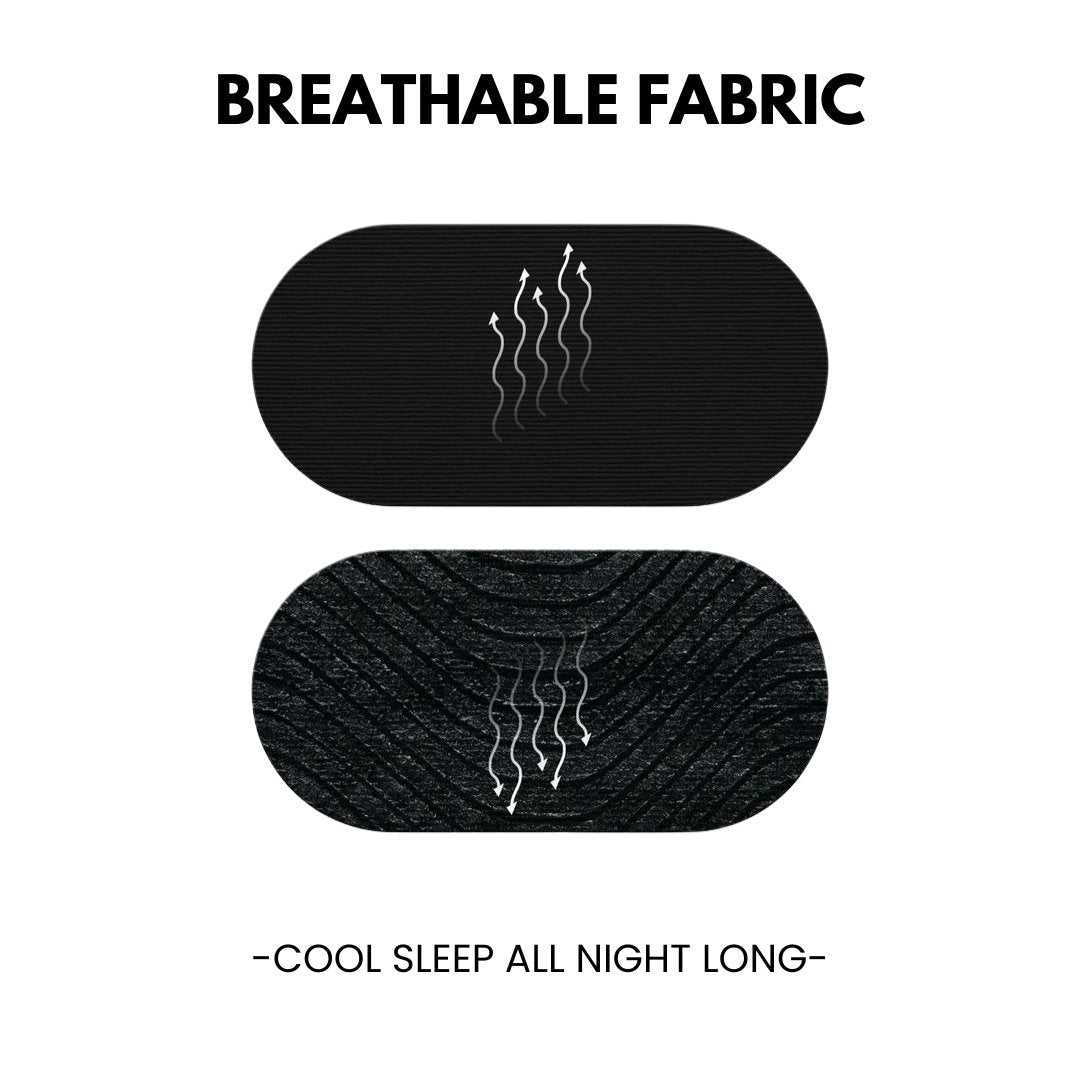
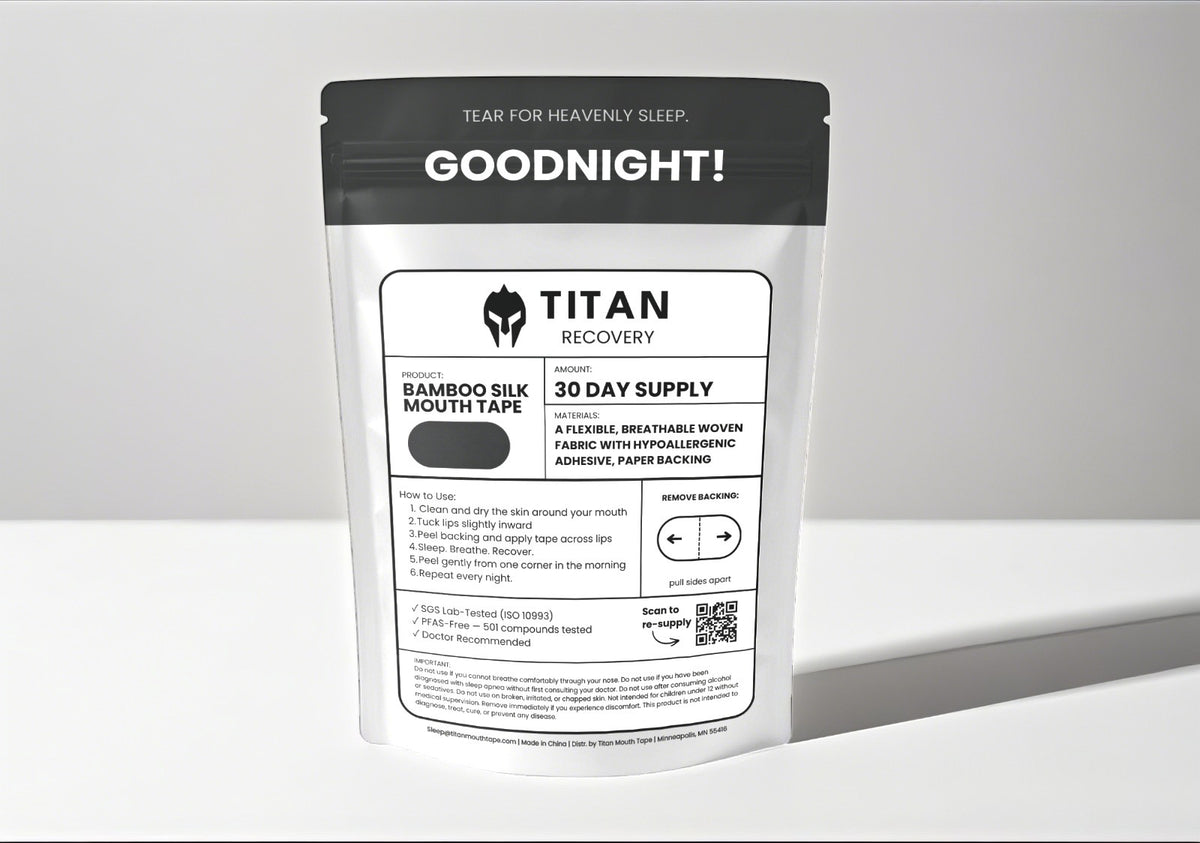
The tape itself: Most people describe initial awareness for 5-10 minutes, followed by completely forgetting the tape is there. Bamboo silk tape crosses the comfort threshold faster than paper, plastic, or kinesiology tape because the material is soft enough to ignore.
Days 2-7: The Pattern Emerges
Snoring reduction. If you snore, your partner will likely notice the change within the first 2-3 nights — often before you do. The mechanism: closed mouth keeps the tongue forward, maintaining the airway that was narrowing and vibrating. Many partners describe the bedroom as "quiet for the first time in years."
Sleep tracker data begins to shift. If you track with Oura, Whoop, or Apple Watch, watch for these directional changes in your 7-day averages:
Respiratory rate may drop from 16-18 breaths/min to 12-14 breaths/min. Nasal breathing is slower and more controlled than mouth breathing — the lower rate indicates the shift has occurred.
HRV may trend upward. Research suggests nasal breathing is associated with parasympathetic activation, which typically increases HRV. An upward HRV trend over 5-7 days is a meaningful signal.
Deep sleep duration may increase. If your deep sleep was consistently under 45 minutes, some users report increases of 10-30 minutes within the first week. Individual results vary — but the trend is directional and consistent with the parasympathetic activation mechanism.
Resting heart rate may drop slightly. Lower overnight heart rate generally indicates better recovery — consistent with the parasympathetic state that nasal breathing supports.
The tape becomes invisible. By night 3-4, you stop noticing the tape. Application becomes automatic — like brushing your teeth. You don't think about it. You just do it.
Weeks 2-4: The Compound Effects
Morning energy improves. This is the change that takes longest to notice because it builds gradually. You don't wake up one morning feeling 100% better. You wake up one morning and realize you didn't need coffee to function — and you can't remember exactly when that shifted. Brain fog may lift. Afternoon energy crashes may diminish.
Facial puffiness may decrease. Research suggests mouth breathing is associated with sympathetic activation, which may contribute to fluid retention and impaired lymphatic drainage. As nasal breathing becomes your nightly default, some users report a less puffy, more defined facial appearance — particularly around the jawline and under-eye area. This is a fluid change, not a structural change — but it's visible.
Lip condition improves. Chronic chapped lips from 8 hours of drying airflow may resolve entirely. Lip treatments applied before bed stay on the lips instead of evaporating. Lips appear more hydrated without changing any products.
Dental checkup improvements. Some users report that their dentist notices reduced gum inflammation, fewer cavities, and healthier tissue at their next checkup. The timeline depends on your dental visit schedule — but the mechanism (preserved saliva flow protecting teeth and gums overnight) begins working from night one.
The Night You Forget
This is the moment that removes all doubt.
Three weeks in, you forget to apply the tape. You wake up with dry mouth. Sore throat. Bad breath. The puffy face is back. Your partner says you snored. Your sleep score drops.
One night without the tape, and every symptom returns — confirming exactly what the tape was preventing all along.
Most users describe this as the night that converted them from "trying mouth tape" to "never sleeping without it."
What the Before-and-After Photos Show (and Don't)
The TikTok transformations are real — but they're often overstated by inconsistent photo conditions (different lighting, angles, times of day) and multiple variables changing simultaneously.
What's genuinely attributable to mouth taping:
Reduced morning puffiness — fluid redistribution from parasympathetic activation and improved lymphatic drainage. This is visible and can be significant.
More hydrated lips — no longer dried out by 8 hours of airflow.
Less under-eye darkness — improved sleep quality reduces the vascular dilation and fluid pooling that create dark circles.
What's not attributable to mouth taping alone:
Jawbone restructuring — adult bones don't reshape from tape. The mewing community debates soft tissue remodeling, but skeletal change from tape alone is not supported by research.
Dramatic weight loss in the face — if facial fullness is from body fat, not fluid, mouth tape won't change it.
How to Track Your Own Before and After
If you want to document your results properly:
Photo baseline: Take a front-view and profile photo on the morning before night 1. Same lighting, same angle, same time. No makeup, no filters. Plain background.
Tracker baseline: Screenshot your 7-day averages for respiratory rate, HRV, deep sleep, and resting heart rate before starting.
Symptom baseline: Note your current morning symptoms — dry mouth (yes/no), sore throat (yes/no), headache (yes/no), energy level (1-10), coffee dependence (1-10).
Day 7 comparison: Same photos. Same tracker metrics. Same symptom checklist. Compare.
Day 30 comparison: Final comparison. By now the compound effects — energy, facial appearance, dental health, snoring — should be clearly visible against baseline.
30 days is enough to know whether mouth taping works for you. And Titan's 30-Night Better Sleep Guarantee means you pay nothing if it doesn't.
Doctor Recommended: "As a maxillofacial surgeon and dentist, I recommend Titan Mouth Tape. Nasal breathing during sleep is essential for airway health and deep restorative rest. Titan's bamboo silk design is the most comfortable and effective mouth tape I have tested. If you struggle with snoring, dry mouth, or poor sleep quality, this is the simplest change you can make for your health." — Dr. Francois P., MD, DDS — Maxillofacial Surgeon
Lab-Tested Safety: Titan's adhesive is independently tested to ISO 10993 medical device standards. Non-toxic (95% cell viability). Non-allergenic (0% reaction rate). Non-irritating (score 0.0/8.0). PFAS-free — 501 compounds tested, zero detected. See full test results →
Try it tonight. Bamboo silk. SilkSeal™ adhesive. Beard-friendly. No logo on the tape. Free shipping. 30-night Better Sleep Guarantee. Shop Titan Mouth Tape → · Shop TitanAir →