Tongue Posture, Mewing, and Mouth Tape: What Actually Works
Share
If you've spent any time on TikTok or YouTube lately, you've seen the mewing videos. Thumbnails showing dramatic jaw transformations. Before-and-after photos that look like two different people. Claims that placing your tongue on the roof of your mouth will reshape your face. The concept has gone from obscure orthodontic theory to mainstream obsession, with millions of people pressing their tongues against their palates, hoping for a sharper jawline.
Some of the claims are overblown. But the underlying principle -- that tongue posture affects facial structure and breathing -- has more substance than skeptics give it credit for. Mouth tape has become one of the most practical tools alongside mewing, because it solves a problem mewing alone can't: what happens to your tongue when you fall asleep.
What Mewing Actually Is
Mewing is named after Dr. John Mew and his son Dr. Mike Mew, British orthodontists who developed a framework called orthotropics. The core idea is that modern humans develop narrower jaws partly because of soft diets and chronic mouth breathing during childhood. The tongue is supposed to rest flat against the roof of the mouth with the lips sealed and teeth lightly touching. This posture exerts a gentle outward force that supports proper development of the maxilla -- the upper jaw bone that forms the middle third of your face.
Mewing, as practiced online, means consciously maintaining this tongue position throughout the day. The full tongue -- not just the tip -- presses against the palate. Lips stay closed. Breathing happens through the nose. It's less an exercise and more a postural correction, like fixing a slouch. You're not doing reps; you're retraining a default position.
Dr. Mike Mew was struck off the UK orthodontic register in 2017 for promoting orthotropics as an alternative to traditional orthodontics. That controversy follows the practice. But it's worth separating the professional dispute from the actual question: does tongue posture matter?
What the Evidence Says (and Doesn't Say)
The evidence for mewing is limited but not baseless. No randomized controlled trial has tested whether consciously changing tongue posture in adulthood reshapes the jaw. That study would be difficult to design -- you can't blind participants to whether they're mewing, and measuring subtle bone changes over years is expensive. So we're working with adjacent evidence, clinical observations, and biological plausibility.
What we do know: tongue posture genuinely affects facial development in children. Children who chronically mouth breathe develop longer, narrower faces -- a pattern called "long face syndrome." When the mouth hangs open, the tongue drops away from the palate. Without that upward pressure, the maxilla grows downward and backward. The palate narrows. The jaw recedes. Myofunctional therapy -- professional-grade tongue posture training -- has a real evidence base in pediatric orthodontics, with measurable changes when corrected early.
The harder question is whether adults see the same results. Bone is less plastic after growth plates close, but it's not static -- it remodels throughout life in response to mechanical forces. That's the basis of orthodontics. Whether the tongue exerts enough force to change adult facial structure is debated, and we don't have definitive proof either way.
What seems more certain is that proper tongue posture in adults affects muscle tone, nasal breathing, and the overall appearance of the jawline -- even if the bones aren't reshaping. Stronger masseter muscles, reduced facial puffiness, and improved head posture all contribute to the visual changes people attribute to mewing.
Mewing While Sleeping: The Gap Nobody Talks About
Here's the part most mewing content glosses over. You can spend all day with perfect tongue posture and lose all of it the moment you fall asleep. Sleep is 7 to 9 hours of uncontrolled muscle relaxation. Your jaw drops. Your tongue falls. Your mouth opens. Whatever postural pattern you practiced during the day dissolves.
This matters because orthotropic theory depends on sustained pressure over time. If mewing works by applying continuous gentle force to the palate, then tongue posture during sleep is arguably more important than daytime posture -- you spend a third of your life asleep. Losing tongue-palate contact for 8 hours every night undermines 16 hours of conscious effort.
And this is exactly the problem that mouth tape solves.
How Mouth Tape Supports Tongue Posture at Night
Mouth tape doesn't force your tongue into position. It creates the conditions where proper tongue posture happens naturally. When your lips are sealed, your mouth stays closed. When your mouth stays closed, your tongue has nowhere to go but up against the palate. In a closed oral cavity, the tongue's resting position is against the roof of the mouth. It's only when the jaw drops open that the tongue falls down and back.
This is why mewing mouth tape has become a popular combination. Mewing trains the conscious habit during the day. Mouth tape extends it into the night by keeping the mouth closed so the tongue maintains palate contact while you sleep.
There's a feedback loop at work. Mouth taping enforces nasal breathing. Nasal breathing reduces the likelihood of mouth opening during sleep. A closed mouth supports tongue-palate contact. And sustained tongue-palate contact during sleep is what mewing practitioners are after -- whether they came from the jawline angle or the sleep health angle.
Mouth Tape and Jawline: Separating Cause from Effect
Does mouth tape directly improve your jawline? The relationship is indirect but real. Mouth tape doesn't sculpt bone. But it prevents the cascade of mouth breathing, tongue drop, and muscle atrophy that contributes to a weaker-looking lower face over time.
Mouth tape's effect on jawline appearance works through several channels. Nasal breathing reduces facial puffiness. Keeping the jaw closed at night maintains tone in the masseter and jaw muscles. And preventing mouth breathing slows the pattern of facial aging associated with chronic mouth breathing -- the elongated face, receding chin, and underdeveloped midface that orthodontists have documented for decades.
People who start mouth taping often notice their face looks different within weeks. The changes aren't bone remodeling -- that takes much longer if it happens at all. What they're seeing is reduced inflammation, less fluid retention, better muscle tone, and the effect of breathing correctly for 8 hours every night. Real changes, just not the ones the most extreme mewing claims promise.
How to Practice Mewing With Mouth Tape
If you want to combine mewing with mouth taping, the approach is straightforward. Start by building the daytime tongue posture habit. Place the entire tongue -- tip, middle, and back -- flat against the roof of your mouth. Lips sealed. Teeth lightly touching. Breathe through your nose. Hold this as your default, not as an exercise you do for five minutes and stop.
The back third of the tongue is the hardest part. Most beginners only press the tip against the palate and think they're mewing. The real correction involves engaging the posterior tongue, which takes practice.
Once the daytime habit feels natural -- give it a week or two -- add mouth tape at night. If you're new to taping, start with a gradual approach. Practice wearing tape during the day first to build comfort and confirm your nasal breathing is sufficient before committing to a full night.
Pair Titan Mouth Tape with TitanAir Nasal Strips if nasal congestion is a concern. Nasal strips open the nasal valve mechanically, so you don't feel the urge to open your mouth. The combination makes nasal breathing easy enough that the mouth stays closed without resistance, and the tongue stays where it should be.
What Mewing Won't Do
Honesty matters here. Mewing will not give a 30-year-old the bone structure changes a child might see from correcting chronic mouth breathing. The TikTok before-and-afters are overwhelmingly lighting, angle, weight loss, or puberty -- not mewing alone. Adult bone remodeling from tongue pressure, if it occurs, is subtle and slow -- years, not weeks.
Mewing also won't fix issues requiring orthodontic or surgical intervention. A severely recessed jaw, significant malocclusion, or obstructive sleep apnea need professional treatment. If you suspect sleep apnea, see a doctor. Mouth tape is not an apnea treatment, and neither is mewing.
What mewing can do, combined with nasal breathing and mouth taping at night, is help maintain the muscle tone, breathing patterns, and facial posture that support a healthier appearance over time. The claims should be moderate. The practice itself is sound.
The Breathing Connection Most People Miss
Mewing gets discussed almost entirely as an aesthetic practice. Sharper jaw. Better cheekbones. More defined face. But the reason tongue posture matters goes deeper than appearance -- it's fundamentally a breathing issue.
When your tongue rests against the palate with your mouth closed, you breathe through your nose by default. Nasal breathing filters, warms, and humidifies air. It produces nitric oxide, which improves oxygen uptake. It activates the parasympathetic nervous system, reducing cortisol and promoting deeper sleep. The relationship between mouth tape and breathwork runs on these same mechanisms.
People who start mewing for the jawline often discover they sleep better, snore less, and feel more rested. That's not the mewing itself -- it's the nasal breathing that mewing enforces. Mouth tape at night makes sure nasal breathing continues while you're unconscious. Thirty days of consistent mouth taping shows up in measurable sleep data -- Oura ring users regularly report improvements in deep sleep, HRV, and respiratory rate.
If you're mewing purely for aesthetics, you'll get breathing benefits whether you wanted them or not. If you came to mouth tape for sleep, you'll get the tongue posture benefits for free. The two practices share the same foundation -- closed mouth, tongue up, air through the nose -- and reinforcing one reinforces the other.
The Bottom Line
Mewing is a real technique rooted in legitimate orthodontic principles, even if the internet has inflated its promises. Proper tongue posture matters for breathing and facial muscle tone -- though adults shouldn't expect the dramatic transformations circulating on social media.
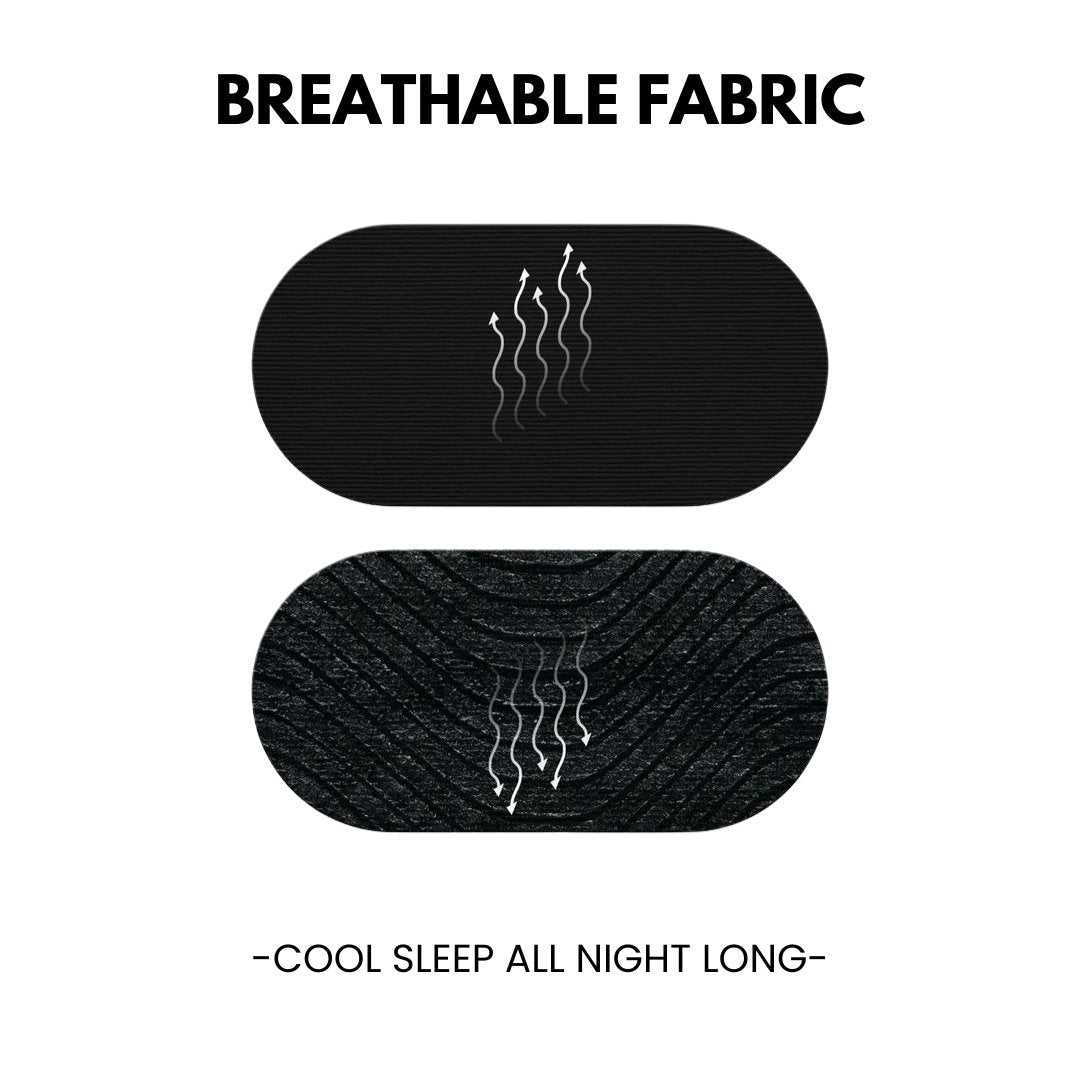
Where mouth tape fits is practical: it solves the night problem. You can train perfect tongue posture during the day, but without mouth tape, your mouth opens, your tongue drops, and you lose 8 hours of postural reinforcement every night. Choosing the right mouth tape -- comfortable, breathable, designed for overnight use -- turns mewing from a daytime-only habit into a 24-hour practice.
Mewing trains the pattern. Mouth tape holds it in place while you sleep. Neither is a miracle. Both are simple practices with compounding returns. And the best reason to do either isn't the jawline -- it's that nasal breathing, proper tongue posture, and better sleep are worth pursuing on their own terms.