How Your Menstrual Cycle Affects Your Sleep
Share
If your sleep feels great some weeks and impossible others, you are not imagining it. The link between your menstrual cycle and sleep is real and measurable: the same hormones that drive ovulation and your period also control body temperature, airway tone, and how easily you drop into deep sleep. For most women, sleep is at its best in the first half of the cycle and at its worst in the week before the period arrives, when progesterone falls and the body runs warmer at night.
This post walks through what changes and why, phase by phase, so you can stop blaming yourself for the bad nights, then covers practical strategies for each phase, including how nasal breathing and mouth taping help protect deep sleep when your hormones are working against you. If your sleep disruption is severe or your cycle has changed suddenly, talk to your doctor. What follows is a practical guide, not a substitute for medical care.
The Two Hormones That Run the Show
Two hormones drive most of the cycle's effect on sleep: estrogen and progesterone. Both rise and fall in a predictable pattern across roughly 28 days, and both influence sleep in ways that go well beyond mood.
Estrogen supports REM sleep, helps regulate body temperature, and influences serotonin, which the body uses to make melatonin. When estrogen is stable and adequate, sleep tends to come more easily and feel more restorative.
Progesterone is the one most women underestimate. It has a genuinely sedating, calming effect, and it is also a respiratory stimulant that helps keep the upper airway muscles toned during sleep. The problem is not high progesterone. The problem is the sharp drop in progesterone late in the cycle, which removes that calming, airway-stabilizing effect right before your period.
The Follicular Phase: Your Best Sleep Weeks
The follicular phase runs from the first day of your period through ovulation, roughly the first two weeks of a typical cycle. After the first day or two of bleeding, estrogen begins a steady climb while progesterone stays low. Your core body temperature sits at its lowest point of the month, and a cooler core is exactly what the body needs to fall asleep and stay in deep sleep.
This is why many women notice their easiest, deepest sleep in the week or so after their period ends: quicker sleep onset, fewer awakenings, higher morning energy. This is the window where your biology is cooperating, so lock in a consistent schedule now and it will carry you through the harder weeks. Our guide on how to sleep better pairs well with this phase.
Ovulation: A Brief Shift
Around ovulation, estrogen peaks and then drops, and progesterone begins to rise. Core body temperature ticks up by about half a degree Celsius and stays elevated for the rest of the cycle. Some women sleep well here thanks to rising progesterone's sedating effect; others notice the first hint of temperature-related restlessness. It is usually mild compared with what comes next.
The Luteal Phase: Where Sleep Gets Hard
The luteal phase is the second half of the cycle, from ovulation to the start of your period. This is where most cycle-related sleep trouble lives, and understanding it explains a lot of otherwise confusing bad nights.
Your body runs warmer. That roughly 0.5 degree Celsius rise in core temperature does not sound like much, but deep sleep depends on the body being able to shed heat and cool down at night. A warmer baseline makes that harder, leaving you with lighter sleep, more tossing and turning, and less of the restorative deep sleep your body is trying to reach. For a refresher on what deep sleep does, our breakdown of the sleep stages covers it.
Progesterone starts high, then crashes. Early in the luteal phase, high progesterone can make you feel sleepy and sluggish during the day. But as the phase progresses and no pregnancy occurs, progesterone falls sharply in the final days before your period, removing the calming effect your brain had gotten used to. This is a major reason sleep quality drops right before menstruation.
More awakenings. A warmer core, falling progesterone, and rising anxiety or physical discomfort add up to more nighttime awakenings. Studies of women's sleep across the cycle consistently show more fragmented sleep and lower sleep efficiency in the late luteal phase than in the follicular phase.
Why You Can't Sleep Before Your Period
If you have ever lain awake the night before your period and wondered why can't I sleep before my period, the late luteal phase is the answer. Several things peak at once in this PMS week.
Progesterone withdrawal. The sedative effect vanishes, and for some women the drop triggers a rebound of alertness and difficulty staying asleep, sometimes called luteal phase insomnia.
Elevated core temperature. You are still running warm from the luteal rise, and heat is one of the most direct enemies of deep sleep.
PMS symptoms. Cramps, bloating, headaches, and mood changes make it harder to fall and stay asleep, while premenstrual anxiety and irritability feed a hyperaroused state that fights sleep onset.
None of this is a personal failing. It is a predictable, hormone-driven pattern, and several of these pathways respond well to practical changes.
Strategies for Each Phase
Because the challenge changes across the month, the smartest approach is to adjust with your cycle rather than treating every night the same.
Cool the room, especially in the luteal phase. Since core temperature rises in the second half of the cycle, this is when a cooler bedroom matters most. Aim for the mid to high 60s Fahrenheit, use breathable bedding, and consider a cooling mattress topper if you sleep hot. Give your body the head start on cooling that your hormones are taking away. Our guide to simple sleep hygiene changes has more on the sleep environment.
Hold a consistent schedule. A steady sleep and wake time is your anchor when hormones are shifting, so your body still knows when it is supposed to sleep even on a rough luteal night. Resist the urge to sleep in dramatically after a bad night, which only pushes the next night later.
Consider magnesium. Many women find magnesium helpful in the luteal phase, where it may ease cramps, support muscle relaxation, and take the edge off premenstrual tension. Magnesium glycinate is a well-tolerated form for evening use. Check with your doctor or pharmacist before adding any supplement.
Build a real wind-down. Rising premenstrual anxiety responds to a deliberate transition into sleep. Dim the lights an hour before bed, put screens away, and use slow breathing, with longer exhales than inhales, to shift your nervous system out of high alert and counter the hyperarousal of the PMS week.
How Nasal Breathing Protects Your Deep Sleep
Here is the piece most cycle-and-sleep advice misses. When progesterone falls in the late luteal phase, it takes some of your airway muscle tone with it. Progesterone helps keep the upper airway open during sleep, so its withdrawal leaves the airway more prone to snoring and subtle breathing disruption, exactly when your sleep is already fragile. This is the same mechanism that makes snoring more common after menopause, when progesterone stays low for good.
Nasal breathing directly counters this. When you breathe through your nose with your mouth closed, your tongue rests against the roof of your mouth and your airway stays more stable. Nasal breathing is also slower and deeper than mouth breathing, and it activates the calming branch of the nervous system, which helps when premenstrual anxiety is keeping you wired.
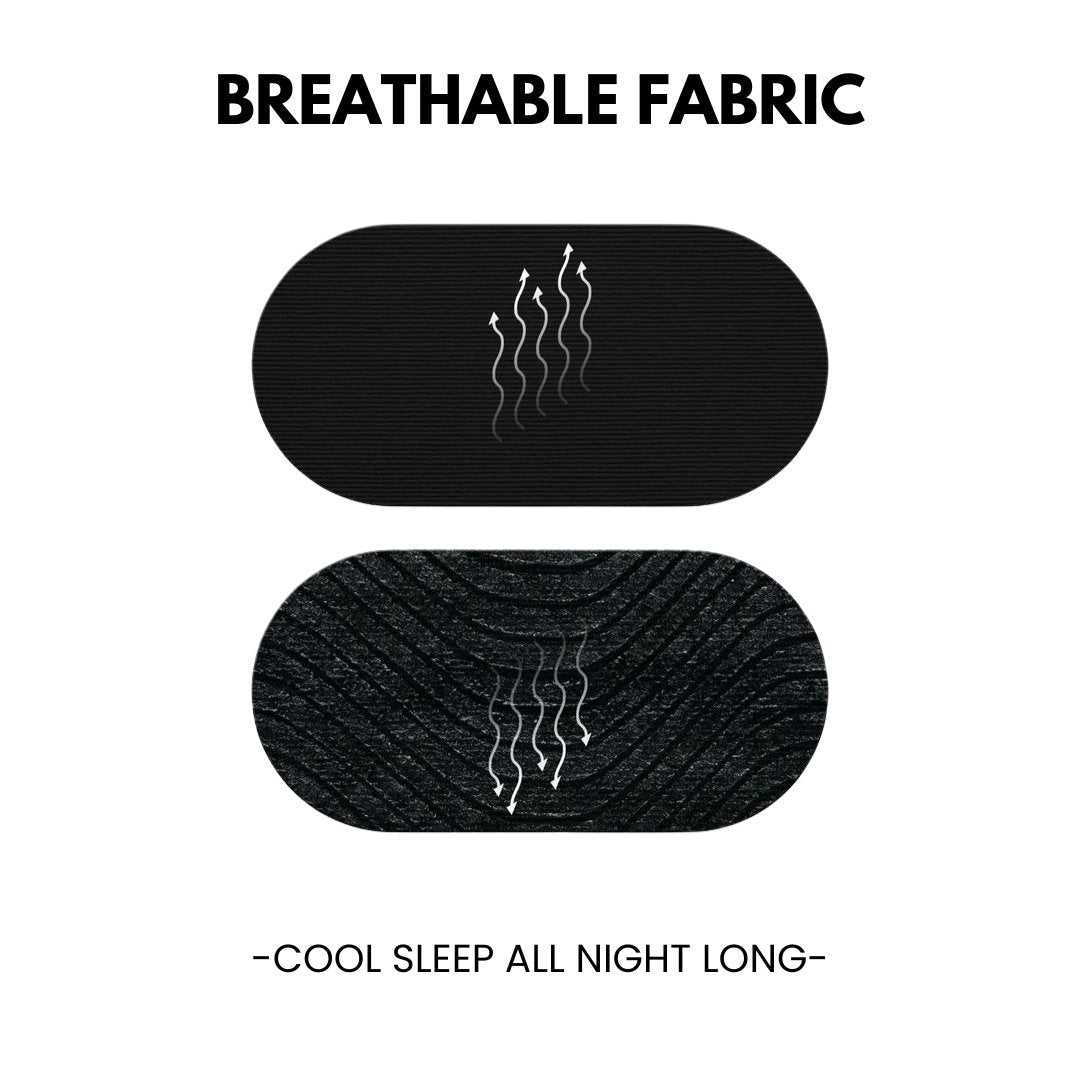
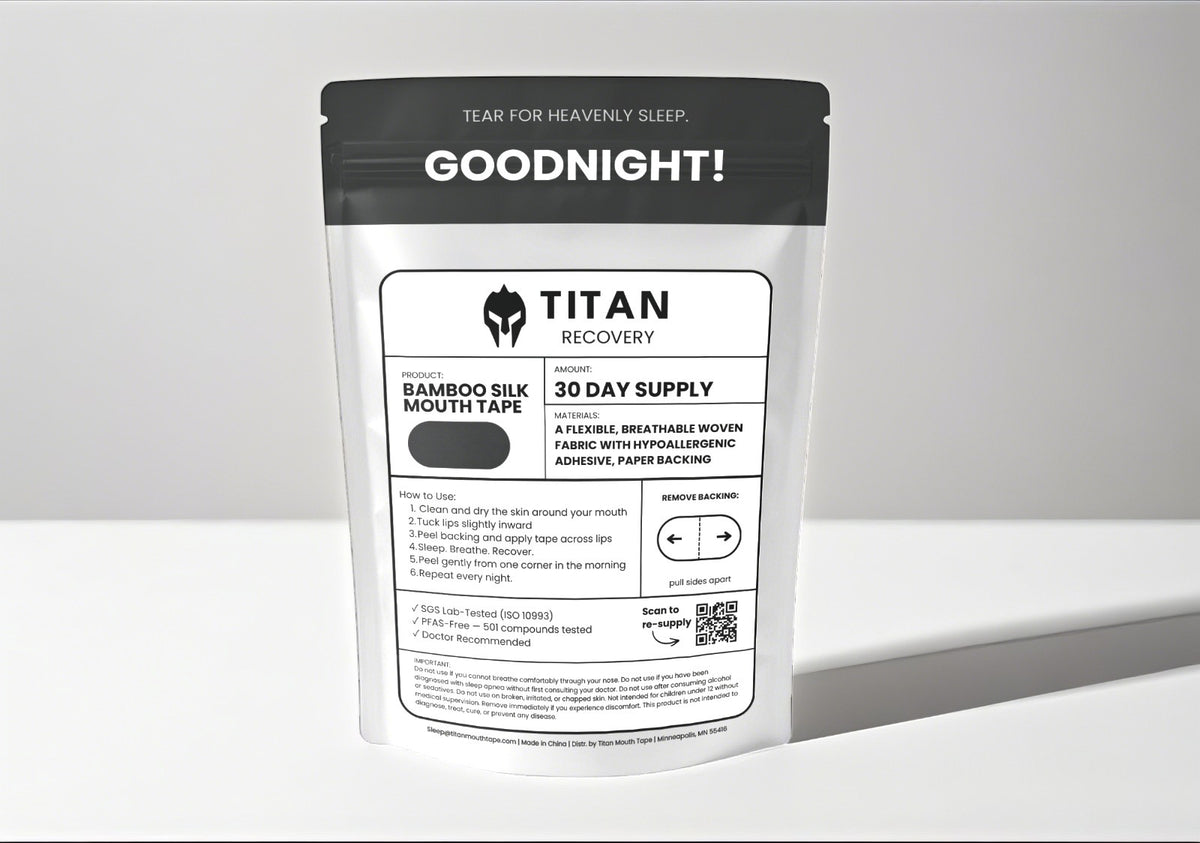
The problem is that you cannot consciously control your breathing once you are asleep. Many women breathe through their nose all day and then default to mouth breathing at night, especially when airway tone drops premenstrually. Titan Mouth Tape keeps your lips gently closed so nasal breathing continues through the whole night, with no effort on your part. It uses a skin-safe adhesive that releases easily if you open your mouth on purpose, so you are not sealed shut. Our overview of how mouth tape supports deep sleep explains the mechanism, and our guide on why mouth tape is gaining popularity among women is a good starting point.
If your nose feels congested premenstrually, which is common because hormonal shifts can cause mild nasal swelling, a nasal strip mechanically opens the nasal passages so nasal breathing feels effortless. Pairing a nasal strip with mouth tape gives you the clearest airway on the nights your body is fighting you, and the deep sleep bundle puts both together. The benefits are cumulative, so give it at least two weeks through a full cycle before judging.
Frequently Asked Questions
Why is my sleep worse the week before my period?
In the late luteal phase, progesterone drops sharply, your core body temperature is still elevated by about half a degree Celsius, and PMS symptoms like cramps and anxiety peak. Progesterone's calming, sedating effect disappears, and the warmer core makes deep sleep harder to reach, so you wake more often and sleep more lightly.
What is luteal phase insomnia?
Luteal phase insomnia is difficulty falling or staying asleep during the second half of the menstrual cycle, especially the days right before your period. It is driven mainly by falling progesterone, elevated body temperature, and premenstrual anxiety. It usually eases once your period begins and hormone levels reset.
Does body temperature really affect period sleep?
Yes. After ovulation, core body temperature rises about 0.5 degrees Celsius and stays up until your period. Deep sleep depends on the body cooling down at night, so a warmer baseline directly reduces deep sleep quality. Cooling your bedroom in the luteal phase is one of the most effective adjustments you can make.
Can mouth tape help with period-related sleep problems?
It helps with the breathing-related part. When progesterone falls premenstrually, airway muscle tone decreases, making snoring and disrupted breathing more likely. Mouth tape keeps you breathing through your nose all night, which stabilizes the airway and supports the calming branch of the nervous system. It does not treat cramps, hormonal shifts, or mood symptoms, so it works best alongside other cycle-aware habits.
Should I change my sleep habits based on my cycle?
Adjusting with your cycle is more effective than treating every night the same. Reinforce good habits in the follicular phase when sleep comes easily, then in the luteal phase lean harder on a cooler room, a consistent schedule, a longer wind-down, and steady nasal breathing to protect the deep sleep your hormones are making harder to get.
The Bottom Line
Your sleep is not the same every night of the month, and it is not supposed to be. The follicular phase gives you your best rest, while the late luteal PMS week is where a warmer body, falling progesterone, and premenstrual symptoms converge to fragment it. Understanding that pattern lets you stop blaming yourself and start working with your biology instead of against it. Cool the room when you run warm, hold your schedule steady, wind down deliberately, and protect nasal breathing on the nights when your airway needs the most support. None of it changes your hormones, but all of it changes how well you sleep while they do their thing.
Doctor Recommended: "As a maxillofacial surgeon and dentist, I recommend Titan Mouth Tape. Nasal breathing during sleep is essential for airway health and deep restorative rest. Titan's bamboo silk design is the most comfortable and effective mouth tape I have tested. If you struggle with snoring, dry mouth, or poor sleep quality, this is the simplest change you can make for your health." — Dr. Francois P., MD, DDS — Maxillofacial Surgeon
Lab-Tested Safety: Titan's adhesive is independently tested to ISO 10993 medical device standards. Non-toxic (95% cell viability). Non-allergenic (0% reaction rate). Non-irritating (score 0.0/8.0). PFAS-free — 501 compounds tested, zero detected. See full test results →
Try the complete system tonight. Titan Mouth Tape (bamboo silk, SilkSeal™ adhesive) + TitanAir Nasal Strips. Free shipping. 30-night Better Sleep Guarantee. Shop Titan Mouth Tape → · Shop TitanAir Nasal Strips →