How Sleep Affects Testosterone (and Why Breathing Matters)
Share
If you've been chasing better testosterone through training, nutrition, and supplements but haven't fixed your sleep, you're working on the wrong end of the problem. Research is clear: sleep and testosterone are directly linked, and the majority of daily testosterone release happens during deep sleep stages. Cut those stages short, and your hormonal output drops -- measurably, within days, regardless of what you're doing during your waking hours.
That doesn't mean sleep is the only variable. But it may be the most underestimated one, especially among men who are otherwise dialing in their health. Here's what the science actually shows about how sleep affects testosterone, and what you can do about it starting tonight.
Your Body Makes Testosterone While You Sleep
Testosterone production follows your sleep cycle, not your workout schedule. The hypothalamic-pituitary-gonadal (HPG) axis -- the hormonal cascade that signals your body to produce testosterone -- is tightly regulated by sleep onset and sleep architecture. Testosterone levels begin rising shortly after you fall asleep, with the most significant release occurring during the first deep sleep and REM cycles of the night. The release is pulsatile, meaning it happens in bursts that correspond to transitions between sleep stages.
This is why total sleep time matters, but it's also why the structure of your sleep matters even more. A night with adequate deep sleep and well-ordered REM cycles produces substantially more testosterone than a night of the same duration with fragmented or shallow sleep. Your body needs to reach and sustain those deeper stages for the hormonal machinery to run properly.
What Happens When Sleep Falls Short
The research on sleep restriction and testosterone is striking. A widely cited study published in JAMA by researchers at the University of Chicago took healthy young men (not elderly, not unhealthy -- young men in their twenties) and restricted their sleep to five hours per night for one week. The result: testosterone levels dropped by 10 to 15 percent. For context, natural aging reduces testosterone by roughly 1 to 2 percent per year. One week of short sleep produced a decline equivalent to a decade or more of aging.
The participants also reported decreased energy, reduced motivation, and lower mood -- symptoms consistent with the hormonal change. Other studies have reinforced this pattern. Research published in the journal Sleep found a roughly linear relationship between sleep duration and morning testosterone: each additional hour of sleep was associated with approximately 15 percent higher testosterone levels. And a polysomnography study -- where researchers measured sleep stages directly -- found that time spent in deep slow-wave sleep was a stronger predictor of testosterone levels than total hours in bed.
The takeaway is straightforward. If you're sleeping six hours and wondering why your recovery, energy, or drive feels flat, low testosterone sleep patterns may be a bigger factor than you realize. And the fix isn't a supplement -- it's getting more and better sleep.
Quality Over Quantity: Why Deep Sleep Percentage Matters
Not all sleep is equal for hormonal production. You can spend eight hours in bed and still produce less testosterone than someone who slept seven hours but hit better deep sleep percentages. Sleep architecture -- the cycling between light sleep (N1, N2), deep slow-wave sleep (N3), and REM -- determines the hormonal output of any given night.
Deep slow-wave sleep, concentrated in the first half of the night, is where growth hormone surges and testosterone release peaks. REM sleep, which dominates the second half, supports additional hormonal regulation and the kind of neural restoration that affects motivation and cognitive drive. Both need to happen in proper sequence and duration. Anything that fragments this architecture -- stress, alcohol, noise, temperature, or breathing problems -- reduces the hormonal return on your time in bed.
This is the part most men miss. They track total sleep hours on their watch or ring and assume that eight hours means they're covered. But if those eight hours are riddled with micro-arousals -- brief disruptions that pull you out of deep sleep without fully waking you -- your sleep tracker may show a decent number while your hormonal profile tells a different story. Feeling tired after a full night is one of the most common signs that sleep quality, not quantity, is the bottleneck.
How Mouth Breathing Sabotages Your Hormones
One of the most common and least recognized destroyers of deep sleep is mouth breathing. When you breathe through your mouth during sleep, several things happen that directly undermine testosterone production.
First, the tongue drops backward as the jaw relaxes, narrowing the upper airway. This increases airway resistance and can produce what sleep researchers call upper airway resistance syndrome -- not full sleep apnea, but enough partial obstruction to trigger micro-arousals. These micro-arousals are brief (often just seconds), rarely remembered, but sufficient to knock you from deep sleep back into lighter stages. Your sleep tracker might show you slept all night. Your hormonal system registered constant interruptions.
Second, mouth breathing dries the oral and throat tissues, increasing the likelihood of snoring. Snoring is a marker of turbulent airflow, and studies have shown it's associated with reduced deep sleep even in people who don't meet the diagnostic criteria for sleep apnea.
Third, mouth breathing promotes sympathetic nervous system activation -- the "fight or flight" response. Deep sleep is a parasympathetically driven state. Heart rate drops, cortisol is suppressed, and anabolic hormones like testosterone and growth hormone are released. When your breathing pattern keeps the sympathetic system more active than it should be, you spend less time in the parasympathetic state that hormonal production requires. The result is measurable: more cortisol, less testosterone, and recovery that never quite catches up to your training.
Practical Steps to Optimize Testosterone Through Sleep
Sleep 7-9 hours, but prioritize depth over duration. Aim for the full window, but understand that protecting your deep sleep percentage is where the hormonal leverage actually lives. If you're consistently sleeping seven hours of high-quality, uninterrupted sleep, that's likely producing more testosterone than nine hours of shallow, fragmented sleep.
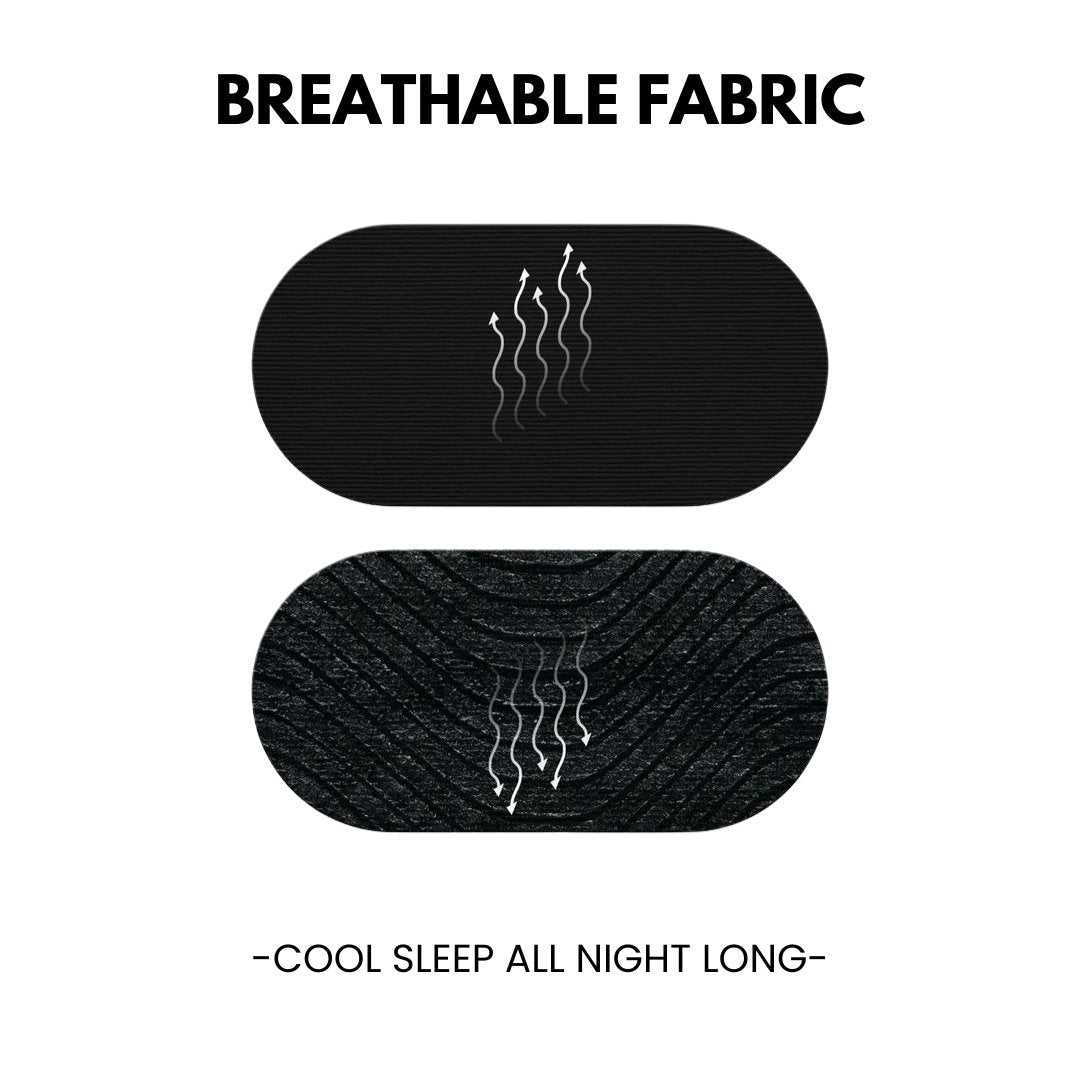
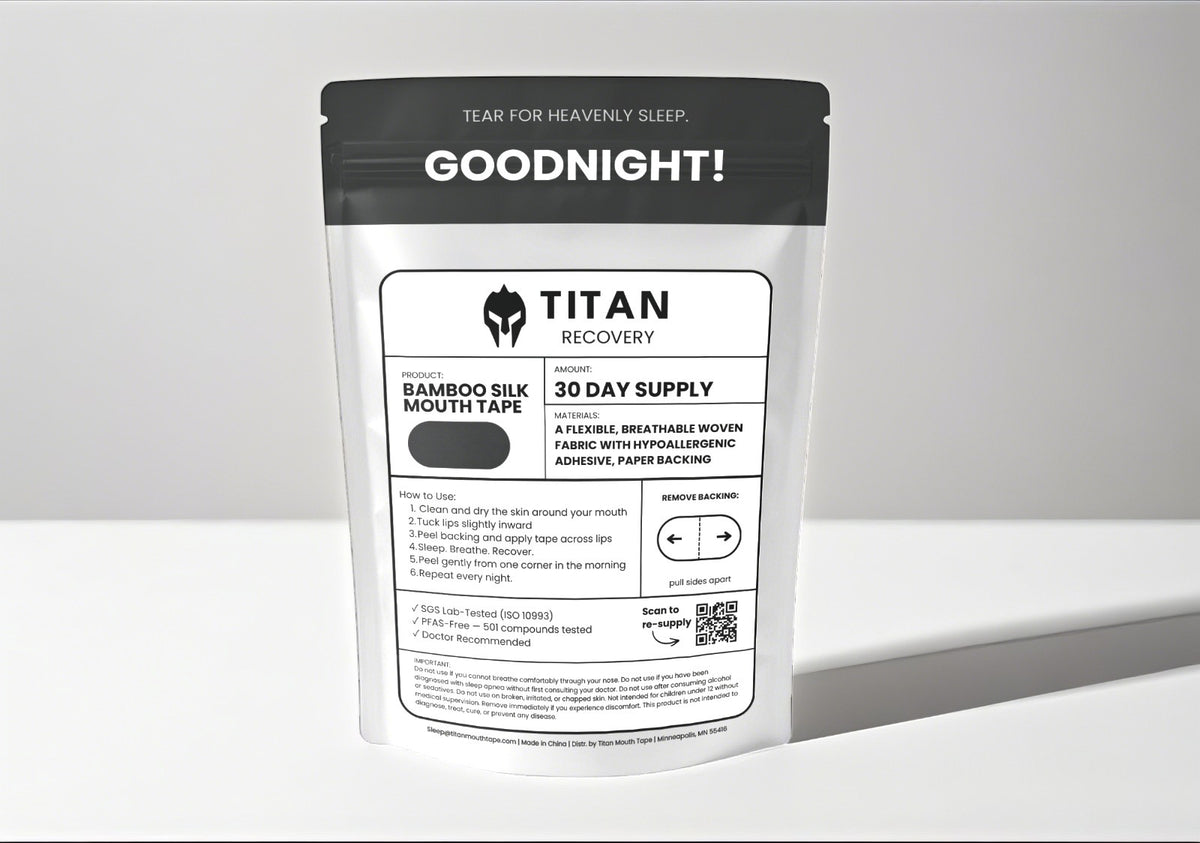
Switch to nasal breathing at night. The simplest way to stop mouth breathing during sleep is mouth tape -- a gentle adhesive that holds the lips closed and routes all breathing through the nose. This eliminates the airway drying, upper airway resistance, and sympathetic activation that mouth breathing causes. If nasal congestion is a factor, TitanAir Nasal Strips mechanically open the nasal valve to make nose breathing feel effortless. The combination of both -- the Deep Sleep Bundle -- is designed specifically for people who want to maximize their nasal breathing during sleep.
Cool the room. Core body temperature needs to drop for deep sleep onset. Research supports a bedroom temperature around 65-68 degrees Fahrenheit. Warmer rooms delay sleep onset and reduce time in deep sleep -- directly reducing the window for testosterone production.
Cut alcohol, especially close to bedtime. Alcohol is a deep sleep suppressant. Even moderate consumption within three hours of bed reduces deep sleep by up to 40 percent in some studies. If you're serious about hormonal optimization, this is one of the highest-return changes you can make. It costs nothing and the effect is immediate.
Track and measure. If you use a wearable like an Oura Ring or Whoop, track your deep sleep percentage before and after making changes. Most people see measurable improvements within one to two weeks of switching to nasal breathing during sleep -- more deep sleep, higher HRV, lower resting heart rate. Those metrics are proxies for the hormonal improvements happening underneath.
Frequently Asked Questions
Does sleep increase testosterone?
Yes. The majority of daily testosterone release happens during deep sleep and REM stages. Research shows a roughly linear relationship between sleep duration and morning testosterone levels, with each additional hour of sleep associated with approximately 15 percent higher levels. Sleep quality -- particularly time spent in deep slow-wave sleep -- is an even stronger predictor than total duration.
How quickly does poor sleep lower testosterone?
Rapidly. Research from the University of Chicago found that restricting sleep to five hours per night for just one week reduced testosterone levels by 10 to 15 percent in healthy young men. The decline was measurable within days, not weeks or months.
Can mouth taping actually help with testosterone?
Mouth taping supports testosterone indirectly by protecting sleep architecture. Mouth breathing during sleep causes micro-arousals that fragment deep sleep -- the stage where testosterone is produced. By keeping the airway nasal, mouth tape helps you spend more time in the deep sleep stages that hormonal production depends on. It's not a testosterone supplement; it's a tool for protecting the sleep quality that your hormonal system requires.
What is the best sleeping temperature for testosterone?
Research supports a bedroom temperature of 65-68 degrees Fahrenheit (18-20 degrees Celsius) for optimal deep sleep. Warmer rooms delay deep sleep onset and reduce total time in slow-wave stages, which directly affects the hormonal output of your sleep. Cooler environments promote the core body temperature drop that deep sleep requires.
The Bottom Line
The relationship between testosterone and sleep is not subtle. Your body produces the majority of its daily testosterone during deep sleep, and anything that fragments or shortens those stages -- whether it's insufficient sleep duration, poor sleep quality, or mouth breathing through the night -- directly reduces hormonal output. The research showing a 10 to 15 percent testosterone decline from one week of restricted sleep should be enough to make sleep a non-negotiable part of any performance or recovery protocol.
The practical side is straightforward: sleep 7-9 hours, protect your deep sleep percentage, keep the room cool, skip the nightcap, and breathe through your nose. For the breathing piece, Titan Mouth Tape and TitanAir Nasal Strips handle it while you sleep. If you've been stacking sleep hacks but haven't addressed how you breathe at night, that's likely the gap. Fix it, and the hormonal environment your body needs for recovery, drive, and performance has a much better chance of showing up.
Doctor Recommended: "As a maxillofacial surgeon and dentist, I recommend Titan Mouth Tape. Nasal breathing during sleep is essential for airway health and deep restorative rest. Titan's bamboo silk design is the most comfortable and effective mouth tape I have tested. If you struggle with snoring, dry mouth, or poor sleep quality, this is the simplest change you can make for your health." — Dr. Francois P., MD, DDS — Maxillofacial Surgeon
Lab-Tested Safety: Titan's adhesive is independently tested to ISO 10993 medical device standards. Non-toxic (95% cell viability). Non-allergenic (0% reaction rate). Non-irritating (score 0.0/8.0). PFAS-free — 501 compounds tested, zero detected. See full test results →
Try the complete system tonight. Titan Mouth Tape (bamboo silk, SilkSeal™ adhesive) + TitanAir Nasal Strips. Free shipping. 30-night Better Sleep Guarantee. Shop Titan Mouth Tape → · Shop TitanAir Nasal Strips →