Mouth Tape for Singers: How Nasal Breathing Protects Your Voice
Share
You do everything right during the day. You warm up before rehearsal. You hydrate between sets. You avoid screaming over the bar noise after a gig. Then you go to sleep, breathe through your mouth for seven hours, and wake up with a voice that sounds like you gargled gravel. Morning hoarseness, reduced range, vocal fatigue that takes an hour to shake off — these are familiar problems for singers, and most of them trace back to something that happens while you're unconscious.
Nighttime mouth breathing is the silent saboteur of vocal health. It dehydrates the mucosal lining that protects your vocal folds, strips moisture from the tissues that need it most, and undoes hours of careful vocal hygiene. Mouth tape for singers addresses this directly — not as a performance trick, but as overnight vocal cord protection that lets you wake up with a voice that's actually ready to work.
What Happens to Your Voice When You Mouth Breathe at Night
Your vocal cords depend on moisture to function. The vocal folds are two bands of mucous membrane stretched across the larynx. When you phonate — speak, sing, hum — they vibrate against each other hundreds of times per second. That vibration requires a thin layer of mucus to reduce friction, prevent tissue damage, and allow the folds to oscillate freely. Without adequate mucosal hydration, the folds become stiff, the vibration becomes effortful, and the sound quality degrades.
When you breathe through your mouth during sleep, room-temperature air passes directly over the vocal folds for six to eight hours straight. That air is unfiltered, unhumidified, and significantly drier than air that has been processed through the nasal passages. The nasal cavity warms incoming air to body temperature and saturates it to near 100% relative humidity before it reaches the throat and lungs. Mouth breathing bypasses this entire conditioning system. The result is prolonged desiccation of the laryngeal tissues — the same tissues you rely on to sing.
This is not a subtle effect. Speech-language pathology research has established that vocal fold hydration is one of the primary modifiable factors in voice quality. Clinicians routinely counsel professional voice users — singers, actors, teachers, public speakers — to maintain laryngeal hydration through water intake, steam inhalation, and environmental humidity. But the advice rarely addresses the largest hydration drain of the day: sleeping with your mouth open for hours on end.
Why Morning Hoarseness Is a Hydration Problem, Not a Warmup Problem
Most singers assume morning voice is normal. You wake up, your voice is scratchy, you drink water and do warmups, and eventually the voice comes online. This feels routine. But the degree of morning hoarseness varies dramatically depending on how you breathed during the night.
Singers who breathe through their nose during sleep tend to wake with voices that are closer to performance-ready. The vocal folds maintained their mucosal hydration throughout the night. The tissues are supple, the vibration pattern is efficient, and the warmup process is shorter because there's less damage to recover from.
Singers who mouth breathe during sleep wake up with vocal folds that have spent hours in drying airflow. The mucosal layer is thinned. The tissue is less pliable. The folds require more subglottic pressure — more air pushed from the lungs — to achieve vibration. That's why the voice sounds rough and feels effortful first thing in the morning. The warmup isn't just warming the muscles. It's rehydrating tissues that were dried out overnight.
For casual singers, this might be a minor inconvenience. For working professionals — gigging musicians, studio vocalists, musical theater performers, worship leaders — that recovery window matters. If you have a morning rehearsal, an early recording session, or a matinee performance, starting from a dehydrated baseline costs you time, range, and vocal quality that you shouldn't have lost in the first place.
The Nitric Oxide Connection to Vocal Effort
Nasal breathing delivers something mouth breathing cannot: nitric oxide. The paranasal sinuses produce nitric oxide (NO), a gas molecule that gets carried into the lungs with each nasal inhalation. NO is a vasodilator — it widens blood vessels and improves blood flow to tissues. It's also a bronchodilator, opening the airways and reducing respiratory resistance.
For singers, the vasodilation effect matters in a specific way. The vocal folds are supplied by the superior laryngeal artery and the inferior laryngeal artery. Better blood flow to these tissues means better oxygen delivery, better nutrient exchange, and better tissue repair during sleep. The vocal folds sustain micro-trauma during singing — that's the nature of tissue vibrating at 200-1,000 Hz for hours. Recovery from that micro-trauma happens primarily during sleep, and the quality of blood flow during sleep influences the speed and completeness of that recovery.
Mouth breathing bypasses the sinuses entirely, eliminating nasal nitric oxide from the respiratory cycle. This means reduced vasodilation, reduced blood flow, and a less efficient repair environment for vocal fold tissue. Nitric oxide's role in nasal breathing is well-documented in respiratory physiology, and its absence during mouth breathing represents a real physiological loss — particularly for anyone whose livelihood depends on tissue recovery in the larynx.
There's also an airway dimension. Mouth breathing during sleep is associated with increased airway resistance in the oropharynx, snoring, and partial airway collapse. These events create turbulent airflow over the vocal folds — essentially, your vocal cords are being buffeted by irregular airflow for hours. Nasal breathing produces laminar (smooth) airflow that passes over the vocal folds with minimal turbulence and minimal drying effect.
Addressing the Concern: Can You Use Mouth Tape Before Performance Days?
This is the question every singer asks first. The fear is reasonable: what if the tape irritates something, what if it changes your breathing pattern in a way that affects your voice, what if you wake up more congested? The answer, for the vast majority of nasal-breathing-capable singers, is that mouth tape is specifically beneficial the night before a performance — not risky.
Think about what you're doing the night before a show. You're resting your voice. You're hydrating. You're getting as much sleep as possible. Mouth tape supports all three of those goals. It ensures your vocal folds stay hydrated through the night. It promotes deeper, less fragmented sleep by preventing snoring and mouth-breathing-related arousals. And it passively maintains the nasal breathing pattern that delivers nitric oxide and humidified air to your respiratory system.
The exception — and this is worth stating directly — is if you are congested. If you cannot breathe comfortably through your nose, do not tape your mouth. Use a nasal strip to see if that opens the airway enough, or skip the tape entirely and address the congestion. Mouth tape works by encouraging a breathing pattern that your body can already sustain; it does not force breathing through a blocked nose.
If you've never used mouth tape before, don't make the night before your biggest performance the first trial run. Start on a regular night with no stakes. Wear it for a few nights to learn what the experience feels like. Most singers report that after the first night or two, they stop noticing the tape entirely — and they very much notice the difference in their morning voice.
Morning Vocal Warmup After Mouth Taping: What Changes
Singers who mouth tape consistently report that their morning warmup changes in character. Instead of spending the first 15-20 minutes just getting the voice to "turn on," the warmup becomes what it's supposed to be: a gradual activation of the muscular coordination needed for singing, starting from a baseline of healthy, hydrated tissue.
Here's a practical morning sequence that pairs well with overnight mouth taping:
Gentle humming (2-3 minutes). Start with closed-mouth humming at a comfortable pitch. Humming creates vibration in the vocal folds with minimal impact force. If you mouth taped the night before, you'll likely notice that humming feels easy right away — the folds are already supple and well-lubricated. Humming also increases nitric oxide production in the sinuses, further boosting blood flow to the laryngeal tissues.
Lip trills and tongue trills (3-5 minutes). These semi-occluded vocal tract exercises create back-pressure that gently stretches the vocal folds and encourages even vibration. With hydrated folds, lip trills will start clean and steady. If you've ever noticed that lip trills are choppy and irregular first thing in the morning, dehydration was likely the culprit.
Gentle sirens through your range (3-5 minutes). Slide from your lower register through your mid-range on comfortable vowels. The purpose is to gradually engage the cricothyroid and thyroarytenoid muscles across your pitch range. Hydrated folds allow these slides to feel smooth through the passaggio (the transition between registers), rather than cracking or catching.
Straw phonation (5 minutes). Singing through a narrow straw (or a semi-occluded vocal tract tool) is one of the most evidence-supported warmup techniques in vocal pedagogy. It reduces collision forces on the vocal folds while maintaining vibration. When your folds are well-hydrated from overnight nasal breathing, straw phonation feels effortless and produces the acoustic feedback that tells you the voice is ready.
Hydrate throughout. Room-temperature water, sipped between exercises. Even with overnight nasal breathing maintaining mucosal hydration, the tissues benefit from systemic hydration as you wake up. Avoid cold water — it temporarily tightens the laryngeal muscles — and avoid very hot drinks, which can cause swelling.
Who Benefits Most
Professional and semi-professional singers who perform or rehearse regularly will notice the biggest difference. The cumulative effect of nightly mucosal dehydration adds up over weeks and months. Chronic mouth breathing during sleep doesn't just affect one morning — it creates a pattern of tissue stress that can contribute to vocal nodules, polyps, and other lesions over time. These conditions develop when the vocal folds are repeatedly subjected to friction without adequate lubrication. Sleeping with a hydrated airway reduces that friction at the source.
Singing teachers and choir directors who use their voices heavily during the day benefit from overnight vocal recovery. These are often the voice users who get the least attention from vocal health advice — they're not performing on stage, but they're using their voices at high volume and high frequency for hours daily.
Anyone recovering from vocal fatigue or strain. If your voice is tired from overuse, the recovery period depends heavily on the conditions your vocal folds experience during sleep. Mouth taping during the recovery window supports the tissue repair process by maintaining hydration and blood flow. Starting mouth taping doesn't require any special equipment or learning curve — the process is straightforward once you've chosen a tape that works for your skin.
What to Look for in a Mouth Tape
Singers tend to be particular about anything that touches their face, and rightfully so. Skin irritation around the mouth, adhesive residue on the lips, or a tape that pulls uncomfortably can create problems that outweigh the benefits.
The tape should use a medical-grade adhesive that holds through the night but releases cleanly in the morning. It should be free from PFAS and harmful chemicals — your skin absorbs what sits on it for eight hours, and the lip area is particularly permeable. It should be lab tested for safety and biocompatibility. And it should be thin and flexible enough that it doesn't create pressure points or pull on the skin.
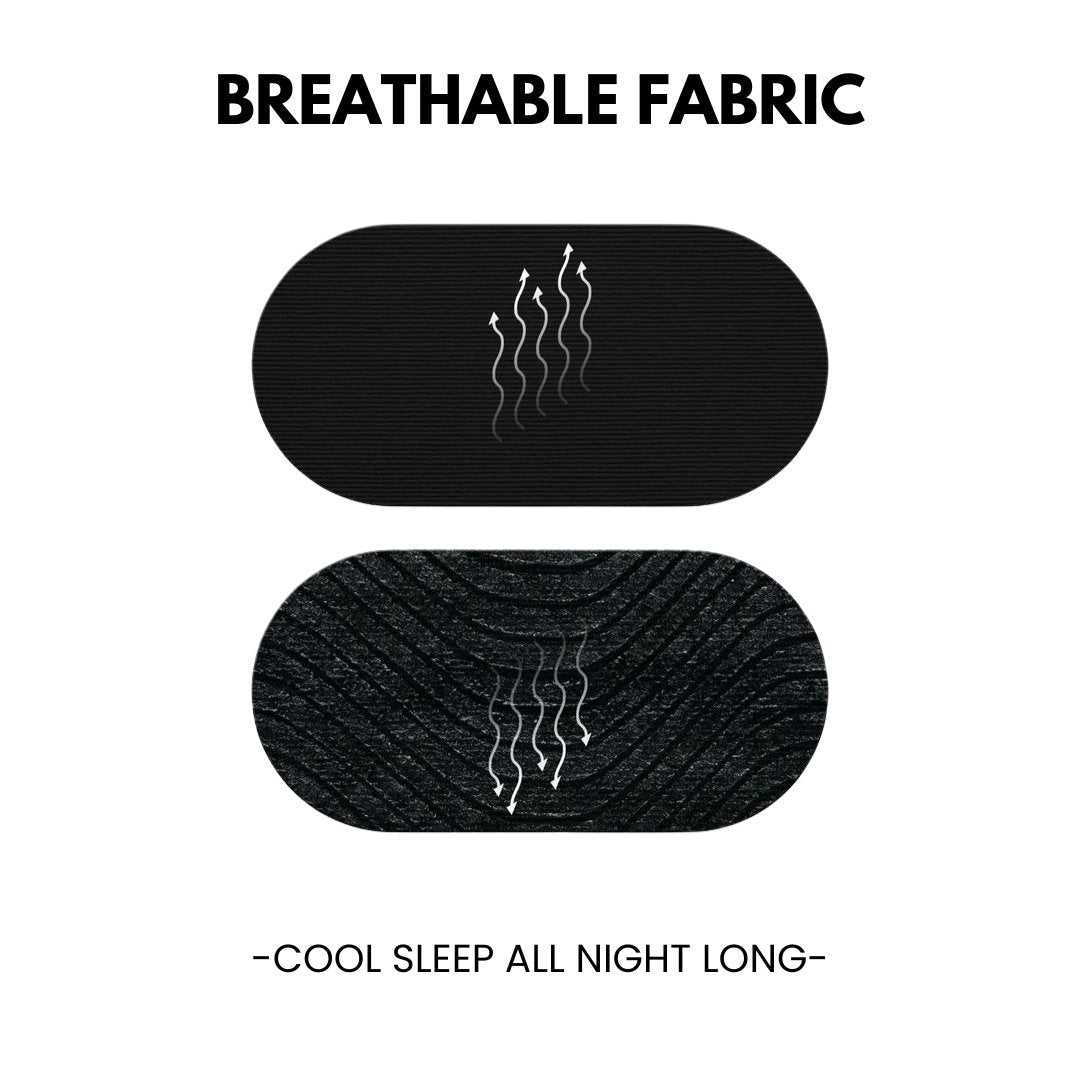
Titan Mouth Tape checks these boxes. It's designed for overnight use with a gentle adhesive that works for sensitive skin, and the material is breathable enough that it promotes lip-seal without creating an airtight barrier. For singers who are concerned about safety and breathability, this is an important distinction — the tape holds the lips gently closed but you can still breathe through your mouth if you need to by opening your jaw with intention.
The Bigger Picture: Sleep Quality and Vocal Performance
Vocal performance doesn't start at warmup. It starts the night before. The quality of your sleep — the depth, the continuity, the respiratory pattern — determines the state of the instrument you pick up in the morning. Every vocal coach emphasizes rest. Few of them talk about how you breathe during that rest.
Snoring, which is a hallmark of mouth breathing, fragments sleep architecture and reduces time in the deep sleep stages where tissue repair happens most efficiently. If you snore, your vocal folds are spending the night in turbulent airflow and your body is spending less time in the recovery states that repair them. Mouth tape addresses both problems simultaneously.
The connection between sleep quality and vocal quality is not esoteric. It's mechanical and physiological. Better sleep means better tissue repair. Nasal breathing means hydrated mucosa. Hydrated mucosa means less friction. Less friction means a cleaner voice with more range and less effort. That's the chain, and every link in it is supported by basic physiology.
The Bottom Line
Your voice is a biological instrument, and biological instruments need maintenance that extends beyond practice sessions and technique drills. Mouth tape for singers is not a performance hack or a trend — it's a straightforward way to protect your vocal folds during the hours when you have no conscious control over your breathing. Nighttime nasal breathing keeps the mucosal lining hydrated, delivers nitric oxide for tissue recovery, and prevents the turbulent airflow that contributes to vocal fold stress.
If you've accepted morning hoarseness as part of being a singer, test that assumption. Try mouth taping for a week and pay attention to how your voice feels when you wake up. The difference between a dehydrated voice and a rested one is obvious the first time you feel it — and once you feel it, sleeping with your mouth open starts to feel like leaving your guitar out in the rain.