How to Stop Your Husband from Snoring (Without Losing Your Mind or Your Marriage)
Share
He's asleep in thirty seconds. You're wide awake listening to what sounds like a chainsaw operating inside a freight train. You nudge him. He stops. He starts again. You stare at the ceiling and wonder if separate bedrooms count as a marital crisis or a survival strategy.
You're not imagining how bad it is. Studies estimate that partners of chronic snorers lose an average of one hour of sleep per night. Over a year, that's more than 15 full days of lost sleep. The fatigue is real, the resentment builds, and eventually the snoring becomes a relationship problem — not just a sleep problem.
Here's the good news: most snoring is fixable. Not with surgery. Not with a bulky CPAP machine he'll refuse to wear. Often with surprisingly simple mechanical interventions you can start tonight.
Why He Snores (It's Probably Not What You Think)
Snoring happens when air flows through a partially obstructed airway and vibrates the soft tissues of the throat. The most common cause isn't anatomy, weight, or age — it's sleeping with the mouth open. When the mouth falls open during sleep, the jaw drops back, the tongue slides toward the throat, and the airway narrows. The narrower the passage, the louder the vibration.
Other contributing factors include nasal congestion (forcing mouth breathing even if the mouth would otherwise stay closed), sleeping on the back (gravity pulls the tongue backward), alcohol close to bedtime (relaxes the throat muscles more than normal sleep), and excess weight around the neck.
The reason this matters: if you address the cause, the snoring often stops — without expensive devices or medical procedures.
The Simplest Fix: Close His Mouth
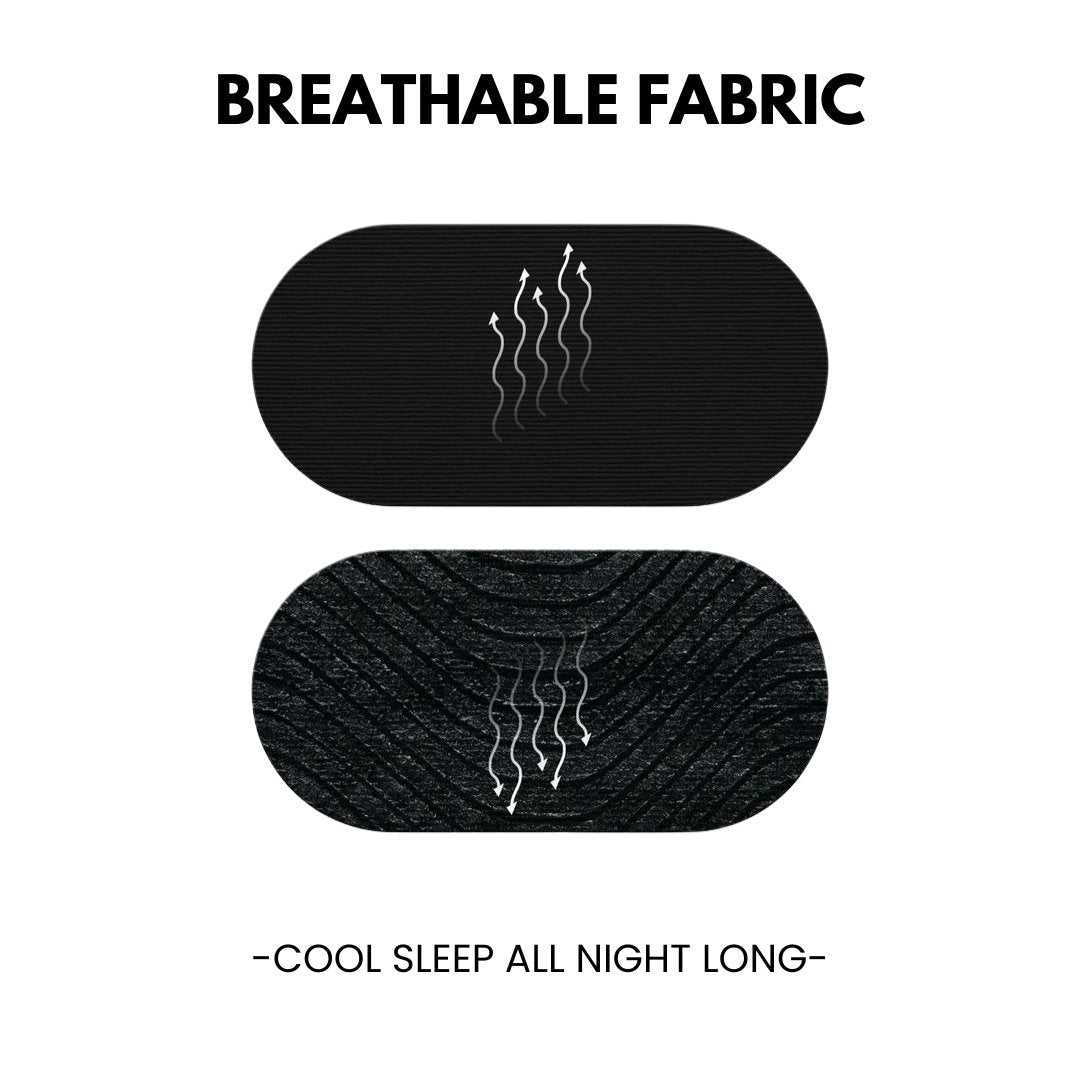
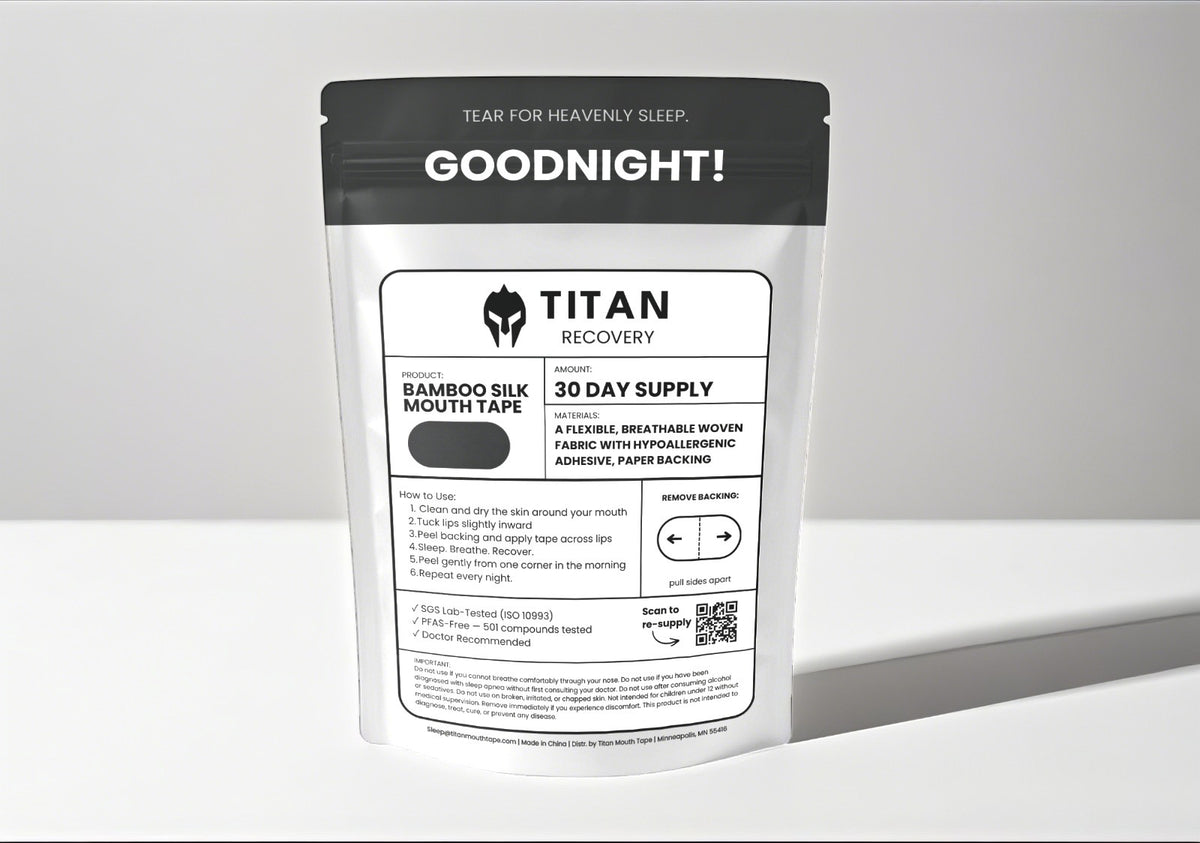
If his mouth is open when he snores — and for most snorers, it is — Titan Mouth Tape is the most direct intervention. A breathable strip across the lips keeps the mouth gently sealed during sleep. The tongue stays forward against the palate instead of falling back. The airway stays wider. The vibration that causes snoring is reduced or eliminated.
Most partners report a noticeable reduction in snoring on the very first night. Some report complete silence. The change is mechanical — not pharmacological — which is why the effect is immediate.
The common objection: "He'll never agree to tape his mouth." In practice, the opposite happens. Once he sleeps a full night with his mouth closed, he wakes up feeling better than he has in years. No more dry mouth. No more sore throat. No more dragging through the afternoon. He becomes the one who reaches for the tape before bed.
Add a Nasal Strip for Maximum Effect
Mouth tape works best when the nasal passages are clear. If his nose is partially blocked — from allergies, a mild deviated septum, or general nighttime congestion — pairing mouth tape with TitanAir Nasal Strips opens the nose while the tape closes the mouth. This combination addresses both sides of the airway equation.
Nasal strips alone don't fix snoring for most people. They open the nose, but they don't prevent the mouth from falling open — so air still bypasses the nasal passage. The combination is what makes the difference.
Other Strategies Worth Trying
Change his sleep position
Back sleeping is the worst position for snoring. Gravity pulls the tongue and soft palate backward, narrowing the airway. Side sleeping reduces this effect significantly. A body pillow or positional wedge can help maintain side sleeping throughout the night.
Cut off alcohol early
Alcohol relaxes the throat muscles beyond what normal sleep does, increasing tissue collapse and vibration. If he drinks, stopping at least 3-4 hours before bed gives the body time to metabolize the alcohol before the muscle-relaxing effects peak.
Elevate the head slightly
A slight incline (4-6 inches at the head of the bed, not just extra pillows that bend the neck) can reduce airway compression. Some couples use adjustable bed frames for this. Even a foam wedge under the mattress helps.
Address nasal congestion
If he's congested at night, a saline rinse before bed and keeping the bedroom humidity at 40-50% can reduce swelling in the nasal passages. Chronic congestion from allergies may benefit from allergy management or nasal strips that mechanically hold the passages open.
When to See a Doctor
Snoring is usually harmless — annoying, but harmless. However, some snoring is a symptom of obstructive sleep apnea, a condition where breathing repeatedly stops during sleep. Warning signs include: gasping or choking sounds during sleep, pauses in breathing you can observe, excessive daytime sleepiness despite what seems like enough hours of sleep, and morning headaches.
If he has these symptoms, a sleep study (many are now available as at-home tests) can determine whether sleep apnea is present. Sleep apnea requires medical treatment — the strategies in this article address snoring, not apnea.
The Conversation (Without Starting a Fight)
Telling someone they snore is surprisingly difficult. Many people react defensively — they didn't choose to snore, they can't control it, and they feel attacked for something that happens while they're unconscious.
What works better: frame it as a health conversation, not a complaint. "I noticed you seem to sleep with your mouth open, and I read that it causes dry mouth and poor sleep quality" lands better than "your snoring is ruining my life." Make it about his sleep quality, not just your annoyance.
Better still: just buy the tape and hand it to him. "Try this tonight — I read it helps with dry mouth and deeper sleep." Most partners who try mouth tape for the first time are surprised at how much better they feel in the morning. The snoring fix becomes a side benefit of a sleep upgrade he actually wanted.
What to Expect on Night One
When mouth tape works (and for most snorers, it works immediately), the bedroom goes quiet. Not reduced snoring. Actual silence. Partners who've spent years sleeping with earplugs, white noise machines, or in separate rooms often describe the first quiet night as emotional — not because the tape is miraculous, but because the problem was so simple and they spent years suffering through it.
The tape won't fix every snorer. If his snoring is caused by severe anatomical issues, obesity, or untreated sleep apnea, mouth tape alone may not be enough. But for the majority of couples dealing with snoring — where the root cause is mouth breathing — it's the fastest, cheapest, most effective starting point.
Tried mouth tape and it didn't work? Here's why — and what to try next.
Doctor Recommended: "As a maxillofacial surgeon and dentist, I recommend Titan Mouth Tape. Nasal breathing during sleep is essential for airway health and deep restorative rest. Titan's bamboo silk design is the most comfortable and effective mouth tape I have tested. If you struggle with snoring, dry mouth, or poor sleep quality, this is the simplest change you can make for your health." — Dr. Francois P., MD, DDS — Maxillofacial Surgeon
Lab-Tested Safety: Titan's SilkSeal™ adhesive is independently tested to ISO 10993 medical device standards. Non-toxic (95% cell viability). Non-allergenic (0% reaction rate). Non-irritating (score 0.0/8.0). PFAS-free — 501 compounds tested, zero detected. See full test results →
Try it tonight. Bamboo silk. SilkSeal™ adhesive. Beard-friendly. No logo on the tape. Free shipping. 30-night Better Sleep Guarantee. Shop Titan Mouth Tape → · Shop TitanAir →
This article is for informational purposes only and does not constitute medical advice. If you have or suspect a sleep disorder or other medical condition, consult a qualified healthcare provider before making changes to your routine.