My Partner Snores: The Fix That Actually Works
Share
If your partner snores, you already know how the nights go. You lie there staring at the ceiling, waiting for the next round of noise, calculating how many hours of sleep you can still salvage before the alarm goes off. You've tried nudging them, rolling them over, burying your head under a pillow. Nothing sticks. And the worst part isn't even the noise — it's the slow buildup of resentment toward someone you love over something they can't control.
You're not alone in this, and you're not being unreasonable. Snoring affects roughly 40% of adult men and 24% of adult women, and the bed partner often suffers more than the person doing the snoring. The snorer sleeps through it. You don't. What follows is a practical look at why your partner snores, what actually works, and how to have the conversation without turning it into a fight.
Why Your Partner Snores
Most snoring in otherwise healthy adults comes down to one thing: mouth breathing during sleep. When the mouth falls open, the jaw slides back, the tongue relaxes toward the throat, and the airway narrows. Air pushing through that tight space vibrates the soft palate. That vibration is the sound you're lying awake listening to.
There are contributing factors — sleeping on the back, alcohol before bed, nasal congestion, excess weight around the neck. But mouth breathing is the common thread running through most of them. Even people who breathe perfectly fine through their nose during the day will default to mouth breathing once their muscles relax in sleep. The jaw drops open, and the snoring starts.
This matters because it means the fix, for most snorers, doesn't require surgery, prescription devices, or expensive sleep clinic visits. It requires keeping the mouth closed so breathing stays routed through the nose, where it belongs.
What You've Probably Already Tried
Earplugs. They muffle the sound but don't eliminate it, and they bring their own problems — ear discomfort, missed alarms, the unsettling feeling of not being able to hear your surroundings. They also do nothing to fix the underlying issue. Your partner is still snoring. You're just hearing less of it.
Separate bedrooms. This works for sleep, but it costs you something else. Bedtime is when many couples actually connect — talking, decompressing, just being physically near each other. Once you move to another room, that daily touchpoint disappears, and it's harder to get back than most people expect. Surveys show roughly one in three couples who split bedrooms report feeling less connected over time.
White noise machines. They mask lower-frequency snoring but struggle with the louder, more irregular patterns. They also train your brain to need external noise to sleep, which creates its own dependency.
Nudging, poking, whispering "roll over." This works for about ninety seconds. Your partner shifts, the snoring stops briefly, then starts again. Meanwhile, you're now wide awake and frustrated.
None of these address why the snoring is happening. They're workarounds, not solutions. If your husband snores and you can't sleep, or your wife snores and you're losing patience, the answer is upstream of earplugs and spare pillows.
How Mouth Tape Works as a Partner Snoring Solution
Mouth tape does exactly what the name suggests — it holds the lips together during sleep so breathing routes through the nose instead of the mouth. When the mouth stays closed, the jaw can't drop back, the tongue stays in its natural forward position, and the airway stays open. No narrow passage, no vibrating tissue, no snoring.
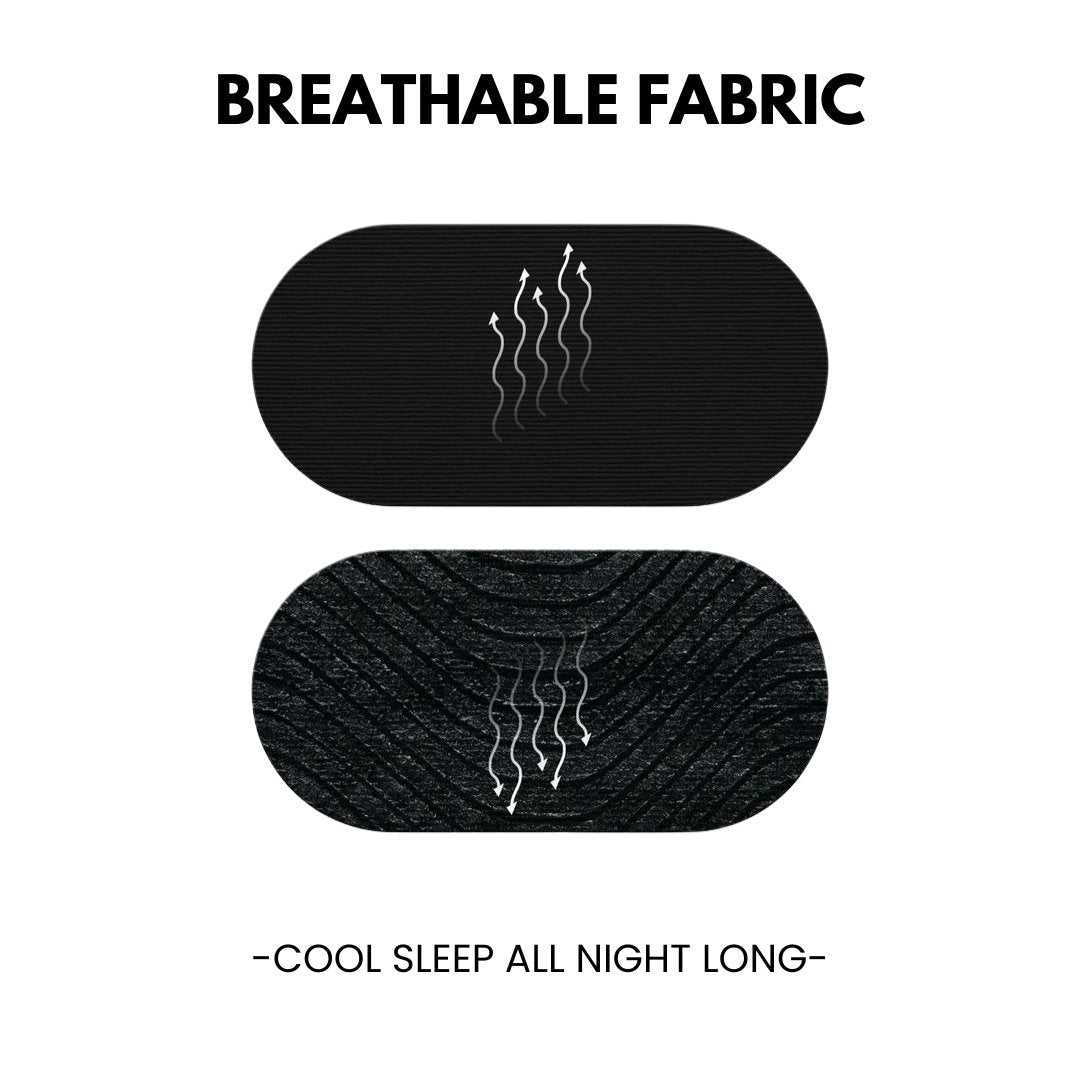
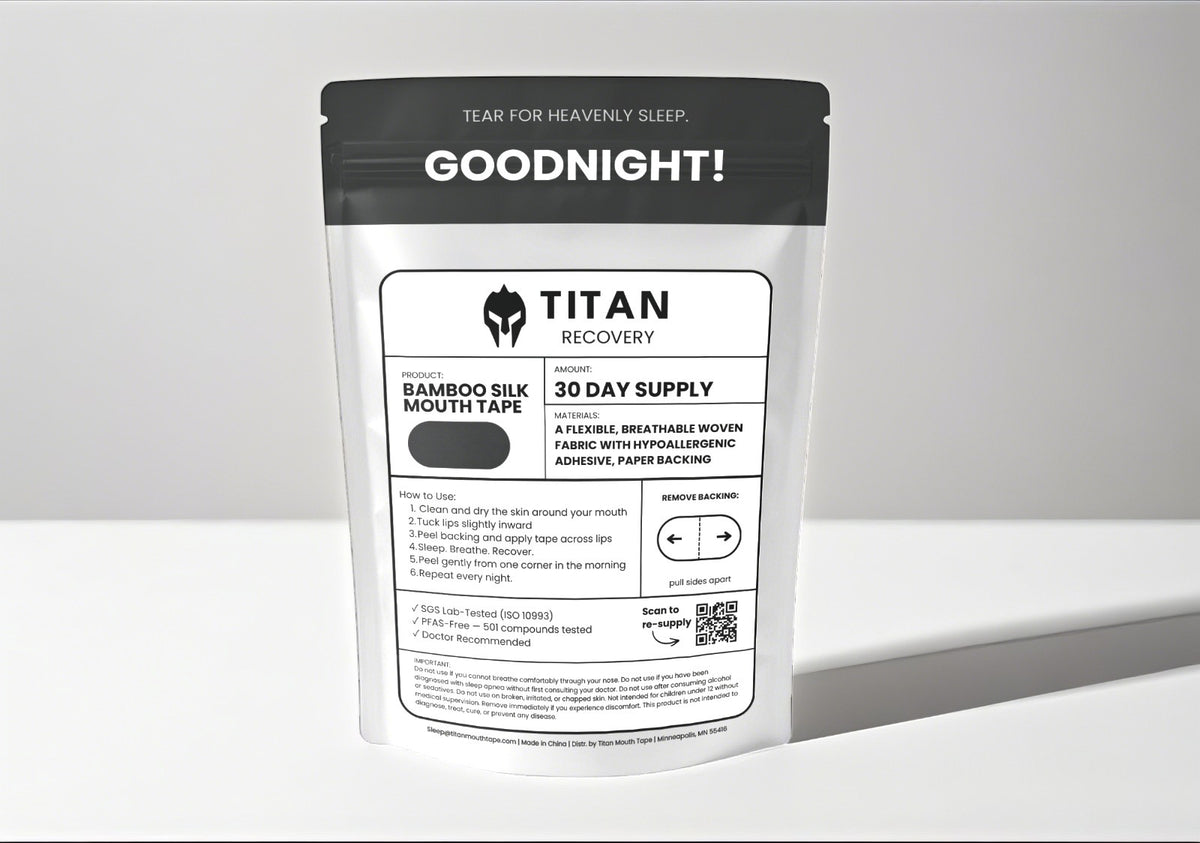
Titan Mouth Tape uses a medical-grade adhesive on breathable bamboo silk. It's not duct tape. It holds firmly enough to stay on all night but releases easily with a deliberate pull. If your partner needs to cough, talk, or drink water, the tape comes right off — no struggle, no residue.
The results are often immediate. The first night of consistent nasal breathing usually produces a dramatic reduction in snoring volume. Many partners report the bedroom going from "impossible to sleep in" to "genuinely quiet" within the first night or two. A full breakdown of how mouth tape reduces snoring covers the mechanics in more detail.
For partners who also deal with nasal congestion, pairing mouth tape with TitanAir Nasal Strips opens the nasal passages mechanically, making nose breathing easier and more comfortable from the first use.
How to Bring It Up Without Starting a Fight
Here's the hard part. Telling someone they snore — especially telling them it's affecting your sleep, your mood, and if you're being honest, your patience with them — is an uncomfortable conversation. Nobody wants to hear that their body is a problem.
Lead with your own experience, not their behavior. "I've been exhausted and I think it's because I'm waking up a lot at night" lands very differently than "your snoring is driving me crazy." One opens a conversation. The other starts a defense.
Try it yourself first. This is the best strategy we've seen. Use mouth tape for a week. Notice the improvements in your own sleep — less dry mouth, deeper rest, quieter breathing. When your partner sees you doing it voluntarily and hearing you describe the results casually, mouth tape goes from "that weird thing" to "that thing that apparently works." People are far more willing to try something they've watched someone else benefit from.
Frame it as a shared project. "Let's both try this for a week and see how we sleep" is a team effort. "You need to tape your mouth because your snoring is ruining my life" is an accusation. Same goal, completely different reception. Our step-by-step guide to mouth taping walks through the first few nights so neither of you is guessing.
Pick the right moment. Not at 3 AM when you've been awake for an hour. Not in the middle of an argument. A calm Saturday morning over coffee works. Mention that you read about it, that you tried it, that it made a difference for you, and that you think it could help both of you sleep better.
What to Expect: The First Two Weeks
Night one. The tape feels unusual. Most people are aware of it for the first ten or fifteen minutes, then forget about it as they fall asleep. Snoring typically drops significantly the first night — you'll likely notice the difference before your partner does, because the silence is obvious.
Nights two through four. The tape starts feeling normal. Your partner stops thinking about it. Sleep quality improves for both of you because neither person is being woken by noise or nudged to roll over.
Week two. This is where the broader benefits show. The snorer wakes up without dry mouth, without a sore throat, without reaching for water. You wake up having slept through the night for the first time in months. Morning energy improves. The resentment — the quiet frustration that was building — starts to dissolve because the thing causing it is gone.
For a deeper look at natural approaches to reducing snoring, including sleep position changes and other complementary habits, we've covered the full picture elsewhere.
When It Might Not Be Just Snoring
Mouth tape addresses snoring caused by mouth breathing, and that covers the majority of cases in otherwise healthy adults. But some snoring patterns point to something more serious, and honesty matters here.
Watch for these signs in your partner's sleep:
- Long pauses in breathing — five seconds or more of silence followed by a sudden gasp or snort
- Choking or gasping sounds during sleep
- Excessive daytime sleepiness despite getting a full night in bed
- Waking up with headaches regularly
- Loud, irregular snoring that changes in pitch and intensity unpredictably
These patterns suggest obstructive sleep apnea, a condition where the airway physically collapses during sleep. Sleep apnea is a medical issue that requires professional diagnosis — typically a sleep study — and treatment. Mouth tape is not a substitute for CPAP or other prescribed therapies for apnea. If you see these signs, encourage your partner to talk to a doctor. A broader overview of snoring causes and solutions can help you sort out what's simple snoring and what might need medical attention.
Frequently Asked Questions
My partner snores loudly — will mouth tape actually make a difference?
If the snoring is caused by mouth breathing — and the majority of non-apnea snoring is — then yes. Mouth tape keeps the airway routed through the nose, which prevents the soft palate vibration that produces the sound. Most partners notice a significant reduction in volume the first night, often describing the bedroom as quiet for the first time in years.
What if my partner won't try mouth tape?
Start by using it yourself. Leading by example is more persuasive than any conversation. Let them observe the results — you sleeping better, waking up more rested, not reaching for water at 2 AM. Most people come around after watching someone they trust benefit from it firsthand. Pressure creates resistance. Results create curiosity.
Is mouth tape safe for my partner to use every night?
Titan Mouth Tape uses a medical-grade adhesive on breathable bamboo silk that's designed for nightly use. It holds the lips together but can be removed instantly with a deliberate pull — it doesn't lock the jaw shut or prevent emergency mouth breathing. Thousands of people use it every night without issues.
Can mouth tape replace sleeping in separate bedrooms?
For couples sleeping apart because of snoring — not because of other preferences — mouth tape directly addresses the reason you separated. If the snoring drops or stops, the reason for separate rooms is gone. Many couples who adopted the "sleep divorce" over snoring have moved back into the same bedroom after one or both partners started taping.
How much does Titan Mouth Tape cost?
A 30-day supply is $34.95. Larger packs reduce the per-night cost — the 90-day supply runs $78.95. With Subscribe and Save, you get an additional 11% discount and never run out. The Titan Deep Sleep Bundle includes both mouth tape and nasal strips if congestion is part of the problem.
The Bottom Line
If your partner snores and it's affecting your sleep, your patience, and your relationship, you don't have to choose between suffering through it and sleeping in another room. Most snoring is caused by mouth breathing, and mouth tape is a simple, immediate way to address it.
Start with yourself. Try it for a few nights. Let the results do the talking. When your partner is ready — and they usually get there faster when they see it working — make it a shared habit. Two people breathing quietly through their noses, sleeping through the night in the same bed, waking up rested. That's not a complicated fix. It's just the right one.
Doctor Recommended: "As a maxillofacial surgeon and dentist, I recommend Titan Mouth Tape. Nasal breathing during sleep is essential for airway health and deep restorative rest. Titan's bamboo silk design is the most comfortable and effective mouth tape I have tested. If you struggle with snoring, dry mouth, or poor sleep quality, this is the simplest change you can make for your health." — Dr. Francois P., MD, DDS — Maxillofacial Surgeon
Lab-Tested Safety: Titan's adhesive is independently tested to ISO 10993 medical device standards. Non-toxic (95% cell viability). Non-allergenic (0% reaction rate). Non-irritating (score 0.0/8.0). PFAS-free — 501 compounds tested, zero detected. See full test results →
Try the complete system tonight. Titan Mouth Tape (bamboo silk, SilkSeal™ adhesive) + TitanAir Nasal Strips. Free shipping. 30-night Better Sleep Guarantee. Shop Titan Mouth Tape → · Shop TitanAir Nasal Strips →