Does a Humidifier Help With Snoring & Dry Mouth?
Share
A humidifier can help with snoring and dry mouth when the cause is dry air. By adding moisture to the bedroom, it eases the nasal congestion, dry mouth, and throat irritation that dry air creates — all of which make snoring worse. But it treats the environment, not the cause: it won't fix habitual mouth breathing, nasal anatomy, or sleep apnea.
That distinction matters. Dry air is a real and common winter trigger, and a humidifier is one of the cheapest ways to remove it. But if you snore or wake parched year-round, the air probably isn't the whole story. Here's how dry air actually drives snoring and dry mouth, what a humidifier helps, and which tools cover the rest.
How Does Dry Air Cause Snoring and Dry Mouth?
Dry air sets off a chain reaction that ends in the symptoms people blame on bad sleep, and it starts in the nose.
Dry air irritates and dries the nasal lining. Your nasal passages are meant to warm and humidify every breath. When the incoming air is already parched, the mucous membrane dries out and the tissue swells and produces thicker mucus. That swelling narrows the nasal airway — the same effect a mild cold or allergy produces.
A narrowed nose forces mouth breathing. When nasal breathing becomes harder, the body defaults to the path of least resistance: the mouth. This usually happens without you noticing, mid-sleep, when you can't correct it.
Mouth breathing produces snoring, dry mouth, and a sore throat. Once the mouth is open, the jaw drops and the tongue slides back, narrowing the throat and setting up the tissue vibration that is snoring. Meanwhile dry air streams over the tongue and throat all night, evaporating saliva and leaving the classic dry, sticky mouth and raw throat by morning.
This is why the problem spikes in winter. Cold outdoor air holds little moisture, and indoor heating dries it further, pushing bedroom humidity well below comfortable levels. Many people who breathe fine through the nose most of the year start snoring and waking parched only in the coldest months — a strong sign that dry air, not anatomy, is the trigger.
Can a Humidifier Stop Snoring?
A humidifier can reduce snoring driven by dry air, but it cannot stop snoring from other causes. It works on one link in the chain above — the dryness that irritates the nose — and leaves the rest untouched.
By raising room humidity, it helps in a few specific ways:
- It keeps the nasal lining moist, reducing the dryness-driven swelling that narrows the nasal airway.
- It eases dry-air congestion, making it easier to keep breathing through your nose instead of switching to your mouth.
- It soothes the throat, easing the raw, scratchy feeling and irritation that dry air leaves behind.
- It reduces dry mouth by lowering how much moisture evaporates from your airway overnight.
The honest limit: if your snoring comes from the mouth falling open out of habit, from nasal or throat structure, or from sleep apnea, moist air alone won't stop it. It makes the air kinder to your airway, but doesn't hold your mouth closed, widen your nasal valve, or keep your throat open.
Does a Humidifier Help With Dry Mouth at Night?
Yes — a humidifier can meaningfully reduce dry mouth at night when the dryness comes from the surrounding air. Moister room air means less saliva evaporates from your mouth and throat while you sleep, so you're less likely to wake parched.
But the most common cause of severe overnight dry mouth isn't the room — it's breathing through an open mouth for hours. No amount of ambient humidity offsets the volume of air passing directly over your tongue and throat all night. A humidifier softens the effect; it doesn't remove the cause.
If you consistently wake with a dry, sticky mouth despite good room humidity, mouth breathing is the likely culprit — our guide to waking up with dry mouth covers how to tell the two apart.
What Humidity Level Is Best for Sleep?
The widely published comfortable range for indoor humidity is roughly 30 to 50 percent, and most sleep and comfort guidance lands in that band. Below about 30 percent, the air is dry enough to irritate the nose and throat and dry out the mouth. Above about 50 percent, the room feels damp and creates conditions where mold, dust mites, and bacteria thrive.
- Measure, don't guess. An inexpensive hygrometer shows where your bedroom sits. Winter heating often drives humidity well under 30 percent with no obvious sign beyond dry skin and a scratchy throat.
- Aim for the middle, not the ceiling. More moisture isn't better past a point — overshooting trades dry air for a worse mold-and-allergen problem.
- Adjust for the season. You'll need a humidifier most in winter and rarely in humid summer months.
Humidity works alongside the other bedroom conditions that shape sleep. If you're dialing in your room, our guide to the ideal bedroom temperature for sleep covers the temperature side of the same equation.
How Do You Use a Humidifier Safely for Snoring?
A humidifier only helps if it's clean and set up correctly. A neglected one makes your air worse, not better.
Clean it regularly. Standing water breeds mold and bacteria that the humidifier then sprays into the air you breathe all night. Empty and dry the tank daily and clean the unit on the manufacturer's schedule — this is the single most important rule.
Use the right water. Distilled or demineralized water reduces the fine white mineral dust that tap water can leave in the air.
Cool mist vs. warm mist. Both add moisture. Cool-mist units are generally recommended around children and pets since there's no hot water involved. Warm-mist units boil the water first, which can feel soothing in cold weather but carry a burn risk if knocked over. For most adults, either works — pick the one you'll actually keep clean.
Mind placement and amount. Set the unit a few feet from the bed on a raised, water-safe surface — not next to your face or on carpet or wood — and point the mist toward open space. Pair it with a hygrometer and stop at 30 to 50 percent; running it full-blast in a closed room invites the mold problem you were avoiding.
Humidifier vs. Mouth Tape vs. Nasal Strips — What Fixes What?
These three tools are often lumped together as "snoring fixes," but they solve different parts of the problem — each addresses a different link in the chain.
- A humidifier fixes the air. It adds moisture so dry air stops irritating your nose and throat. Best for dryness-driven congestion, dry mouth, and winter symptoms. It won't hold your mouth closed or open your nose.
- Nasal strips open the nose. An external strip lifts the nostril sidewalls to widen the nasal valve — the narrowest point in the airway. Best when a narrow or congested nose is pushing you toward mouth breathing. See how nasal strips work and nasal strips for congestion.
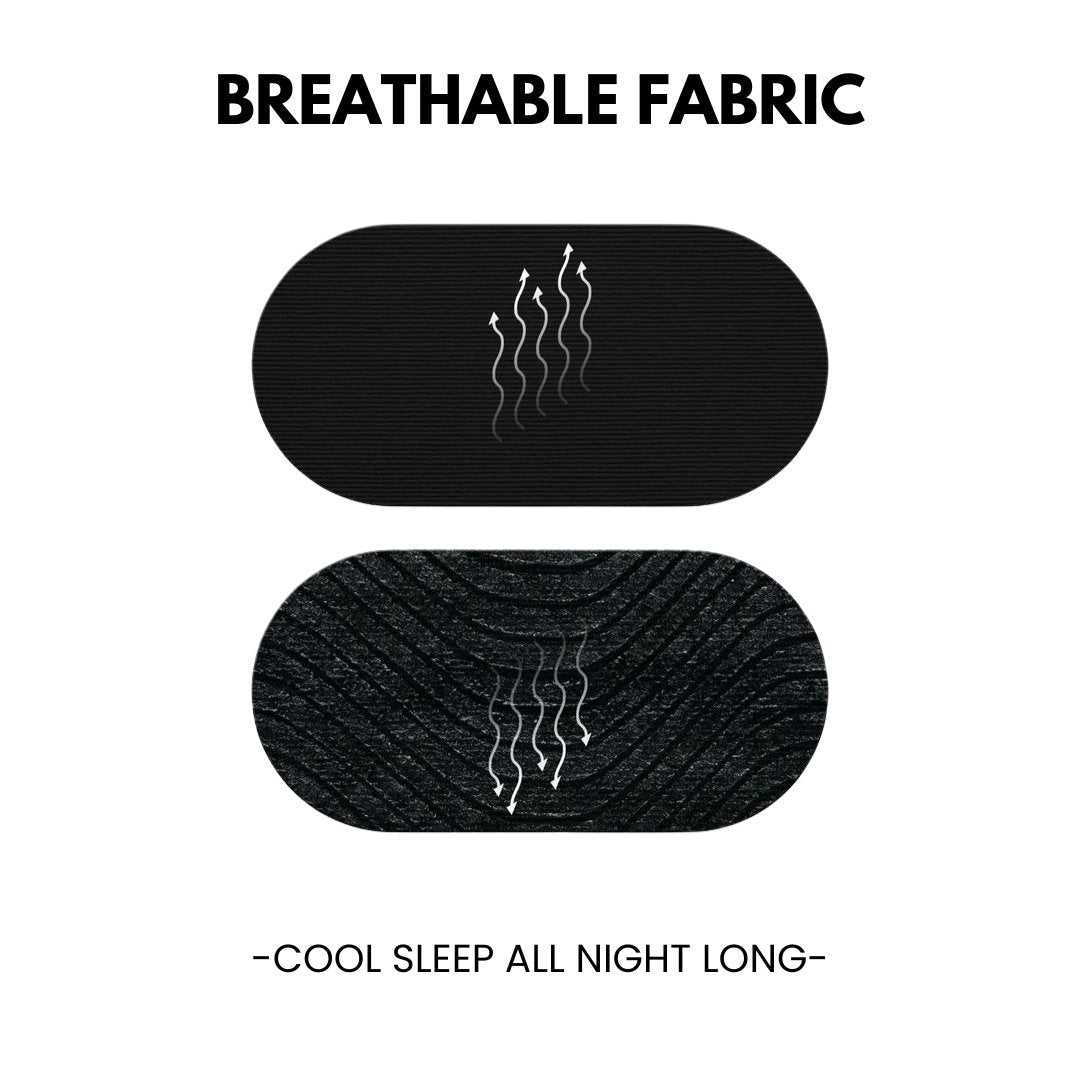
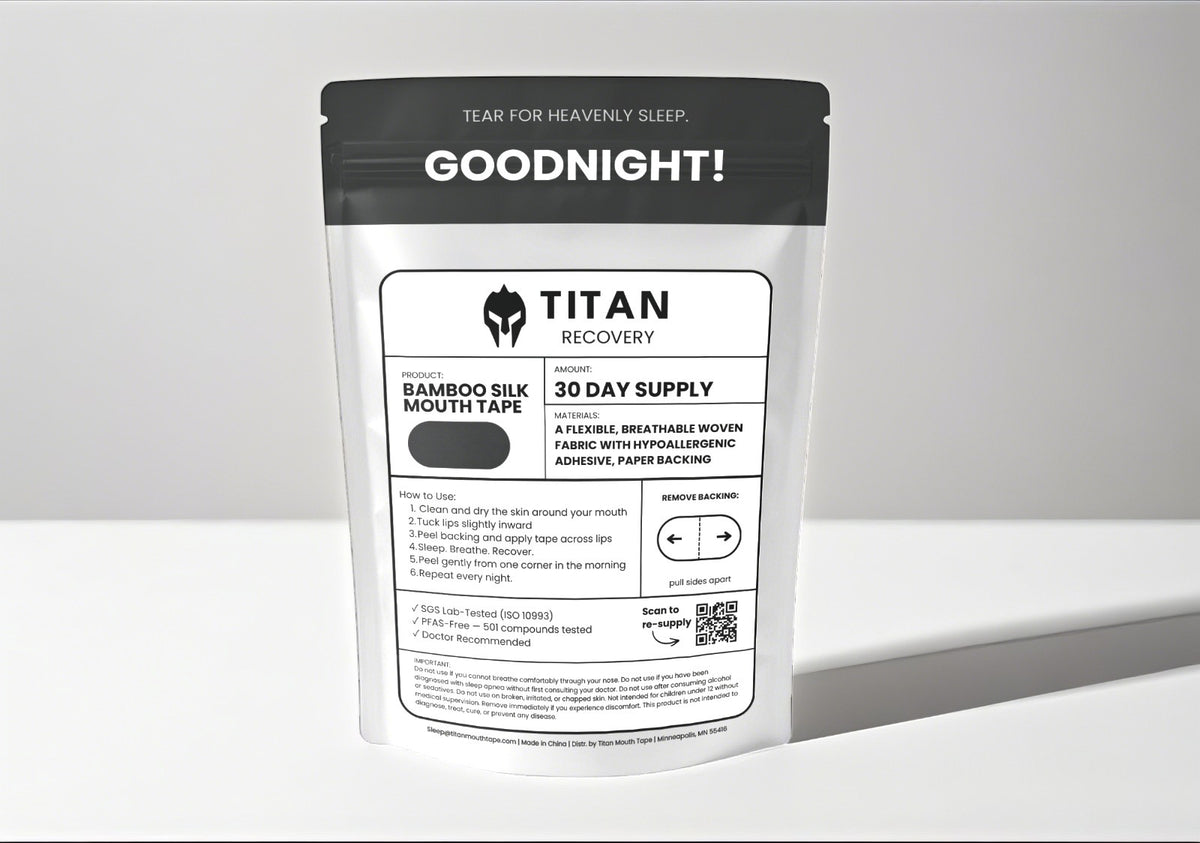
- Mouth tape keeps the mouth closed. A gentle strip over the lips encourages your mouth to stay shut so you breathe through your nose all night. Best for habitual mouth breathing — the cause a humidifier can't touch. See how mouth tape works.
They aren't rivals — they're a stack. Dry winter air triggers congestion (humidifier territory), the congestion narrows the nose (nasal strip territory), and the resulting mouth breathing produces snoring and dry mouth (mouth tape territory). Addressing the whole chain beats picking one link. For the breathing side, the Titan Deep Sleep Bundle pairs a nasal strip to open the nose with mouth tape to keep it the primary airway.
When Is Snoring More Than Dry Air?
A humidifier is a low-risk first step, but it's not a diagnosis. Talk to a doctor if your snoring comes with loud gasping or choking, breathing pauses a partner notices, daytime exhaustion despite a full night in bed, morning headaches, or if it persists year-round no matter how you adjust the air. These can be signs of obstructive sleep apnea, which needs medical evaluation rather than a gadget — moist air and better nasal breathing may make you more comfortable, but they don't treat apnea.
Frequently Asked Questions
Does a humidifier help with snoring?
It can, when the snoring is driven by dry air. By moistening the nasal passages and throat, a humidifier reduces the dryness-related congestion that pushes people toward mouth breathing and snoring. It won't help snoring caused by mouth-breathing habits, nasal anatomy, or sleep apnea.
Will a humidifier cure my dry mouth at night?
It helps if your dry mouth comes from dry room air, since less saliva evaporates in moist air. But the most common cause of severe overnight dry mouth is breathing through an open mouth for hours, which a humidifier can't fix. If dry mouth persists at good humidity, mouth breathing is the likely cause.
What humidity level is best for sleep?
Roughly 30 to 50 percent is the widely cited comfortable range. Below that, dry air irritates the airway; above it, you risk mold, dust mites, and a damp room. Use a hygrometer and aim for the middle of the range.
Cool mist or warm mist for snoring?
Both add moisture and both ease dry-air symptoms. Cool-mist units are generally recommended around children and pets since there's no hot water involved. Warm-mist units can feel soothing in winter but carry a burn risk. Choose whichever you'll clean consistently.
Can a humidifier make snoring worse?
A poorly maintained one can. Standing water grows mold and bacteria that get sprayed into the air, and over-humidifying past 50 percent invites dust mites and allergens — both of which irritate airways and worsen congestion. Clean it regularly and keep humidity in range.
Do I still need mouth tape or nasal strips if I use a humidifier?
Often, yes — they solve different problems. A humidifier fixes dry air, nasal strips open a narrow nose, and mouth tape keeps the mouth closed for nasal breathing. If snoring or dry mouth continues once the air is well humidified, the cause is likely nasal restriction or mouth breathing.
The Bottom Line
A humidifier is genuinely useful for snoring and dry mouth when dry air is the cause — most obviously in winter, when indoor humidity drops and the nose, throat, and mouth pay for it. Keep the bedroom in the 30 to 50 percent range and the unit clean, and you remove dry air as a trigger for the whole congestion-to-mouth-breathing cascade.
What it can't do is hold your mouth closed, widen your nasal airway, or treat sleep apnea. If you've moistened the air and still snore or wake parched, the problem has moved past the environment. That's where TitanAir Nasal Strips open the nose and Titan Mouth Tape keeps it as your primary airway — the links moist air alone can't reach. Treat the air first, then the breathing.
Doctor Recommended: "As a maxillofacial surgeon and dentist, I recommend Titan Mouth Tape. Nasal breathing during sleep is essential for airway health and deep restorative rest. Titan's bamboo silk design is the most comfortable and effective mouth tape I have tested. If you struggle with snoring, dry mouth, or poor sleep quality, this is the simplest change you can make for your health." — Dr. Francois P., MD, DDS — Maxillofacial Surgeon
Lab-Tested Safety: Titan's adhesive is independently tested to ISO 10993 medical device standards. Non-toxic (95% cell viability). Non-allergenic (0% reaction rate). Non-irritating (score 0.0/8.0). PFAS-free — 501 compounds tested, zero detected. See full test results →
Try the complete system tonight. Titan Mouth Tape (bamboo silk, SilkSeal™ adhesive) + TitanAir Nasal Strips. Free shipping. 30-night Better Sleep Guarantee. Shop Titan Mouth Tape → · Shop TitanAir Nasal Strips →