
Best Nasal Strips for Running, Working Out & Athletes (2026)
Share
The best nasal strips for running are the ones that hold the nasal valve open through sweat and stride impact, so more air moves through your nose at aerobic pace instead of forcing you to gasp through your mouth. That is the whole job. A running nasal strip does not add oxygen or boost your VO2max on its own -- it removes the mechanical bottleneck at the narrowest point of your airway, which is exactly what limits most runners who want to train nasal breathing but find the nose can't keep up past an easy jog.
This guide covers why runners reach for nasal strips, what separates a good one from a drugstore strip that curls off at mile two, and how to build one into a real nasal-breathing progression.
Why Runners Use Nasal Strips
At rest, your nose handles airflow fine. Start running and ventilation demand climbs while increased blood flow swells the tissue lining your nasal passages. The narrowest section -- the nasal valve, just inside the nostrils -- becomes a genuine restriction, and the body does what it always does under resistance: it opens the mouth.
More airflow at aerobic pace. A nasal strip lifts the sidewalls of the nose outward, widening the nasal valve. For a runner at a conversational, Zone 2 effort, that extra cross-sectional area is often the difference between sustainable nasal breathing and switching to the mouth. The strip does not change your lungs -- it changes how much air reaches them through the nose.
Reduced airway resistance. Airflow through a tube drops sharply as it narrows -- resistance rises with the fourth power of the radius. That is why even a small opening at the nasal valve produces a disproportionate improvement in how easily air moves. Runners describe it as the nose no longer feeling like a straw: less work to move the same volume of air.
It supports nasal-breathing training. Many runners want the benefits of nasal breathing -- lower perceived effort, steadier heart rate, filtered and humidified air -- but quit because the nose feels too restrictive to start. A strip lowers that barrier, holding the valve open while your body adapts. For the physiological case, see whether you should breathe through your nose during exercise.
Do Nasal Strips Actually Help Running?
Here is the honest version. Nasal strips reliably reduce nasal airway resistance -- easy to feel the first time you run with one -- but they do not directly improve maximal metrics like VO2max or race times, and studies looking for those effects are mixed. The real value is enabling: by keeping the valve open, the strip raises the pace at which you can sustain nasal breathing, so you spend more of your easy and moderate mileage training the pattern. The adaptations from that training -- better CO2 tolerance, more controlled ventilation, lower heart rate at a given pace -- are where the endurance payoff lives. The strip makes the training accessible; it is not the adaptation itself. We break down the evidence in do nasal strips work.
What to Look For in a Running Nasal Strip
Most nasal strips are engineered for sleep. They are tested against a pillow, not a tempo run in July. Three things separate a strip that survives a run from one that doesn't.
It has to hold through sweat. This is the single biggest failure point. Standard drugstore strips use adhesive designed for dry skin at rest. As soon as your face films with sweat, the edges lift and the strip peels within a mile or two. A running strip needs adhesive formulated to bond to skin that is actively sweating. If it can't stay stuck, nothing else matters.
Spring tension that doesn't quit when damp. The lifting force comes from a flexible spring element inside the strip. Cheaper strips lose tension once wet -- they stay on the face but stop pulling the valve open. A good running strip holds its outward pull wet or dry, through the full session.
Comfort and clean removal. You will wear the strip for 30 to 90 minutes while your head bounces and your expression changes with effort. It needs to sit without pinching or over-flaring the nostrils, and come off without tearing skin or leaving residue. An aggressive strip that irritates is one you'll stop using -- so watch the adhesive and backing material if your skin is sensitive.
How TitanAir Performs on the Run
TitanAir Nasal Strips are built for this dual use -- they hold overnight on the pillow and the next morning on the road. The adhesive bonds to sweating skin, so the strip anchors to the bridge and sides of the nose and stays put through stride impact instead of curling at the edges during your warm-up.
The spring element keeps pulling the valve open even after the strip is damp, so the airflow you feel in the first mile is still there in the last. The backing is soft bamboo silk rather than the stiff plastic-and-fabric of typical drugstore strips, which makes it more comfortable over a long effort and cleaner to remove -- no residue, no red marks. If you have bounced off cheaper strips because they fell off or irritated your skin, that combination is what TitanAir solves for. For the mechanics, see how TitanAir nasal strips work.
How to Combine Strips with Nasal-Breathing Training
A strip works best as part of a deliberate progression. The goal is to make nasal breathing your default on easy runs, then let the strip become an assist rather than a crutch.
Anchor it to easy pace. Nasal-breathing capacity is built at low intensity, and the MAF method (Maximum Aerobic Function, from Dr. Phil Maffetone) gives a simple target: keep your heart rate around 180 minus your age in beats per minute, and run entirely through your nose at that effort. If your nose can't keep up at MAF pace, that is exactly where a strip earns its place -- it opens the valve so you can hold nasal-only breathing at the aerobic effort where the adaptation happens.
Run the whole progression. Wear the strip on every easy run for two to four weeks and breathe exclusively through your nose at MAF effort. Expect it to feel restrictive at first -- that air hunger is your CO2 tolerance being trained, and it improves. Over the following weeks the passages adapt and nasal breathing at easy pace becomes automatic. From there, some runners keep the strip only for hard sessions or allergy days; others keep wearing it for the marginal opening. Either way, it enabled training that builds lasting capacity -- an adaptation covered in the role of nasal breathing in athletic performance and recovery.
Apply it right. Put the strip on clean, dry skin before your warm-up -- not on a face that is already sweating. Center it across the widest part of the nose, just above the nostrils, and press the ends firmly for a few seconds. That prep is most of what determines whether it holds for the full run.
The Honest Limit: Max Effort Is Different
A running nasal strip is not magic, and it is worth being clear about where it stops helping. The mouth moves far more air per breath than the nose ever will. Below your ventilatory threshold -- easy and moderate running -- the nose with the valve held open can keep up. Push past roughly 80 percent of max effort, into hard intervals, hill repeats, or a race finish, and your body needs every available airway. The mouth is going to open. That is normal, healthy physiology, not a failure of the strip.
At those intensities the strip keeps the nose contributing to total airflow rather than collapsing out of the equation. So the practical rule is simple: nasal strips are a tool for your aerobic base -- easy runs, long runs, recovery miles, warm-ups and cool-downs -- where nasal breathing is achievable and where most of your endurance is built. Don't judge a strip by an all-out kick. Judge it by how much of your weekly mileage it lets you run through your nose.
Strips by Day, Tape by Night
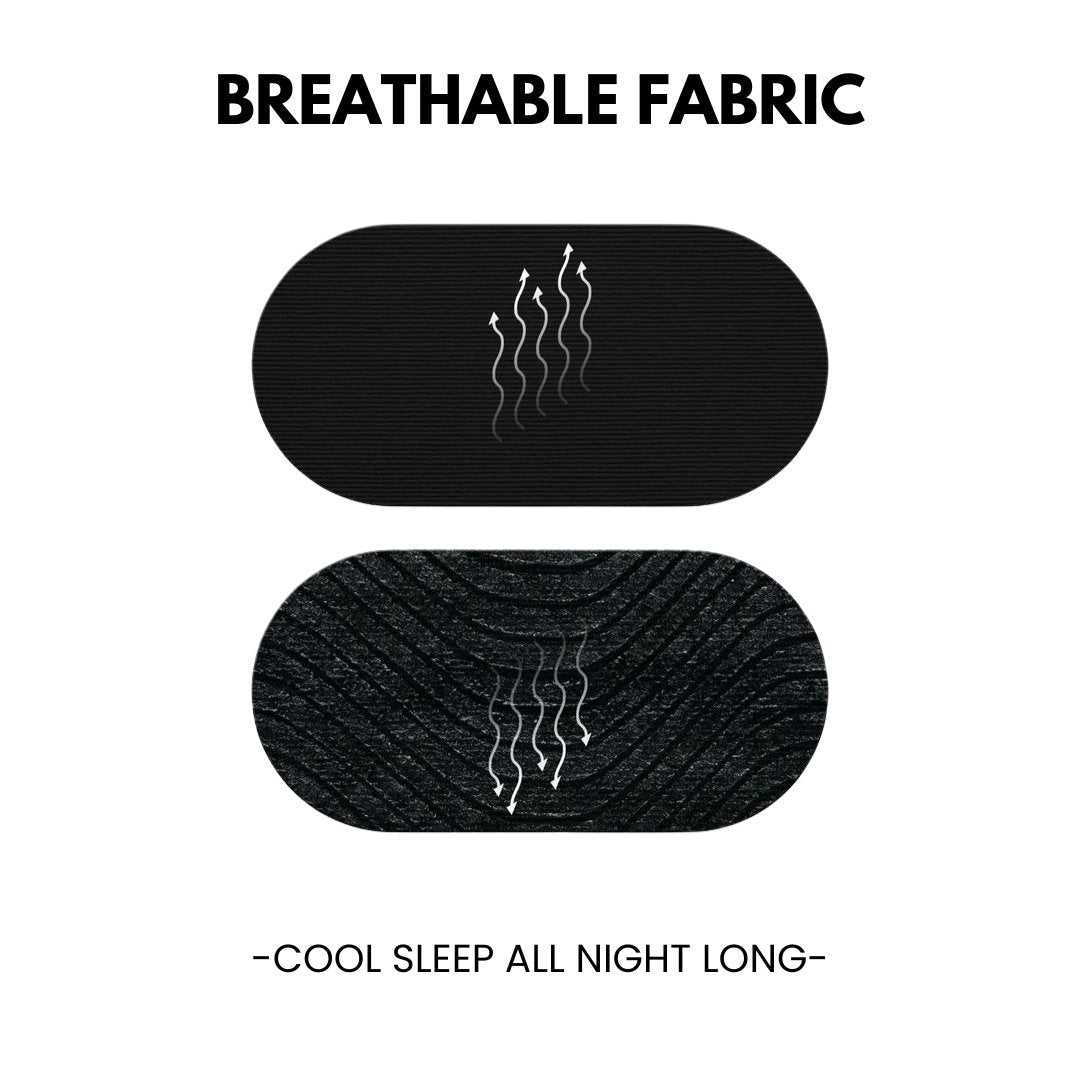
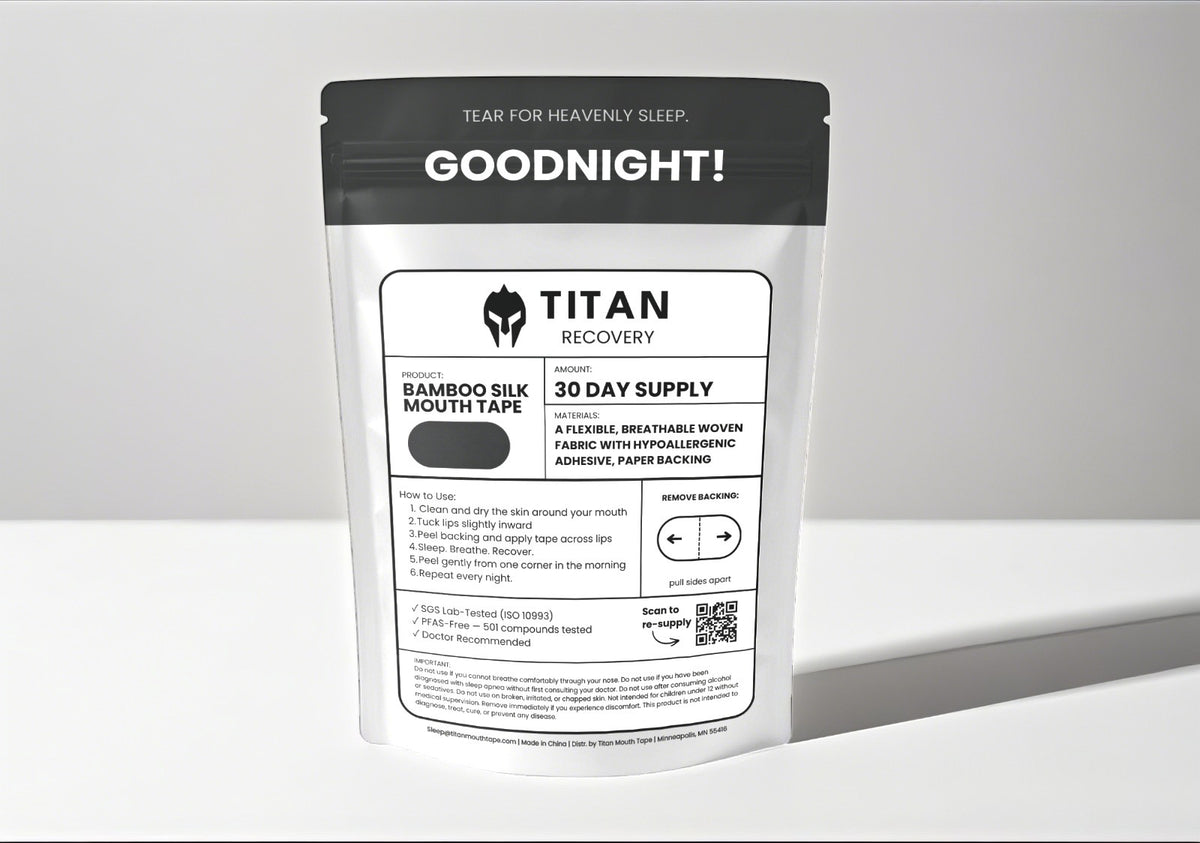
Nasal breathing is a 24-hour pattern, and what you do overnight either reinforces or undoes what you trained on the run. Spend the day building capacity, then sleep eight hours with your mouth hanging open, and you work against yourself during the window when you have zero conscious control. That is where the daytime and nighttime tools fit together: TitanAir strips open the nose while you train; Titan Mouth Tape keeps the lips gently closed while you sleep, so you keep breathing nasally during recovery. Night breathing is also where the deep, restorative sleep endurance training depends on gets protected, which we cover in how mouth tape supports deep sleep. The Deep Sleep Bundle pairs both for runners who want to cover the full cycle.
Frequently Asked Questions
Do nasal strips help with running?
Yes, for what they are designed to do. Nasal strips widen the nasal valve, the narrowest point in the airway, reducing resistance and raising the pace at which you can sustain nasal breathing. They do not directly raise VO2max or race times -- their value is enabling you to train the nasal-breathing pattern across your easy and moderate mileage, where the endurance adaptations accrue.
Will nasal strips stay on during a sweaty run?
A strip built for training will. The failure point on cheap drugstore strips is adhesive designed for dry, at-rest skin -- it lifts as soon as you sweat. TitanAir uses an adhesive formulated to hold on sweating skin and maintains spring tension when damp. Apply to clean, dry skin before your warm-up and press the ends firmly for the best hold.
Should runners use nasal strips or mouth tape?
They do different jobs. Nasal strips open the nose and are the tool for running, where the mouth may still open at high intensity. Mouth tape closes the mouth for sleep, keeping you breathing nasally through the night. Many runners use both -- strips on the run, tape overnight -- to build nasal breathing around the clock.
How long does one nasal strip last on a run?
One strip per session. A TitanAir strip holds through roughly 45 to 90 minutes of running without losing adhesion or spring tension, then peels off cleanly afterward. Remove and discard after the run rather than reusing it.
Do nasal strips help in the gym and while lifting?
Yes — for most training, a nasal strip helps you hold nasal breathing instead of panting through your mouth. Nose breathing during moderate strength and conditioning work keeps your breathing controlled, your heart rate steadier, and staves off the dry-mouth, gassed-out feeling of mouth breathing between sets. A strip opens your nasal airway so that nose breathing stays easy through your working sets. For true max-effort lifts and all-out intervals you'll still switch to the mouth (see "The Honest Limit" above) — but for warm-ups, accessory work, and conditioning, a strip helps.
Are nasal strips good for athletes and training?
Athletes use nasal strips to make nasal breathing easier during warm-ups, zone-2 endurance work, and recovery sessions. Controlled nasal breathing supports endurance and a calmer nervous system, and because strips are drug-free and non-habit-forming, they're simple to add to any routine and legal in competition. TitanAir Nasal Strips are built to hold through sweat and stay put during movement, so they don't peel mid-session.
More questions about nasal strips for working out
Will nasal strips fall off when I sweat? A quality strip with a strong, skin-safe adhesive stays put through sweat. Apply to clean, dry skin before your session for the best hold — TitanAir is designed to last through a full workout.
Are nasal strips legal in competition? Yes. Nasal strips are drug-free external devices, so they're allowed in virtually all sports.
The Bottom Line
The best nasal strips for running stay put through sweat, keep pulling the valve open when damp, and come off without a fight. That combination is what lets you run more of your weekly mileage through your nose -- the entire point. The strip is not adding oxygen; it removes the bottleneck that stops most runners from training nasal breathing in the first place.
Used well, it fits a real progression: wear it on easy runs at MAF pace, breathe through your nose, and let capacity build until the strip becomes an assist rather than a necessity. Be realistic about the ceiling -- at max effort the mouth takes over, and that's fine. TitanAir Nasal Strips are built to hold on the road and on the pillow, and pairing them with Titan Mouth Tape overnight closes the loop on nasal breathing around the clock. Start with your next easy run -- the difference in airflow is immediate, and the adaptation it builds is what lasts.
Doctor Recommended: "As a maxillofacial surgeon and dentist, I recommend Titan Mouth Tape. Nasal breathing during sleep is essential for airway health and deep restorative rest. Titan's bamboo silk design is the most comfortable and effective mouth tape I have tested. If you struggle with snoring, dry mouth, or poor sleep quality, this is the simplest change you can make for your health." — Dr. Francois P., MD, DDS — Maxillofacial Surgeon
Lab-Tested Safety: Titan's adhesive is independently tested to ISO 10993 medical device standards. Non-toxic (95% cell viability). Non-allergenic (0% reaction rate). Non-irritating (score 0.0/8.0). PFAS-free — 501 compounds tested, zero detected. See full test results →
Try the complete system tonight. Titan Mouth Tape (bamboo silk, SilkSeal™ adhesive) + TitanAir Nasal Strips. Free shipping. 30-night Better Sleep Guarantee. Shop Titan Mouth Tape → · Shop TitanAir Nasal Strips →