Why Sean O'Malley Mouth Tapes Every Night — And Says He Does It More Religiously Than Anything
Share
Sean O'Malley — former UFC Bantamweight Champion, one of the most dynamic strikers in MMA history — tapes his mouth shut every night before bed.
He's not quiet about it either. On The Joe Rogan Experience, O'Malley said he sleeps with mouth tape every single night. On the Andrew Schulz podcast, he spoke about the importance of nasal breathing for performance and recovery. In another interview, he described mouth taping as the single practice he does more consistently than anything else in his routine.
For a fighter who landed 230 significant strikes in his UFC 299 rematch against Marlon Vera — the most ever recorded in a bantamweight title fight — the margins between winning and losing are measured in fractions of a second, fractions of a breath, and fractions of a percentage point of oxygen efficiency.
Mouth tape is how he optimizes the 8 hours that determine whether those fractions work in his favor.
Why a UFC Champion Mouth Tapes
Oxygen efficiency in a sport where gas tanks win fights
MMA is one of the most aerobically demanding sports on earth. A five-round championship fight is 25 minutes of sustained high-intensity output — striking, grappling, defending, and moving — with your heart rate pinned near maximum. Fighters who run out of gas lose fights. Fighters who manage their oxygen win them.
Research suggests nasal breathing may improve oxygen efficiency through two mechanisms that matter enormously to fighters:
Nitric oxide production. The paranasal sinuses produce nitric oxide exclusively during nasal breathing. Research published in the American Journal of Respiratory and Critical Care Medicine found that nitric oxide may dilate blood vessels in the lungs, improving oxygen transfer from air to blood. More efficient oxygen uptake means more fuel available to muscles during extended output.
CO2 tolerance. Nasal breathing is slower than mouth breathing, which retains more CO2 in the blood. Higher CO2 tolerance means your body doesn't panic and hyperventilate when oxygen demand spikes — a critical advantage in the later rounds of a championship fight when your opponent is gasping. O'Malley's ability to maintain pace and composure in rounds 4 and 5, when most fighters fade, may be partly attributable to the CO2 tolerance that consistent nasal breathing training builds.
Parasympathetic control under pressure
Research published in Neuroreport found that nasal breathing is associated with parasympathetic nervous system activation — the calm, composed, controlled state. Mouth breathing is associated with sympathetic activation — the fight-or-flight panic response.
In combat sports, the fighter who stays calm wins. The fighter who panics, breathes through the mouth, and dumps adrenaline too early gases out. O'Malley's striking style — fluid, creative, precise — requires a nervous system operating in control, not chaos. Training nasal breathing during sleep reinforces the parasympathetic pathways that support this composure during competition.
Every night of mouth taping is 8 hours of parasympathetic training. Over weeks and months of fight camp, that compounds into a measurably different nervous system response under pressure.
Recovery between sessions
A professional fighter's training schedule is brutal — multiple sessions per day, six days a week, for 8-12 week fight camps. The difference between arriving at fight night healthy and arriving overtrained often comes down to how efficiently the body recovers between sessions.
Deep sleep is where recovery happens. Growth hormone — which drives muscle repair, tissue regeneration, and immune restoration — is released primarily during Stage 3 NREM sleep. Approximately 70% of daily growth hormone output occurs during deep sleep. If mouth breathing is keeping the nervous system in sympathetic mode, the body may not reach the deep sleep stages where growth hormone release is highest.
O'Malley's mouth taping protocol isn't about sleep duration. It's about sleep quality — specifically, the parasympathetic state that allows the body to access deep sleep and the recovery processes that come with it.
O'Malley's Approach: Simplicity Over Complexity
What's striking about O'Malley's approach is how simple it is. He's not using a $3,000 sleep system. He's not wearing a high-tech device. He's not following a 15-step sleep protocol.
He tapes his mouth shut and goes to bed. Every night. With a consistency he describes as more religious than any other practice in his routine.
That consistency matters more than complexity. The benefits of nasal breathing during sleep compound over time. One night is noticeable. Thirty nights change your baseline. Three hundred and sixty-five nights across a training year — that's 2,920 hours of parasympathetic training, nitric oxide production, and optimized recovery that a mouth-breathing competitor doesn't get.
For a fighter operating at the highest level of the sport, that compound advantage is significant — and it costs less than a dollar a night.
Other Combat Athletes Who Mouth Tape
O'Malley isn't alone in the fight world. Nasal breathing and mouth taping have been adopted across combat sports:
MMA fighters use it for recovery between training sessions and to maintain CO2 tolerance during camps. Boxing coaches are incorporating nasal breathing drills into conditioning protocols. Jiu-jitsu practitioners use it during rolling sessions to train composure under pressure — if you can breathe calmly through your nose while someone is trying to choke you, you can breathe calmly anywhere.
The pattern across combat sports is consistent: fighters who depend on composure, gas tank management, and recovery speed are converging on the same intervention — control how you breathe during the 8 hours you spend unconscious.
What Fighters and Non-Fighters Have in Common
You don't have to be a UFC champion to benefit from the same mechanism.
O'Malley's body produces nitric oxide the same way yours does — through the nasal passages. His parasympathetic nervous system activates through the same pathway — nasal breathing. His deep sleep stages are governed by the same physiology. The scale of his physical demands is different. The biology is identical.
If you wake up with dry mouth, sore throat, or the feeling that 8 hours of sleep gave you 4 hours of recovery — your mouth was open all night and your body missed the same benefits O'Malley is capturing.
If your partner says you snore — your airway was narrowing the same way a fighter's airway narrows when the tongue drops backward.
If you hit an afternoon wall every day and depend on coffee to function — your brain fog may trace back to the same oxygen efficiency gap that mouth breathing creates.
O'Malley fixed it with a strip of tape. You can too.
How to Follow O'Malley's Protocol
Step 1: Confirm you can breathe comfortably through your nose while lying down. If congestion is an issue, start with a nasal strip to open the nasal passages.
Step 2: Apply a strip of mouth tape across your lips before bed. Five seconds.
Step 3: Sleep.
Step 4: Do it again tomorrow night. And the night after that. The benefits compound with consistency — and consistency is the thing O'Malley emphasizes more than any specific product or technique.
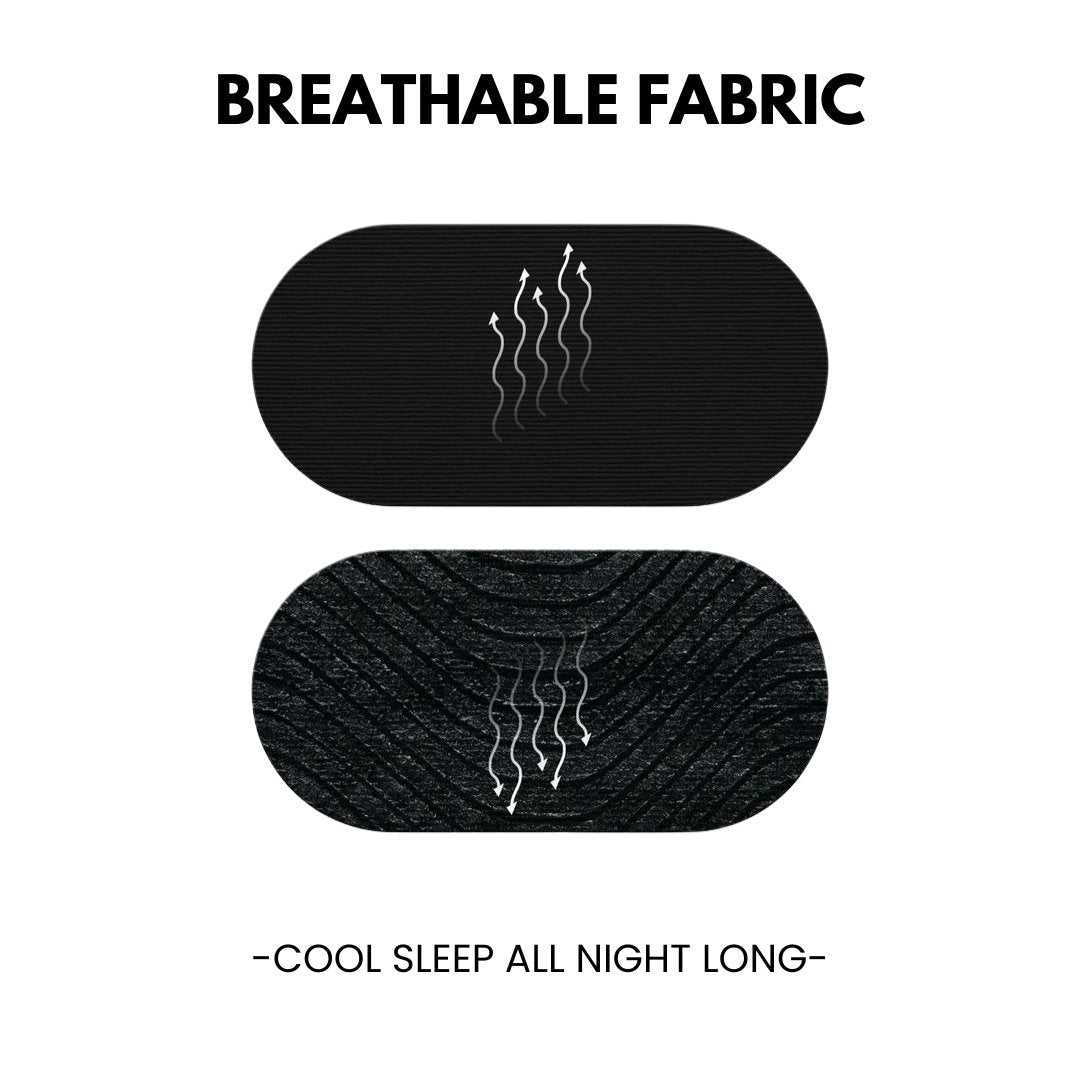
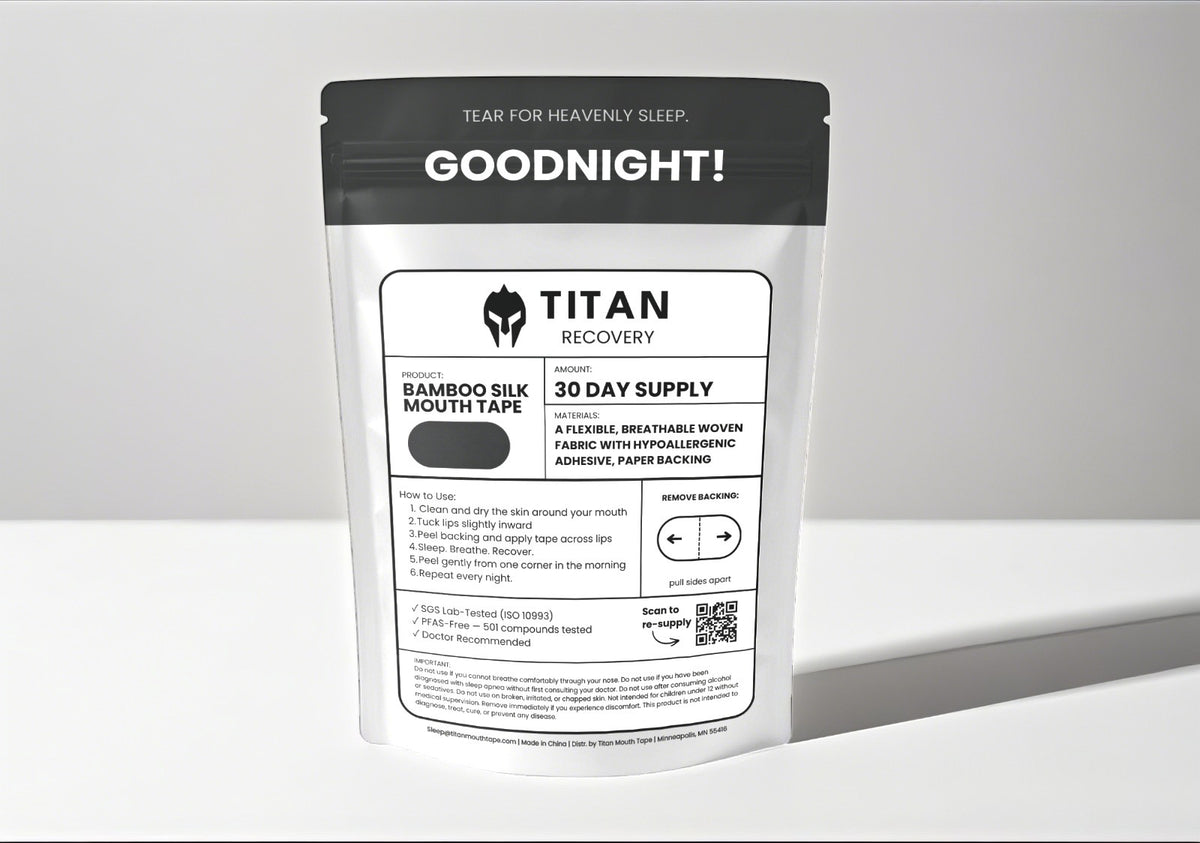
What to look for in mouth tape: bamboo silk material (breathable, comfortable, beard-friendly). An adhesive that's been independently tested for safety. PFAS-free. No logo on the tape. And a guarantee that lets you try it risk-free.
Doctor Recommended: "As a maxillofacial surgeon and dentist, I recommend Titan Mouth Tape. Nasal breathing during sleep is essential for airway health and deep restorative rest. Titan's bamboo silk design is the most comfortable and effective mouth tape I have tested. If you struggle with snoring, dry mouth, or poor sleep quality, this is the simplest change you can make for your health." — Dr. Francois P., MD, DDS — Maxillofacial Surgeon
Lab-Tested Safety: Titan's adhesive is independently tested to ISO 10993 medical device standards. Non-toxic (95% cell viability). Non-allergenic (0% reaction rate). Non-irritating (score 0.0/8.0). PFAS-free — 501 compounds tested, zero detected. See full test results →
Try it tonight. Bamboo silk. SilkSeal™ adhesive. Beard-friendly. No logo on the tape. Free shipping. 30-night Better Sleep Guarantee. Shop Titan Mouth Tape → · Shop TitanAir →