Can You Wear Nasal Strips Every Night?
Share
Can you wear nasal strips every night? Yes. For most people, nasal strips are safe for nightly use with no long-term downside. They work mechanically — a spring band pulls the nasal valve open — so there's no drug to build tolerance to, nothing to absorb, and no way for your nose to become "dependent" on them. The only realistic issue with daily use is skin, not physiology: the adhesive can occasionally cause redness or irritation, and that's manageable with a few simple habits.
Why Nightly Use Is Safe: The Mechanism Matters
The reason nasal strips are safe to wear every night comes down to how they work. A nasal strip is a flexible spring band embedded in an adhesive backing. When you apply it across the lower bridge of your nose, the spring tries to straighten, and because it's anchored to both sides of the nose, that force lifts the nostril walls outward. The nasal valve — the narrowest part of your airway — opens wider, and air moves through with less resistance.
That's the whole story. There's no medication, no decongestant, no active ingredient. Compare that to a decongestant nasal spray, which genuinely can cause rebound congestion when overused because the blood vessels in the nose become reliant on the drug. Nasal strips have no equivalent risk — there's no chemistry involved, nothing acting on the tissue. The strip is a physical lever, and the moment you take it off, your nose returns to exactly the state it was in before.
Because the effect is purely mechanical, it's also consistent over time. A strip you wear on night 300 works the same way it did on night one — no diminishing return, no adaptation, no wearing off. That's a real advantage of a mechanical solution over a pharmacological one: nasal strips do what they do reliably, night after night, because physics doesn't develop a tolerance.
The Real Downside of Daily Use: Skin, Not Your Nose
If nightly nasal strip use causes a problem, it will almost always show up on your skin rather than inside your nose — the one genuine consideration with long-term daily wear.
Adhesive irritation. Any adhesive applied to the same patch of skin every night for months can, in some people, cause redness, dryness, or a mild reaction. This isn't unique to nasal strips — it's true of any repeated-contact adhesive product, and the skin across the bridge of the nose is relatively thin.
Redness or a faint mark. Some people notice a slight pink outline where the strip sat, especially right after removal. This is usually just from the peel and fades within minutes. Redness that lingers for hours, or gets worse night over night, is a sign the adhesive isn't agreeing with your skin.
Dryness or flaking. Repeated adhesive removal can strip a bit of surface moisture and, over time, leave the skin on the bridge of the nose slightly dry. A light daytime moisturizer handles this easily.
None of these are dangerous or inevitable — they're the predictable result of adhesive plus skin plus repetition, and every one is preventable with the habits below. The downside of nightly use is a skin-care question, not a health risk to your nose or breathing.
Will I Become Dependent on Nasal Strips?
This is the most common worry, and the honest answer is no — there is no physiological dependence on nasal strips, and they do not weaken your nose.
The fear usually goes: "If I hold my nose open every night, won't the muscles get lazy?" But the nasal valve doesn't collapse because of weak muscles that could be trained — it narrows because of fixed anatomy (the width of your passages, the position of your septum) and because soft tissue draws inward under the negative pressure of inhalation. A nasal strip counteracts that pull from the outside. It's a splint, not a crutch — and splinting a structure open at night no more causes it to atrophy than reading glasses make your eyes weaker.
What people sometimes mistake for dependence is simply noticing the difference. Once you've slept with open nasal breathing for a few weeks, going back to restricted breathing feels worse — not because your nose got weaker, but because you now have a comparison. That's a preference, not a physiological reliance. Stop using strips and your nose performs exactly as before. You can wear them every night indefinitely without training your nose to need them.
How to Avoid Irritation With Nightly Use
Since skin is the only real variable, a few simple habits make nightly use comfortable for the long haul.
Apply to clean, dry skin. Oil, sweat, and skincare products weaken the adhesive bond and can trap residue against the skin. Wipe the bridge of your nose clean and let it dry before applying. A better-adhered strip also shifts less during the night, which means less edge rubbing.
Vary the placement slightly. Move the strip up or down by a few millimeters from one night to the next. Keeping the adhesive off the exact same skin cells every night is the single most effective way to prevent the cumulative irritation that comes from repeated same-spot contact.
Remove gently. Don't rip the strip off. Peel it slowly from one end, ideally after a warm shower or with a slightly damp face, which loosens the adhesive and lets the glue release cleanly instead of dragging on the skin.
Moisturize during the day. Keep the skin on your nose healthy with a light daytime moisturizer, applied hours before your next strip so the surface is dry at bedtime. Hydrated skin tolerates adhesive far better than dry, compromised skin.
Take a break if you need one. If you notice persistent redness, give the skin a night or two off. There's no rebound congestion and no withdrawal — because the effect is mechanical, a break costs nothing beyond that night's breathing, and you pick back up whenever your skin is ready.
How TitanAir Is Built for Nightly Comfort
TitanAir Nasal Strips are designed for the person who wears them every night — a different design problem than a strip meant for the occasional cold or a single hard workout.
The adhesive is medical-grade and latex-free, calibrated to hold through a full night — side sleeping, movement, and sweating included — while still releasing cleanly in the morning without tearing skin or leaving a heavy residue ring. That balance matters more for daily use: an aggressive adhesive might be fine once a week but becomes a problem when it's stripping your skin 30 nights a month. Clean release is what makes nightly wear sustainable.
The dual-spring design also spreads the lifting force across a wider area of the nasal valve rather than concentrating it at one point, so no single spot on your skin takes the whole mechanical load — exactly what you want in a strip you'll use every night rather than ration.
Who Should Be Cautious
Nightly use is safe for the large majority of people, but a few should take extra care or check with a professional first.
Very sensitive or fragile skin. If your skin reacts to most adhesives, bandages, or tapes, start with a patch test and use the placement-rotation habit from day one. A gentle, clean-release adhesive is very different from a heavy medical tape, but ease into nightly use rather than jumping straight to it.
Active skin conditions on the nose. If you have eczema, rosacea, dermatitis, acne, or any broken or inflamed skin across the bridge of your nose, don't apply adhesive over it — wait until the area has healed. Taping over compromised skin can worsen a flare.
A confirmed adhesive allergy. If a dermatologist has diagnosed a genuine contact allergy to acrylate adhesives, nasal strips of any brand may not be right for you.
Recent nose surgery or injury. If you've had rhinoplasty, septum surgery, or a recent nasal fracture, ask your surgeon before applying any external force to the area.
For everyone outside those categories — which is most people — nightly use is a non-issue. The strip is one of the lowest-risk sleep tools available precisely because it doesn't do anything chemically.
Nasal Strips Plus Mouth Tape: The Complete Nightly System
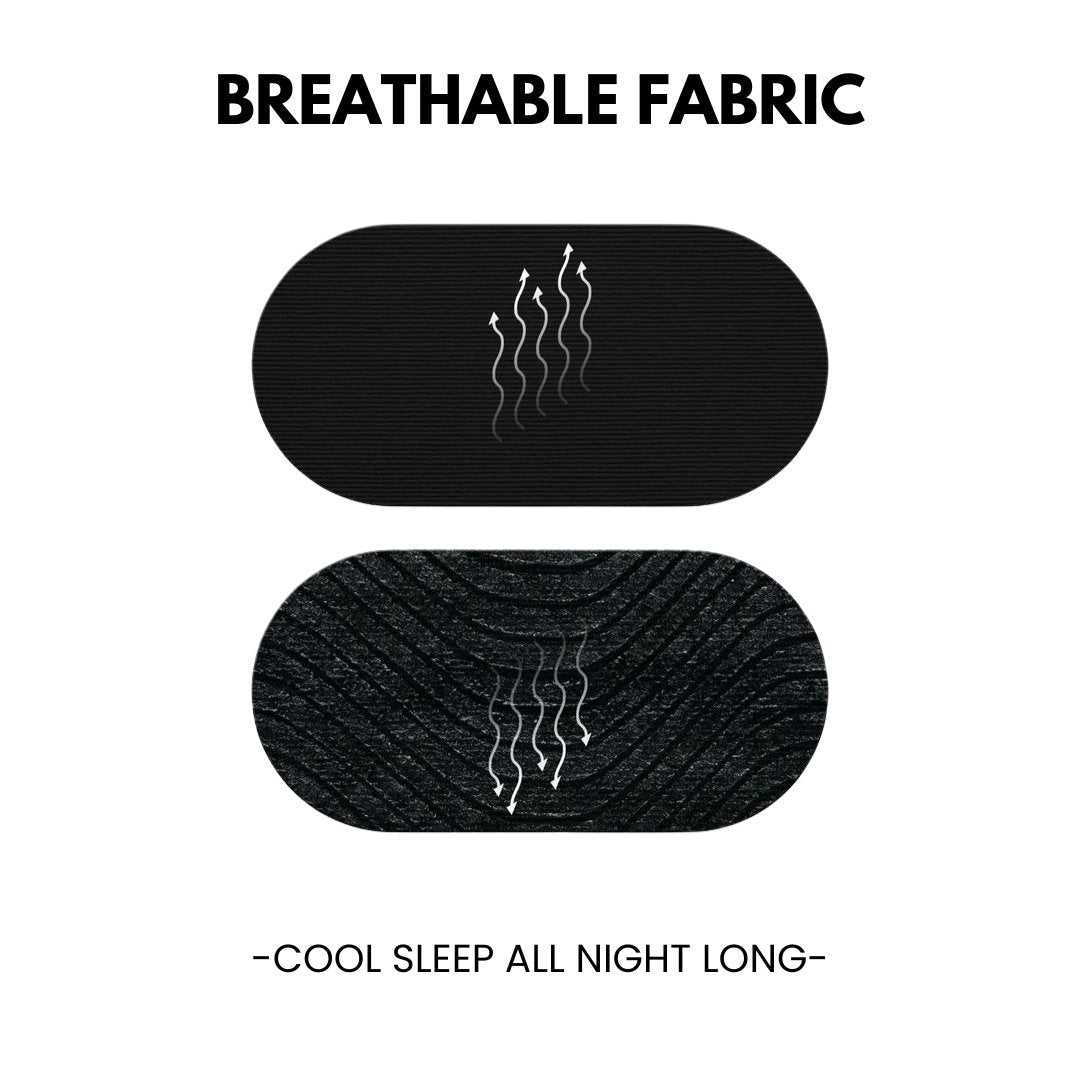
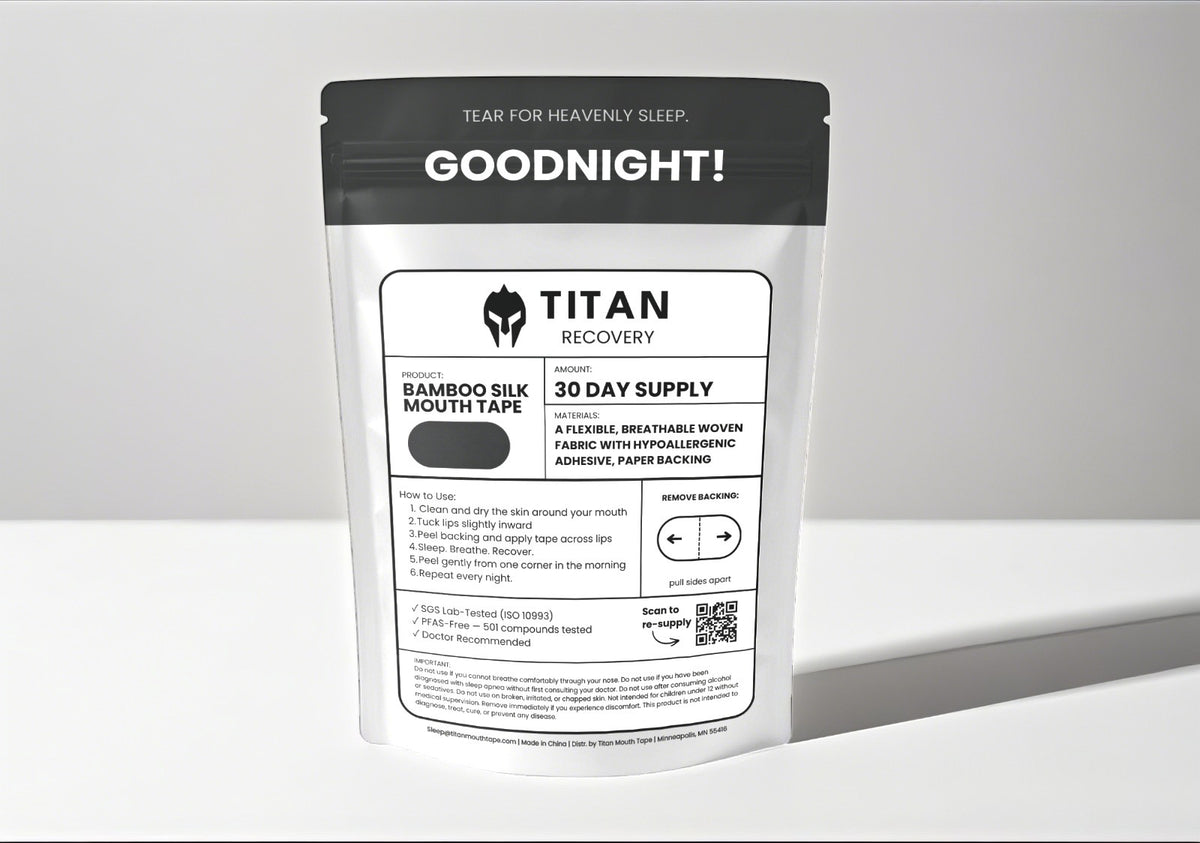
A nasal strip opens your nose, but it doesn't close your mouth. If you breathe through your mouth during sleep — which most snorers do — opening the nasal passage alone won't fully redirect your breathing. That's where the two tools work together: the strip handles the supply side by making sure enough air can flow through the nose, and Titan Mouth Tape handles the demand side by keeping the mouth closed so your body actually uses that open nasal airway.
Both are safe for nightly use, and both work mechanically. The Titan Sleep System pairs them together — apply the nasal strip first to confirm easy airflow, then the mouth tape. Consistency is where the benefit compounds, so it's worth seeing how the pieces fit into a broader approach to sleeping better. Nightly use is exactly what these products are built for.
Frequently Asked Questions
Are nasal strips safe to use long term?
Yes. Because they work mechanically with no drugs or active ingredients, there's no risk of tolerance, rebound congestion, or physiological dependence over long-term use. The only real consideration is skin health at the application site, which is easily managed by applying to clean skin, varying placement slightly, and removing gently.
What are the side effects of nasal strips?
Side effects are limited to the skin: possible redness, mild irritation, dryness, or a faint mark where the strip sat. These come from the adhesive, not from any effect on your nose or breathing, and they're uncommon with a quality clean-release adhesive. There are no internal or systemic side effects, because nothing is absorbed.
Can nasal strips cause skin irritation?
They can, though it's not the norm. Irritation usually comes from repeated adhesive contact on the same patch of skin, applying to oily or damp skin, or ripping the strip off. Applying to clean dry skin, rotating placement a few millimeters each night, and peeling slowly prevents nearly all of it. If redness persists, take a night or two off.
Will my nose become dependent on nasal strips?
No. There is no physiological dependence, and nasal strips do not weaken your nose. The strip is an external splint that holds the nasal valve open; it doesn't replace muscle function or cause any structure to atrophy. When you stop, your nose performs exactly as before. What feels like dependence is just having grown used to breathing well.
Is it OK to wear a nasal strip every night?
Yes. Nasal strips are designed for a full night's sleep and are safe to use every night for most people. Choose a strip with a medical-grade, clean-release adhesive built for repeated wear, follow good application habits, and pause for a night if your skin needs a rest. Those with very sensitive skin, active skin conditions, or recent nose surgery should be cautious first.
The Bottom Line
You can wear nasal strips every night, and for most people it's completely safe. They work mechanically, so there's no dependence, no rebound congestion, no tolerance, and no effect on how your nose works when the strip is off — and the benefit stays consistent because it's driven by physics, not chemistry. The one real consideration is skin: adhesive on the same spot nightly can occasionally cause redness, but applying to clean dry skin, varying placement, removing gently, and taking a break when needed prevents nearly all of it. Those with very sensitive skin, active skin conditions, a confirmed adhesive allergy, or recent nose surgery should take extra care.
For a routine built to be worn every night, pair TitanAir Nasal Strips with Titan Mouth Tape. Open the nose, close the mouth, and breathe through your nose all night — safely, night after night.
Doctor Recommended: "As a maxillofacial surgeon and dentist, I recommend Titan Mouth Tape. Nasal breathing during sleep is essential for airway health and deep restorative rest. Titan's bamboo silk design is the most comfortable and effective mouth tape I have tested. If you struggle with snoring, dry mouth, or poor sleep quality, this is the simplest change you can make for your health." — Dr. Francois P., MD, DDS — Maxillofacial Surgeon
Lab-Tested Safety: Titan's adhesive is independently tested to ISO 10993 medical device standards. Non-toxic (95% cell viability). Non-allergenic (0% reaction rate). Non-irritating (score 0.0/8.0). PFAS-free — 501 compounds tested, zero detected. See full test results →
Try the complete system tonight. Titan Mouth Tape (bamboo silk, SilkSeal™ adhesive) + TitanAir Nasal Strips. Free shipping. 30-night Better Sleep Guarantee. Shop Titan Mouth Tape → · Shop TitanAir Nasal Strips →