Why the Youngest IFBB Pro in the World Uses Nasal Strips
Share
Anton Ratushnyi is 22 years old, Ukrainian-born, and the youngest Classic Physique IFBB Pro in the world. He's been compared to Chris Bumstead. He trains like his career depends on every rep — because it does.
And he uses nasal strips.
In his Instagram content (@anton_swl), Ratushnyi has been seen wearing nasal strips — adding nasal breathing optimization to an already meticulous training, nutrition, and supplementation protocol. For a 22-year-old who turned pro before most lifters finish their first real bulk, that's a signal worth paying attention to.
Why a Pro Bodybuilder Uses Nasal Strips
Bodybuilding is a sport that happens in the gym and is won in recovery. Training creates the stimulus. Sleep is where the adaptation occurs — muscle repair, growth hormone release, nervous system restoration, and the cellular processes that turn a hard workout into actual growth.
At Ratushnyi's level, the training stimulus is maximized. The nutrition is dialed in. The supplementation is precise. The only variable left to optimize is the quality of the 7-8 hours he spends unconscious — and how efficiently his body recovers during that window.
Nasal strips address one of the most basic and overlooked components of sleep quality: airflow.
The airflow problem most lifters ignore
When you carry significant muscle mass — especially in the chest, shoulders, and neck — your respiratory demand is higher than average. More tissue requires more oxygen for maintenance and repair. At the same time, a thicker neck can increase airflow resistance during sleep.
Nasal strips physically lift and widen the nostrils from the outside, reducing nasal airflow resistance mechanically. No drugs. No medication. Just flexible spring-loaded bands that hold the nasal passages open all night.
The result: more air flows through the nose with less effort. For a bodybuilder whose body is demanding maximum oxygen delivery to repair muscle tissue during sleep, reducing any bottleneck in the breathing pathway may be meaningful.
Nitric oxide and recovery
The nasal passages produce nitric oxide — a molecule that research suggests may dilate blood vessels, improve oxygen transfer in the lungs, and support blood flow to recovering tissues. Nitric oxide is produced exclusively during nasal breathing. Mouth breathing bypasses the nasal passages entirely, and no nitric oxide is produced.
For bodybuilders, nitric oxide is already a familiar concept — it's the mechanism behind pump supplements and pre-workouts that promote vasodilation. Nasal breathing during sleep produces the same molecule naturally, without supplementation, for 7-8 hours straight.
Growth hormone and deep sleep
Approximately 70% of daily growth hormone output occurs during deep sleep (Stage 3 NREM). Growth hormone drives muscle repair, tissue regeneration, bone density, and fat metabolism — all processes that directly determine how quickly a bodybuilder recovers between sessions.
Deep sleep requires parasympathetic nervous system dominance — the rest-and-recovery state. Research published in Neuroreport found that nasal breathing is associated with parasympathetic activation, while mouth breathing is associated with sympathetic (stress) activation. Maximizing nasal airflow during sleep — which is what nasal strips do — may support the parasympathetic state where growth hormone release is highest.
Sleep quality determines training capacity
A pro bodybuilder trains 5-6 days per week with volume and intensity that would destroy someone who isn't recovering properly. The difference between recovering fully between sessions and accumulating fatigue is often sleep quality — not sleep duration.
Research on elite athletes consistently shows that sleep quality predicts next-day performance, injury risk, and training tolerance more reliably than any other recovery variable. This is why athletes like Erling Haaland have made sleep optimization the foundation of their recovery protocol — and why nasal breathing interventions are showing up in more and more professional athletes' nighttime routines.
Nasal Strips vs. Mouth Tape: What's the Difference?
Ratushnyi uses nasal strips. Haaland uses mouth tape. What's the difference — and which one should you use?
Nasal strips open the nose. They physically widen the nasal passages from the outside, reducing airflow resistance and making it easier to breathe through the nose.
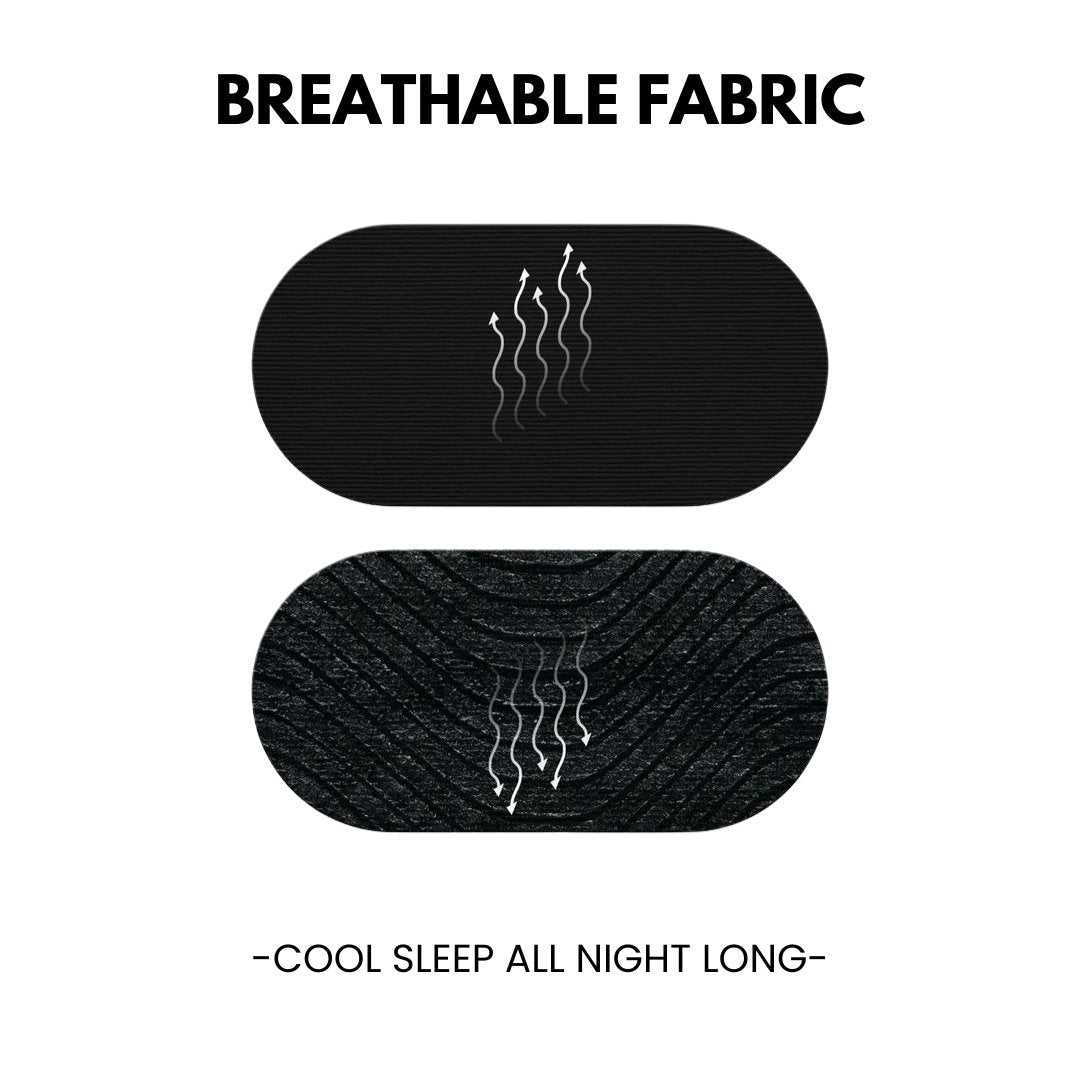
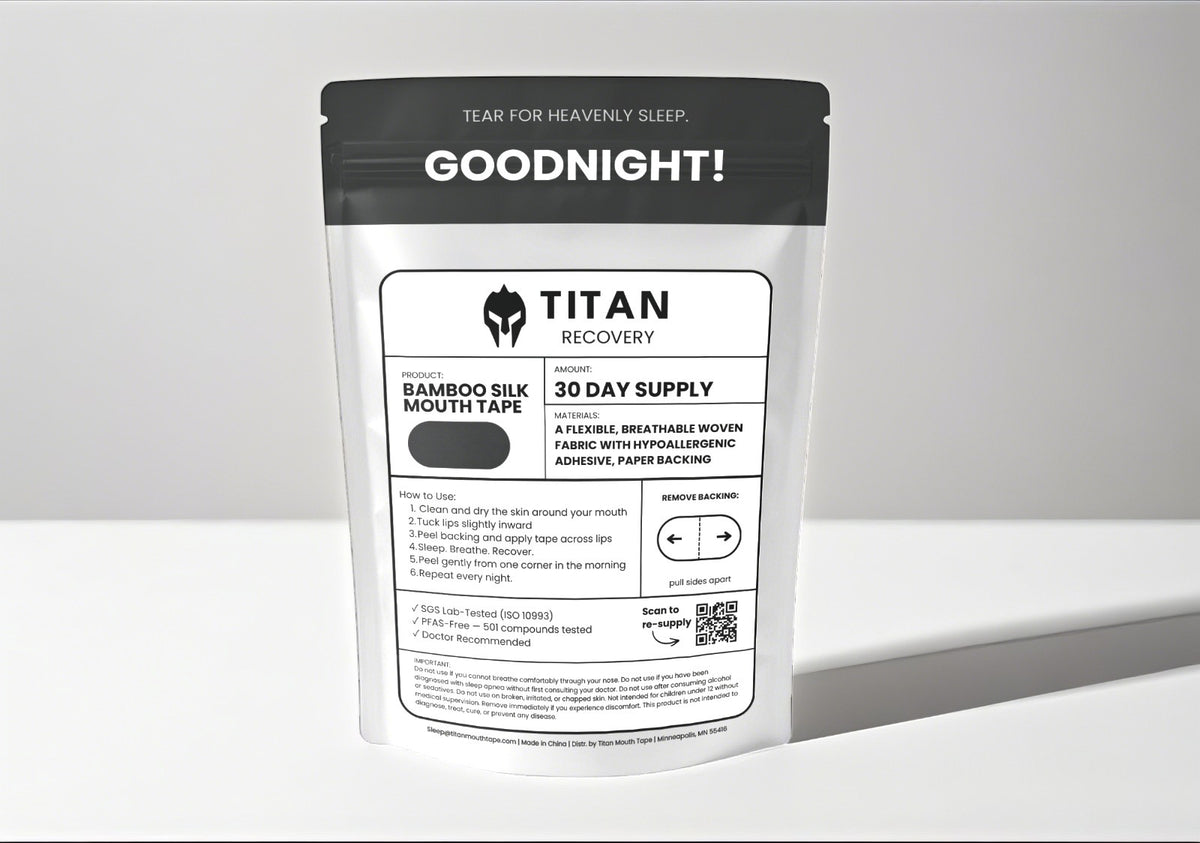
Mouth tape closes the mouth. It holds the lips gently together during sleep, preventing the jaw from dropping open and the tongue from falling backward into the airway.
They solve different problems. Nasal strips address the supply side — making nasal breathing easier. Mouth tape addresses the demand side — preventing the body from defaulting to mouth breathing when jaw muscles relax during sleep.
The most effective approach is both. Nasal strip to open the nose. Mouth tape to close the mouth. Together they create a complete nasal breathing system — all airflow routed through the nasal pathway where nitric oxide is produced, air is filtered and humidified, and parasympathetic activation is supported.
Using nasal strips alone leaves the mouth unaddressed. If the mouth opens during sleep — and for an estimated 50-60% of adults, it does — the nasal strip opens the nose while the mouth remains the path of least resistance. Air goes through the mouth anyway, bypassing the nasal strip entirely.
What Bodybuilders and Lifters Should Look for in Nasal Strips
Spring-loaded bands. The bands should provide consistent outward pressure throughout the night — not weaken as the adhesive warms. The lift at hour 8 should feel the same as at hour 1.
Hypoallergenic adhesive. The strip sits on the bridge of your nose all night. The adhesive should hold securely and remove cleanly without residue or irritation.
Drug-free. Medicated nasal sprays (like Afrin) cause rebound congestion with regular use and shouldn't be used nightly. Nasal strips work mechanically — no medication, no rebound, safe for nightly use indefinitely.
Pair with mouth tape. If you're serious about optimizing sleep for recovery, use both. Open the nose and close the mouth. The combination addresses both sides of the airflow equation.
The Athlete Recovery Stack
Ratushnyi's nighttime protocol — ZMA, melatonin, and nasal strips — represents a trend among elite athletes: stacking simple, low-cost interventions that compound over time rather than chasing expensive gadgets.
The complete sleep optimization stack for athletes might look like:
Nasal strip + mouth tape — open the nose, close the mouth, maximize nasal breathing
Cool room (65-68°F) — support the core temperature drop required for deep sleep
Morning sunlight — set the circadian clock for proper melatonin timing
Consistent bedtime — maintain the deep sleep scheduling window
No alcohol 4+ hours before bed — protect sleep architecture in the second half of the night
None of these cost more than a few dollars a night. None require equipment. None have side effects. And the compound effect over a training block — weeks and months of consistently better recovery — may be the difference between progressing and plateauing.
The Bottom Line
Anton Ratushnyi is 22 and already an IFBB Pro. He's building one of the most impressive physiques in classic bodybuilding. And nasal strips are part of his approach.
It's not complicated. It's not expensive. It's not glamorous. But for an athlete whose career depends on recovering faster than the competition — every variable matters. Including how efficiently air gets into the body — during training and during sleep.
If nasal breathing matters enough for the youngest Classic Physique Pro in the world, it might be worth paying attention to — both during training and during sleep.
Doctor Recommended: “As a maxillofacial surgeon and dentist, I recommend Titan Mouth Tape. Nasal breathing during sleep is essential for airway health and deep restorative rest. Titan’s bamboo silk design is the most comfortable and effective mouth tape I have tested. If you struggle with snoring, dry mouth, or poor sleep quality, this is the simplest change you can make for your health.” — Dr. Francois P., MD, DDS — Maxillofacial Surgeon
Lab-Tested Safety: Titan’s SilkSeal™ adhesive is independently tested to ISO 10993 medical device standards. Non-toxic (95% cell viability). Non-allergenic (0% reaction rate). Non-irritating (score 0.0/8.0). PFAS-free — 501 compounds tested, zero detected. See full test results →
Try it tonight. Bamboo silk. SilkSeal™ adhesive. Beard-friendly. No logo on the tape. Free shipping. 30-night Better Sleep Guarantee. Shop Titan Mouth Tape → · Shop TitanAir →