Best Mouth Tape for Sensitive Skin: What to Look for (and What to Avoid)
Share
If you have sensitive skin, eczema, rosacea, or any kind of reactive skin, you already know the drill: every new product that touches your face is a gamble. Mouth tape is no different. You want the benefits of nasal breathing during sleep — less snoring, no dry mouth, deeper rest — but you need to find the best mouth tape for sensitive skin that won't leave you with redness, rashes, or irritation every morning. The good news is that the right tape exists. The key is knowing exactly what causes skin reactions and what to look for on a product page before you buy.
Why Most Mouth Tape Irritates Sensitive Skin
The majority of mouth tapes on the market are made from synthetic materials — polyester, nylon, or foam — with an acrylic or rubber-based adhesive. When you press that combination against your skin for seven to nine hours every night, three things can go wrong.
Harsh adhesives. Most consumer tapes use industrial-grade acrylic adhesives. These are engineered for maximum stick, not skin safety. Acrylic adhesives can contain residual monomers and chemical irritants that trigger contact dermatitis, especially in people with compromised skin barriers. If you've ever peeled off a bandage and seen a red rectangle left behind, you've experienced this firsthand.
PFAS and undisclosed chemicals. Per- and polyfluoroalkyl substances (PFAS) — sometimes called "forever chemicals" — have been found in adhesive products, including tapes and bandages. PFAS are used to improve moisture resistance and adhesion, but they don't break down in the body or the environment. For people with sensitive or reactive skin, even trace amounts of these compounds can amplify inflammatory responses. Most tape brands don't test for PFAS at all, so there's no way to know what you're putting on your face unless the manufacturer has done third-party screening. Read more about why cheap adhesives are a problem.
Non-breathable materials. Synthetic tape materials trap heat and moisture against the skin. For anyone with eczema or rosacea, this creates a microenvironment that worsens flare-ups. Your skin can't regulate temperature or moisture underneath a solid barrier, which is why you might wake up with a ring of irritation even if the adhesive itself isn't particularly harsh.
What to Look for in Mouth Tape for Sensitive Skin
Choosing the right mouth tape comes down to four factors. If a product checks all four, it's likely safe for reactive skin. If it misses even one, it's a risk.
1. Hypoallergenic Adhesive with Third-Party Biocompatibility Testing
The word "hypoallergenic" appears on a lot of packaging, but it has no regulated definition. Any company can print it on a label without testing. What actually matters is whether the adhesive has been independently tested to ISO 10993 standards — the international framework used to evaluate medical devices for biological safety.
ISO 10993 testing includes three core evaluations: cytotoxicity (does the material kill skin cells), sensitization (does it cause allergic reactions over repeated exposure), and irritation (does it cause visible skin damage). A product that passes all three has real data behind its safety claims. A product that says "gentle" or "hypoallergenic" without referencing any testing standard is giving you marketing language, not evidence. You can read about what rigorous adhesive testing actually looks like.
2. Breathable, Natural Material
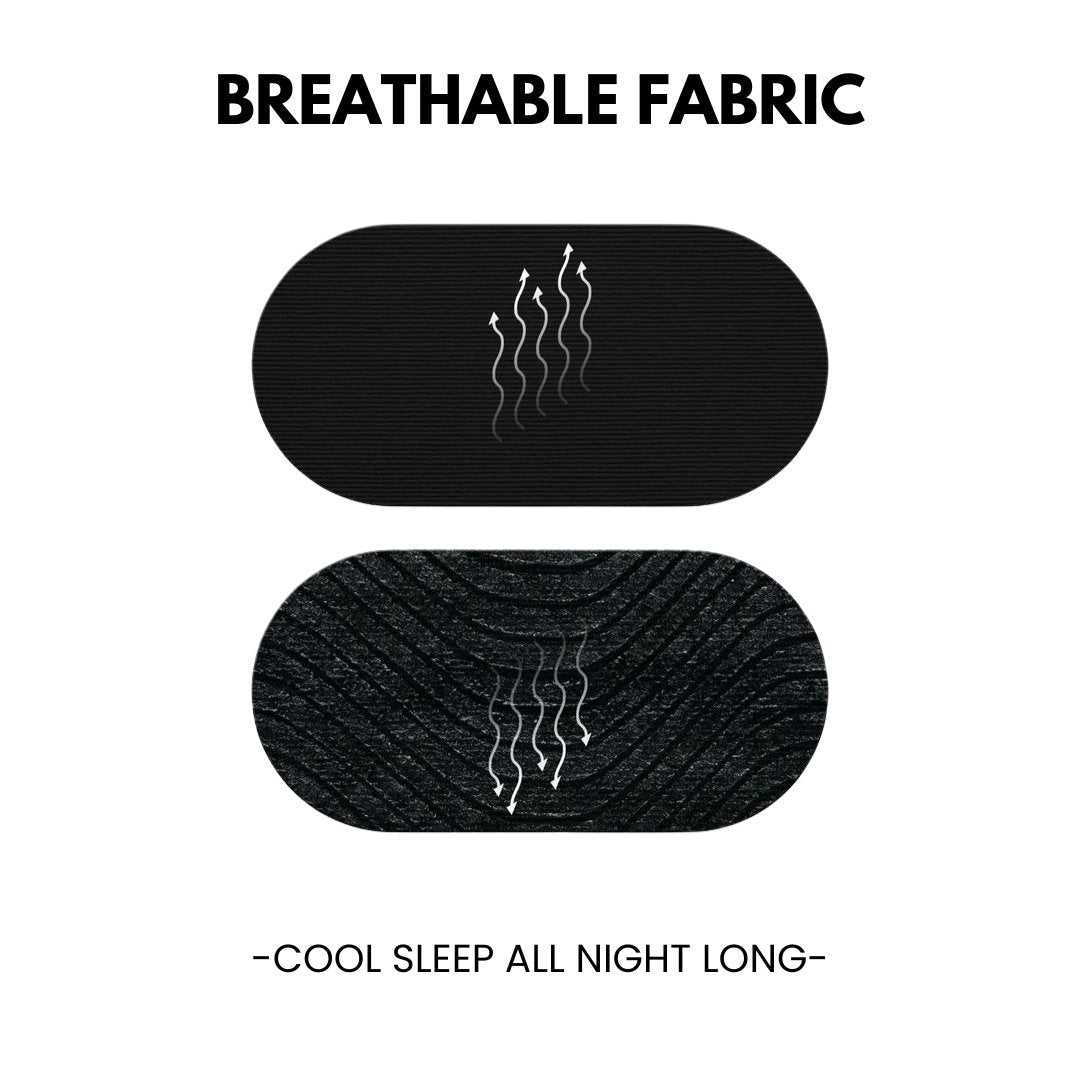
The tape material itself matters as much as the adhesive. Breathable fabrics like bamboo silk allow air and moisture to pass through, which prevents the heat-trapping effect that synthetic materials create. This is particularly important for people with rosacea, where trapped heat directly triggers flushing and irritation.
Natural fibers also tend to be softer against the skin, which reduces mechanical irritation from the tape shifting or pulling during sleep. If a tape feels stiff or plasticky between your fingers, it's going to feel worse on your face after eight hours.
3. PFAS-Free Certification
PFAS testing isn't standard in the mouth tape industry. Most brands don't do it, and most consumers don't think to ask. But if you have sensitive skin, this is worth paying attention to. Look for products that have been screened for a broad range of PFAS compounds by an independent lab — not just a handful of the most common ones, but a comprehensive panel. The more compounds tested, the more confident you can be that the product is genuinely free of forever chemicals.
4. Gentle Removal
The moment of truth for sensitive skin is the morning. A tape that rips at the skin, leaves adhesive residue, or pulls at facial hair creates micro-damage to the skin barrier — exactly the kind of repeated trauma that triggers eczema flares and contact dermatitis cycles. The best mouth tape for sensitive skin should peel away cleanly without resistance. If you have to scrub your face with a washcloth to remove residue, the adhesive is too aggressive for nightly use. Learn more about what pain-free removal should actually feel like.
Why Titan Mouth Tape Is Built for Sensitive Skin
Titan Mouth Tape was designed from the ground up with skin safety as a non-negotiable requirement — not as an afterthought. Every component has been independently tested, and the results are published for anyone to review.
ISO 10993 biocompatibility testing. Titan's SilkSeal adhesive was tested by an independent laboratory to the full ISO 10993 medical device standard. The results:
- Cytotoxicity: 95% cell viability. The adhesive is essentially non-toxic to skin cells. For reference, anything above 70% is considered a pass under ISO 10993-5. Titan scored well above that threshold.
- Sensitization: 0% reaction rate. Across all test subjects, zero allergic reactions were observed. This is the gold standard for people with reactive skin — it means the adhesive does not trigger the immune response that causes contact dermatitis.
- Irritation: Score of 0.0 out of 8.0. No visible skin irritation was observed at any point during testing. A score of 0.0 is as clean as it gets.
These aren't marketing claims. They're lab results from an accredited testing facility, conducted under controlled conditions with standardized protocols.
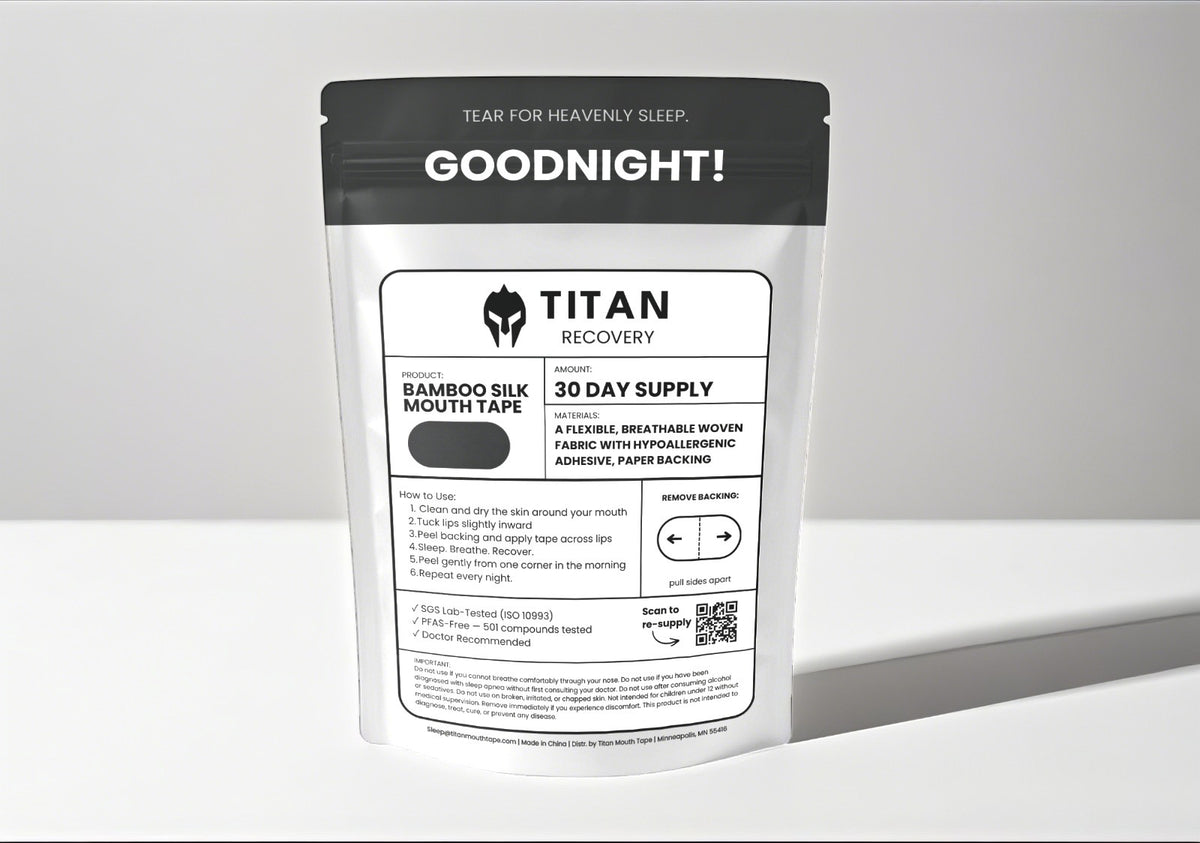
PFAS-free screening. Titan's mouth tape was screened for 501 individual PFAS compounds by a third-party laboratory. The result: zero detected. Not "low levels." Not "below the threshold of concern." Zero. This is one of the most comprehensive PFAS screenings in the sleep product category, and it means you can wear Titan tape on your face every night without introducing forever chemicals into your skin.
Bamboo silk material. The tape itself is made from bamboo silk — a natural, breathable fabric that allows air and moisture to pass through. It doesn't trap heat, it doesn't feel plasticky, and it conforms to the contours of your face without stiffness. For people with eczema or rosacea, this breathability is critical. It eliminates the sealed-environment effect that synthetic tapes create.
Clean removal. The SilkSeal adhesive is engineered for secure overnight hold with clean, painless removal in the morning. No residue. No pulling. No micro-tears to the skin barrier. It's also beard-friendly — it releases from facial hair without the ripping that makes other tapes unusable for people with beards or stubble.
Practical Tips for Using Mouth Tape with Sensitive Skin
Even with a skin-safe tape, a few habits will help you get the best results and avoid any unnecessary irritation.
Do a patch test first. Before wearing mouth tape to sleep, apply a small piece to the inside of your wrist or behind your ear for 30 to 60 minutes. If you see any redness, itching, or raised bumps, that tape isn't right for your skin. If nothing happens, you're clear to try it on your face. This is standard practice for anyone with reactive skin, and it takes the guesswork out of the equation.
Apply to clean, dry skin. Oils, moisturizers, and serums create a barrier between the adhesive and your skin. This can cause the tape to shift during the night (leading to more friction and irritation) or to grip unevenly (creating pressure points). Wash your face, let it dry completely, and apply the tape as the last step before bed. If you use a nighttime skincare routine, apply the tape to the lip area before applying products to the rest of your face.
Remove gently in the morning. Don't rip the tape off. Start at one corner and peel slowly, pulling parallel to the skin rather than straight up. This minimizes stress on the skin barrier and prevents the micro-damage that can accumulate over weeks of nightly use. With the right tape, this should be effortless — if it hurts, switch products.
Pair with nasal strips if you're congested. If nasal congestion makes you a mouth breather, taping your mouth shut won't fix the root cause. Pair your mouth tape with TitanAir Nasal Strips to open your nasal passages and make nose breathing comfortable. This combination addresses both sides of the equation — keeping the mouth closed and keeping the nose open.
Watch for cumulative reactions. Some skin reactions don't appear on the first night. They build over days or weeks of exposure. Pay attention to how your skin looks and feels after the first week. Beyond avoiding reactions, nasal breathing itself may actively benefit your skin -- read more about nasal breathing and skin health during sleep. If you notice any progressive redness or texture changes around your lips, reassess the product. With a genuinely biocompatible tape like Titan, cumulative reactions shouldn't occur — but monitoring is still smart practice. If you're concerned about skin reactions, our guide on whether mouth tape causes acne or rashes covers this in detail.
The Bottom Line
Sensitive skin doesn't have to keep you from mouth taping. But it does mean you need to be selective. Skip the products that rely on marketing language without lab data. Look for ISO 10993 biocompatibility testing, PFAS-free certification, breathable natural materials, and clean removal. Titan Mouth Tape checks every one of those boxes — with published lab results to prove it. Your skin deserves the same level of evidence you'd expect from a medical device, not a roll of tape with "gentle" printed on the package.
Doctor Recommended: "As a maxillofacial surgeon and dentist, I recommend Titan Mouth Tape. Nasal breathing during sleep is essential for airway health and deep restorative rest. Titan's bamboo silk design is the most comfortable and effective mouth tape I have tested. If you struggle with snoring, dry mouth, or poor sleep quality, this is the simplest change you can make for your health." — Dr. Francois P., MD, DDS — Maxillofacial Surgeon
Lab-Tested Safety: Titan's SilkSeal™ adhesive is independently tested to ISO 10993 medical device standards. Non-toxic (95% cell viability). Non-allergenic (0% reaction rate). Non-irritating (score 0.0/8.0). PFAS-free — 501 compounds tested, zero detected. See full test results →
Try it tonight. Bamboo silk. SilkSeal™ adhesive. Beard-friendly. No logo on the tape. Free shipping. 30-night Better Sleep Guarantee. Shop Titan Mouth Tape → · Shop TitanAir →
Doctor Recommended: "As a maxillofacial surgeon and dentist, I recommend Titan Mouth Tape. Nasal breathing during sleep is essential for airway health and deep restorative rest. Titan's bamboo silk design is the most comfortable and effective mouth tape I have tested. If you struggle with snoring, dry mouth, or poor sleep quality, this is the simplest change you can make for your health." — Dr. Francois P., MD, DDS — Maxillofacial Surgeon
Lab-Tested Safety: Titan's adhesive is independently tested to ISO 10993 medical device standards. Non-toxic (95% cell viability). Non-allergenic (0% reaction rate). Non-irritating (score 0.0/8.0). PFAS-free — 501 compounds tested, zero detected. See full test results →
Try the complete system tonight. Titan Mouth Tape (bamboo silk, SilkSeal™ adhesive) + TitanAir Nasal Strips. Free shipping. 30-night Better Sleep Guarantee. Shop Titan Mouth Tape → · Shop TitanAir Nasal Strips →