Mouth Tape vs Chin Strap: Which One Actually Keeps Your Mouth Closed?
Share
If you mouth breathe during sleep and you've gone looking for solutions, you've probably seen two categories of products: mouth tape and chin straps. They attack the same problem from different angles. One is a thin adhesive strip across your lips. The other is a fabric strap that wraps under your chin and over your head to hold your jaw closed. Both claim to stop mouth breathing. One of them actually works consistently.
Here's a straightforward comparison of how each approach performs in real-world use — overnight, every night, across different sleeping positions and face shapes.
How Each One Works
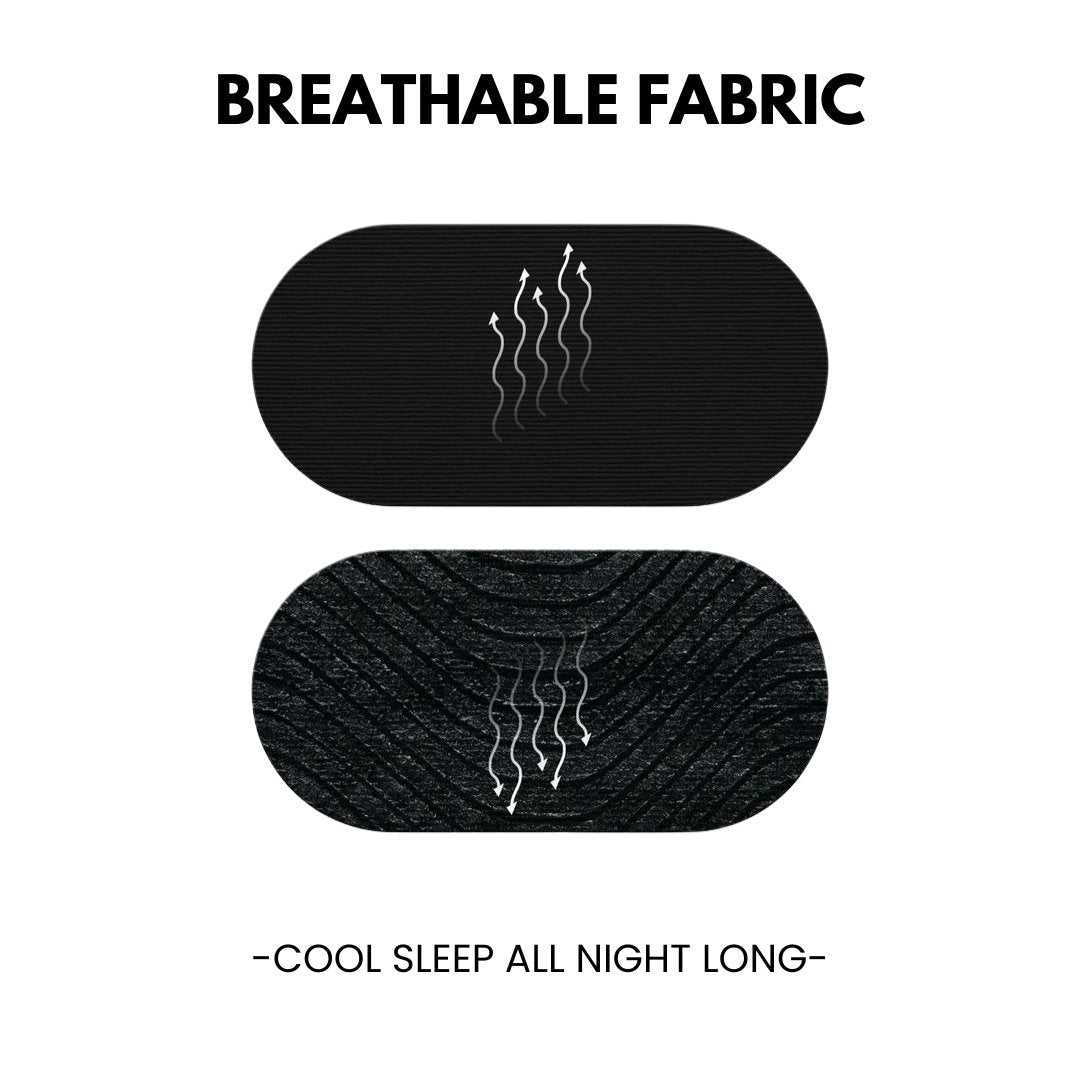
Mouth tape is a thin adhesive strip applied directly over the lips. It seals the mouth closed. Air goes through the nose. The adhesive does the work — once it's on, the mouth stays shut regardless of sleeping position, jaw movement, or how many times you roll over. The tape is small, flat, and barely noticeable to wear.
A chin strap is a fabric harness — typically neoprene or elastic — that wraps under the chin and fastens over the top or back of the head with Velcro. The concept is to cradle the jaw and hold it in a closed position through upward tension. Common models include the Sunset Comfort (~$13), Sleep Legends (~$16), and PIDOTI (~$30), along with dozens of similar designs on Amazon in the $5-$30 range.
In theory, both keep the mouth closed. In practice, the mechanisms are very different — and the failure modes are even more different.
Side-by-Side Comparison
| Factor | Mouth Tape | Chin Strap |
|---|---|---|
| How it closes the mouth | Adhesive seals lips directly | Fabric tension holds jaw up |
| Stays in place all night | Yes | Frequently slips off |
| Comfort | Thin, barely noticeable | Bulky headgear |
| Works in all sleep positions | Yes | Shifts with side/stomach sleeping |
| Pillow interference | None | Velcro snags on pillowcase; straps shift |
| Partner-friendly | Barely visible | Visible headgear |
| Jaw soreness | No | Possible (upward jaw pressure) |
| Addresses the root cause | Yes (seals lips) | Partially (holds jaw, lips can still part) |
| Typical price | $0.76-$0.90/night (purpose-built) | $5-$30 one-time (reusable) |
| Durability | Single-use (fresh strip each night) | Reusable but stretches out over weeks |
The Chin Strap Problem
Chin straps have a fundamental design weakness: they rely on friction and tension instead of adhesion. The strap sits against your chin and wraps over your head. Nothing actually holds it in place except the tightness of the fit and the friction between fabric and skin. During eight hours of sleep, you shift positions, turn your head, press your face into a pillow, and move your jaw. Every one of those movements works against the strap.
The result is predictable. Read through reviews of any chin strap on Amazon, and the same complaints appear over and over:
- "Woke up with it around my neck."
- "Slipped off within two hours."
- "Velcro caught on my pillowcase and pulled the strap loose."
- "Had to tighten it so much to stay on that my jaw hurt in the morning."
- "Doesn't actually stop the snoring."
These aren't manufacturing defects. They're inherent to the design. A strap that relies on wrapping around an irregularly shaped head, with a chin that narrows toward the front, is fighting geometry. Tighten it enough to stay on and it creates uncomfortable pressure. Leave it loose enough to be comfortable and it slides off.
Why Mouth Tape Works Where Chin Straps Fail
Adhesive is more reliable than friction. This is the core difference. Mouth tape sticks directly to the skin around your lips. It doesn't depend on staying positioned around your head. It doesn't shift when you roll over. It doesn't snag on your pillowcase. The adhesive either holds or it doesn't — and good adhesive holds all night.
Mouth tape addresses the actual mechanism of mouth breathing. When you mouth breathe during sleep, the issue is that your lips part. Your jaw may drop, but the airflow happens through the opening between your lips. A chin strap tries to prevent jaw drop by pushing upward on the chin — but even with the jaw held in place, the lips can still separate. Mouth tape seals the lips directly. It's treating the leak, not the joint above it.
There's nothing to shift. A strip of tape on your lips weighs almost nothing. It doesn't have a head strap. It doesn't have Velcro. It doesn't interact with your pillow, your hair, or your sleeping position. Side sleeper, back sleeper, stomach sleeper — the tape stays where you put it because adhesive doesn't care which direction gravity is pulling.
No jaw pressure. Chin straps create upward force on the jaw to keep it closed. Over eight hours, that pressure can cause jaw soreness, TMJ discomfort, or teeth clenching. Mouth tape doesn't exert any force on the jaw. It just holds the lips together and lets the jaw rest in whatever position is natural.
The One Scenario Where Chin Straps Have a Role
There's a specific population for whom chin straps serve a purpose: CPAP users. If you use a CPAP machine with a nasal mask (not a full-face mask), mouth leaks can reduce the effectiveness of the therapy. Some CPAP users add a chin strap to prevent their mouth from opening and releasing the pressurized air.
In this context, the chin strap is a supplementary device working alongside a machine that's already delivering pressure. The CPAP does the work; the chin strap just prevents air leaks. This is a different scenario than using a chin strap as a standalone anti-mouth-breathing solution — and it's the one use case where chin straps have legitimate clinical backing.
Even in the CPAP context, many sleep specialists now recommend mouth tape as a more reliable alternative to chin straps for preventing mouth leaks. But if your sleep doctor has specifically recommended a chin strap with your CPAP setup, follow their guidance.
Comfort and Livability
The aesthetics matter more than people admit. A chin strap is headgear. You're wearing a fabric harness around your head to bed. If you share a bed, your partner sees it. If you travel, you're packing it. If you sleep at someone else's house, you're explaining it. None of this is disqualifying, but it adds friction to the habit — and habits survive on low friction.
Mouth tape is nearly invisible. A thin strip across the lips. Your partner might not notice. It packs flat in a bag. There's nothing to explain. The barrier to consistent use is as low as it gets.
The Velcro problem is real. Nearly every chin strap uses Velcro closures, and nearly every chin strap user has a pillowcase story. The Velcro catches on fabric — pillowcase, sheets, or the strap's own material — and either pulls the strap out of position or creates that ripping sound at 3 a.m. that wakes up both you and the person next to you. Mouth tape doesn't have fasteners that interact with bedding.
Chin straps degrade. The elastic stretches. The Velcro loses grip. The fabric absorbs sweat and oils and needs washing. A chin strap that fit well in week one may not fit well in week six. You're either re-buying regularly or accepting declining performance. Mouth tape is fresh each night — consistent adhesion, consistent material, no degradation curve.
What About Snoring?
Many people buy chin straps specifically to stop snoring. The logic is: close the mouth, force nose breathing, eliminate the throat vibration that causes snoring.
The logic is sound, but the execution matters. A chin strap that slips off at 1 a.m. doesn't reduce snoring between 1 a.m. and 7 a.m. A chin strap that holds the jaw but lets the lips part doesn't fully prevent mouth breathing. And a chin strap that has to be cranked tight enough to stay on may cause jaw tension that actually worsens sleep quality.
Mouth tape solves the snoring equation more directly. Lips sealed, mouth breathing eliminated, nasal breathing maintained all night. The adhesive doesn't slip. The seal doesn't loosen. If you're taping specifically for snoring, the consistency of the seal is everything — and adhesive beats friction.
For maximum airflow through the nose while the mouth is taped, pair mouth tape with TitanAir Nasal Strips. Opening the nasal passages while sealing the mouth makes nasal breathing easier and more comfortable, which reduces the temptation to mouth breathe and further reduces snoring.
The Cost Comparison
Chin straps are cheaper upfront. A $15 strap lasts a few weeks to a couple of months before it stretches out or the Velcro gives up. Call it $60-$90 per year if you're replacing it every two to three months.
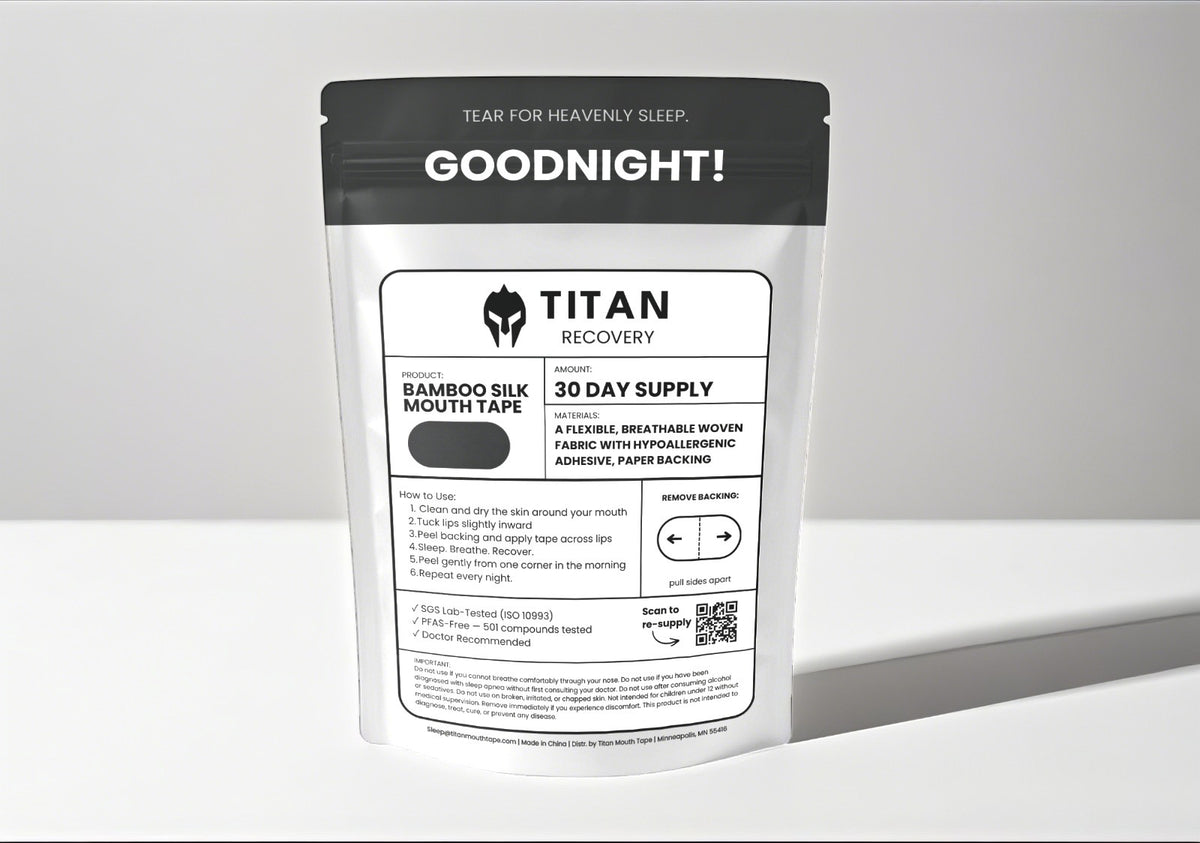
Purpose-built mouth tape costs more. Titan Recovery's 360-day pack runs $272.95 ($0.76/night), and the 30-day pack is $26.95 ($0.90/night). Over a full year, you're paying roughly $275 for tape versus $60-$90 for chin straps.
But cost per night only matters for the nights the product actually works. A chin strap that slips off halfway through the night is delivering half the value. A chin strap that ends up around your neck by 2 a.m. is delivering zero. When you factor in effectiveness — how many nights per month the product actually keeps your mouth closed from bedtime to alarm — tape's higher per-unit cost often delivers better per-result value.
Who Titan Recovery Is Best For
Choose mouth tape if you:
- Want your mouth reliably sealed all night, every night
- Sleep on your side or stomach (positions where chin straps shift most)
- Have tried a chin strap and had it slip off
- Want something minimal, low-profile, and partner-friendly
- Have sensitive skin and want an adhesive with biocompatibility testing
- Want a PFAS-free product that's been tested for overnight facial contact
- Have a beard (chin straps interact poorly with facial hair; good mouth tape is designed for it)
Consider a chin strap if you:
- Use a CPAP with a nasal mask and need to prevent mouth air leaks
- Have a medical condition that makes adhesive on your lips inadvisable (your doctor can advise)
- Specifically prefer the feel of a strap over adhesive on your skin
The Bottom Line
Chin straps try to solve mouth breathing by holding the jaw up. Mouth tape solves it by sealing the lips shut. One relies on friction and tension that fight your pillow, your sleeping position, and gravity all night. The other uses adhesive that stays put regardless of how you move. For the vast majority of people trying to stop mouth breathing during sleep, mouth tape is the more effective, more comfortable, more reliable solution. Titan Mouth Tape uses bamboo silk and SilkSeal adhesive for all-night hold with gentle morning removal, backed by ISO 10993 biocompatibility and PFAS-free testing across 501 compounds. A 30-day supply is $26.95. If nasal congestion makes nose breathing harder, add TitanAir Nasal Strips ($24.95/30-day) to open the airway while the tape keeps the mouth closed.