Ashton Hall Mouth Tape: What the Viral TikTok Creator Gets Right (and What's Overstated)
Share
If you've been on TikTok in the last six months, you've probably seen Ashton Hall's face — with tape across his mouth. His videos on mouth taping, self-improvement, and sleep optimization have gone viral, and the comment sections are filled with the same question: does this actually work?
Hall tapes his mouth shut before bed every night. He frames it as one of the simplest and most impactful self-improvement habits available — a practice that may support better sleep, better breathing, and over time, a more defined facial appearance. His audience is predominantly young men interested in looksmaxxing, self-improvement, and optimizing every variable they can control.
Here's what the science says about what Ashton Hall is doing — what's supported by research, what's overstated, and how to do it properly if you want to try it yourself.
What Ashton Hall Does
Hall's nighttime protocol is straightforward: he applies tape across his mouth before bed to hold it closed during sleep. In some videos, he also uses a nasal strip or tape across the nose to keep the nasal passages open.
The goal: keep the mouth closed and breathe exclusively through the nose for the entire night. No mouth breathing. No dry mouth. No snoring. No waking up feeling like you didn't sleep.
He positions mouth taping as a keystone habit — one simple change that cascades into multiple benefits across sleep quality, appearance, energy, and overall health. And while his delivery is TikTok-optimized, the underlying practice is grounded in real physiology.
What the Science Supports
Nasal breathing activates the recovery state
Research published in Neuroreport found that nasal breathing is associated with parasympathetic nervous system activation — the rest-and-recovery branch. Mouth breathing is associated with sympathetic activation — the stress response. Deep sleep requires parasympathetic dominance. If your mouth is open and your nervous system is in low-grade stress mode all night, your body may not reach the sleep stages where growth hormone is released, tissue repair occurs, and genuine recovery happens.
This is the mechanism behind the "I feel more rested" reports from mouth tapers — and it's well-supported by research.
Nitric oxide production
The paranasal sinuses produce nitric oxide exclusively during nasal breathing. Research suggests nitric oxide may dilate blood vessels, improve oxygen transfer in the lungs, and support antimicrobial defense in the respiratory tract. Mouth breathing produces zero nitric oxide.
For Hall's audience — young men focused on performance, recovery, and physical optimization — nitric oxide is already a familiar concept from pre-workout supplements. Nasal breathing produces the same molecule naturally, all night, without supplementation.
Dry mouth, snoring, and sore throat
These are the immediate, mechanical benefits that most people notice on night one. Mouth stays closed → saliva doesn't evaporate → no dry mouth. Tongue stays forward → airway stays more open → snoring may decrease. No dry air flowing across the throat → no morning sore throat.
These aren't controversial claims. They're direct mechanical consequences of keeping the mouth closed during sleep.
Better sleep tracker scores
Users who track with Oura Ring, Whoop, or Apple Watch commonly report improved HRV, lower resting heart rate, lower respiratory rate, and increased deep sleep duration after starting mouth taping. These metrics are consistent with the parasympathetic activation mechanism — nasal breathing shifts the nervous system into recovery mode, which produces measurable changes in the data.
What's Overstated
Hall's content — and much of the TikTok mouth taping content — sometimes overstates certain benefits. Here's where to calibrate expectations:
Jawline restructuring
The claim that mouth taping will reshape your jawbone is the most overstated benefit in the mouth taping community. Adult bones are fused. Mouth tape does not move bones, widen the palate, or advance the mandible.
What IS real: reduced facial puffiness from better sleep quality and parasympathetic activation, improved jaw muscle tone from keeping the mouth closed (masseter engagement), and less under-eye darkness from deeper sleep. These changes are visible and consistently reported — but they're soft tissue and fluid changes, not skeletal restructuring.
In children, chronic mouth breathing is well-documented to affect facial development. In adults, the changes from mouth taping are real but more subtle — and honest expectations matter.
"Key to self-improvement"
Mouth taping is a helpful sleep optimization tool. It may improve how you breathe, how you sleep, and how you feel in the morning. Calling it "the key to self-improvement" oversells a single habit. Better sleep contributes to better performance, energy, mood, and appearance — but it's one variable among many. Diet, exercise, stress management, relationships, and purpose matter too.
That said — if your sleep quality is bad because you mouth breathe all night, fixing the breathing may be the single highest-leverage change available to you right now. In that specific context, it can feel like a key that unlocks everything else.
How to Try Ashton Hall's Protocol Properly
If you want to try mouth taping after seeing Hall's content, here's how to do it right — with better product selection and realistic expectations.
Step 1: Check your nose
Lie down, close your mouth, and breathe through your nose for 60 seconds. If this is comfortable, your nasal passages are clear enough for mouth taping. If it feels restricted, start with a nasal strip to open the passages before adding mouth tape.
Step 2: Choose the right tape
This is where product selection matters. Not all mouth tape is the same — and the tape you see in TikTok videos may not be the best option for nightly use.
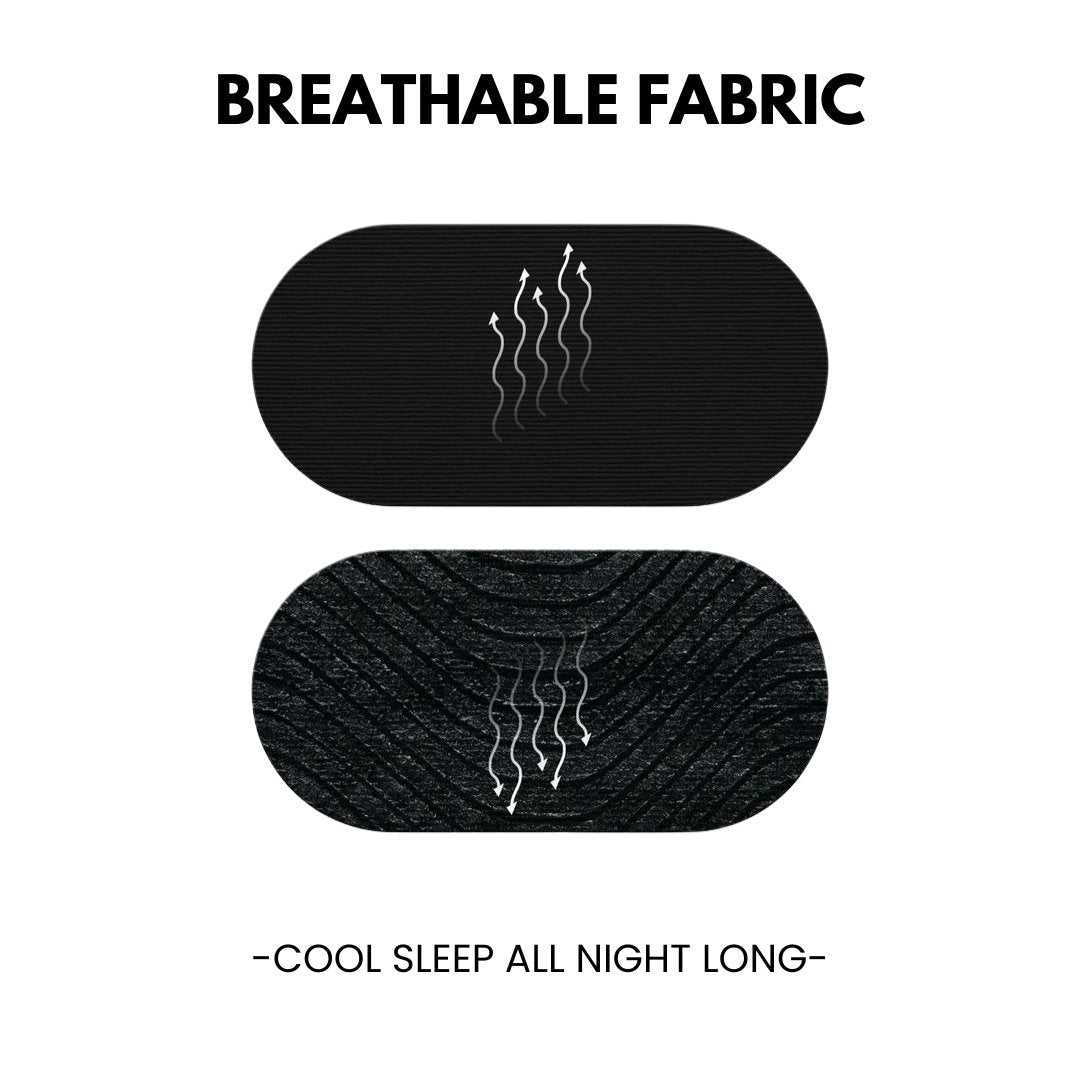
Material: Bamboo silk is breathable, comfortable, and conforms to your face. Surgical tape, micropore tape, and kinesiology tape were designed for other purposes and may irritate skin with nightly use.
Adhesive safety: The adhesive contacts the thinnest, most permeable skin on your body for 8 hours every night. It should be independently tested under ISO 10993 for biocompatibility. It should be screened for PFAS. "Hypoallergenic" on the label is not a test result — it's a marketing term.
Beard compatibility: If you have any facial hair, you need tape that works on beards — holds through hair all night and releases without pulling on removal.
No logo on the tape. Clean, unbranded tape looks intentional. A brand name across your mouth doesn't.
Step 3: Apply and sleep
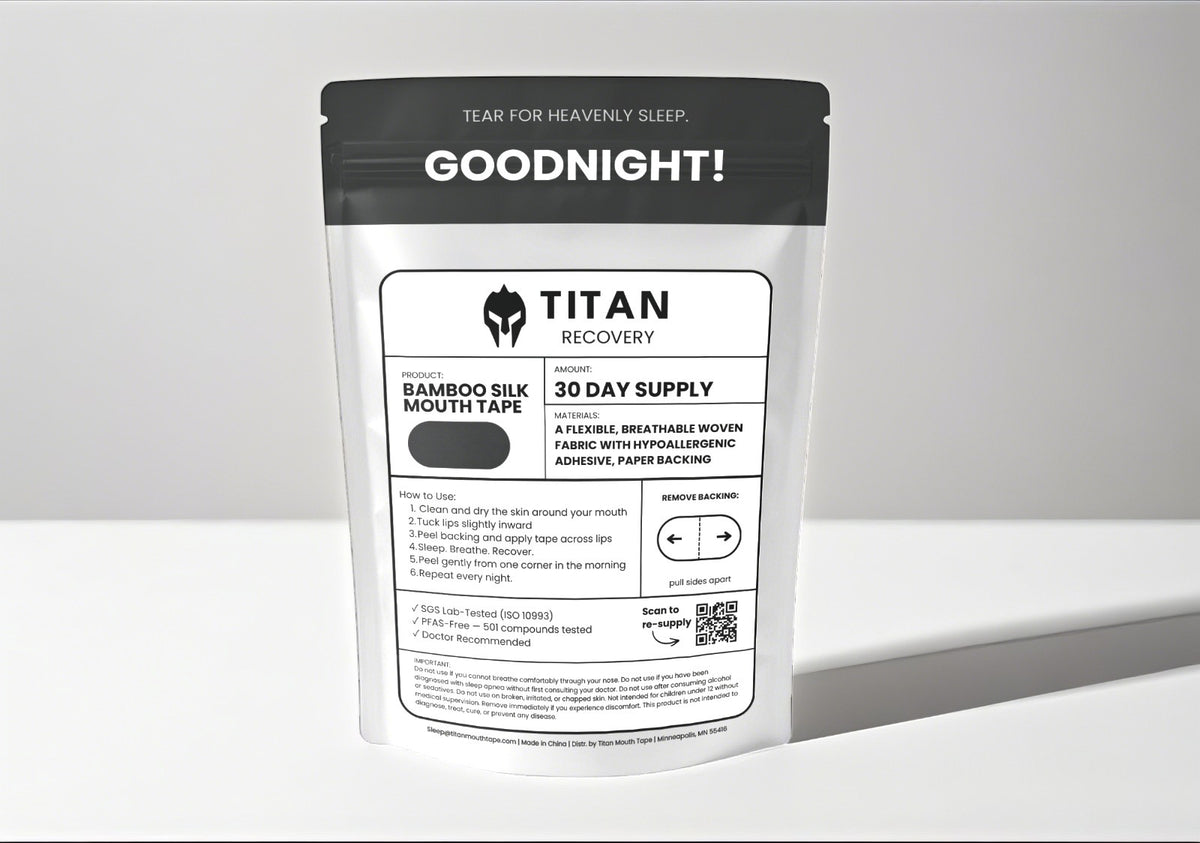
Clean and dry the skin around your mouth. Tuck your lips slightly inward. Apply the tape across your lips. Press for 10 seconds. Sleep.
If using a nasal strip, apply it first — across the bridge of your nose. Open the nose, then close the mouth.
Step 4: Track results
Take a baseline photo (same lighting, same angle, morning). Note your morning symptoms: dry mouth (yes/no), sore throat (yes/no), energy level (1-10). If you use a sleep tracker, screenshot your 7-day averages.
Compare at day 7 and day 30. The changes should be visible in both your data and how you feel.
What Ashton Hall Gets Right
Hall gets the core message right: how you breathe during sleep matters more than most people realize, and closing the mouth is a simple intervention with outsized impact. He's introduced millions of young men to a practice that research supports — and that most of them would never have discovered through medical channels.
The enthusiasm can be excessive. The claims about jawline restructuring are overstated. But the foundational practice — nasal breathing during sleep, achieved by keeping the mouth closed — is sound.
The key is doing it with the right product. A tape that's tested for safety, made from a material designed for nightly facial wear, and backed by data you can verify — not just a strip of surgical tape from a TikTok recommendation.
For more on the connection between mouth taping, mewing, and facial appearance, read this →
Doctor Recommended: "As a maxillofacial surgeon and dentist, I recommend Titan Mouth Tape. Nasal breathing during sleep is essential for airway health and deep restorative rest. Titan's bamboo silk design is the most comfortable and effective mouth tape I have tested. If you struggle with snoring, dry mouth, or poor sleep quality, this is the simplest change you can make for your health." — Dr. Francois P., MD, DDS — Maxillofacial Surgeon
Lab-Tested Safety: Titan's adhesive is independently tested to ISO 10993 medical device standards. Non-toxic (95% cell viability). Non-allergenic (0% reaction rate). Non-irritating (score 0.0/8.0). PFAS-free — 501 compounds tested, zero detected. See full test results →
Try it tonight. Bamboo silk. SilkSeal™ adhesive. Beard-friendly. No logo on the tape. Free shipping. 30-night Better Sleep Guarantee. Shop Titan Mouth Tape → · Shop TitanAir →