Titan Recovery for Athletes
Share
You track your macros. You program your training blocks. You spend real money on creatine, protein, and recovery boots. But every night, you spend seven to nine hours breathing through your mouth — undoing a measurable portion of the work you put in during the day. Titan Recovery for athletes targets the single biggest leak in most recovery protocols: how you breathe while you sleep. Nasal breathing during sleep improves oxygen efficiency, supports deeper sleep stages, and creates the physiological conditions where growth hormone release, tissue repair, and nervous system recovery actually happen at full capacity.
Athletes who measure everything — HRV, resting heart rate, sleep scores, readiness — already have the data to see this. The question is whether you're willing to address the variable you've been ignoring.
Sleep Is the Number One Recovery Tool
This isn't opinion. It's physiology. During deep sleep (stages 3 and 4 of non-REM sleep), the pituitary gland releases the majority of its daily growth hormone output — the hormone directly responsible for muscle protein synthesis, tissue repair, and bone remodeling. Athletes who consistently reach adequate deep sleep duration recover faster between sessions, adapt to training stress more completely, and sustain higher training loads without breakdown.
Heart rate variability — the metric that Whoop, Oura, and EIGHT Sleep users track as a proxy for autonomic recovery — is directly shaped by sleep quality. Higher HRV indicates that your parasympathetic nervous system is dominating during rest, which means your body is actively repairing rather than still managing stress from the day's training. Poor sleep suppresses HRV. Fragmented sleep suppresses HRV. Mouth breathing during sleep, which is associated with more frequent micro-arousals and reduced time in deep sleep phases, suppresses HRV.
The athletes who recover fastest are not always the ones with the best genetics or the most sophisticated supplement stacks. They are consistently the ones who protect their sleep quality with the same discipline they bring to their training. The data on Titan Recovery's impact on sleep quality is worth reviewing if you track any of these metrics.
How Mouth Breathing Sabotages Athletic Recovery
Mouth breathing during sleep creates a cascade of problems that directly undermine recovery. The airway dries out, which increases the likelihood of snoring and partial airway obstruction. Snoring fragments sleep architecture — you cycle out of deep sleep more frequently, spend less total time in the stages where growth hormone is released, and wake with a lower HRV than your training load would predict.
Mouth breathing also bypasses the paranasal sinuses, which produce nitric oxide — a vasodilator that supports oxygen transfer in the lungs. Every breath through the mouth skips this step entirely. For athletes whose recovery depends on efficient oxygen delivery to damaged tissues overnight, that's a measurable loss repeated across thousands of breaths per night.
The downstream effects show up in the data. Athletes who mouth-breathe during sleep commonly report higher resting heart rates in the morning, lower readiness scores, and the subjective feeling of waking up unrested despite adequate time in bed. The training was good. The nutrition was dialed. The sleep was compromised by something as basic as an open mouth — and the recovery numbers reflect it.
What Titan Recovery Does for Athletes
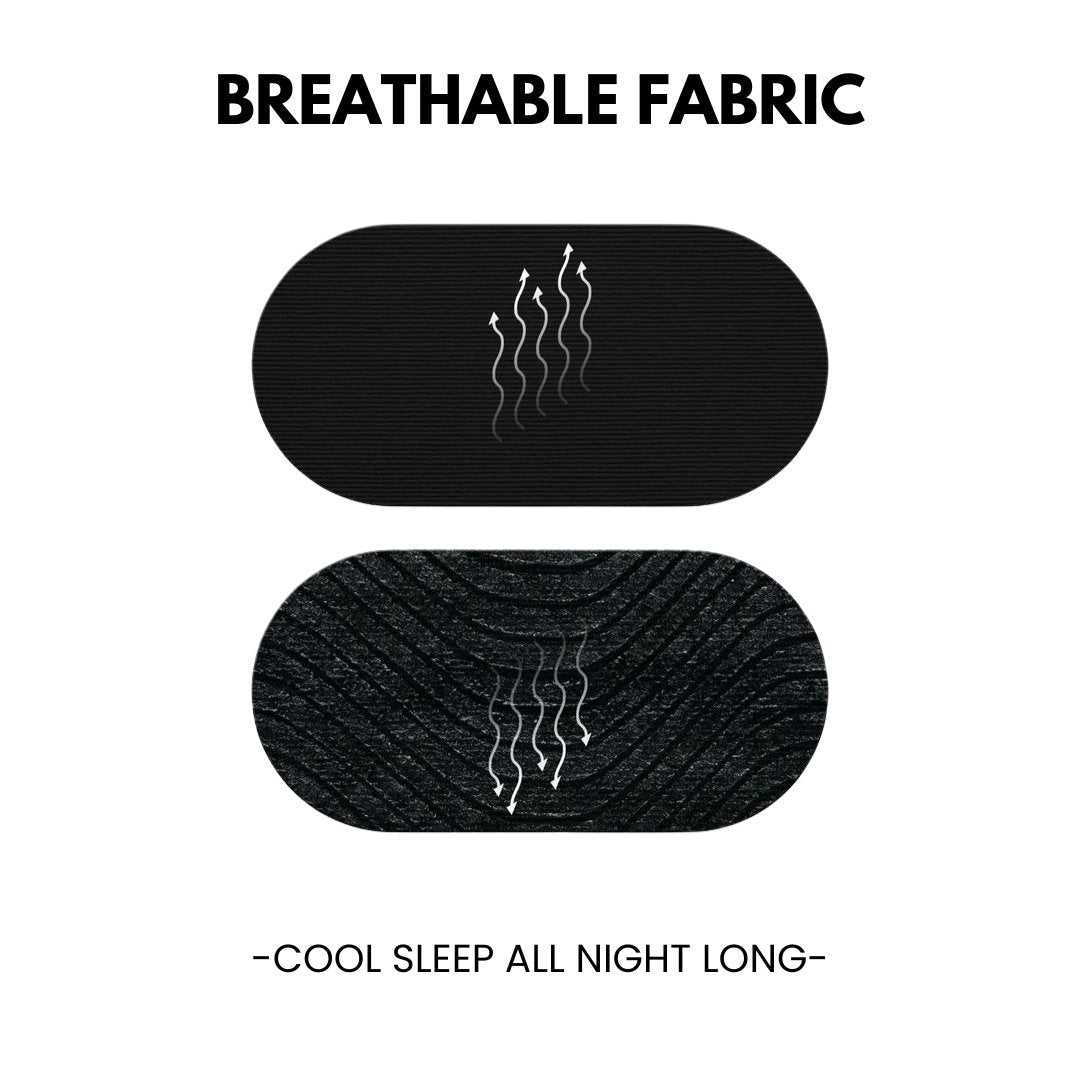
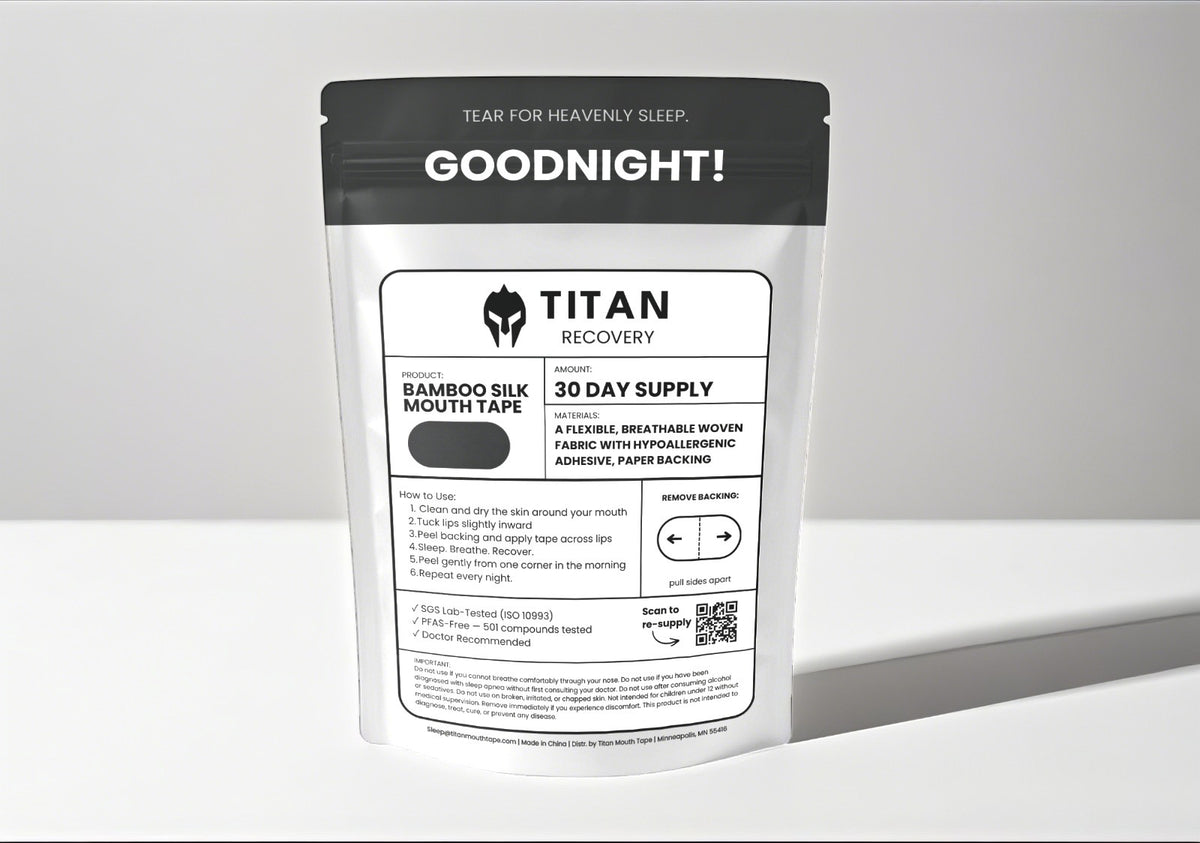
Titan Mouth Tape closes the mouth during sleep and enforces nasal breathing for the full duration of the night. For athletes, the benefits are specific and measurable:
Nasal breathing improves oxygen efficiency. Breathing through the nose filters, warms, and humidifies air before it reaches the lungs. Nitric oxide from the sinuses enters the lower airways with each nasal breath, supporting vasodilation and oxygen transfer. The result is more efficient gas exchange — the same number of breaths moving more usable oxygen into circulation.
Deeper sleep means more growth hormone. Nasal breathing reduces snoring and micro-arousals, which allows the body to sustain longer periods of deep sleep. Growth hormone release is pulsatile and concentrated in deep sleep — more uninterrupted deep sleep means more total growth hormone output overnight. For athletes in hard training blocks, this is the difference between recovering enough to absorb the next session and accumulating fatigue that eventually forces a deload.
Higher HRV means faster recovery. Athletes who switch to nasal breathing during sleep consistently report improvements in morning HRV readings within the first one to two weeks. Higher HRV reflects a nervous system that spent the night in genuine parasympathetic recovery rather than managing the low-grade stress of obstructed breathing. Oura Ring users who start mouth taping frequently see this shift in their data within the first week.
Sport-Specific Benefits
CrossFit and functional fitness. CrossFit athletes train across multiple energy systems in a single session — glycolytic intervals, heavy strength work, and sustained aerobic efforts. Recovery between sessions is the bottleneck for most competitive CrossFitters, not fitness capacity. Titan Recovery for CrossFit athletes means deeper sleep, better HRV recovery between double-session days, and less accumulated fatigue across a training week. The connection between mouth tape and gym recovery is direct: better sleep tonight means a better session tomorrow.
Endurance sports. Runners, cyclists, and triathletes accumulate training volume that makes sleep quality a rate-limiting factor for adaptation. Aerobic base development, mitochondrial biogenesis, and glycogen restoration all depend on adequate deep sleep. Mouth tape enforces nasal breathing overnight, and the role of nasal breathing in athletic recovery is well-documented — it compounds across the high-volume training weeks where recovery margins are thinnest.
Strength sports. Powerlifters, Olympic weightlifters, and strongman competitors depend on growth hormone and testosterone for muscle repair and strength adaptation. Both hormones peak during deep sleep. Bodybuilders choose Titan Recovery for this reason — protecting deep sleep quality protects the hormonal environment that makes strength gains possible.
Combat sports. Fighters and grapplers need both physical recovery and cognitive sharpness. REM sleep supports motor learning and skill consolidation, while deep sleep handles the physical repair. Mouth breathing fragments both. Athletes in combat sports who train twice daily have the smallest recovery windows — and the most to gain from fixing how they breathe during the hours between sessions.
Pairing Mouth Tape with Nasal Strips
Athletes with any degree of nasal congestion — seasonal allergies, a slightly deviated septum, or the general swelling that comes from hard training and elevated inflammatory markers — benefit from combining Titan Mouth Tape with TitanAir Nasal Strips. The tape keeps the mouth closed. The strips mechanically widen the nasal passages to reduce airflow resistance.
The combination addresses both sides of the equation: mouth tape prevents the default fallback to mouth breathing, and nasal strips ensure that nasal airflow is sufficient to sustain comfortable breathing all night. The Titan Sleep System bundles both products for athletes who want the full protocol. For athletes in heavy training phases — where nasal congestion from elevated inflammation is common — the combination is especially effective.
What the Data Shows
Athletes who track sleep with Oura Ring, Whoop, or similar devices report consistent patterns after starting Titan Mouth Tape:
HRV improvements within the first week. Morning HRV readings typically increase as sleep fragmentation decreases. The magnitude varies by individual, but the direction is consistent — less time mouth breathing means less autonomic disruption overnight.
More time in deep sleep. Reduced snoring and fewer micro-arousals translate directly to longer sustained periods in deep sleep stages. Users commonly report 10 to 30 additional minutes of deep sleep per night, which compounds across a training week into meaningfully more growth hormone exposure and tissue repair time.
Higher morning readiness scores. Whoop recovery scores and Oura readiness scores reflect the downstream effects of better sleep architecture — higher HRV, lower resting heart rate, more deep sleep. Athletes who were chronically in the yellow or red zone often see a shift toward consistent green recovery within two to three weeks of nightly mouth taping. The Oura score data from mouth tapers is the most granular evidence available.
Subjective recovery improvements. Athletes report waking up with less dry mouth, less morning grogginess, and a clearer sense of being rested. These subjective markers align with the objective data — and for athletes who make daily training decisions based on how they feel in the morning, the subjective signal matters.
Frequently Asked Questions
Is Titan Mouth Tape safe for athletes to use every night?
Yes. Titan Mouth Tape is designed for nightly use. It uses a medical-grade adhesive that holds securely but removes cleanly in the morning without skin irritation. Athletes with beards or facial hair report reliable adhesion. The tape allows mouth opening in an emergency — it's a gentle closure, not a seal. Thousands of athletes use it nightly as part of their recovery protocol.
How quickly will I see changes in my recovery data?
Most athletes who track HRV and sleep stages see measurable changes within the first five to seven nights. Deep sleep duration tends to increase first, followed by HRV improvements as sleep architecture stabilizes. The full compounding effect on recovery quality typically becomes clear over two to four weeks of consistent nightly use.
Can I use mouth tape if I train twice a day?
Absolutely — and two-a-day athletes arguably benefit most. When recovery windows are compressed, sleep quality becomes the primary lever for adaptation. Mouth tape maximizes the recovery value of every hour you spend in bed. Some athletes also use it during naps between sessions for the same reason.
Should I use nasal strips and mouth tape together?
For athletes, combining them is the strongest approach. Mouth tape enforces nasal breathing. Nasal strips reduce airflow resistance so that nasal breathing is effortless all night. Athletes in heavy training blocks — when inflammation and congestion are higher — get the most benefit from pairing both. The Titan Sleep System bundles both at a lower per-unit cost than buying separately.
The Bottom Line
Athletes optimize everything they can measure — except the eight hours they spend unconscious. Titan Recovery for athletes fixes that blind spot. Nasal breathing during sleep supports deeper sleep stages, higher growth hormone output, improved HRV, and faster recovery between sessions. The protocol is simple: Titan Mouth Tape every night, TitanAir Nasal Strips if you want maximum airflow, and the discipline to treat sleep as the recovery tool it actually is. Subscribe and Save for 11% off every order. Free shipping. Better Sleep Guarantee.
Doctor Recommended: "As a maxillofacial surgeon and dentist, I recommend Titan Mouth Tape. Nasal breathing during sleep is essential for airway health and deep restorative rest. Titan's bamboo silk design is the most comfortable and effective mouth tape I have tested. If you struggle with snoring, dry mouth, or poor sleep quality, this is the simplest change you can make for your health." — Dr. Francois P., MD, DDS — Maxillofacial Surgeon
Lab-Tested Safety: Titan's adhesive is independently tested to ISO 10993 medical device standards. Non-toxic (95% cell viability). Non-allergenic (0% reaction rate). Non-irritating (score 0.0/8.0). PFAS-free — 501 compounds tested, zero detected. See full test results →
Try the complete system tonight. Titan Mouth Tape (bamboo silk, SilkSeal™ adhesive) + TitanAir Nasal Strips. Free shipping. 30-night Better Sleep Guarantee. Shop Titan Mouth Tape → · Shop TitanAir Nasal Strips →