
Do TitanAir Nasal Strips Work? Honest Answer
Share
Do TitanAir Nasal Strips work? The short answer is yes. They physically open your nasal passages by roughly 30-40% using a spring-loaded mechanism that lifts the outer walls of your nose. No medication, no chemicals, no waiting period. You apply the strip, the spring creates outward tension, and airflow increases immediately.
That's the mechanism. The rest of this article covers the physics behind how TitanAir works, what results people actually report, and — just as important — what nasal strips can't fix.
How Nasal Strips Work: The Basic Physics
Your nose has a structural weak point called the nasal valve. It sits just inside the nostril, about a centimeter back, and it's the narrowest section of your entire airway. When you breathe in, the slight negative pressure can cause the soft tissue around the valve to collapse inward, narrowing the passage even more. This effect gets worse when you're lying down, congested, or breathing harder during exercise.
A nasal strip works by applying outward mechanical force across the nasal valve from the outside. The strip contains a flexible spring band — typically made of plastic or composite material — embedded in an adhesive backing. When you apply the strip across the bridge of your nose, the spring tries to straighten itself. Because it's anchored to both sides of your nose by the adhesive, that straightening force pulls the nostrils open.
The result: the nasal valve opens wider, the soft tissue can't collapse as easily on inhalation, and air moves through with less resistance. Research published in the American Journal of Rhinology has confirmed that external nasal dilators reduce nasal airflow resistance and increase cross-sectional area at the nasal valve. The effect is entirely mechanical and lasts as long as the strip stays in place.
What TitanAir Does Differently
TitanAir Nasal Strips use a dual-spring design that distributes lifting force across a wider area of the nasal valve, rather than concentrating it at a single point the way many nasal strips do. This matters because the nasal valve isn't a single spot — it's a region. A strip that only lifts at the center of the bridge misses the lateral portions of the valve where collapse actually occurs.
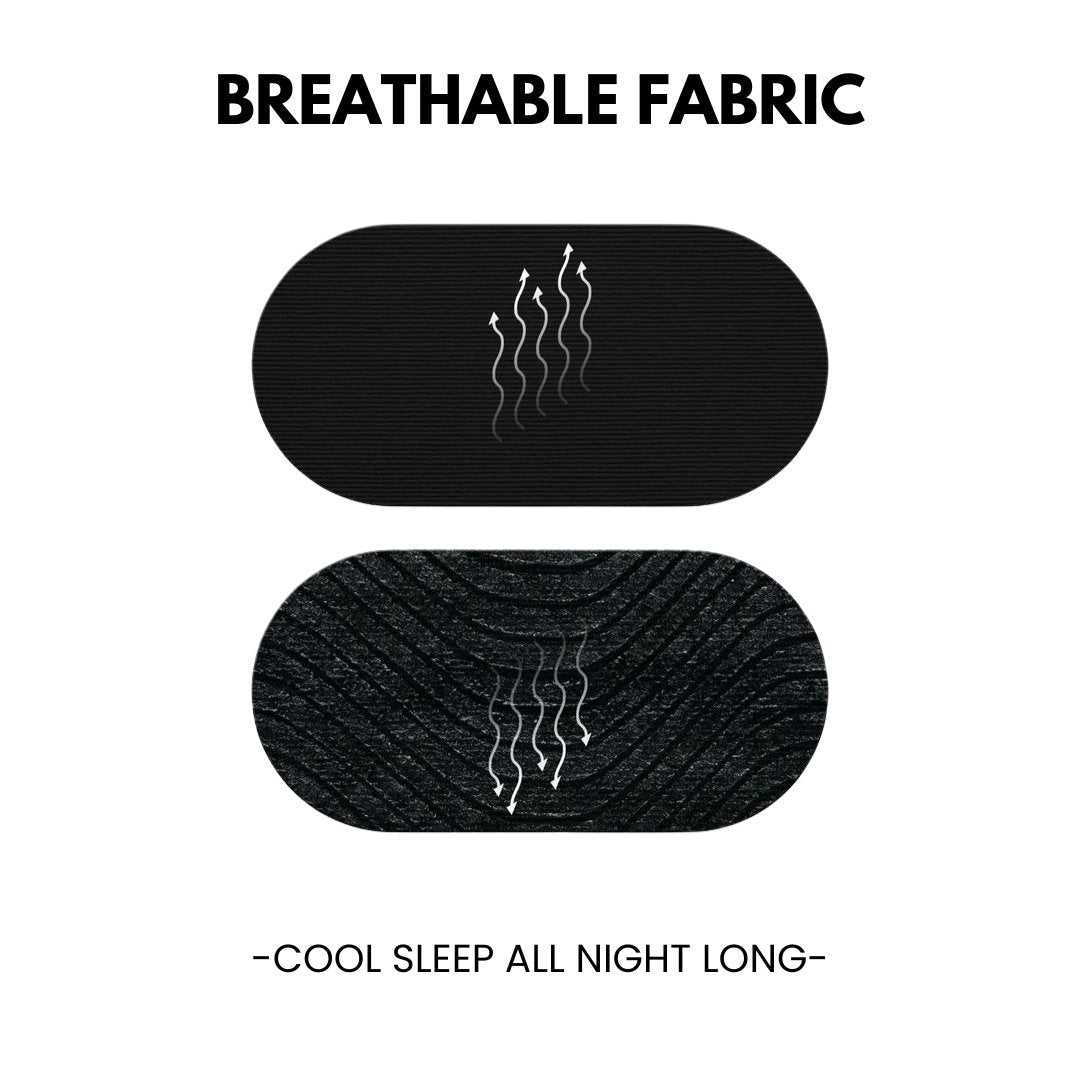
The adhesive is medical-grade and latex-free. It's designed to hold through a full night of sleep — including side sleeping, sweating, and movement — without peeling at the edges. The adhesive strength is calibrated so the strip stays put all night but doesn't tear skin or leave heavy residue when you remove it in the morning.
The spring tension itself is stronger than what you'll find in most pharmacy-aisle nasal strips. That's a deliberate trade-off: a stronger spring means more opening force, which means greater airflow improvement. Some people feel a slight pulling sensation when they first apply a TitanAir strip. That's the spring doing its job. Within a minute or two, you stop noticing the sensation — but the airflow increase stays.
What the Results Actually Look Like
The most common feedback from TitanAir users falls into a few consistent patterns.
Immediate airflow difference. Most people notice the effect within seconds. You breathe in through your nose and more air comes through with less effort. People with partial congestion often describe it as "opening up," even though nothing is clearing — the strip is mechanically widening the passage.
Reduced snoring volume. Partners frequently report the difference before the wearer notices. More nasal airflow means less turbulence and less tissue vibration. Nasal strips are most effective for snoring that originates from nasal restriction. If snoring comes from the throat — which is common — nasal strips alone may reduce it but won't eliminate it.
Better sleep quality. People who switch from restricted to open nasal breathing report feeling more rested. The likely mechanism is reduced micro-arousals — when airflow is restricted, your body works harder to breathe, causing brief unconscious awakenings. Opening the nasal valve reduces that effort.
Exercise performance. Athletes use TitanAir during training for the same reason it works during sleep: more air through the nose with less resistance, keeping nasal breathing viable at higher intensities.
What TitanAir Works Best For
Snoring driven by nasal congestion. If you snore because your nose is partially blocked — from allergies, a cold, or swollen tissues — a nasal strip directly addresses the bottleneck by increasing airflow so the body doesn't compensate by opening the mouth.
Naturally narrow nostrils. Some people have narrower nasal passages. A nasal strip compensates for that anatomy mechanically, without surgery or medication.
Mild to moderate congestion. Allergies, seasonal congestion, and the swelling that comes from lying down at night all respond well to external nasal dilation. The strip holds the passage open despite the swelling.
Deviated septum (mild). A partial nasal septum deviation can restrict one side of the nose. External nasal strips won't straighten the septum, but they can improve airflow on the restricted side enough to make nasal breathing comfortable during sleep.
Exercise. A nasal strip lowers airflow resistance, keeping nasal breathing viable at higher intensities and delaying the switch to mouth breathing during training.
What TitanAir Won't Fix
Nasal strips are a tool with specific limits. Being honest about those limits matters.
Severe obstruction, polyps, or sinusitis. If your nose is fully blocked — not partially restricted, but obstructed — an external strip can't create enough opening. Polyps sit inside the cavity where no external force can move them. Chronic sinus infections involve inflammation deep in the passages. All three need evaluation and treatment by an ENT.
Sleep apnea. Obstructive sleep apnea involves the airway collapsing at the throat, not the nose. If you snore loudly, gasp during sleep, or stop breathing at night, see a sleep specialist. Nasal strips are not a substitute for a CPAP or medical intervention.
Mouth breathing. This is the big one. A nasal strip opens your nose, but it doesn't close your mouth. If you breathe through your mouth during sleep — which most people who snore do — opening the nose alone won't redirect your breathing. You need both: nasal strips to open the nose and mouth tape to close the mouth.
How to Get the Best Results
Placement is the single biggest factor. Most people place nasal strips too high on the bridge of the nose. Up there, the bone is rigid — the strip can't flex or create tension.
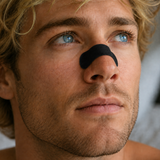
The correct placement is lower, across the fleshy part where the cartilage meets the nostrils. This is where the nasal valve sits. Run your finger down the bridge of your nose and feel the transition from hard bone to softer cartilage. Center the strip on that transition zone, not above it.
Before applying: Clean and dry the skin. Oil, moisturizer, and sweat reduce adhesive strength. Apply the strip before skincare products, or wipe the nose clean first.
After applying: Press firmly for 10 seconds, especially at the edges. Full contact with the skin is what keeps the strip in place all night.
Removing: Peel slowly from one end. A slow peel lets the adhesive release cleanly.
Pairing TitanAir with Mouth Tape
TitanAir Nasal Strips and Titan Mouth Tape solve different halves of the same problem. The nasal strip opens the supply side — it makes sure enough air can flow through your nose. The mouth tape closes the demand side — it prevents your body from defaulting to mouth breathing when your jaw relaxes during sleep.
Together, they create a complete nasal breathing system. Nasal strips alone leave the mouth open, so even with better nasal airflow, the body may still mouth breathe out of habit. Mouth tape alone works well for people with clear nasal passages, but if there's any nasal restriction, the closed mouth can make breathing feel effortful because the nose is the only option and it's not fully open.
The combination eliminates both failure modes. The Titan Sleep System bundles both products together. Apply the nasal strip first to confirm easy nasal airflow, then apply the mouth tape. The entire process takes about 30 seconds.
With Subscribe and Save, you lock in an 11% discount and never run out. Free shipping on every order.
Frequently Asked Questions
How quickly do TitanAir Nasal Strips start working?
Immediately. The spring mechanism creates outward tension the moment you apply the strip. Most people feel the airflow difference within seconds. There's no medication to absorb, no active ingredient to kick in — the effect is purely mechanical and starts as soon as the strip is in place.
Can I wear TitanAir Nasal Strips every night?
Yes. Because they work mechanically with no drugs or active ingredients, there's no risk of dependency, rebound congestion, or tolerance. You can wear them nightly for as long as you want. If the adhesive causes any skin irritation — which is uncommon but possible with any adhesive product — take a night off and let the skin recover.
Are TitanAir Nasal Strips worth it compared to cheaper pharmacy strips?
The difference is spring strength and adhesive quality. TitanAir uses stronger spring tension for more opening force and a medical-grade adhesive that holds all night without peeling. Cheaper strips often lose tension as the adhesive weakens, or use a softer spring that doesn't create enough lift. If you've tried pharmacy strips and they didn't seem to help, the issue may have been the strip, not the concept.
Do TitanAir Nasal Strips help with a deviated septum?
They can help with mild to moderate deviations. A nasal strip can't straighten the septum itself, but it can improve airflow by widening the nasal valve on the restricted side. For a significant deviation that causes major one-sided obstruction, see an ENT for evaluation. A nasal strip is a useful tool, not a replacement for medical treatment when the structural issue is severe.
The Bottom Line
TitanAir Nasal Strips work through simple mechanics: a spring-loaded strip pulls your nasal valve open, increases airflow by 30-40%, and reduces the resistance that makes nasal breathing difficult. No drugs, no chemicals, no waiting. The effect is immediate and lasts all night.
They work best for snoring caused by nasal congestion, naturally narrow nostrils, mild deviated septum, exercise performance, and anyone who wants easier nasal breathing during sleep. They won't fix severe obstruction, polyps, sinusitis, or sleep apnea — and they don't close your mouth.
For the complete breathing system — nose open and mouth closed — pair TitanAir Nasal Strips with Titan Mouth Tape. Open the supply side. Close the demand side. Breathe through your nose all night.
Doctor Recommended: "As a maxillofacial surgeon and dentist, I recommend Titan Mouth Tape. Nasal breathing during sleep is essential for airway health and deep restorative rest. Titan's bamboo silk design is the most comfortable and effective mouth tape I have tested. If you struggle with snoring, dry mouth, or poor sleep quality, this is the simplest change you can make for your health." — Dr. Francois P., MD, DDS — Maxillofacial Surgeon
Lab-Tested Safety: Titan's adhesive is independently tested to ISO 10993 medical device standards. Non-toxic (95% cell viability). Non-allergenic (0% reaction rate). Non-irritating (score 0.0/8.0). PFAS-free — 501 compounds tested, zero detected. See full test results →
Try the complete system tonight. Titan Mouth Tape (bamboo silk, SilkSeal™ adhesive) + TitanAir Nasal Strips. Free shipping. 30-night Better Sleep Guarantee. Shop Titan Mouth Tape → · Shop TitanAir Nasal Strips →