Best Nasal Strips for Sleeping in 2026: Strips, Dilators, and Magnets Compared
Share
There are more ways to open your nose at night than ever before. External strips, internal dilators, magnetic systems -- the category has expanded well past the drugstore aisle, and most of the marketing is designed to confuse you. Some of these products are excellent. Some are solutions looking for a problem. We tested all six of the major options on the market in 2026, wore each for at least a week, and put together the comparison we wish had existed when we started.
Here's what actually works, what doesn't, and what's worth your money.
Master Comparison Table
| Product | Type | Material | Reusable? | Price/Month | Per Night | Our Rating |
|---|---|---|---|---|---|---|
| TitanAir | External strip | Bamboo silk | No | $24.95 | $0.83 | 9.2/10 |
| Breathe Right | External strip | Plastic / fabric | No | ~$11 | $0.37 | 7.8/10 |
| Clear Passage | External strip | Plastic / fabric | No | ~$8-15 | $0.20-0.30 | 6.5/10 |
| Intake Breathing | Magnetic band | Silicone / metal | Band yes, tabs no | ~$25+ | $0.83 | 7.5/10 |
| Rhinomed Mute | Internal dilator | Medical polymer | ~10 uses | ~$18 | $0.60 | 6.8/10 |
| WoodyKnows | Internal dilator | Medical silicone | ~30 days | ~$17 | $0.57 | 6.3/10 |
External Strips vs. Internal Dilators
Before getting into the individual reviews, it helps to understand the two fundamentally different approaches to opening your nasal passages at night.
External nasal strips sit on the outside of your nose, across the bridge. They use flexible splints or spring bands to physically lift the sidewalls of the nostrils outward, widening the nasal valve from the outside. You peel, stick, sleep, and toss in the morning. The mechanism is simple, proven, and comfortable for most people. TitanAir, Breathe Right, and Clear Passage all fall into this category.
Internal nasal dilators go inside your nostrils. They push the nasal passages open from within using stents, paddles, or flexible frames. The airflow improvement can be significant -- Rhinomed claims up to 38% more airflow with its Mute dilator. But the tradeoff is comfort. You're inserting a foreign object into your nose and sleeping with it there for eight hours. Some people adapt quickly. Others never get used to it. Rhinomed Mute and WoodyKnows use this approach.
Intake Breathing is a hybrid. Its magnetic band sits on the outside of your nose, but it uses adhesive tabs placed just inside the nostrils to anchor the system. It's the most engineered option on the market, which is both its strength and its weakness.
For most sleepers, external strips are the better starting point. They're simpler, more comfortable, and require zero adjustment period. Internal dilators make more sense for people with specific nasal anatomy issues or those who've tried external strips and need more aggressive airway opening.
TitanAir Nasal Strips -- Best Overall
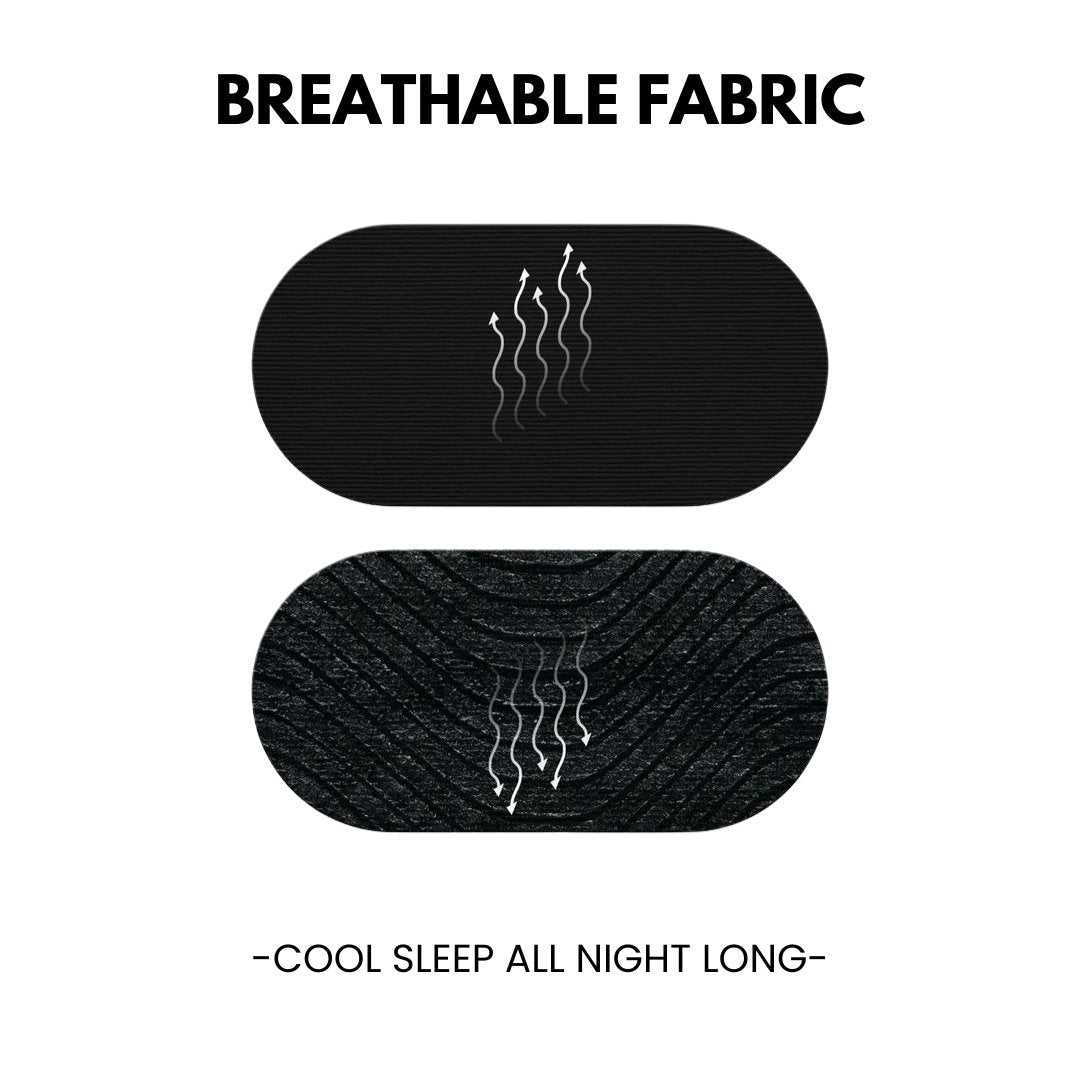
TitanAir is the only nasal strip on this list made from bamboo silk. That might sound like a marketing gimmick, but it translates to a noticeable difference in comfort. The material is softer and more breathable than the plastic-and-fabric construction used by Breathe Right and its imitators. On the skin, it feels closer to a silk bandage than a drugstore strip.
The adhesive holds through the night without leaving the sticky residue that's become a hallmark complaint about other external strips. In our testing, the strip stayed firmly in place through side sleeping, pillow adjustment, and the occasional 3 AM face-plant into the pillow. Removal in the morning was clean -- no red marks, no peeling skin, no leftover gunk that requires scrubbing.
The lift is solid. Intake Breathing claims a more aggressive opening, but TitanAir is more than adequate for the vast majority of sleepers. What TitanAir does better than anyone else is deliver consistent, comfortable airflow improvement that you'll actually use every single night. The best nasal strip is the one you don't dread putting on.
At $24.95 for a 30-day supply, TitanAir costs more than drugstore options. That's the honest tradeoff. You're paying roughly double the per-night cost of Breathe Right. Whether that premium is worth it comes down to how much you value the material quality and how sensitive your skin is. If you've bounced off cheaper strips because of adhesive irritation or discomfort, TitanAir is worth trying before you give up on external strips entirely.
Best for: Nightly use, sensitive skin, anyone who's been disappointed by drugstore strips.
Breathe Right
Breathe Right invented the modern nasal strip category, and they're still the product most people think of when they hear the term. The design is straightforward: a flexible spring-band strip in either tan or clear, available in Original and Extra Strength (which provides about 50% more lifting force). You can find them at essentially any pharmacy, grocery store, or big-box retailer in the country.
The strips work. The spring-band mechanism provides genuine nasal valve expansion, and the Extra Strength version delivers a meaningful upgrade in airflow over the Original. At around $11 for a 30-count box, the per-night cost is hard to beat -- roughly 37 cents. For a lot of people, that combination of availability, proven performance, and low price is all they need.
The downsides are real, though. The adhesive is aggressive, which means it holds well but can leave residue on the skin and occasionally pull at sensitive or oily skin during removal. People with naturally oily complexions frequently report that the strips lose adhesion before morning. The materials are functional but generic -- there's no pretense of premium here. And the packaging generates a fair amount of plastic waste, which matters to some buyers and doesn't to others.
If you're trying nasal strips for the first time and want to spend as little as possible to see if the concept works for you, Breathe Right Extra Strength is the right starting point. Just don't be surprised if you eventually want to upgrade.
Marketed toward: First-time users, budget-conscious buyers, people who want to grab strips at the store tonight.
Clear Passage
Clear Passage is essentially a budget Breathe Right. The design is similar -- external adhesive strip with flexible bands -- and the mechanism is identical. The difference is price. Depending on where you buy, Clear Passage strips run $8-15 for packs of 30-50, which makes them the cheapest per-night external strip option available.
Performance-wise, they're fine. Not exceptional. The adhesive is adequate but not as consistent as Breathe Right's. The lifting force varies more from strip to strip. Brand recognition is low, which means less investment in quality control and less published testing data. You're getting the basic mechanics of a nasal strip at the lowest possible price, and the product delivers on that promise without any extras.
The limitations are the same ones shared by all plastic-and-adhesive external strips: potential residue, inconsistent hold on oily skin, and a generic feel. But if your goal is to spend the absolute minimum on a nasal strip that works, Clear Passage gets the job done.
Marketed toward: Budget-first buyers, anyone who goes through strips quickly and wants to keep costs low.
Intake Breathing
Intake Breathing takes a completely different approach. Instead of an adhesive strip, the system uses a reusable magnetic band that sits on the outside of your nose, anchored by small disposable adhesive tabs placed just inside your nostrils. The magnets pull outward on the tabs, expanding the nasal passages from the sides -- a different mechanism than traditional strips, which lift from the bridge.
The system was originally designed for athletes, and the hold reflects that. This thing does not move. Wind, sweat, aggressive movement -- the magnetic connection is significantly stronger than any adhesive-only strip. The airflow improvement is real and, in our testing, slightly more noticeable than a standard external strip. The expansion angle targets the sidewalls directly rather than relying on bridge lift alone.
That said, there's a learning curve. Getting the adhesive tabs positioned correctly inside your nostrils takes a few tries. The starter kit costs $35, and refill tabs run about $25 per month -- making this the most expensive option on the list for ongoing use. Some people find the internal tabs uncomfortable, especially in the first week. And the magnetic band, while small, is more noticeable on the face than a standard strip.
Intake Breathing is the product for someone who has tried everything else and wants maximum airway opening regardless of cost or complexity. It's well-engineered and effective. But for most people, the combination of cost, learning curve, and internal tab placement makes it harder to recommend as an everyday sleep solution.
Marketed toward: Athletes, maximum airflow seekers, people who've outgrown standard strips.
Rhinomed Mute
The Mute is an internal nasal dilator from Australian company Rhinomed. It's a small polymer device with adjustable paddles that you insert into both nostrils. The paddles expand to push the nasal passages open from the inside. Rhinomed claims the device can increase airflow by up to 38% and that 75% of users report reduced snoring.
The concept is sound. An internal dilator can apply more direct force to the nasal passages than an external strip, and for people with specific anatomy -- narrow nasal valves, for example -- that direct approach can make a meaningful difference. The starter pack includes three sizes, which helps with fit, and each device is reusable for about 10 uses before the paddles lose their tension.
Comfort is the limiting factor. Inserting a device into your nostrils before bed is not pleasant for everyone. Some users adapt within a few nights; others find it consistently uncomfortable or distracting enough to disrupt sleep -- which defeats the purpose. The device can also slip out during the night, particularly for side sleepers. And reusable means you need to clean it regularly, adding a maintenance step that external strips don't require.
At about $18 for a starter pack with three sizes, the initial cost is reasonable. The per-night cost is competitive. But the comfort barrier is real, and it makes the Mute a better fit for specific use cases than for general nightly use.
Marketed toward: People with narrow nasal valves, back sleepers, anyone open to internal devices.
WoodyKnows -- Budget Internal Dilator
WoodyKnows offers a range of internal nasal dilators at budget prices. The trial pack includes four sizes and multiple design variants (Super-Support for maximum expansion, Ultra-Thin for minimal intrusion). The devices are reusable for roughly 30 days each, and at $17 for the trial pack, the per-night cost is among the lowest on this list.
The variety is both the product's strength and its weakness. Having multiple designs means you can experiment to find what works for your anatomy, but it also means a significant trial-and-error period. Some users find the right fit immediately; others cycle through the entire pack before finding something tolerable. The company effectively acknowledges this by selling a trial pack rather than a single product.
As with the Mute, the fundamental limitation is comfort. Internal dilators require insertion, take time to get used to, and add a cleaning step to your nightly routine. The WoodyKnows devices are competently made and priced fairly, but they don't solve the core problem that internal devices are less comfortable than external strips for the majority of sleepers.
Marketed toward: Budget-conscious buyers interested in internal dilators, people who want to try multiple sizes and designs.
Pairing Nasal Strips with Mouth Tape
Here's something most nasal strip reviews won't tell you: a nasal strip on its own only solves half the problem.
Opening your nasal passages makes it easier to breathe through your nose. But if your mouth falls open during sleep -- and for many people, it does -- all that improved nasal airflow is wasted. The body defaults to the path of least resistance. If the mouth is open, air goes through the mouth, and you're right back to snoring, dry mouth, and fragmented sleep.
That's why pairing a nasal strip with mouth tape creates a more complete system than either product alone. The nasal strip opens the airway. The mouth tape gently encourages the lips to stay closed, so your body actually uses that airway all night. We've covered the science and the practical details of using nasal strips and mouth tape together in a separate guide.
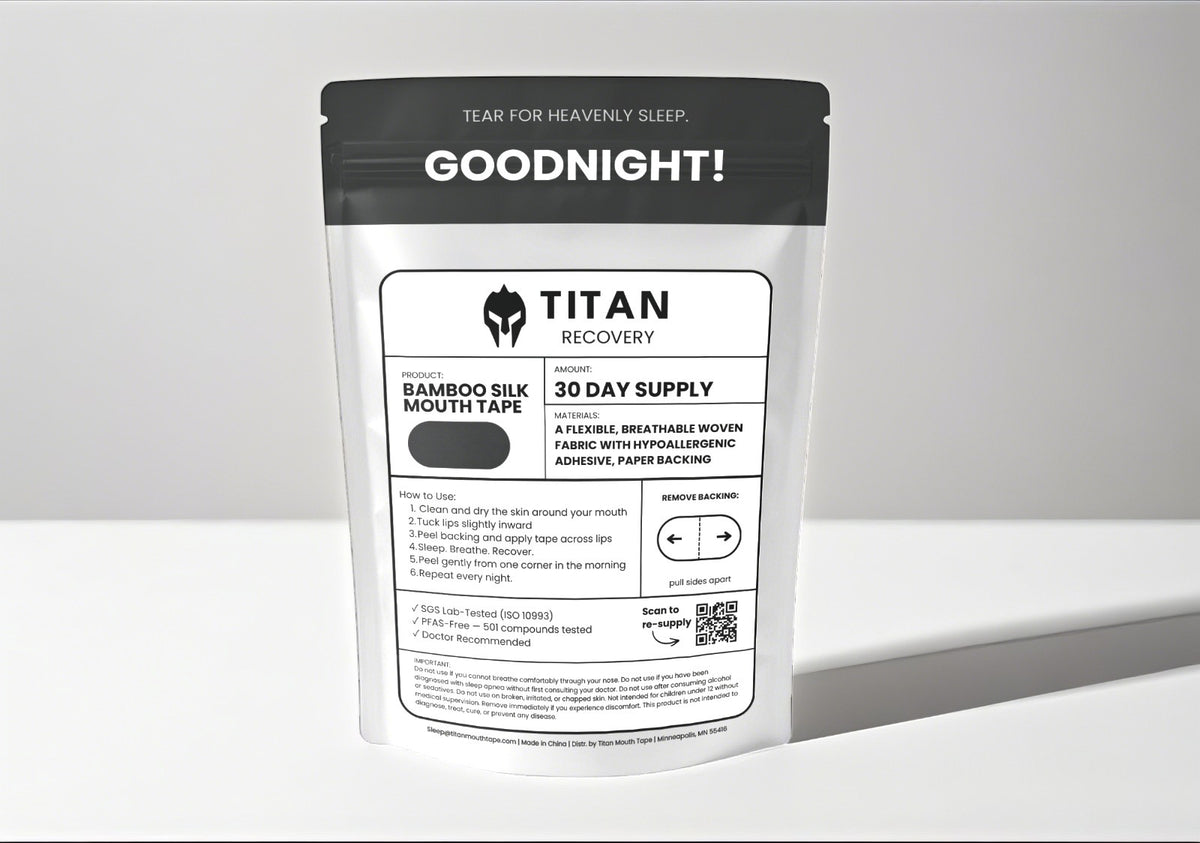
TitanAir nasal strips were designed to pair with Titan Recovery mouth tape. Both use the same hypoallergenic adhesive system, both are made from premium materials, and the Deep Sleep Bundle packages them together at a lower per-unit cost than buying each separately. It's the closest thing on the market to a complete nasal breathing system for sleep.
Can you pair Breathe Right with mouth tape? Sure. Can you pair an internal dilator with mouth tape? Absolutely. The combination works regardless of which nasal product you choose. But TitanAir plus Titan Recovery mouth tape is the only purpose-built pairing, and the materials and adhesive systems are designed to complement each other.
The Bottom Line
For most people, TitanAir nasal strips are the best nasal strips for sleeping in 2026. The bamboo silk material, clean adhesive, and all-night hold put them ahead of the competition in comfort and daily usability. Paired with Titan Recovery mouth tape, they form a complete nasal breathing system that addresses both sides of the equation -- open airway and closed mouth.
If budget is the top priority, Breathe Right Extra Strength remains a solid choice at a third of the price. If you want to experiment with internal dilators, the WoodyKnows trial pack gives you the most sizing options for the money. And if you want significant airway opening regardless of cost or complexity, Intake Breathing's magnetic system is an option.
But the best nasal strip is the one you'll wear consistently, every night, without dreading it. For comfort, material quality, and the ability to build a complete sleep system around it, TitanAir earns the top spot.