Does Nasal Breathing Boost Testosterone? What the Research Says
Share
Health note: This article is general education, not medical advice. Quality sleep supports overall health, but individual results vary — talk to a healthcare professional about your situation.
There's a reason "get more sleep" shows up on every list of natural ways to support testosterone. The majority of daily testosterone release happens during sleep -- specifically during deep sleep and REM stages. Disrupt those stages, and you disrupt the hormonal environment that men's health depends on. The question worth asking is what disrupts those stages most reliably for the largest number of people. And one answer that doesn't get enough attention is breathing through your mouth.
This is not a claim that nasal breathing boosts testosterone the way a supplement or a medical intervention might. The relationship is indirect but well-supported: nasal breathing produces better sleep architecture, better sleep architecture produces more time in the deep stages where testosterone is released, and more time in those stages supports a healthier hormonal profile. That chain has research behind each link. Let's walk through it.
Testosterone Is a Sleep Hormone
Most men think of testosterone as something that responds to exercise, diet, and age. It does. But the single largest daily influence on testosterone production is sleep. The hypothalamic-pituitary-gonadal (HPG) axis -- the signaling cascade that triggers testosterone release from the testes -- is tightly linked to sleep onset and sleep stages. Testosterone levels begin rising at the start of sleep and peak during the first bout of REM. The pulsatile release pattern depends on cycling through the full architecture of sleep: light stages, deep slow-wave sleep, and REM, in proper sequence and duration.
The research on sleep restriction is blunt. A study published in JAMA by researchers at the University of Chicago found that healthy young men who slept five hours per night for one week had testosterone levels 10 to 15 percent lower than when they slept eight hours. To put that in perspective, normal aging reduces testosterone by about 1 to 2 percent per year. One week of restricted sleep produced a hormonal decline equivalent to 10 to 15 years of aging. The men also reported decreased vigor and increased fatigue -- subjective effects consistent with the measured hormonal change.
Other studies have confirmed and extended this finding. Research in the journal Sleep documented a linear relationship between sleep duration and morning testosterone levels: each additional hour of sleep was associated with a roughly 15 percent increase in testosterone. A separate study using polysomnography (overnight sleep monitoring) showed that the amount of time spent in deep slow-wave sleep was a stronger predictor of testosterone levels than total sleep duration alone. In other words, it's not just how long you sleep -- it's how deeply you sleep that determines how much testosterone your body produces.
This is where breathing enters the picture.
Mouth Breathing Wrecks Sleep Architecture
Sleep architecture refers to the structure and cycling of sleep stages throughout the night. A healthy night of sleep involves multiple 90-minute cycles, each containing progressions through light sleep (stages N1 and N2), deep slow-wave sleep (N3), and REM sleep. The first half of the night is typically dominated by deep sleep; the second half is richer in REM. Both matter for hormonal regulation.
Mouth breathing during sleep degrades this architecture in several measurable ways. First, it increases upper airway resistance. When the mouth opens during sleep, the tongue drops backward and the airway narrows. This doesn't necessarily produce full obstructive apnea, but it creates what sleep researchers call upper airway resistance syndrome (UARS) -- partial airway restriction that causes micro-arousals. These micro-arousals are brief, often lasting only seconds, and most people never become conscious of them. But they're enough to knock you out of deep sleep and back into lighter stages, fragmenting the architecture that testosterone production depends on.
Second, mouth breathing dries out the oral and pharyngeal tissues. Dry airway tissues are more likely to vibrate (producing snoring) and more prone to collapse. Snoring itself is a marker of turbulent airflow and partial obstruction, and it's associated with reduced deep sleep and increased sleep fragmentation in studies that separate snoring from full sleep apnea.
Third, mouth breathing activates the sympathetic nervous system more than nasal breathing does. Sympathetic activation during sleep is the physiological opposite of what deep sleep requires. Deep slow-wave sleep is a parasympathetically dominated state -- heart rate drops, blood pressure falls, cortisol is suppressed, and growth hormone and testosterone are released. When sympathetic tone remains elevated because the body is working harder to breathe through a suboptimal airway, the conditions for deep sleep are undermined. You may clock eight hours in bed and still spend inadequate time in the sleep stages where hormonal recovery happens.
The Cortisol Side of the Equation
Testosterone doesn't operate in isolation. It exists in a relationship with cortisol -- the primary stress hormone -- and that relationship matters for understanding why sleep quality affects hormonal health so directly.
Cortisol and testosterone have an inverse relationship in the body. When cortisol rises, testosterone tends to fall. This is a well-documented phenomenon in endocrinology, observed across studies of physical stress, psychological stress, and sleep deprivation. The mechanism involves the HPG axis: elevated cortisol signals the hypothalamus to reduce gonadotropin-releasing hormone (GnRH) output, which reduces luteinizing hormone (LH) from the pituitary, which reduces the signal for testosterone production in the testes.
Sleep deprivation and poor sleep quality both elevate cortisol. Research has shown that even one night of fragmented sleep -- not necessarily short sleep, but sleep with frequent arousals -- increases next-day cortisol levels. The effect is cumulative: chronic poor sleep creates a sustained cortisol elevation that continuously suppresses the HPG axis.
Mouth breathing contributes to this cortisol elevation through the sympathetic activation described above. Every micro-arousal from airway resistance, every episode of partially obstructed breathing, every instance of snoring-related vibration triggers a small cortisol release. Individually, these are minor. Accumulated across six to eight hours of sleep, night after night, they create an environment where cortisol is chronically slightly elevated and testosterone is chronically slightly suppressed. The result is a hormonal profile that looks worse than it should given the person's age, diet, and activity level.
Nitric Oxide and Male Health
There's another dimension to the nasal breathing testosterone connection that goes beyond sleep architecture, and it involves nitric oxide.
When you breathe through your nose, the paranasal sinuses produce nitric oxide (NO) -- a gas that enters the lungs with each inhale and passes into the bloodstream. Nitric oxide is a potent vasodilator: it relaxes smooth muscle in blood vessel walls, increasing blood flow throughout the body. This is the same pathway that erectile dysfunction medications like sildenafil (Viagra) target. Those drugs work by preventing the breakdown of nitric oxide's downstream signaling molecule, prolonging vasodilation.
The relevance to men's health is direct. Erectile function depends on adequate blood flow, which depends on nitric oxide availability. While nasal breathing alone is not a treatment for erectile dysfunction, it contributes to the total nitric oxide pool in the body. Mouth breathing bypasses the sinuses entirely -- no sinus-derived nitric oxide enters the bloodstream. Over the course of a full night of sleep, the difference in cumulative nitric oxide exposure between a nasal breather and a mouth breather is substantial.
Research in vascular biology has also connected nitric oxide to testicular blood flow. Adequate perfusion of the testes supports Leydig cell function -- the cells responsible for testosterone production. While no study has isolated nasal breathing as a variable in testicular blood flow specifically, the broader principle is established: better systemic vasodilation supports better blood flow to reproductive organs.
This isn't an argument that mouth tape is a testosterone booster. It's an observation that nasal breathing supports the vascular environment that male reproductive health depends on -- and mouth breathing removes that support for the entire duration of sleep.
What You Can Actually Do About It
The practical takeaway from all of this research is straightforward: if you want to support your hormonal health through sleep, you need to protect sleep quality, not just sleep duration. And one of the simplest interventions for sleep quality is ensuring nasal breathing throughout the night.
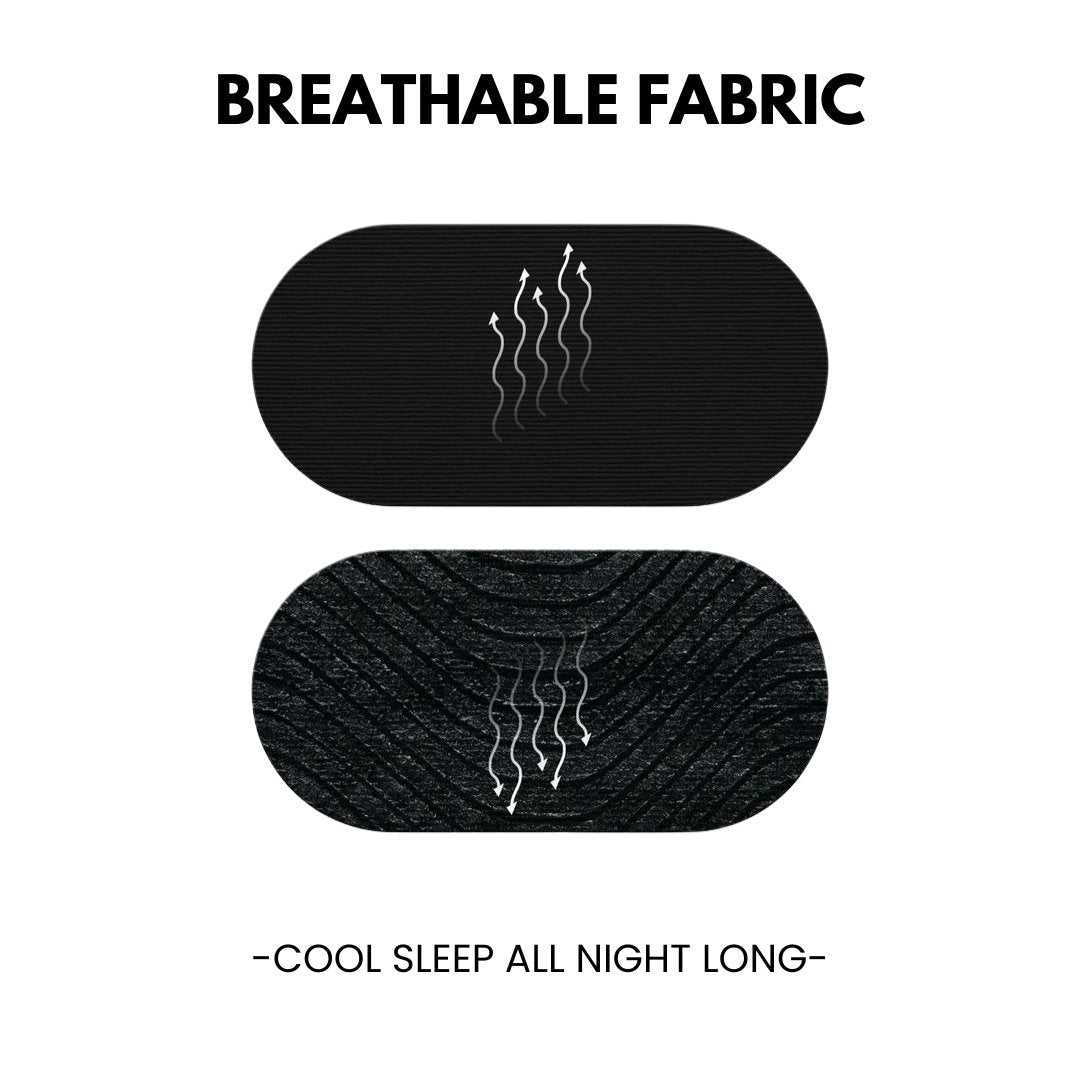
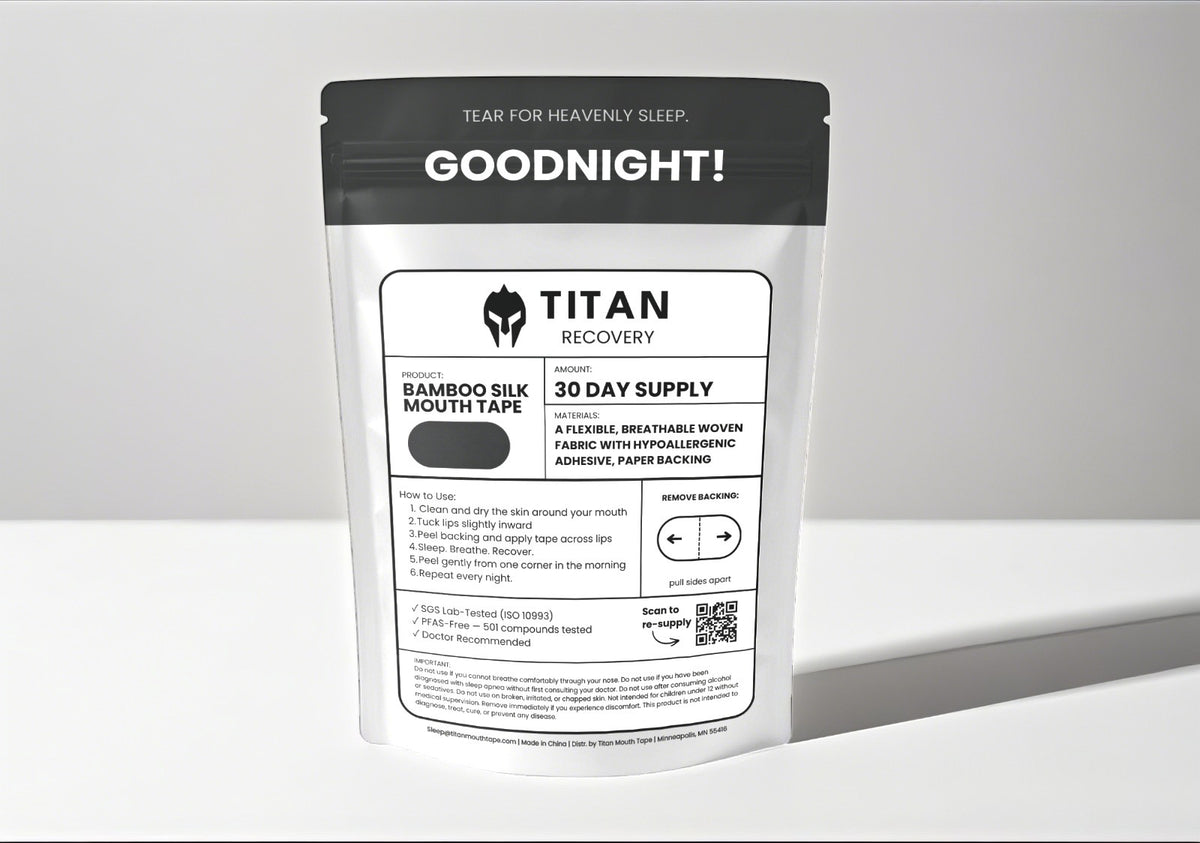
Start with mouth tape. A gentle adhesive strip holds the lips in a relaxed, closed position, routing all breathing through the nose. This eliminates the airway drying, upper airway resistance, micro-arousals, and sympathetic activation that mouth breathing produces during sleep. If you're new to the practice, a step-by-step guide can help you acclimate gradually. Some people feel uneasy the first few nights -- that's normal and typically resolves within a week. If you're concerned about safety, the risk profile is well understood and the tape is designed to release with minimal effort.
Add nasal strips if needed. If nasal congestion makes nose breathing difficult, TitanAir Nasal Strips mechanically open the nasal valve -- the narrowest point of the airway -- reducing resistance and making nasal breathing feel effortless. Pairing nasal strips with mouth tape is a common approach for people who want the best possible nasal breathing setup during sleep.
Practice nasal breathing during the day. Your nighttime breathing pattern is partly a continuation of your daytime default. If you spend your waking hours breathing through your mouth, your body will revert to that pattern during sleep even with tape on (in some cases, dislodging the tape). Daytime nasal breathing practice -- even just wearing mouth tape during desk work or reading -- helps retrain the pattern so nasal breathing becomes your baseline, awake and asleep.
Protect your sleep environment. Nasal breathing is one input into sleep quality, but it's not the only one. Temperature (cool room, around 65-68 degrees), darkness (blackout curtains or an eye mask), consistency (same bedtime and wake time), and timing (avoiding late caffeine and alcohol) all contribute to the deep sleep stages where testosterone is produced. Fix your breathing and neglect everything else, and you'll get a fraction of the potential benefit.
Track the Change
One of the advantages of addressing sleep quality for hormonal health is that you can actually measure the improvement. If you use a sleep tracker like an Oura Ring, Whoop, or Apple Watch, you can observe changes in deep sleep duration, HRV, and resting heart rate after switching to nasal breathing during sleep. Most people see measurable improvements within one to two weeks -- more time in deep sleep, higher HRV, lower resting heart rate. These are the physiological markers that correlate with the hormonal improvements described above.
For a more direct measurement, morning testosterone levels can be tested through standard bloodwork. If you suspect sleep quality has been affecting your hormonal profile, a baseline test followed by a retest after 60 to 90 days of consistent nasal breathing during sleep (along with other sleep hygiene improvements) can show whether the intervention is moving the needle. This is worth discussing with a doctor, especially if you're experiencing symptoms of low testosterone -- fatigue, reduced motivation, decreased muscle recovery, low libido -- that don't match your age and activity level.
What This Doesn't Mean
It would be irresponsible to suggest that mouth tape is a testosterone treatment. It isn't. Clinically low testosterone (hypogonadism) has specific causes -- ranging from pituitary dysfunction to testicular damage to medication effects -- that require medical evaluation and, in many cases, medical treatment. No breathing pattern will overcome a pathological hormonal deficiency.
What the research supports is a more measured claim: sleep quality is a major modifiable factor in testosterone production, mouth breathing degrades sleep quality through well-understood mechanisms, and nasal breathing restores the sleep conditions under which healthy hormonal function occurs. For men whose testosterone is suboptimal because their sleep is suboptimal -- and that's a much larger group than most people realize -- fixing the breathing pathway is a practical, low-risk intervention that addresses a genuine physiological bottleneck.
The experience of people who commit to nasal breathing during sleep consistently reports the same cluster of improvements: deeper sleep, more energy, better recovery, and sharper mental clarity. These subjective reports align with the objective changes in sleep architecture and hormonal profiles that the research describes. Not everyone will see dramatic results -- individual variation is real -- but for many men, the sleep-breathing connection is the missing piece in a health picture that otherwise doesn't add up.
The Bottom Line
Testosterone production depends on deep sleep. Deep sleep depends on uninterrupted sleep architecture. Uninterrupted sleep architecture depends, in part, on keeping your airway open and your nervous system in a parasympathetic state throughout the night. Mouth breathing undermines all of this -- silently, every night, in a way most men never identify as the problem.
Nasal breathing doesn't "boost" testosterone the way a headline might promise. What it does is remove a barrier to the sleep quality that testosterone production requires. For men who are doing the other things right -- training, eating well, managing stress -- but still not seeing the hormonal results they expect, sleep breathing is worth examining. The fix is simple: Titan Mouth Tape keeps the nasal pathway open all night, TitanAir Nasal Strips make that pathway wider if congestion is a factor, and the research supports both as tools for protecting the sleep that your hormones depend on.