10 Benefits of Nasal Breathing (And Why You're Missing Them Every Night)
Share
Your nose isn't just a hole in your face. It's a sophisticated organ that filters, warms, humidifies, and chemically treats every breath before it reaches your lungs. It produces a molecule that improves oxygen delivery. It activates the branch of your nervous system responsible for recovery. And it does all of this automatically — as long as you're actually using it.
The problem: an estimated 50-60% of adults breathe through their mouth during some portion of the night. They bypass every benefit their nose provides — for 7-8 hours, every night, for years.
Here are the documented benefits of nasal breathing, why they matter, and how to make sure you're getting them during the hours that count most.
1. Nitric Oxide Production
This is the benefit most people have never heard of — and it may be the most important.
Your paranasal sinuses produce nitric oxide (NO) exclusively during nasal breathing. Research published in the American Journal of Respiratory and Critical Care Medicine found that nitric oxide is produced in the nasal cavity and carried into the lungs with each nasal breath.
What nitric oxide does: it may dilate blood vessels in the lungs (improving oxygen transfer), support antimicrobial defense in the respiratory tract (it has antiviral, antibacterial, and antifungal properties), help regulate blood pressure through vasodilation, and improve oxygen delivery to tissues throughout the body.
When you breathe through your mouth, none of this happens. Zero nitric oxide production. Your lungs receive unprocessed air without the molecule your body relies on for efficient oxygen use.
For bodybuilders and athletes, this is especially relevant — nitric oxide is the same molecule targeted by pump supplements and pre-workouts. Nasal breathing produces it naturally, all night, every night — without supplementation.
2. Parasympathetic Nervous System Activation
Research published in Neuroreport found that nasal breathing is associated with parasympathetic nervous system activation — the rest-and-recovery branch. Mouth breathing is associated with sympathetic activation — the stress response.
This distinction matters enormously for sleep. Deep sleep — where growth hormone is released, tissue repair occurs, memory consolidates, and the immune system restores — requires parasympathetic dominance. If mouth breathing is keeping your nervous system in stress mode, your body may not reach the sleep stages where recovery happens.
It also matters for daily stress management. Research suggests that deliberate nasal breathing during the day (4-7-8 breathing, box breathing) can measurably lower heart rate and cortisol — using the same parasympathetic pathway that nasal breathing activates automatically during sleep.
3. Air Filtration
Your nasal passages are lined with tiny hairs (cilia) and a mucous membrane that trap particles before they reach your lungs: dust, pollen, bacteria, viruses, mold spores, and pollutants. The nose is your body's air filter.
Mouth breathing bypasses this filtration entirely. Air enters your throat and lungs directly — unfiltered, carrying whatever was in the air around you. This is one reason research has associated chronic mouth breathing with higher rates of upper respiratory infections, sore throats, and allergy symptom severity.
4. Air Humidification and Warming
The nasal passages humidify incoming air to approximately 95% relative humidity and warm it to near body temperature before it reaches the lungs. This protects the delicate bronchial and alveolar tissue from the drying and cooling effects of raw air.
Mouth breathing delivers air at ambient humidity and temperature — which in heated or air-conditioned rooms can be extremely dry. This dry air irritates throat tissue (causing morning sore throats), dries out the oral cavity (causing dry mouth and bad breath), and may irritate bronchial tissue over time.
5. Improved Oxygen Efficiency (Bohr Effect)
Nasal breathing is slower than mouth breathing. The resistance created by the nasal passages naturally slows airflow, which means each breath spends more time in the lungs — allowing more complete oxygen exchange in the alveoli.
Additionally, the slower breathing rate retains more CO2 in the blood. This matters because of the Bohr effect: hemoglobin releases oxygen to tissues more efficiently in the presence of adequate CO2. Mouth breathing — which is faster and expels CO2 more rapidly — may paradoxically reduce oxygen delivery to cells despite moving more air.
Research has found that nasal breathing may improve arterial oxygenation compared to mouth breathing — not by breathing more, but by breathing more efficiently.
6. Airway Stability
When you breathe through your nose with your mouth closed, your tongue rests against the palate. This tongue position maintains the retroglossal space — the airway behind the tongue — keeping it open.
When you breathe through your mouth, the tongue drops to the floor of the mouth and falls backward. The retroglossal space narrows. This is the primary mechanism of snoring — and in more severe cases, the mechanism of obstructive sleep apnea.
Nasal breathing maintains the anatomical conditions that keep the airway open. Mouth breathing creates the conditions that allow it to narrow.
7. Oral Health Protection
Saliva is the mouth's primary defense system. It neutralizes bacterial acids, remineralizes tooth enamel, controls pathogenic bacteria, and maintains the pH balance of the oral ecosystem.
Nasal breathing preserves saliva flow during sleep. Mouth breathing evaporates it. Research published in the Journal of Oral Rehabilitation found that mouth breathing during sleep dropped oral pH below the enamel demineralization threshold — meaning mouth breathers may lose enamel every night regardless of how well they brush.
Dentists increasingly recognize nighttime mouth breathing as a contributing factor to cavities, gum disease, and chronic bad breath. Keeping the mouth closed during sleep is one of the simplest interventions for oral health — yet it's rarely mentioned in dental hygiene education.
8. Reduced Snoring
Snoring is caused by air vibrating through a partially obstructed airway. Nasal breathing — with the mouth closed and the tongue against the palate — maintains airway patency and reduces the tissue vibration that produces snoring.
A retrospective survey published in Sleep and Breathing found that 65% of mouth tapers reported reduced snoring after four weeks. The mechanism is direct: nasal breathing keeps the airway open. Mouth breathing allows it to narrow.
9. Better Sleep Architecture
The combination of parasympathetic activation, improved oxygen efficiency, maintained airway stability, and preserved saliva flow creates the conditions for higher-quality sleep — more time in deep sleep stages, fewer microarousals, and more complete recovery cycles.
People who switch from mouth breathing to nasal breathing during sleep commonly report feeling more rested from the same number of hours. The hours didn't change. The quality of those hours did.
10. Facial and Postural Benefits
Nasal breathing with the mouth closed promotes proper tongue posture (tongue on palate), supported jaw position, and neutral head alignment. Research in children has documented that chronic mouth breathing is associated with measurable changes in facial structure. In adults, the effects are primarily related to muscle tone, posture, and fluid distribution — but they're visible and consistently reported.
The mewing community has built an entire practice around maintaining nasal breathing and tongue posture for these benefits — and mouth taping extends that practice into the 8 hours when you can't consciously control it.
How to Get These Benefits During Sleep
You can't consciously control your breathing while you're unconscious. That's the fundamental challenge — and it's why nasal breathing benefits during sleep require a mechanical intervention.
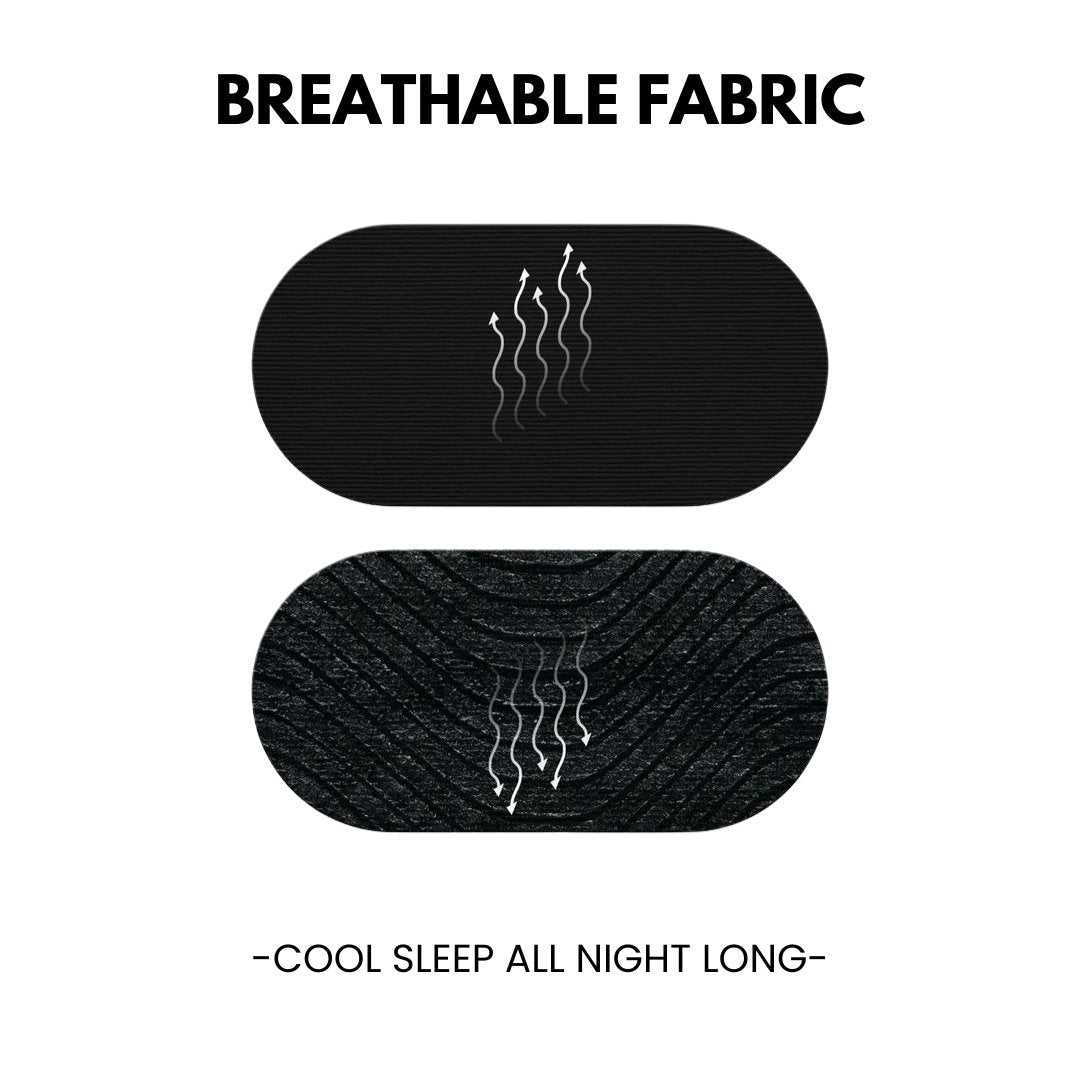
Mouth tape holds your mouth closed, preventing the jaw from dropping open and encouraging nasal breathing for the full 7-8 hours. This is the primary intervention — it addresses the most common reason nasal breathing fails during sleep (the mouth opening).
Nasal strips physically open the nasal passages from the outside, reducing resistance and making nasal breathing easier. The combination — mouth tape to close the mouth, nasal strip to open the nose — creates a complete nasal breathing system.
Every benefit on this list is available to you. You're just not getting them if your mouth is open.
Doctor Recommended: "As a maxillofacial surgeon and dentist, I recommend Titan Mouth Tape. Nasal breathing during sleep is essential for airway health and deep restorative rest. Titan's bamboo silk design is the most comfortable and effective mouth tape I have tested. If you struggle with snoring, dry mouth, or poor sleep quality, this is the simplest change you can make for your health." — Dr. Francois P., MD, DDS — Maxillofacial Surgeon
Lab-Tested Safety: Titan's adhesive is independently tested to ISO 10993 medical device standards. Non-toxic (95% cell viability). Non-allergenic (0% reaction rate). Non-irritating (score 0.0/8.0). PFAS-free — 501 compounds tested, zero detected. See full test results →
Try it tonight. Bamboo silk. SilkSeal™ adhesive. Beard-friendly. No logo on the tape. Free shipping. 30-night Better Sleep Guarantee. Shop Titan Mouth Tape → · Shop TitanAir →
This article is for informational purposes only and does not constitute medical advice. If you have or suspect a sleep disorder or other medical condition, consult a qualified healthcare provider before making changes to your routine.