Mouth Taping for Snoring
Share
Snoring is not just a noise problem. It is a breathing problem. When you sleep with your mouth open, the soft tissues in your throat relax and vibrate as air pushes past them. That vibration is the sound your partner complains about, and it signals turbulent, inefficient airflow that fragments your sleep even when you do not fully wake up. Research shows that snorers spend less time in deep sleep and REM stages, which explains why you can sleep eight hours and still feel unrested.
Mouth taping addresses snoring at its source by keeping your mouth closed and routing air through your nose, where it flows smoothly and quietly. It is not a trick or a hack. It is fixing the mechanical problem that causes the noise. Here is how it works and what to expect.
Why mouth breathing causes snoring
Your nose is engineered for breathing. It has rigid cartilage and bone structures that maintain an open airway, turbinates that direct and regulate airflow, and mucous membranes that warm and humidify air before it reaches your throat. The result is smooth, laminar airflow that passes through your upper airway without disturbing the surrounding soft tissue.
Your mouth has none of those features. When you breathe through it at night, air rushes in unfiltered and unregulated. Your jaw drops open, your tongue falls backward toward the throat, and your soft palate collapses slightly under its own weight. Air has to push through a narrower, floppier passage than your nose provides, and the turbulence creates vibration in the uvula and soft palate. That vibration is snoring.
This is why snoring tends to get worse with age (muscle tone decreases), weight gain (extra tissue narrows the airway), alcohol (relaxes throat muscles), and sleeping on your back (gravity pulls the tongue backward). All of these factors make the oral airway narrower and floppier, amplifying the turbulence and the noise.
How mouth tape reduces snoring
Mouth tape works by keeping your lips gently sealed so your body defaults to nasal breathing. When air flows through the nose instead of the mouth, several things happen simultaneously that eliminate the conditions for snoring. The throat stays more open because the jaw is not dropping. The tongue stays forward against the palate because the mouth is closed. The soft palate stays taut because there is no direct oral airflow pushing against it. Less turbulence means less vibration means less snoring.
A 2022 study in Healthcare found that mouth taping significantly reduced snoring severity in participants with mild sleep-disordered breathing. The improvement was not subtle. Partners reported measurable reductions in both the volume and frequency of snoring events. Participants also reported improved subjective sleep quality, which makes sense because the same turbulence that causes audible snoring also causes micro-arousals that fragment sleep without fully waking you.
This does not mean mouth tape is a cure for all snoring in every case. If your snoring is caused by significant nasal obstruction, severely enlarged tonsils, or moderate to severe obstructive sleep apnea, taping alone may not resolve it completely. But for the majority of snorers, the primary cause is mouth breathing, and taping addresses that directly and effectively.
What to expect in the first week
Most people notice a difference within two or three nights. The progression typically follows a predictable pattern:
- Night 1-2: The tape feels unfamiliar on your lips. You may wake up once or twice aware of it, or find it has partially peeled off by morning. Snoring usually decreases but may not disappear entirely as your body adjusts to the new breathing pattern and your jaw muscles learn to stay relaxed in the closed position.
- Night 3-5: Taping feels normal and you stop noticing it. Snoring drops significantly. You start waking up without dry mouth, without a sore throat, and with noticeably more energy. Partners usually report the biggest change during this phase.
- Night 7+: Consistent nasal breathing becomes your default pattern. Some people find their snoring essentially disappears. Sleep tracking data, if you use it, typically shows increased deep sleep and fewer disruptions.
If you want to track the improvement objectively, smartphone apps like SnoreLab can record and score your snoring before and after you start taping. The before-and-after comparison is often striking and provides solid evidence that the tape is working beyond subjective feel.
Choosing the right tape
Not all mouth tapes are equal, and using the wrong one is the most common reason people try taping once and give up. Avoid anything with aggressive adhesive that pulls your skin or leaves residue, non-breathable backing that traps moisture and feels suffocating, or a design that fully seals your lips with no room for emergency breathing. These issues make the experience uncomfortable enough that compliance drops to zero.
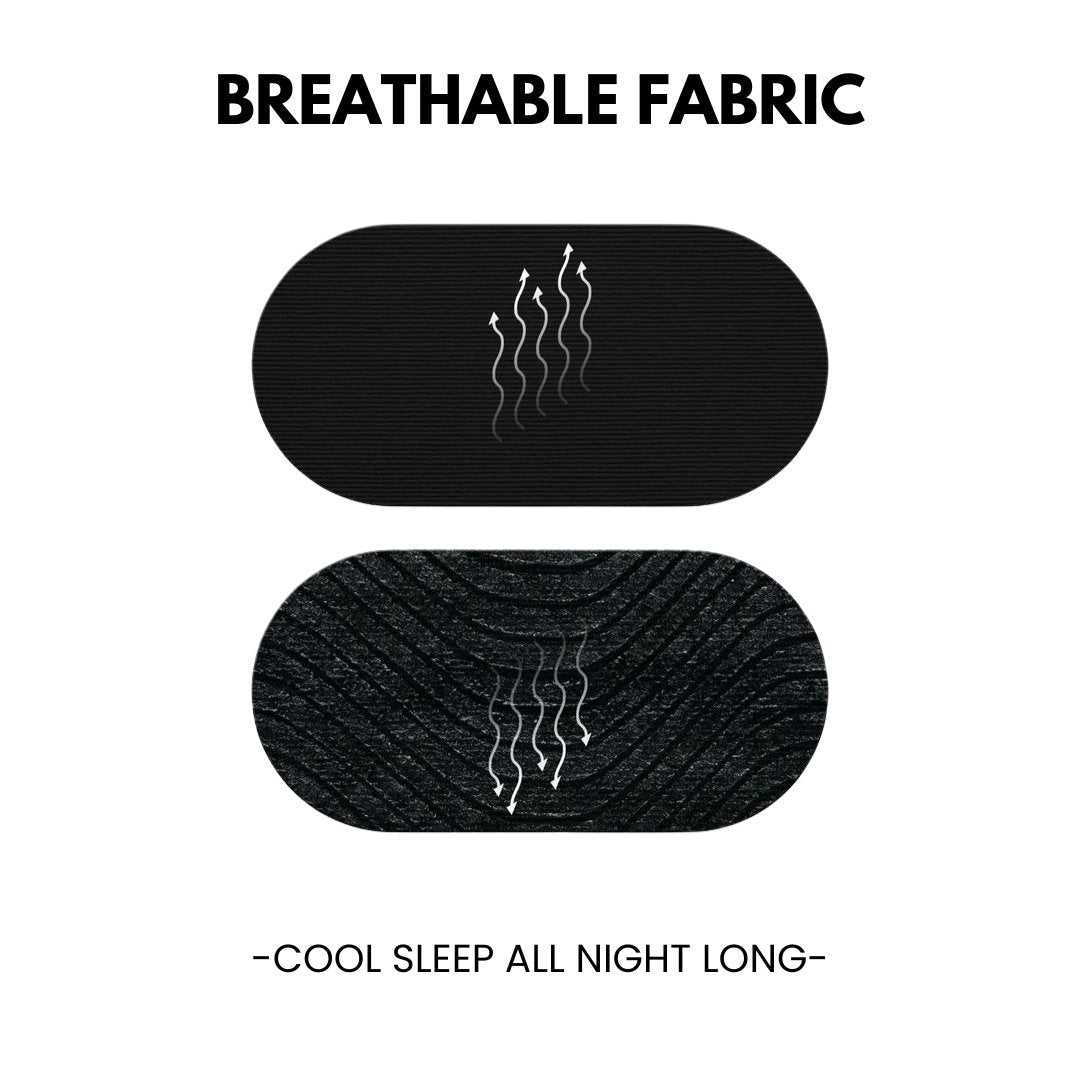
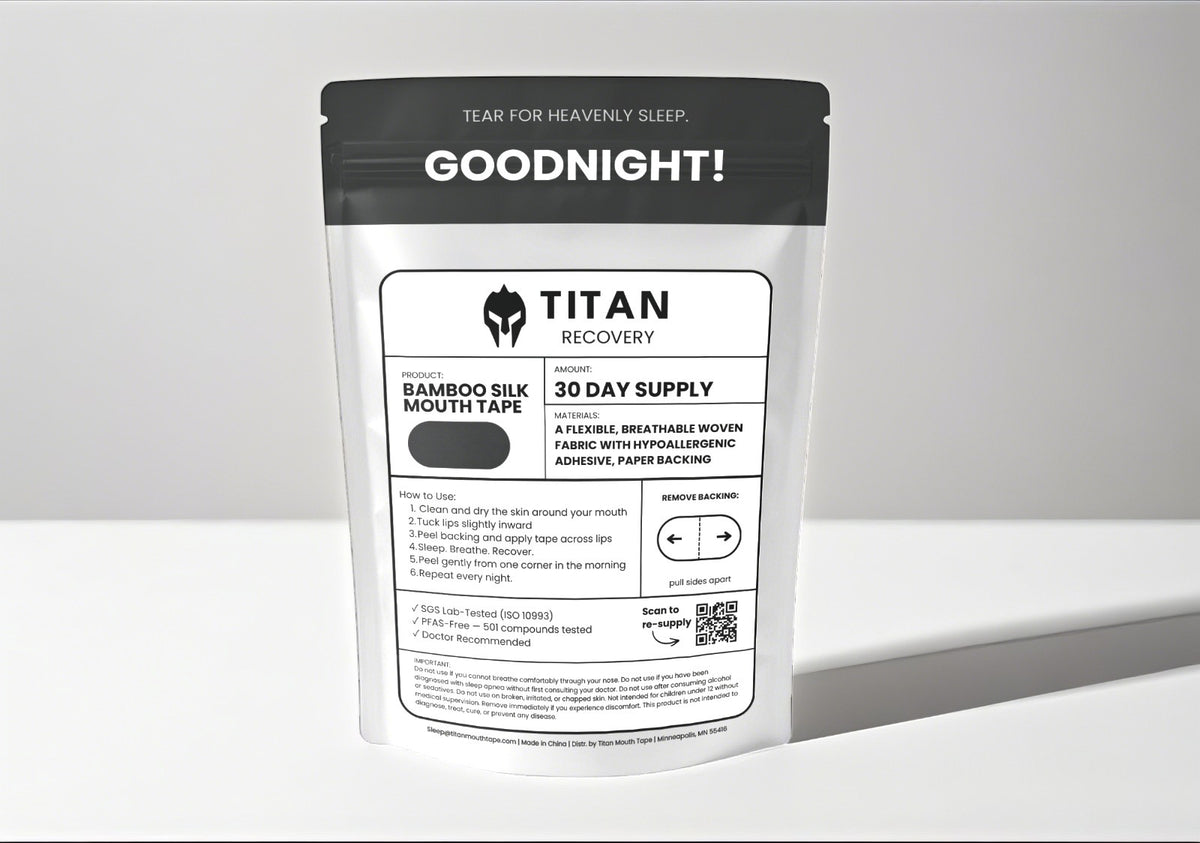
Titan Mouth Tape is made from bamboo silk with a medical-grade SilkSeal adhesive. It is porous so moisture does not build up underneath, and it releases cleanly in the morning without pulling skin or facial hair. The adhesive is independently tested to ISO 10993 standards, is hypoallergenic, and is verified PFAS-free across 501 tested compounds. The bamboo silk material is thin and breathable, which is why most people forget they are wearing it within a few nights.
For snorers who also deal with nasal congestion, allergies, or a slightly deviated septum, pairing tape with TitanAir Nasal Strips opens the nasal passages mechanically and makes the transition to exclusive nasal breathing much smoother. Our guide on using mouth tape and nasal strips together covers the best approach for getting maximum airflow.
When to see a doctor instead
Mouth taping is effective for snoring caused by mouth breathing, which accounts for the majority of snoring cases in the general population. However, you should consult a sleep specialist or your primary care doctor if your snoring is accompanied by gasping, choking, or silent pauses where breathing appears to stop, if your partner observes episodes where your breathing stops and restarts, if you feel excessively tired during the day despite what feels like adequate sleep hours, or if your snoring persists unchanged even with consistent nasal breathing via mouth taping.
These can be signs of obstructive sleep apnea, a condition that requires proper diagnosis through a sleep study and may need treatment beyond mouth taping alone, such as CPAP therapy. For more on where mouth tape fits in relation to sleep apnea, read our guide on mouth tape and sleep apnea safety. If you already use a CPAP and deal with mouth leaks, see our post on how mouth tape fixes CPAP mouth leaks.
The Bottom Line
Most snoring is caused by mouth breathing, and mouth taping is the most direct, effective fix available. It keeps your lips closed, routes air through your nose where it flows smoothly, and eliminates the throat vibration that produces the sound. It does not mask snoring or treat symptoms. It addresses the actual mechanical cause. Most people see significant improvement within a week.
Titan Mouth Tape starts at under $0.75 per night. It is the lowest-effort change you can make for snoring, and unlike nose strips or throat sprays that only address downstream symptoms, it fixes the root cause. If snoring is affecting your sleep, your partner's sleep, or both, this is where to start.
Doctor Recommended: “As a maxillofacial surgeon and dentist, I recommend Titan Mouth Tape. Nasal breathing during sleep is essential for airway health and deep restorative rest. Titan’s bamboo silk design is the most comfortable and effective mouth tape I have tested. If you struggle with snoring, dry mouth, or poor sleep quality, this is the simplest change you can make for your health.” — Dr. Francois P., MD, DDS — Maxillofacial Surgeon
Lab-Tested Safety: Titan’s SilkSeal™ adhesive is independently tested to ISO 10993 medical device standards. Non-toxic (95% cell viability). Non-allergenic (0% reaction rate). Non-irritating (score 0.0/8.0). PFAS-free — 501 compounds tested, zero detected. See full test results →
Try it tonight. Bamboo silk. SilkSeal™ adhesive. Beard-friendly. No logo on the tape. Free shipping. 30-night Better Sleep Guarantee. Shop Titan Mouth Tape → · Shop TitanAir →
This article is for informational purposes only and does not constitute medical advice. If you have or suspect a sleep disorder or other medical condition, consult a qualified healthcare provider before making changes to your routine.
Related reading
- How to Stay Asleep All Night
- Does Mouth Tape Help with Snoring?
- Your Partner Snores. It’s Hurting More Than Your Sleep.
- Titan Mouth Tape for Snoring really works!
- Does a Humidifier Help With Snoring & Dry Mouth?
Want the tape built for this? Try mouth tape from Titan — bamboo silk, beard-friendly, PFAS-free, with a 30-Night Better Sleep Guarantee.