How Mouth Tape Fixes CPAP Mouth Leaks
Share
If you use a CPAP machine and wake up with a dry mouth, a raw throat, or hear your machine ramping up its pressure overnight, you are almost certainly dealing with mouth leaks. It is one of the most common CPAP complaints, affecting an estimated 30 to 50 percent of users, and it directly undermines the therapy your doctor prescribed. Air escapes through your open mouth instead of maintaining the steady positive pressure your airway needs to stay open.
Mouth tape is a simple, effective fix that CPAP users are increasingly adopting. It addresses the root cause in a way that chin straps and full-face masks often cannot. Here is how it works, why it outperforms the alternatives, and how to integrate it into your CPAP routine safely.
What mouth leaks actually do to your therapy
Your CPAP machine delivers a specific, calibrated pressure, measured in centimeters of water pressure, to keep your upper airway mechanically splinted open throughout the night. When your mouth falls open during sleep, that carefully calibrated pressure vents straight out of your mouth into the room. The machine's sensors detect the pressure drop and respond by increasing airflow to compensate, which dries out your mouth and throat even faster and creates an uncomfortable rushing sensation.
This creates a destructive cycle: the leak causes drying, the drying causes throat irritation, the irritation causes more frequent swallowing and jaw movement, which causes more mouth opening, which causes larger leaks. Meanwhile, the therapy itself becomes progressively less effective because the pressure that should be holding your airway open is escaping instead of doing its job. Your AHI (apnea-hypopnea index) numbers creep up, your oxygen desaturation events increase, and you feel like the CPAP is not working even though the machine is functioning correctly.
Most modern CPAP software platforms, including ResMed myAir, the OSCAR open-source compliance tool, and Philips DreamMapper, track leak rates in detail. If your data shows elevated leak events concentrated in the second half of the night, when muscle relaxation is at its deepest, mouth leaks are the almost certain cause.
Why chin straps often fall short
The standard clinical recommendation for CPAP mouth leaks is a chin strap, a fabric band that wraps under your lower jaw and over the top of your head to hold your jaw in a closed position. In theory, this keeps your mouth shut. In practice, chin straps have several problems that limit their effectiveness for many users.
They are uncomfortable and often shift during sleep, losing their positioning when you need them most. They hold the jaw upward but do not actually seal the lips, which means air can still escape between partially parted lips even when the jaw is held. They interact poorly with facial hair, which prevents the strap from sitting securely. And adding another piece of headgear on top of your CPAP mask and headgear creates a complicated, uncomfortable stack that makes compliance harder.
Full-face masks are the other common recommendation. These cover both your nose and mouth, so any air that leaks through the mouth is contained within the mask seal. But full-face masks are substantially bulkier than nasal masks, harder to fit properly, more likely to cause pressure sores on the nose bridge, and many users find them claustrophobic or anxiety-inducing, especially early in their CPAP adaptation.
How mouth tape solves the problem directly
Mouth tape addresses CPAP mouth leaks at the source by keeping your lips physically sealed. Air cannot escape through a closed mouth, regardless of jaw position or muscle relaxation level. This maintains the full prescribed pressure in your airway and eliminates the compensation cycling that causes dryness, discomfort, and elevated AHI readings.
The practical benefit is significant: mouth tape lets you use a nasal mask or nasal pillow mask, which are smaller, lighter, quieter, and dramatically more comfortable than full-face alternatives, while still maintaining complete therapy pressure. For many CPAP users, switching from a full-face mask to a nasal mask plus mouth tape represents a major improvement in comfort that translates directly into better compliance.
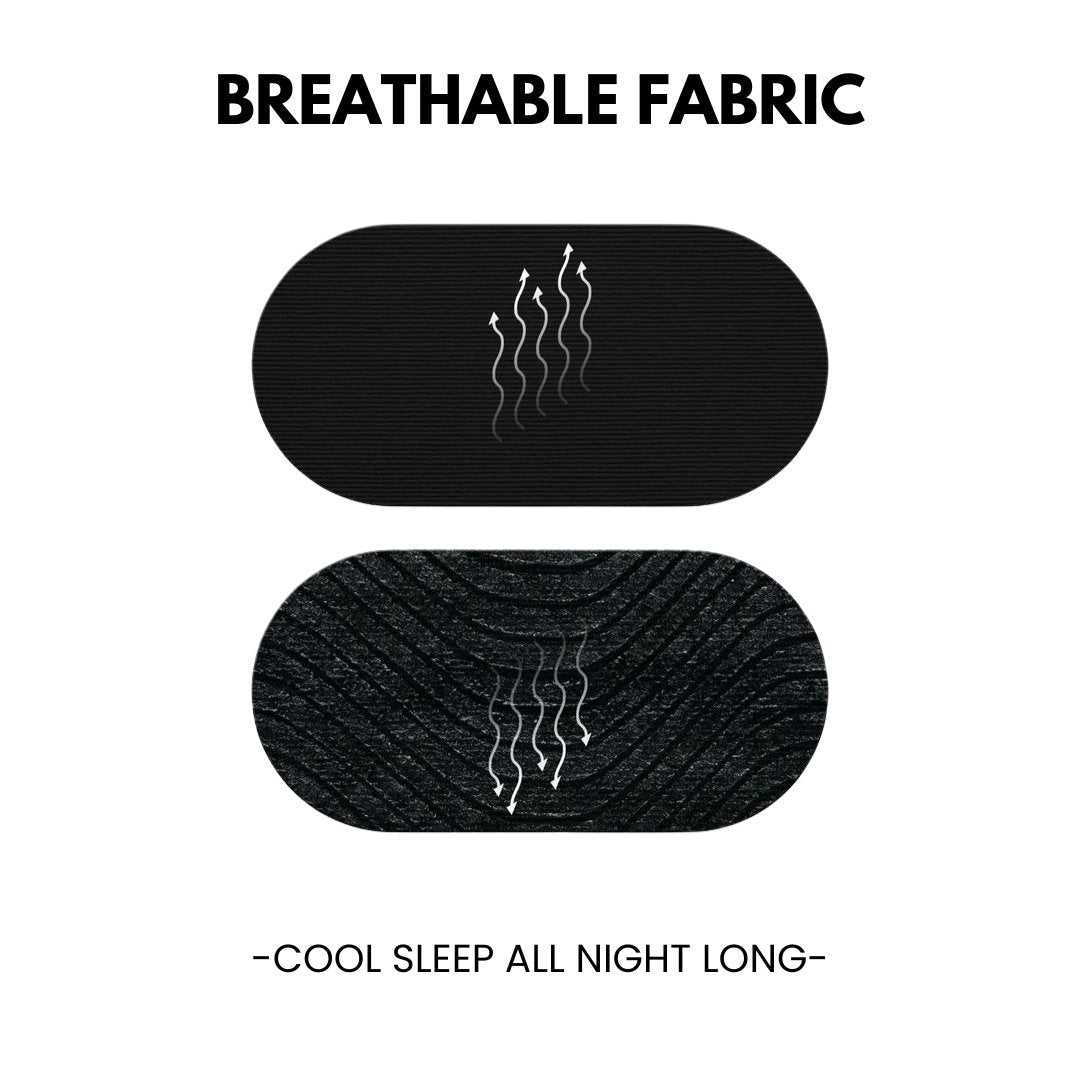
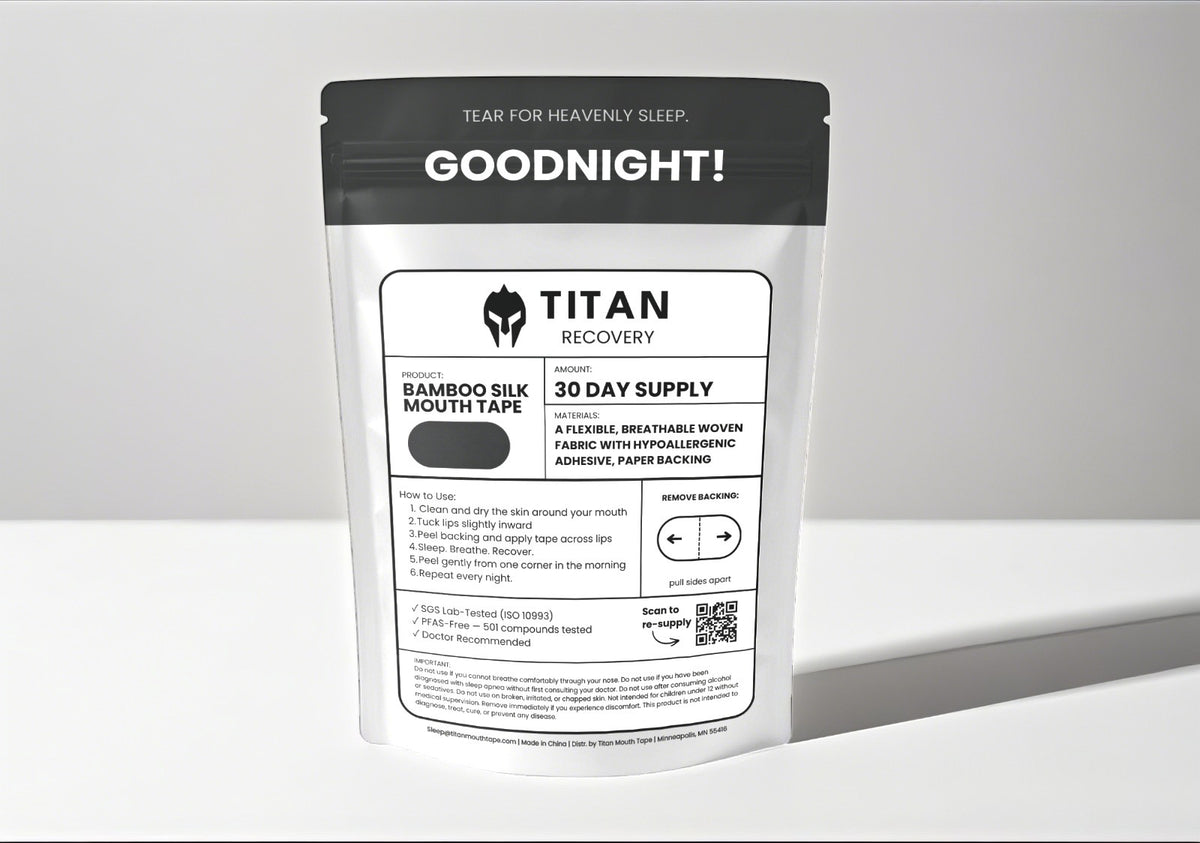
The key is using tape specifically designed for prolonged skin contact during sleep. Titan Mouth Tape uses a bamboo silk material with a medical-grade SilkSeal adhesive that is hypoallergenic, breathable, and independently tested to ISO 10993 medical device standards. Unlike surgical tape, athletic tape, or improvised solutions, it holds securely for the entire night without irritating skin, leaving adhesive residue, or pulling facial hair when removed in the morning.
How to start using mouth tape with your CPAP
The integration is straightforward. Start by trying it for a few nights while closely monitoring your CPAP compliance data to verify the improvement objectively.
- Apply the tape before putting on your mask. Clean, dry lips first. Apply the tape, then position your nasal mask or nasal pillows, then turn on the machine. This sequence ensures the tape does not interfere with your mask seal or headgear positioning.
- Use a nasal mask or nasal pillows, not a full-face mask. The entire purpose of taping is to keep your mouth closed so a nasal-only mask can deliver therapy effectively. If you are currently using a full-face mask specifically because of mouth leaks, tape is the change that lets you downsize to a nasal mask.
- Check your leak data the next morning. Compare your large leak percentage and total leak rate to your recent averages. Most people see a dramatic, immediate drop in leak events from the very first night of taping.
- Compare your AHI readings over a week. As leak events decrease, your therapy pressure stays consistent, and your AHI numbers should improve correspondingly. This is the objective confirmation that taping is improving your actual therapy outcomes.
- Adjust your humidifier settings if needed. If you use a heated humidifier with your CPAP, you may be able to reduce the humidity level once mouth leaks stop. Much of the dryness CPAP users experience is caused by the leak itself, not by insufficient humidification. Reducing humidity can reduce condensation (rainout) in the tubing.
Is it safe to tape your mouth while using a CPAP?
Yes, for the majority of CPAP users with obstructive sleep apnea. The CPAP provides continuous positive airway pressure through your nasal passages, maintaining your airway regardless of mouth position. Mouth tape simply prevents that pressure from escaping through your lips. If you feel any discomfort or need to open your mouth at any point, the tape releases easily with normal jaw movement.
However, consult your sleep physician before using mouth tape if you have central sleep apnea rather than obstructive, if your doctor has specifically prescribed a full-face mask for reasons other than mouth leaks, if you have severe nasal obstruction that limits nasal breathing even with CPAP pressure support, or if you are using bilevel (BiPAP) therapy with specific pressure requirements. For more detailed safety guidance, see our comprehensive post on mouth tape and sleep apnea safety.
Pairing mouth tape with TitanAir Nasal Strips can further reduce nasal resistance and make CPAP breathing feel more natural and comfortable, especially at higher prescribed pressure settings.
The Bottom Line
Mouth leaks are the most common reason CPAP therapy underperforms, and mouth tape is the simplest, most direct fix available. It keeps your lips sealed, maintains your prescribed therapy pressure, eliminates the dry mouth and sore throat that make CPAP miserable, and lets you use a smaller, more comfortable nasal mask instead of a bulky full-face setup. Most users see their leak rates drop dramatically from the very first night.
Titan Mouth Tape costs under $0.75 per night, which is significantly less than a new CPAP mask, a chin strap, or the dental costs of chronic dry mouth. If you have been fighting mouth leaks and your compliance data confirms it, try taping for one week and compare the numbers. The data will speak for itself. For help choosing the right tape, see our guide to the 7 best mouth tapes for sleeping.
Doctor Recommended: “As a maxillofacial surgeon and dentist, I recommend Titan Mouth Tape. Nasal breathing during sleep is essential for airway health and deep restorative rest. Titan’s bamboo silk design is the most comfortable and effective mouth tape I have tested. If you struggle with snoring, dry mouth, or poor sleep quality, this is the simplest change you can make for your health.” — Dr. Francois P., MD, DDS — Maxillofacial Surgeon
Lab-Tested Safety: Titan’s SilkSeal™ adhesive is independently tested to ISO 10993 medical device standards. Non-toxic (95% cell viability). Non-allergenic (0% reaction rate). Non-irritating (score 0.0/8.0). PFAS-free — 501 compounds tested, zero detected. See full test results →
Try it tonight. Bamboo silk. SilkSeal™ adhesive. Beard-friendly. No logo on the tape. Free shipping. 30-night Better Sleep Guarantee. Shop Titan Mouth Tape → · Shop TitanAir →
This article is for informational purposes only and does not constitute medical advice. If you have or suspect a sleep disorder or other medical condition, consult a qualified healthcare provider before making changes to your routine.