Mouth Tape vs Melatonin: Which Sleep Aid Works Better?
Share
Most people who reach for melatonin are trying to solve a real problem: they can't fall asleep, they wake up groggy, or they never feel rested. But melatonin is a sleep onset signal — it tells your brain that bedtime has arrived. It doesn't do anything about the quality of the sleep that follows. If you fall asleep fine but still wake up exhausted, melatonin isn't addressing what's wrong.
Mouth tape works on the other side of the equation. By keeping the mouth sealed and routing all breathing through the nose, it optimizes your airway during the hours you're already asleep — the hours that determine whether you actually recover. Melatonin helps you fall asleep. Mouth tape helps you stay in deep sleep. They solve different problems, and understanding the difference changes how you approach sleep entirely.
What Melatonin Actually Does (and Doesn't Do)
Melatonin is a hormone your body already produces. The pineal gland releases it in response to darkness, and it signals to your brain that it's time to sleep. Supplemental melatonin does the same thing — it nudges that "time for bed" signal when your natural production is disrupted or delayed.
That's useful in specific situations. Jet lag throws off your circadian rhythm, and a small dose of melatonin can help reset the clock. Shift workers whose schedules conflict with daylight benefit from it. People who naturally produce less melatonin — older adults, for example — may find it helpful for falling asleep faster.
What melatonin does not do: it doesn't increase the amount of deep sleep you get. It doesn't prevent mouth breathing. It doesn't reduce snoring. It doesn't improve oxygen saturation during sleep. It doesn't keep your airway open. Once you're asleep, melatonin's job is done. The quality of what happens next depends on factors melatonin can't touch — your breathing pattern, airway patency, and how much time your body spends in restorative sleep stages.
There are also practical limits. Studies suggest melatonin is most effective at low doses (0.5-3mg), but most over-the-counter products sell doses of 5-10mg. At those levels, some people experience grogginess the next morning, vivid or unsettling dreams, and a sense that their sleep timing feels "off" for the day. Long-term use at high doses can also suppress your body's own melatonin production, creating a cycle where you feel dependent on the supplement to fall asleep at all.
What Mouth Tape Does
Mouth tape keeps your lips sealed during sleep, routing 100% of your breathing through the nose. That's not a minor adjustment — it changes the mechanics of your entire night.
Nasal breathing filters, warms, and humidifies incoming air before it reaches your lungs. It also triggers the release of nitric oxide in the sinuses, a molecule that improves oxygen absorption in the bloodstream. Mouth breathing bypasses all of that. It dries out the throat, narrows the airway, promotes snoring, and shifts the body toward lighter, more fragmented sleep.
The result of taping is measurable: users consistently report deeper sleep, less snoring, reduced dry mouth, and better recovery scores on wearables like WHOOP, Oura, and Apple Watch. These aren't onset effects — they're quality effects that unfold across the full six to eight hours of sleep. If you're curious about what the data looks like, this breakdown covers mouth tape and deep sleep in detail.
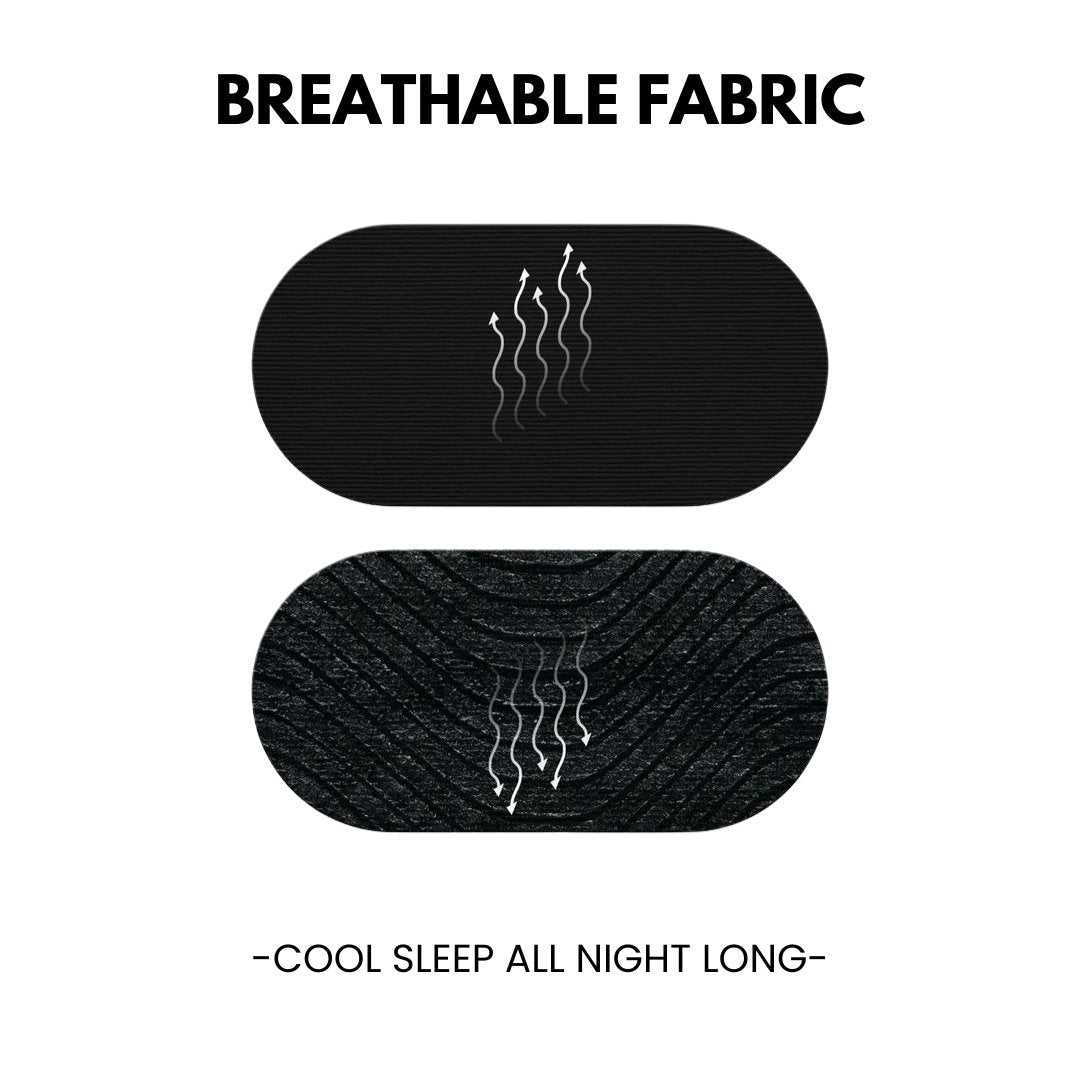
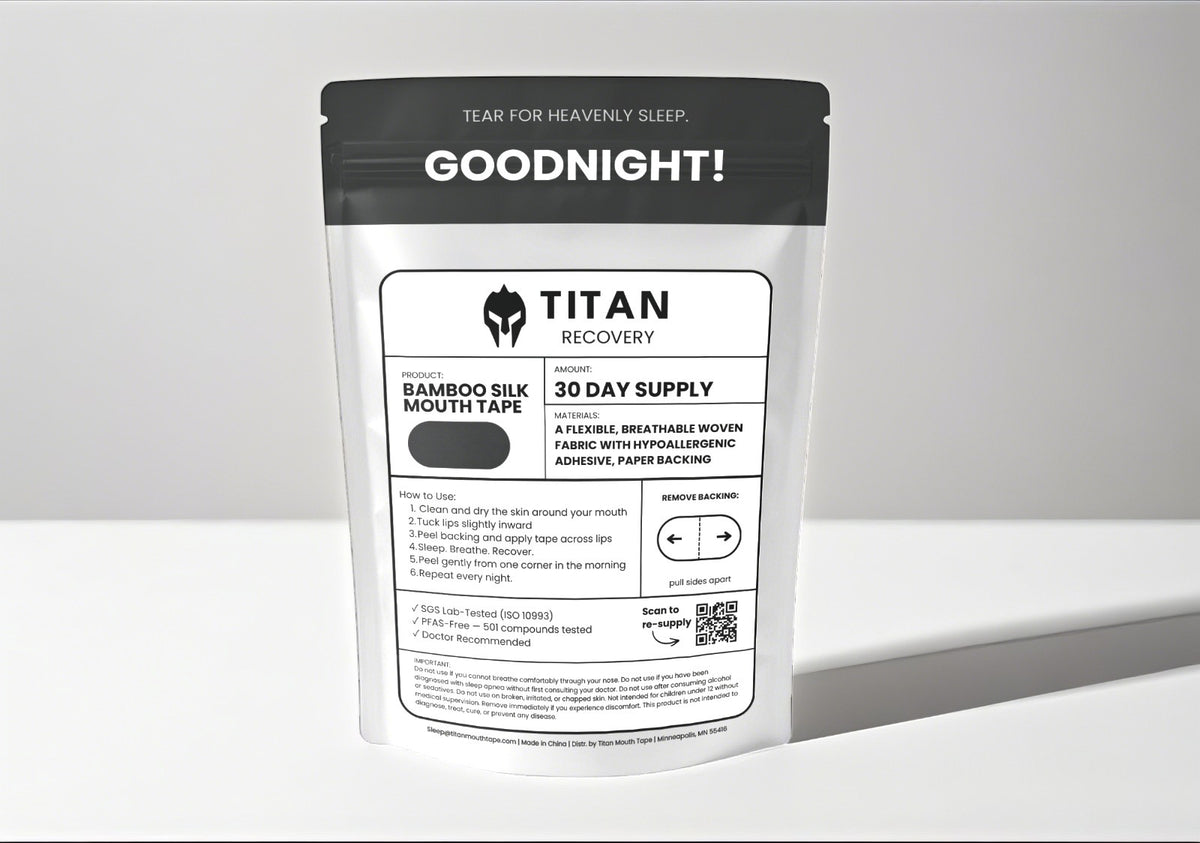
Titan Mouth Tape is designed specifically for overnight use — medical-grade adhesive that holds all night but removes cleanly in the morning, with a shape that fits comfortably across the lips without covering the surrounding skin. Paired with TitanAir Nasal Strips, it creates an open nasal passage and a sealed mouth — the ideal airway setup for deep sleep.
Head-to-Head Comparison
| Factor | Mouth Tape | Melatonin |
|---|---|---|
| Primary function | Improves sleep quality | Speeds up sleep onset |
| Mechanism | Seals mouth, enforces nasal breathing | Supplements sleep hormone signal |
| Affects deep sleep | Yes | No |
| Dependency risk | None | Possible with long-term use |
| Side effects | None reported | Grogginess, vivid dreams, headaches |
| Reduces snoring | Yes | No |
| Suitable for nightly use | Yes | Best short-term |
| Cost per night (30-day) | ~$1.17 | $0.10-$0.50 |
| Improves morning energy | Yes (better oxygen, deeper sleep) | Can cause next-day drowsiness |
The cost difference is real, and melatonin is cheaper per night. But cost per night only matters if the product does what you need. If your problem is sleep quality — waking up tired, snoring, dry mouth, restless nights — melatonin won't fix it at any price. Most people spending money on melatonin would get more from a better sleep setup than from another bottle of supplements.
When Melatonin Makes Sense
Melatonin is a legitimate tool in specific contexts:
Jet lag. Crossing multiple time zones disrupts your circadian rhythm. A short course of low-dose melatonin (0.5-3mg) taken at your destination's bedtime can help reset your internal clock faster. This is one of the best-supported uses in the research.
Shift work. If you're sleeping during daylight hours, your body isn't producing melatonin on the schedule you need. Supplementation fills the gap.
Occasional sleeplessness. A stressful week, a schedule disruption, a new environment — short-term use to help initiate sleep during a rough patch is reasonable.
In these situations, melatonin is addressing a real timing problem. The sleep onset signal is off, and the supplement corrects it. That's different from reaching for melatonin every night because you just don't sleep well — in that case, the onset signal may not be the issue at all.
When Mouth Tape Makes Sense
Mouth tape addresses the structural side of sleep — how well your body breathes and recovers during the hours you're unconscious. That makes it relevant for a much wider set of people:
Every night. Unlike melatonin, mouth tape isn't a short-term intervention. It's a nightly practice that improves sleep quality every time you use it. There's no tolerance buildup, no dependency, and no diminishing returns.
Snoring. If you or your partner snores, mouth breathing is almost always involved. Sealing the mouth forces nasal breathing, which keeps the airway open and reduces the soft palate vibration that causes snoring.
Dry mouth and sore throat in the morning. Both are telltale signs of overnight mouth breathing. Tape solves the root cause.
Wearable data showing poor deep sleep. If your WHOOP, Oura, or Apple Watch consistently shows low deep sleep percentages and poor recovery, your breathing pattern during sleep is one of the first variables worth addressing.
General fatigue despite adequate sleep hours. Sleeping seven or eight hours but still feeling tired usually points to a quality problem, not a quantity problem. Here's what users report after switching to mouth tape.
Using Both Together
Mouth tape and melatonin aren't competitors — they work on different mechanisms, and for some people, using both makes sense.
If you're dealing with jet lag or a temporary schedule disruption AND you want to make sure the sleep you get is high quality, using a low-dose melatonin to help with onset while taping for airway optimization during the night covers both bases. The melatonin helps you fall asleep. The tape helps you stay in deep sleep. No overlap, no conflict.
The practical approach: start with mouth tape. Use it nightly. If you still have trouble falling asleep after a week or two of consistent use, consider adding a low-dose melatonin (0.5-1mg) thirty minutes before bed — and plan to phase it out once your schedule stabilizes. The tape stays. The melatonin is temporary.
Why Most People Should Try Mouth Tape First
Here's the pattern we see: someone has poor sleep, reaches for melatonin, falls asleep a little faster, but still wakes up feeling unrested. They increase the dose. They try a different brand. They add magnesium, L-theanine, or another supplement. The stack grows, the results don't.
The reason is straightforward — they're treating the symptom (difficulty initiating sleep) without fixing the underlying problem (poor breathing mechanics that degrade sleep quality all night long). Mouth tape addresses the root cause. It doesn't make you drowsy. It doesn't need to be cycled. It won't leave you groggy. It just keeps your airway optimized so your body can do what it's designed to do during sleep: recover.
A 30-day supply of Titan Mouth Tape is $34.95, or lock in 11% off with Subscribe and Save. The Titan Sleep System bundles mouth tape with TitanAir Nasal Strips for the complete airway setup. If you've been buying melatonin monthly for years and still don't sleep well, this is worth a try.
Frequently Asked Questions
Can I use mouth tape and melatonin at the same time?
Yes. They work through completely different mechanisms. Melatonin influences sleep onset timing. Mouth tape optimizes your airway during sleep. There's no interaction between the two, and using them together can address both falling asleep and staying in deep sleep.
Is mouth tape a natural sleep aid?
Mouth tape isn't a supplement or a drug — it's a physical tool that promotes nasal breathing during sleep. Nasal breathing is the body's default breathing mode, so tape is restoring a natural function rather than introducing a foreign substance. In that sense, it's about as natural as a sleep aid gets.
Does melatonin improve deep sleep?
Research does not support melatonin as a deep sleep enhancer. Its primary effect is on sleep latency — how long it takes to fall asleep. Once you're asleep, melatonin's influence on sleep architecture (the distribution of light, deep, and REM stages) is minimal. If deep sleep is what you're after, airway optimization through nasal breathing is a more direct path. This post covers the connection between mouth tape and deep sleep.
What happens if I stop taking melatonin?
With short-term, low-dose use, most people can stop without issues. With long-term or high-dose use, some people find it harder to fall asleep without the supplement — their body has down-regulated its own melatonin production in response to the external supply. This is one of the reasons sleep researchers generally recommend melatonin for short-term or situational use rather than as a nightly habit.
How quickly does mouth tape improve sleep?
Most users notice a difference within the first few nights — less dry mouth, less snoring, and a subjective sense of sleeping more deeply. Wearable data tends to reflect improvements within the first week. Unlike supplements that need weeks to build up, mouth tape works mechanically on the first application. If you're new to it, here's a step-by-step guide to getting started.
The Bottom Line
Melatonin and mouth tape both have a role in better sleep — but they're not interchangeable. Melatonin is a timing tool. It nudges your body toward sleep onset when your circadian rhythm is off. Mouth tape is a quality tool. It keeps your airway open and your breathing nasal so the sleep you get is actually restorative.
If your problem is falling asleep after a red-eye flight, melatonin is the right call. If your problem is waking up tired after a full night of sleep, snoring, dry mouth, or consistently poor recovery scores, mouth tape addresses what's actually going wrong. And if you need both, they work together without conflict.
For most people, starting with mouth tape is the higher-return move. Fix the airway first. If timing is still an issue after that, a short course of low-dose melatonin can handle the rest.
Doctor Recommended: "As a maxillofacial surgeon and dentist, I recommend Titan Mouth Tape. Nasal breathing during sleep is essential for airway health and deep restorative rest. Titan's bamboo silk design is the most comfortable and effective mouth tape I have tested. If you struggle with snoring, dry mouth, or poor sleep quality, this is the simplest change you can make for your health." — Dr. Francois P., MD, DDS — Maxillofacial Surgeon
Lab-Tested Safety: Titan's adhesive is independently tested to ISO 10993 medical device standards. Non-toxic (95% cell viability). Non-allergenic (0% reaction rate). Non-irritating (score 0.0/8.0). PFAS-free — 501 compounds tested, zero detected. See full test results →
Try the complete system tonight. Titan Mouth Tape (bamboo silk, SilkSeal™ adhesive) + TitanAir Nasal Strips. Free shipping. 30-night Better Sleep Guarantee. Shop Titan Mouth Tape → · Shop TitanAir Nasal Strips →