Titan Mouth Tape vs Dryft Sleep: Transparency vs Press Coverage
Share
Dryft Sleep has been in Vogue, Cosmopolitan, Harper's Bazaar, and Elle — where it won "Best Material" in 2024. That's an impressive press run for a mouth tape brand. But there's something odd about winning a "Best Material" award from a magazine when you don't publicly disclose what your material actually is.
That's the tension in this comparison. Dryft has the magazine features, the dentist recommendations, and a breathing vent that solves a real problem for nervous first-timers. Titan Recovery has bamboo silk, named adhesive technology, and third-party lab testing you can actually look up. One brand invested in PR. The other invested in transparency. Both made their choice.
Material: Known vs Unknown
Dryft describes its tape as "medical-grade materials" with a silicone adhesive. That's the full extent of the material disclosure on their site and packaging. They don't name the fiber, the base material, or the specific composition of the tape substrate. "Medical-grade" is a descriptor, not a material — it tells you the intended use category, not what's touching your face.
This matters because mouth tape sits on your skin for roughly eight hours a night, every night. Over 30 days, that's 240 hours of direct contact. Over a year, nearly 3,000 hours. Knowing what the material is — not just its marketing category — seems like a reasonable expectation.
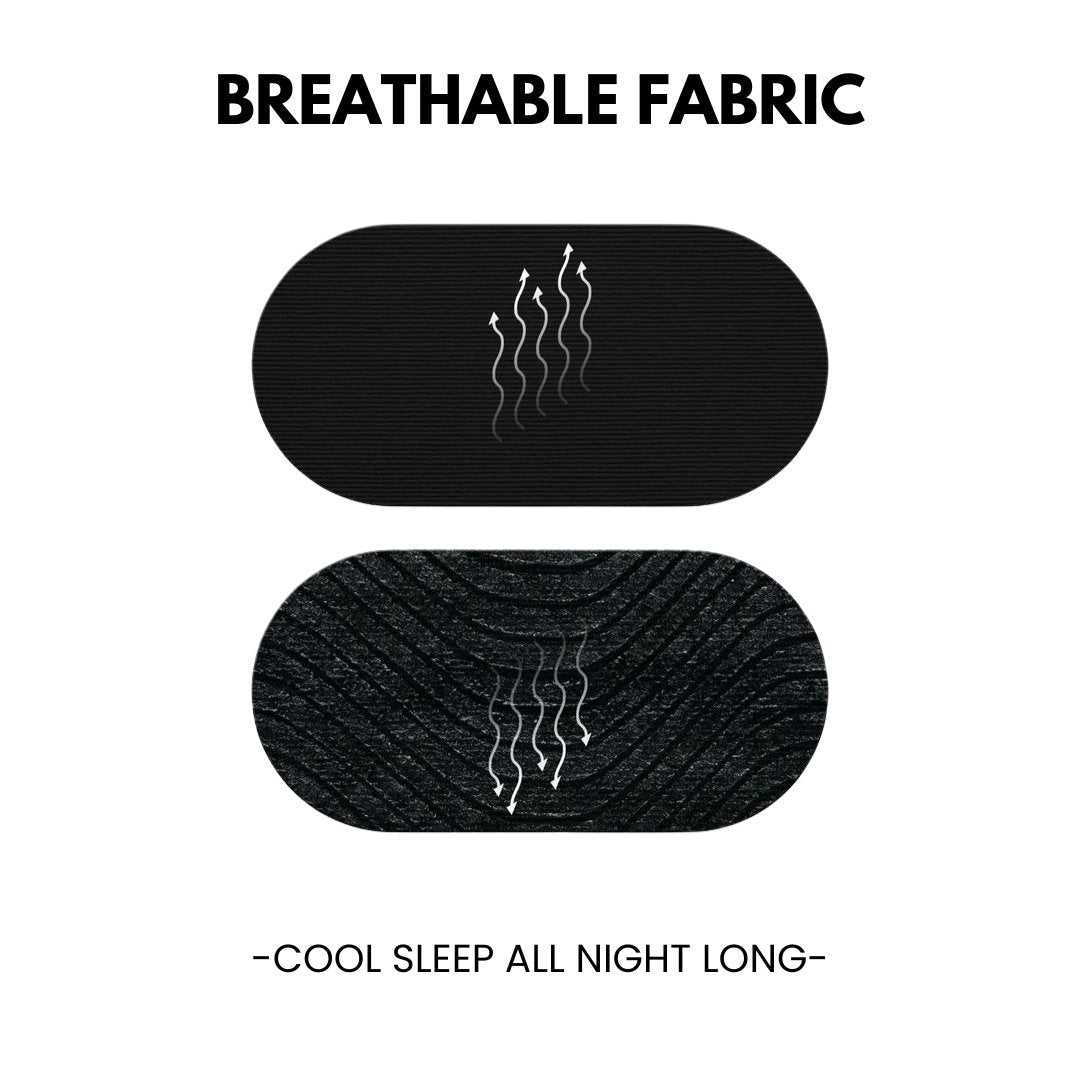
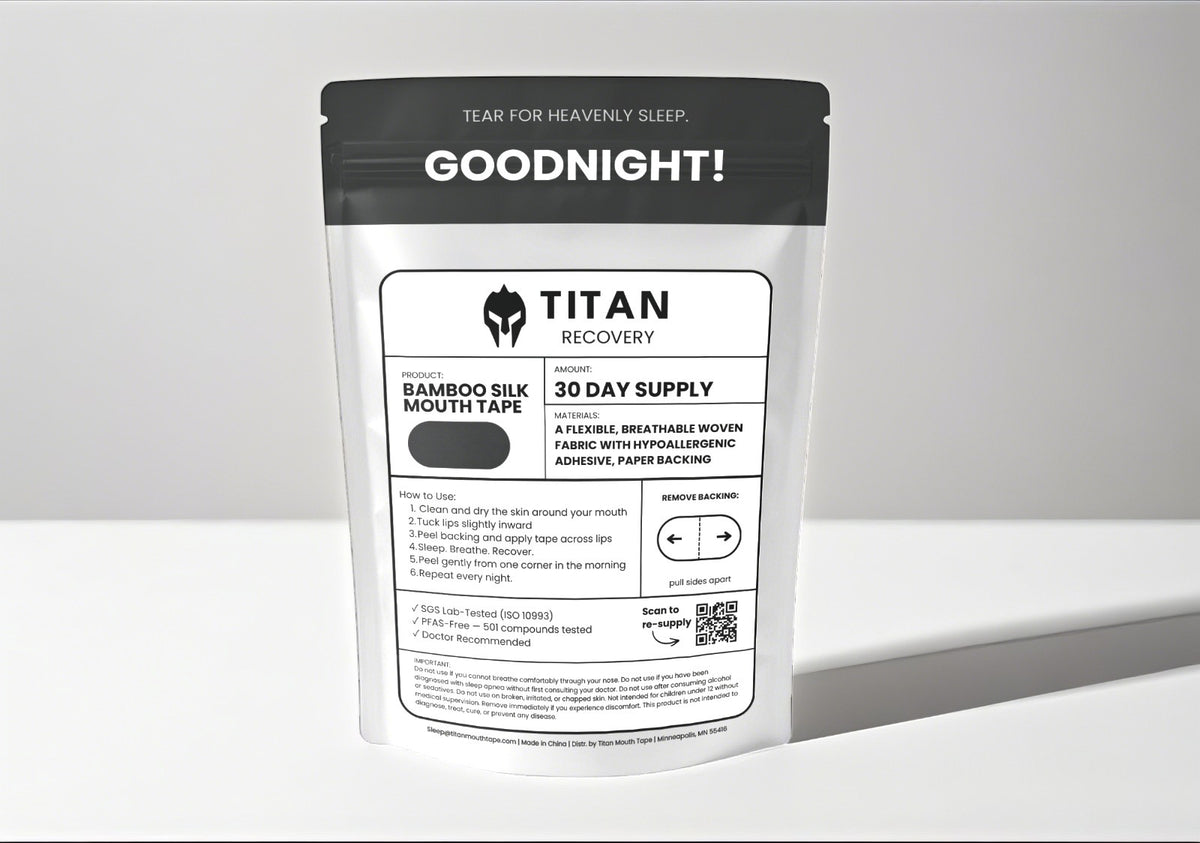
Titan Recovery uses bamboo silk with SilkSeal adhesive. Bamboo silk is a specific material: a natural fiber derived from bamboo pulp, processed into a fabric with a smooth, round fiber cross-section that sits gently on skin. It's softer than cotton, naturally hypoallergenic, and breathable. SilkSeal is the adhesive technology — designed to hold securely through the night and release cleanly in the morning without pulling skin or leaving residue.
You know what it is. You can look it up. You can make an informed decision. That's the baseline Titan Recovery starts from, and it's a baseline Dryft hasn't met.
The Breathing Vent: Dryft's Real Innovation
Dryft includes a breathing vent in their tape. This is worth taking seriously. The vent is a small opening built into the tape that allows limited mouth breathing if your nasal passages become blocked during the night. It's not a gap or a design flaw — it's an intentional feature.
For first-time mouth tapers, the vent addresses the most common fear: "What if I can't breathe through my nose?" The vent acts as a pressure release — if your nose clogs, air can still pass through the vent. That psychological safety net makes it easier for hesitant people to try mouth taping for the first time.
The trade-off is seal quality. A vent that allows air through is, by definition, an incomplete seal. For light mouth breathers or beginners who are still adapting to nasal breathing, the vent is a useful training tool. For moderate to strong mouth breathers who need their mouth fully closed to develop consistent nasal breathing habits, the vent can become a crutch — your body will find the path of least resistance, and that path goes through the vent.
Titan Recovery uses full coverage without a vent. The tape seals your lips completely, which drives stronger nasal breathing adaptation over time. If your nose is congested, the tape is easy to remove — but while it's on, it's doing its job without compromise. For people who have moved past the anxiety stage and want real results, full coverage without a vent is the more effective design.
Safety Testing: What's on the Record
Dryft doesn't publish PFAS testing results or reference ISO 10993 biocompatibility testing. Their marketing leans on dentist and myofunctional therapist recommendations, which is a form of professional endorsement — but it's not the same as third-party lab verification. A dentist recommending a product based on patient outcomes is valuable. A lab confirming that the product doesn't cause irritation, sensitization, or cytotoxic reactions is a different kind of evidence, and the two don't substitute for each other.
Titan Recovery is PFAS-free across 501 tested compounds — verified by independent lab testing, not self-reported. The tape has also completed ISO 10993 biocompatibility testing, the international standard for evaluating materials that contact human skin. This is the framework used for surgical tapes, wound dressings, and other medical devices designed for prolonged wear.
The gap here is straightforward: Titan Recovery has the testing on record. Dryft has professional endorsements. Both have value. But when you can't verify what a product is made of, professional endorsements carry a different weight than when you can.
Adhesive: Silicone vs SilkSeal
Dryft uses a silicone adhesive. Silicone adhesives are generally gentle on skin and remove cleanly — they're a common choice in medical tapes and wound care products. For most people, silicone adhesives don't cause irritation or leave residue. It's a reasonable adhesive choice, and one of the few material details Dryft actually discloses.
Titan Recovery uses SilkSeal adhesive, which is designed specifically for mouth tape wear patterns — eight continuous hours, nightly, on the lip and surrounding skin area. The adhesive holds through sleep movement, saliva exposure, and varying humidity levels, then releases without pulling skin, tugging facial hair, or leaving sticky residue. It's part of the reason the tape works well for beard wearers and sensitive skin.
Price Comparison
Price per night at each tier tells the honest story.
Dryft pricing: 30 strips for $26.99 ($0.90 per night), 60 strips for $44.99 ($0.75 per night), and 180 strips for $99.00 ($0.55 per night).
Titan Recovery pricing: 30-day supply for $26.95 ($0.90 per night), 90-day supply for $78.95 ($0.88 per night), 180-day supply for $146.95 ($0.82 per night), and 360-day supply for $272.95 ($0.76 per night).
At the single-month level, the prices are nearly identical. Dryft gets meaningfully cheaper at scale — their 180-strip pack drops to $0.55 per night, while Titan Recovery's 180-day supply sits at $0.82 per night. Dryft offers lower bulk pricing. That's clear, and it's a legitimate advantage for cost-conscious buyers who go through a lot of tape.
Head-to-Head Comparison
| Feature | Titan Recovery | Dryft Sleep |
|---|---|---|
| Material | Bamboo silk | Undisclosed "medical-grade" |
| Material Transparency | Full disclosure | Not disclosed |
| PFAS Testing | 501 compounds verified | No claims |
| ISO 10993 | Yes | No claims |
| Breathing Vent | No (full seal) | Yes |
| Adhesive Type | SilkSeal | Silicone |
| Price (30-day) | $26.95 | $26.99 |
| Per-Night (Best Tier) | $0.76/night (360-day) | $0.55/night (180 strips) |
| Press Coverage | -- | Elle, Vogue, Cosmo, Harper's |
| Made in USA | -- | Yes |
Who Titan Recovery Is Best For
Anyone who wants to know what they're putting on their face. Titan Recovery names its materials — bamboo silk and SilkSeal adhesive — and backs those materials with ISO 10993 biocompatibility testing and PFAS-free verification across 501 compounds. If you read ingredient labels and care about what's touching your skin for thousands of hours a year, Titan Recovery treats that concern as a baseline rather than an afterthought.
People who want full seal performance. No vent means no workaround for your mouth-breathing reflex. The tape does one thing — keeps your mouth closed — and it does it completely. For CPAP users, beard wearers, and anyone who's past the beginner stage, full coverage with a reliable adhesive is the more effective approach.
Anyone who thinks material transparency shouldn't be optional. You wouldn't buy a pillow that refused to list its filling. You wouldn't wear a shirt that said "premium fabric" without identifying the fiber. Mouth tape touches your lips and skin for eight hours a night. Knowing what it's made of shouldn't require a press inquiry.
The Bottom Line
Dryft Sleep built a recognizable brand. The magazine features are real, the breathing vent solves a real problem for beginners, and the bulk pricing is competitive. Those are genuine strengths, and they've helped a lot of people try mouth taping for the first time.
But when you ask a simple question — "What is this tape made of?" — Dryft doesn't answer. And that question only gets more important the longer you use the product. Eight hours a night, every night, for months or years. At that volume of exposure, "medical-grade materials" isn't enough information.
Titan Recovery answers that question before you have to ask it. Bamboo silk. SilkSeal adhesive. PFAS-free across 501 compounds. ISO 10993 biocompatibility tested. Full coverage, full disclosure, and materials you can verify yourself.
Press coverage is nice. Transparency is better. See for yourself.