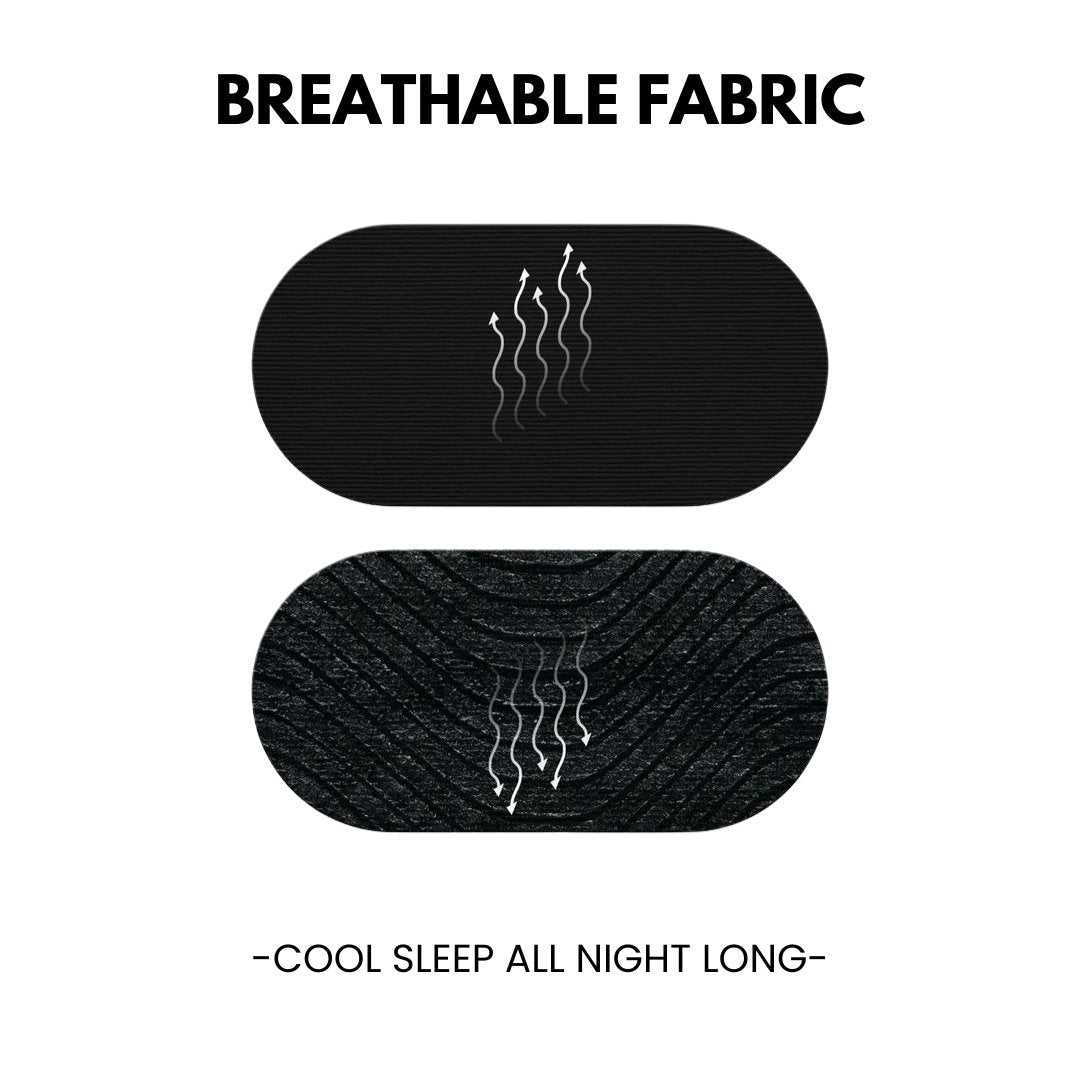
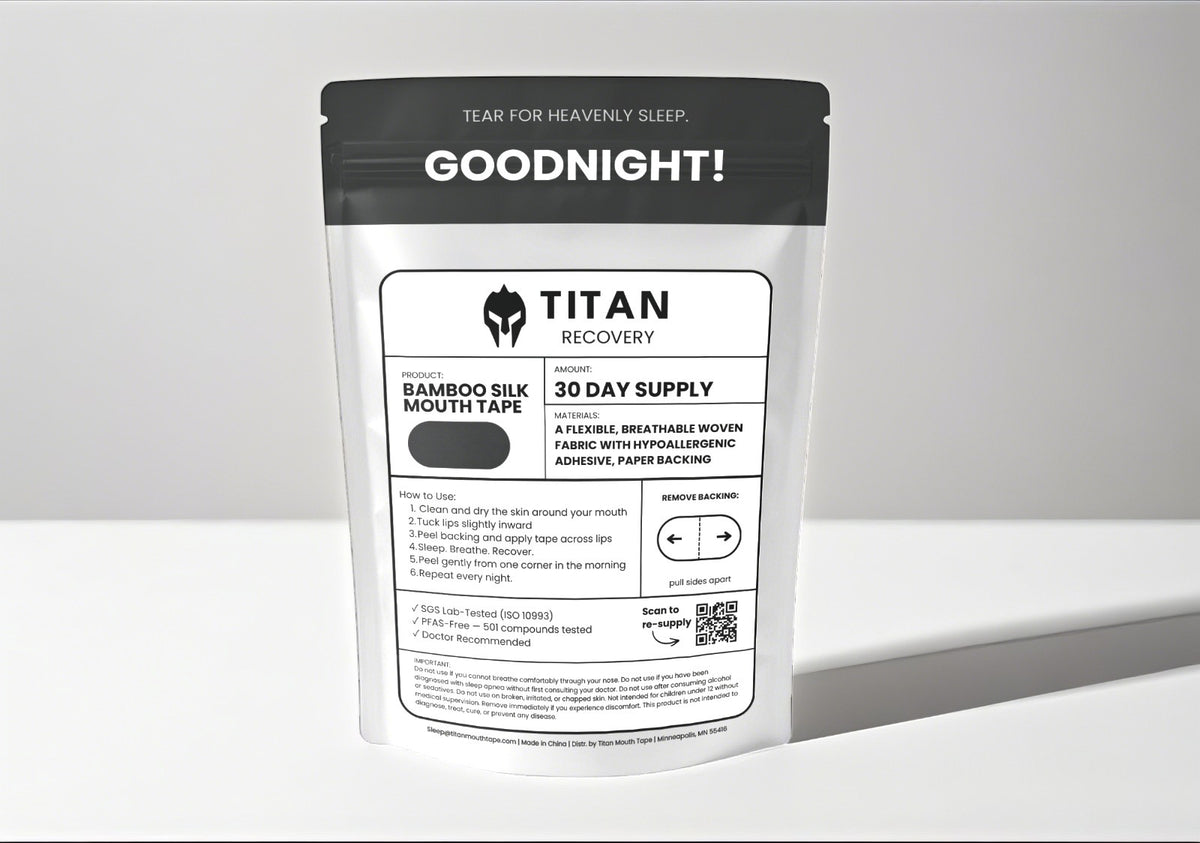
Third-Party Tested vs. Untested: The Mouth Tape Safety Gap Nobody Talks About
Share
You put it on your face. Over your mouth. While you sleep. Every night.
And yet most mouth tape brands don't publish a single safety test. No toxicology reports. No irritation testing. No allergen screening. No independent lab verification of any kind. You're trusting a product that touches your skin for 8 hours a night based on nothing more than a listing title and a few customer reviews.
This isn't a hypothetical risk. Adhesives can contain irritants, allergens, and chemicals you wouldn't knowingly apply to your face. Some contain formaldehyde-releasing compounds. Some contain PFAS — the "forever chemicals" linked to a growing list of health concerns. Without third-party testing, there's no way to know what's in the adhesive — and no way to know what it's doing to your skin while you sleep.
What "Third-Party Tested" Actually Means
Third-party testing means an independent laboratory — not the brand, not the manufacturer, not someone with a financial interest in the product — evaluated the product against recognized safety standards. The lab has no relationship with the brand. The results are what they are.
The gold standard for products that contact skin is ISO 10993, the international standard for biological evaluation of medical devices. It covers:
Cytotoxicity testing — does the material kill or damage human cells on contact? The test exposes living cells to the adhesive material and measures cell viability. A pass means the material is non-toxic at the cellular level.
Sensitization testing — does the material cause allergic reactions? This evaluates whether repeated exposure triggers an immune response. A 0% reaction rate means the adhesive didn't cause sensitization in any test subject.
Irritation testing — does the material cause skin irritation? Scored on a scale of 0.0 to 8.0, where 0.0 means no irritation was observed. Products that score above 0 can cause redness, itching, or inflammation — especially with repeated nightly use.
What Most Brands Skip — and Why
ISO 10993 testing is expensive. A full panel — cytotoxicity, sensitization, and irritation — costs thousands of dollars per product. Most mouth tape brands are dropshipped products made by contract manufacturers overseas. The brand buys inventory, prints labels, and lists on Amazon. They don't test because testing costs money and isn't legally required for products marketed as "wellness" rather than medical devices.
The result: a market full of products that look the same in the listing but vary wildly in what's actually in the adhesive. Some use medical-grade adhesives. Some use industrial adhesives repackaged for consumer products. Without testing, you can't tell the difference from the outside.
The PFAS Problem
PFAS (per- and polyfluoroalkyl substances) are a class of synthetic chemicals found in an enormous range of consumer products — from nonstick cookware to food packaging to adhesives. They're called "forever chemicals" because they don't break down in the environment or in your body. They accumulate over time.
Research has linked PFAS exposure to immune system effects, thyroid disruption, liver damage, and increased cancer risk. The EPA has set health advisory levels for certain PFAS compounds at near-zero concentrations — meaning even tiny amounts are considered concerning.
Why this matters for mouth tape: adhesives can contain PFAS as processing aids, surfactants, or release agents. If your mouth tape adhesive contains PFAS, you're absorbing those chemicals through your skin for 8 hours every night, night after night.
Testing for PFAS requires specific analytical methods (EPA 537.1 or equivalent) that screen for hundreds of individual compounds. It's not cheap. Most brands don't do it. Most brands don't even know if their adhesive contains PFAS because they've never asked.
What Titan Mouth Tape Tests For
Titan's SilkSeal adhesive is independently tested by accredited laboratories to the following standards:
Cytotoxicity (ISO 10993-5): 95% cell viability. The adhesive is non-toxic at the cellular level. This is tested by exposing living human cells to the material and measuring how many survive. 95% viability is well above the 70% threshold required for a pass.
Sensitization (ISO 10993-10): 0% reaction rate. Zero test subjects showed an allergic response to the adhesive material. This test specifically evaluates whether repeated skin contact triggers immune sensitization — the kind of reaction that worsens with continued use.
Irritation (ISO 10993-10): Score 0.0 out of 8.0. No measurable skin irritation. This matters for a product you wear for 8 hours on some of the most sensitive skin on your body — around the lips and mouth.
PFAS screening: 501 individual PFAS compounds tested. Zero detected. This is not a general "PFAS-free" marketing claim — it's a specific analytical test that screens for 501 individual compounds and reports the results.
View the full lab reports and test results.
How to Evaluate Any Mouth Tape Brand
Before you buy any mouth tape — Titan or otherwise — ask these questions:
1. Do they publish third-party test results? Not "clinically tested" or "dermatologist approved" — those phrases are marketing copy, not safety certifications. Look for specific lab results from an identified testing organization (an accredited, independent laboratory).
2. What standard were the tests conducted to? ISO 10993 is the recognized standard for biocompatibility of materials that contact skin. If the brand doesn't reference a specific standard, the testing (if it exists) may not be meaningful.
3. Do they test for PFAS? This requires specific testing — it's not covered by general safety panels. If a brand doesn't mention PFAS testing, assume they haven't done it. "PFAS-free" without a cited test is a claim, not a fact.
4. Is the adhesive identified by name or type? Medical-grade adhesives have specific designations and safety profiles. If the brand can't tell you what adhesive they use, they may not know — which means they definitely haven't tested it.
5. Where is the product manufactured? This isn't about country-of-origin bias — it's about supply chain transparency. Brands that control their manufacturing can verify their materials. Brands that dropship from anonymous contract manufacturers cannot.
The Bottom Line
A product that sits on your skin for 8 hours a night, every night, over your mouth — one of the most permeable and sensitive areas of skin on your body — should be tested to the same standard as a medical device. Not because it's legally required (it often isn't), but because the alternative is trusting your health to a product you know nothing about.
Is mouth taping safe? Here's what the research says.
Third-party testing isn't a marketing differentiator. It's the minimum standard any responsible brand should meet. If a brand won't show you their test results, that tells you everything you need to know.
Doctor Recommended: "As a maxillofacial surgeon and dentist, I recommend Titan Mouth Tape. Nasal breathing during sleep is essential for airway health and deep restorative rest. Titan's bamboo silk design is the most comfortable and effective mouth tape I have tested. If you struggle with snoring, dry mouth, or poor sleep quality, this is the simplest change you can make for your health." — Dr. Francois P., MD, DDS — Maxillofacial Surgeon
Lab-Tested Safety: Titan's SilkSeal™ adhesive is independently tested to ISO 10993 medical device standards. Non-toxic (95% cell viability). Non-allergenic (0% reaction rate). Non-irritating (score 0.0/8.0). PFAS-free — 501 compounds tested, zero detected. See full test results →
Try it tonight. Bamboo silk. SilkSeal™ adhesive. Beard-friendly. No logo on the tape. Free shipping. 30-night Better Sleep Guarantee. Shop Titan Mouth Tape → · Shop TitanAir →