Mouth Breathing and Dark Circles: Why Your Eyes Show Your Breathing Habits
Share
You've tried the eye creams. You've tried the cold spoons, the tea bags, the color-correcting concealer. You sleep eight hours and still look like you slept three. Those dark circles under your eyes won't budge, and every solution you've tried treats them as a skin problem. But what if they're a breathing problem?
The connection between mouth breathing and dark circles is one that dermatologists and ENTs have recognized for decades, even though it hasn't reached mainstream awareness. Chronic mouth breathing — especially during sleep — disrupts sleep quality, alters blood oxygenation, and causes venous pooling in the thin skin beneath the eyes. The dark circles aren't just cosmetic. They're a visible indicator of how well your body is breathing and recovering at night.
The Mechanism: How Mouth Breathing Creates Dark Circles
The skin under your eyes is the thinnest on your body. At roughly 0.5 millimeters thick — about one-quarter the thickness of skin elsewhere on the face — it's translucent enough to reveal the underlying vasculature. When blood pools in the small veins and capillaries beneath this tissue, the discoloration shows through as a dark, bruise-like shadow. That's what most dark circles are: blood showing through thin skin.
The question is why the blood pools there in the first place. The answer involves three interconnected pathways, and mouth breathing contributes to all of them.
Pathway 1: Fragmented sleep. Mouth breathing during sleep is associated with snoring, micro-arousals, and reduced time in deep sleep stages. Each time the airway partially obstructs — even briefly — the brain triggers a micro-arousal to restore muscle tone and reopen the airway. These micro-arousals don't fully wake you, but they pull you out of the deep sleep phases where the body performs its most effective circulatory maintenance. The result is that blood flow and lymphatic drainage around the eyes operate at diminished capacity. Fluid accumulates. Deoxygenated blood sits in the periorbital capillaries longer than it should. The skin beneath the eyes darkens.
This is not speculation. Sleep research has repeatedly demonstrated the connection between poor sleep quality and periorbital hyperpigmentation (the clinical term for dark circles). A study in the journal Sleep found that even one night of partial sleep deprivation increased perceived dark circles by observers. Chronic sleep disruption — the kind that mouth breathing produces night after night — compounds this effect over time.
Pathway 2: Reduced oxygen saturation. Nasal breathing is more efficient than mouth breathing at maintaining blood oxygen levels during sleep. The nasal passages produce nitric oxide, which improves oxygen transfer in the lungs. Nasal breathing also creates positive end-expiratory pressure, which keeps the small airways in the lungs open at the end of each exhale, preventing collapse and maintaining gas exchange. Mouth breathing provides neither of these benefits.
When blood oxygen saturation drops — even slightly, even intermittently — the hemoglobin in red blood cells becomes more deoxygenated. Deoxygenated hemoglobin is darker in color than oxygenated hemoglobin. In the thin-skinned periorbital area, this color difference is visible. Chronic mild oxygen desaturation from mouth breathing creates a persistent darkening beneath the eyes that no eye cream will address, because the discoloration is literally in the blood, not in the skin.
Pathway 3: Venous congestion and impaired drainage. The venous drainage from the periorbital area flows through the facial veins and eventually into the internal jugular vein. Mouth breathing, particularly when associated with snoring and partial airway obstruction, creates negative pressure fluctuations in the chest that impede venous return from the head and face. The blood backs up. The delicate venous plexus beneath the eyes — which has no valves to prevent backflow — becomes engorged. The result is visible pooling that persists into the morning and, with chronic mouth breathing, becomes a semi-permanent feature.
The ENT Connection: "Allergic Shiners"
ENT physicians have a name for dark circles caused by nasal and airway problems: allergic shiners. The term originally described the dark circles associated with allergic rhinitis, where nasal congestion impedes venous drainage from the periorbital area. But the mechanism is not exclusive to allergies. Any condition that chronically blocks or reduces nasal airflow — including habitual mouth breathing — can produce the same venous congestion and the same dark circles.
The reason ENTs recognize this pattern is that they see it resolve when the nasal airway is restored. Patients who undergo septoplasty for a deviated septum, turbinate reduction for chronic congestion, or adenoidectomy for enlarged adenoids often report that their dark circles fade within weeks of surgery — not because the surgery affected their skin, but because restoring nasal breathing eliminated the venous congestion that was causing the discoloration.
This pattern is the strongest evidence that dark circles are often a breathing symptom rather than a skin condition. When the breathing is fixed, the circles improve. When the breathing stays compromised, no amount of topical treatment addresses the root cause.
Beyond Dark Circles: How Mouth Breathing Changes Your Face
Dark circles are just one visible marker of chronic mouth breathing. The pattern affects multiple aspects of facial appearance, and recognizing these signs together creates a clearer picture than any single symptom alone.
Dry, cracked lips. Mouth breathing desiccates the lips throughout the night. The oral mucosa — the moist tissue inside the mouth — is not designed for continuous airflow exposure. Chronic mouth breathers often have perpetually dry, chapped lips that no lip balm fully resolves, because the drying happens again every night for hours.
Gum recession and dental issues. Mouth breathing reduces saliva production and dries the oral cavity, creating an environment favorable for bacterial growth. Over time, this contributes to gingivitis, gum recession, enamel erosion, and increased cavity formation. The dental effects are well-documented — dentists frequently identify chronic mouth breathers by the pattern of decay and gum disease before the patient mentions any breathing issue.
Facial structure changes. In children and adolescents, chronic mouth breathing has been associated with measurable changes in craniofacial development — a longer, narrower face ("long face syndrome"), a recessed chin, a narrow dental arch, and a high palatal vault. In adults, while bone structure is set, the soft tissue effects continue: loss of muscle tone in the lips and jaw, a habitually open mouth posture, and the forward head posture that often accompanies mouth breathing. Mouth breathing's effect on facial aging is a topic that spans both the structural and the visible — the face literally develops differently when the mouth is the primary airway.
Dull complexion. Sleep quality directly affects skin health. During deep sleep, growth hormone is released, collagen production increases, and blood flow to the skin peaks. This is why it's called "beauty sleep" — the skin genuinely repairs and regenerates during deep sleep stages. Mouth breathing reduces time in deep sleep through micro-arousals and fragmentation. The skin gets fewer hours of its primary repair window. Over time, this manifests as a dull, uneven complexion that looks tired regardless of how many hours were spent in bed.
Why Skincare Alone Doesn't Fix This
The skincare industry addresses dark circles as a surface problem. Retinol to thicken the skin. Vitamin C to brighten. Caffeine to constrict blood vessels. Peptides to strengthen the tissue. These approaches are not wrong — they can improve the appearance of dark circles caused by pigmentation, sun damage, or age-related skin thinning. But if the underlying cause is hemodynamic — blood pooling, oxygen desaturation, impaired venous drainage — then treating the skin surface is addressing the downstream effect while leaving the upstream cause untouched.
Think of it this way: if you had a bruise on your arm, you wouldn't try to fix it with concealer and moisturizer. You'd address whatever was causing the bruise. Dark circles caused by mouth breathing are, in a simplified sense, a slow-motion bruise — a persistent discoloration caused by blood behavior beneath thin skin. The fix is not on the skin. The fix is in the breathing.
This is also why "get more sleep" doesn't always fix dark circles. If you're sleeping eight hours but mouth breathing the entire time, you're getting eight hours of fragmented, poorly oxygenated sleep that actively contributes to the dark circles. More hours of bad sleep doesn't solve the problem. Better quality breathing during those hours does.
How Nasal Breathing Reverses the Cycle
Each pathway that creates dark circles can be addressed by restoring consistent nasal breathing during sleep.
Nasal breathing reduces snoring and micro-arousals, leading to more consolidated deep sleep. More deep sleep means better circulatory function, improved lymphatic drainage around the eyes, and more effective tissue repair overnight.
Nasal breathing maintains higher blood oxygen saturation through nitric oxide delivery and positive end-expiratory pressure. Better oxygenation means brighter-colored blood in the periorbital capillaries and less visible discoloration through the thin under-eye skin.
Nasal breathing eliminates the negative intrathoracic pressure swings associated with obstructive snoring, reducing venous congestion in the face and periorbital area. Less congestion means less pooling, less puffiness, and less of the puffy-to-dark-circle progression that many mouth breathers experience each morning.
The improvement is not instant. Chronic dark circles from chronic mouth breathing have developed over months or years of nightly damage. Reversing that pattern takes weeks of consistent nasal breathing to produce visible results. Most people who switch to consistent nighttime nasal breathing — via mouth tape, airway therapy, or both — report noticeable improvement in under-eye appearance within two to four weeks, with progressive improvement over the following months.
How to Start Addressing Dark Circles Through Breathing
Step one: Determine whether you mouth breathe at night. Signs include waking with dry mouth, morning sore throat, lip dryness, pillow drool marks, and reports from a partner that you snore or sleep with your mouth open. If you sleep alone, a simple test is to apply a small piece of medical tape to your lips before bed. If it's displaced in the morning, you were mouth breathing at some point during the night.
Step two: Address nasal patency. You can only breathe through your nose if your nose is open. If you have chronic congestion — from allergies, a deviated septum, swollen turbinates, or other nasal obstruction — address that first. TitanAir Nasal Strips can mechanically open the nasal valve and improve airflow for mild to moderate nasal resistance. For more significant obstruction, an ENT evaluation may be necessary. The goal is to ensure that nasal breathing is comfortable and sustainable before you commit to it all night.
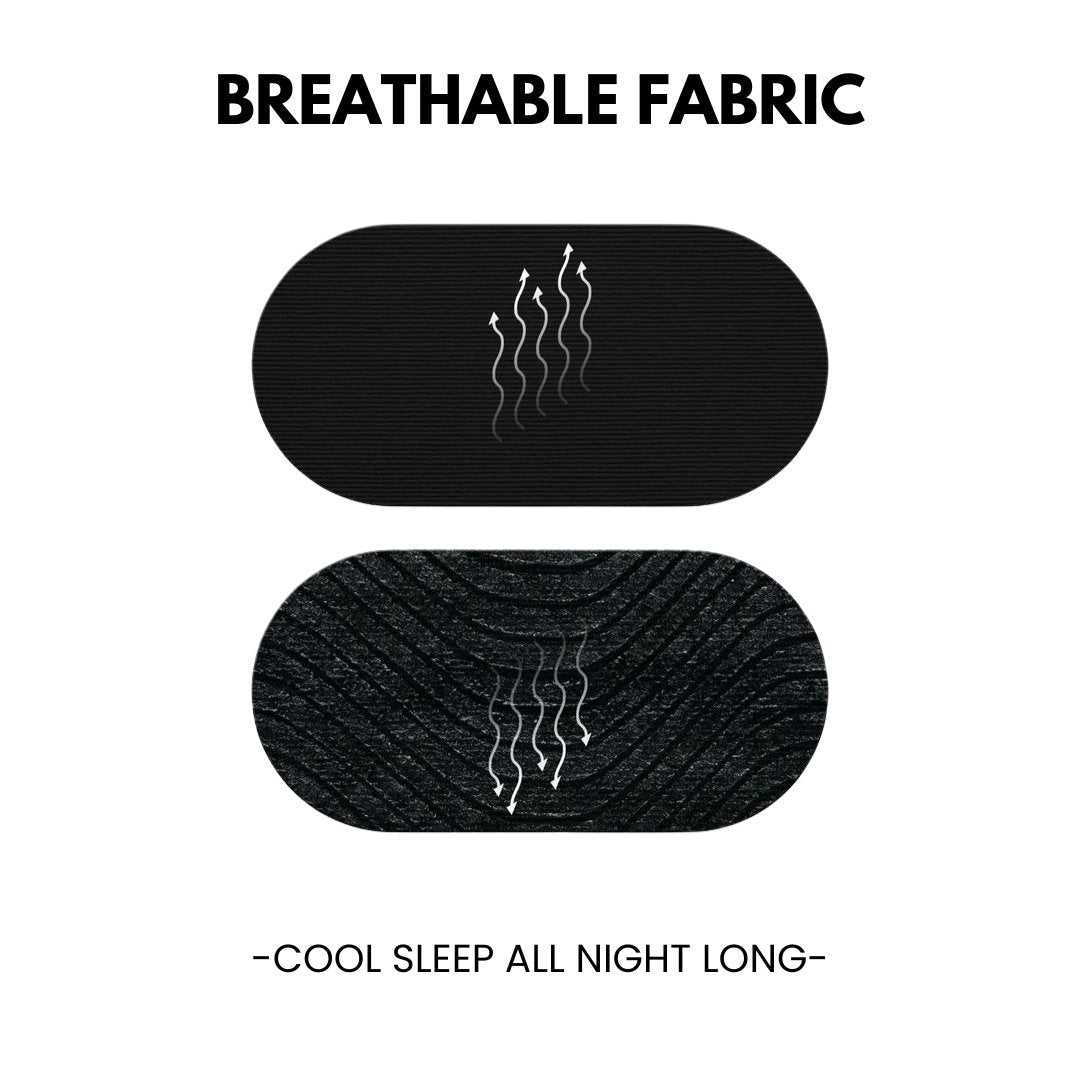
Step three: Start mouth taping. Begin gradually — wear the tape during the day for short periods to build comfort, then transition to overnight use. Titan Mouth Tape uses a gentle adhesive that works for sensitive skin, which matters for the perioral area where the skin is delicate and reactive. The tape holds the lips in a relaxed closed position; it doesn't create a forceful seal.
Step four: Track the change. Take a photo of your under-eye area on the first morning, then again at two weeks and four weeks under the same lighting conditions. The comparison is often more convincing than the mirror, because the change is gradual enough that day-to-day you might not notice it. But side-by-side photos across a month of consistent nasal breathing tell a clear story.
What Dark Circles Are Really Telling You
Dark circles are data. They're your body displaying the cumulative effect of how you slept, how you breathed, and how effectively your circulatory system recovered overnight. They are not a problem confined to your skin. They are an external indicator of an internal process — and in many cases, that internal process is mouth breathing.
This reframe matters because it changes what you spend your time and money trying to fix. If dark circles are a skin problem, the solution is skincare products. If dark circles are a sleep quality and breathing problem — which for chronic mouth breathers, they are — the solution is fixing the breathing. Everything else is concealer over a cause that's still running.
The complete guide to mouth taping covers the full practice — from first use through long-term habit formation. For the dark-circles-specific approach, the key is consistency. One night of nasal breathing won't erase months of venous pooling. But thirty nights of nasal breathing, consolidated deep sleep, and adequate oxygenation can produce the kind of visible change that makes people ask what you changed about your skincare routine.
The Bottom Line
Those dark circles under your eyes may not be about genetics, allergies, or inadequate skincare. Mouth breathing and dark circles are connected through sleep disruption, oxygen desaturation, and venous pooling — mechanisms that operate beneath the skin, not on it. Chronic mouth breathing during sleep creates the physiological conditions for persistent under-eye discoloration, and no topical product addresses the root cause. Restoring nasal breathing through mouth tape and nasal strips targets the actual problem: the breathing pattern that's stealing your sleep quality and leaving the evidence on your face every morning.