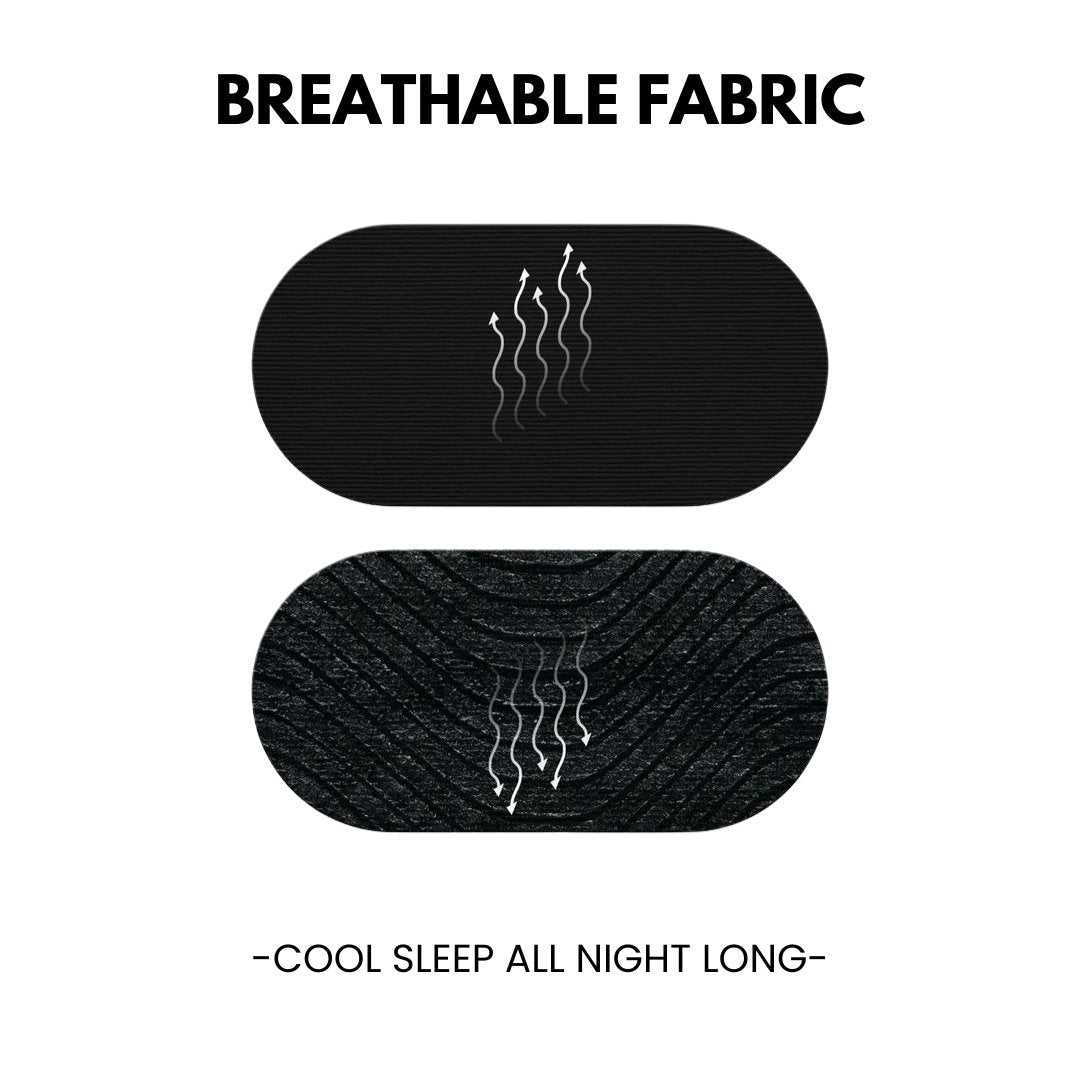
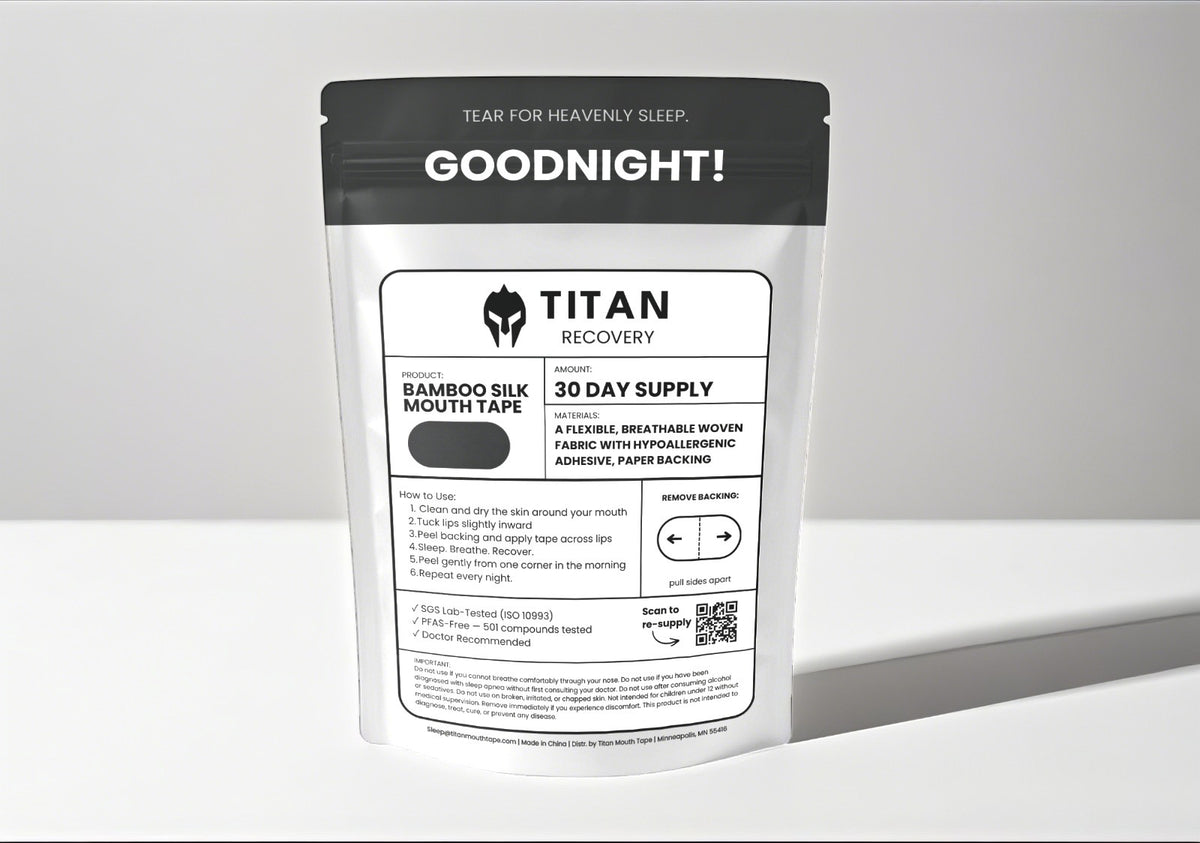
Mouth Tape for Naps: Is It Worth the Short Sleep?
Share
Yes, mouth tape for naps is worth it -- and for most people who mouth breathe during sleep, it might be the single easiest upgrade to daytime rest. Even during a 20-minute nap, an open mouth dries out your throat, invites snoring, and leaves you waking up groggy instead of refreshed. A small strip of tape keeps you nasal breathing from the moment you close your eyes, and the whole process adds about six seconds to your nap routine.
Most of the conversation around mouth taping focuses on overnight use, which makes sense -- that's eight hours of breathing. But naps have their own set of problems that tape solves cleanly, and nobody seems to be talking about it. Whether you're catching a power nap between meetings, sleeping on a flight, or doing a full 90-minute recovery nap as a shift worker, there's a strong case for keeping your mouth closed.
Why You Mouth Breathe More During Naps
Here's something most people don't consider: your jaw is more likely to fall open during a nap than during nighttime sleep. The reason is position.
At night, most people sleep in a bed, lying flat or on their side. During naps, you're often reclined on a couch, leaning back in a chair, propped up against a wall on a flight, or slumped over a desk. In every one of these positions, gravity is pulling your jaw downward more aggressively than it does when you're lying flat. The muscles that keep your mouth closed relax as you fall asleep, and without the support of a pillow under your chin, the jaw drops.
The result is predictable: mouth breathing, snoring (yes, you can snore during a nap -- anyone who's shared an office with a desk napper knows this), dry mouth, and that thick-headed feeling when you wake up. Dry mouth upon waking isn't just uncomfortable -- it disrupts the recovery that the nap was supposed to provide.
Mouth tape solves the gravity problem. Your jaw stays closed regardless of your position, and you breathe through your nose for the entire nap.
Power Naps: 20 Minutes With Better Breathing
The power nap -- usually 15 to 25 minutes -- is designed to capture the benefits of light sleep (stages 1 and 2 of the sleep cycle) without dipping into deep sleep, which can leave you groggy if you wake mid-cycle. The goal is to fall asleep quickly, stay in light sleep, and wake up sharper than before.
Nasal breathing supports every part of that goal.
Faster onset. Nasal breathing activates the parasympathetic nervous system -- the "rest and digest" branch that signals your body to relax. Your heart rate slows, blood pressure drops slightly, and your nervous system shifts away from alertness. When you're trying to fall asleep in 5 minutes during a short break, that parasympathetic push matters. Mouth breathing doesn't produce the same calming signal. Breathing through your nose, with the air being filtered, warmed, and humidified as it passes through the nasal passages, tells your body that conditions are safe for sleep.
No dry wakeup. Even 20 minutes of mouth breathing in a dry office or living room will coat your throat with that sticky, dehydrated feeling. You wake up wanting water instead of feeling rested. Nasal breathing keeps your mouth hydrated throughout.
Better wakeup quality. People who nap with mouth tape consistently describe the wakeup as cleaner -- less fog, less disorientation, less of the "I shouldn't have napped" feeling. Part of that is simply avoiding the dehydration and mild airway irritation that come with mouth breathing, even over a short period.
Longer Naps: 60 to 90 Minutes
When you extend a nap to 60 or 90 minutes, you're going through a full sleep cycle -- light sleep, deep sleep, and potentially REM. At this length, a nap starts to look a lot like a compressed night of sleep, and the benefits of mouth tape mirror overnight use.
Snoring reduction. Deep sleep relaxes your airway muscles more than light sleep does. A 90-minute nap that includes a deep-sleep stage is exactly where snoring shows up. Mouth tape keeps your jaw closed, which helps maintain airway tone and reduces the vibration of soft tissue that causes snoring. If you share a living space and nap on the couch, this is the difference between a quiet nap and one that broadcasts through the apartment.
Better sleep quality. Research on nasal breathing during sleep consistently shows that it supports better oxygen exchange and less sleep disruption than mouth breathing. Those findings apply to any sleep, not just eight-hour stretches. A 90-minute nap with consistent nasal breathing is going to be more restorative than the same nap punctuated by mouth breathing, dry mouth, and micro-arousals from airway dryness. Sleep position matters here too -- if you nap on your back (common on couches), you're in the position most associated with mouth breathing and snoring.
Shift workers and irregular schedules. If you're a nurse, first responder, driver, or anyone working nights or rotating shifts, naps aren't optional -- they're how you stay functional. A 90-minute nap between shifts needs to deliver real recovery, not just unconsciousness. Mouth tape helps ensure that the sleep you get is quality sleep, not compromised by mouth breathing in whatever break room, car, or spare bed you're using.
Travel Naps: Where Mouth Tape Earns Its Keep
If there's one napping scenario where mouth tape goes from "nice to have" to "genuinely important," it's travel -- specifically air travel.
Airplane cabin humidity sits around 10 to 20 percent, which is drier than the Sahara. At that humidity, your nasal passages and throat dry out even when you're awake with your mouth closed. Add mouth breathing during a nap, and you're funneling desert-dry air directly over your soft palate, tongue, and throat for however long you sleep. The result is the familiar airplane wakeup: sore throat, cracked lips, that sandpaper feeling in the back of your mouth. You land feeling worse than when you boarded.
Mouth tape during a flight nap keeps the air routed through your nose, where it gets humidified before reaching your throat. Your nasal passages aren't perfect humidifiers in 15-percent cabin humidity, but they're dramatically better than an open mouth. The difference in how you feel when you wake up is significant.
Trains and cars work the same way. The air might not be as dry as an airplane cabin, but reclined seats produce the same jaw-drop problem, and car air conditioning can be surprisingly dehydrating over a long ride. If you're the passenger on a road trip and you want to nap without waking up with a dry mouth and a sore neck from snoring with your head tilted, tape helps.
The social factor. Mouth taping on a plane might feel awkward, but consider the alternative: snoring next to a stranger at 35,000 feet. A small strip of tape is far less noticeable than open-mouthed snoring, and most Titan Mouth Tape strips are subtle enough that your seatmate probably won't even see it.
The Practical Side: It Takes Five Seconds
One reason people don't mouth tape for naps is that it feels like adding a step to something that's supposed to be effortless. But the actual friction is close to zero.
Application takes five seconds. Peel a strip, press it on your lips, close your eyes. There's no preparation, no routine, no equipment. You can keep a few strips in your desk drawer, backpack, laptop bag, or carry-on. They weigh nothing and take up no space.
Removal takes one second. When the alarm goes off or you wake up naturally, peel the strip off. Done. There's no residue to clean, no ritual to reverse.
You can reuse a strip. This is the detail most people don't know: if you used a strip of mouth tape last night and it still has adhesive, it often works fine for a daytime nap. The adhesive on quality mouth tape is designed to hold through a full night of sleep, so a used strip typically has more than enough grip for a 20-minute nap. You're not wasting a fresh strip every time you want to rest your eyes. Safety stays the same whether the strip is fresh or reused -- you can always open your mouth with a gentle push if you need to.
The barrier to napping with mouth tape is genuinely lower than setting an alarm. Once you've done it two or three times, it becomes automatic.
When Mouth Tape for Naps Is Overkill
Honest take: if you nap for 15 minutes, you know you don't mouth breathe or snore during sleep, and you wake up feeling fine, adding mouth tape does nothing meaningful. The tape solves specific problems -- mouth breathing, snoring, dry mouth, poor wakeup quality. If you don't have those problems during naps, you don't need a solution.
How do you know if you mouth breathe during naps? A few indicators:
- You wake up from naps with a dry mouth or throat.
- Someone has told you that you snore during naps.
- You feel groggier after a nap than you did before it.
- You tend to mouth breathe during the day when relaxed (watching TV, reading, scrolling).
- You nap in reclined positions -- chairs, couches, airplane seats.
If any of those sound familiar, mouth tape will likely improve your nap quality. If none of them apply, you might be one of the people whose jaw stays closed and whose nasal breathing stays consistent regardless of sleep length or position -- and in that case, the tape is unnecessary.
Getting Started: Mouth Tape for Your Next Nap
If you already use mouth tape at night, using it for naps requires no adjustment. Same strip, same application, shorter duration. You already know it works for you.
If you've never used mouth tape at all, a nap is actually a great first test. It's short, low-stakes, and you're sleeping lightly enough to stay somewhat aware of the tape. If you can nap comfortably with it, you know you'll be fine overnight. It's a natural stepping stone -- less commitment than a full night, more useful than just wearing the strip around the house.
Pair it with nasal strips if you want maximum airflow, especially for travel naps where cabin air is dry and nasal congestion is more likely. The combination -- mouth sealed, nasal passages opened -- gives you the best possible breathing during sleep, whether that sleep lasts 20 minutes or 8 hours.
Frequently Asked Questions
Can I use mouth tape for a nap if I've never tried it at night?
Absolutely -- a nap is actually an ideal first experience with mouth tape. You're sleeping lightly, the duration is short, and you're aware enough to remove the tape if it feels uncomfortable. Many people find that a successful nap session gives them the confidence to try mouth tape overnight. Start with a 20-minute nap in a comfortable position and see how it feels.
Will mouth tape help me fall asleep faster during a nap?
It can. Nasal breathing activates your parasympathetic nervous system, which promotes relaxation and helps your body transition into sleep. When your power nap window is only 20 minutes, shaving a few minutes off your time to fall asleep means more actual sleep and a better recovery. The forced nasal breathing also gives your mind something rhythmic to focus on, which can reduce the mental chatter that keeps you awake.
Is it safe to use mouth tape while napping in a public place like an airplane?
Yes. The same safety principles apply whether you're in your bed or in seat 14C. Quality mouth tape allows you to open your mouth with a gentle push of your jaw if needed, and you can always breathe through your nose. The tape keeps your jaw from dropping open due to gravity -- it doesn't create an airtight seal. If you have concerns about breathing through your nose specifically in dry airplane air, pair the tape with a nasal strip to keep your passages open.
How many times can I reuse a mouth tape strip for naps?
A strip used for a full night of sleep typically retains enough adhesive for one or two daytime naps. After that, adhesion drops and the strip may not stay in place. If the strip doesn't hold when you press it to your lips, use a fresh one. You'll know when a strip is done -- it just won't stick.
Should I set a timer when napping with mouth tape?
If you normally set an alarm for naps, keep doing that -- the mouth tape doesn't change anything about wakeup. If anything, you may find that napping with mouth tape produces a cleaner, more natural wakeup because you're not being pulled out of sleep by dry-mouth discomfort. For power naps, keep the alarm at 20 to 25 minutes to avoid entering deep sleep.
The Bottom Line
Mouth tape for naps is a small thing that produces a noticeable difference for anyone who mouth breathes during sleep. The application takes five seconds, removal takes one, and a used strip from the night before often works fine for a daytime nap. You get better breathing, no dry mouth, less snoring, and a wakeup that actually leaves you feeling rested instead of foggy.
If you already tape at night, extend the habit to naps -- you're leaving easy recovery on the table if you don't. If you're new to mouth taping entirely, a nap is the lowest-pressure way to try it. Twenty minutes, one strip of Titan Mouth Tape, and you'll know within one session whether it works for you.
Doctor Recommended: "As a maxillofacial surgeon and dentist, I recommend Titan Mouth Tape. Nasal breathing during sleep is essential for airway health and deep restorative rest. Titan's bamboo silk design is the most comfortable and effective mouth tape I have tested. If you struggle with snoring, dry mouth, or poor sleep quality, this is the simplest change you can make for your health." — Dr. Francois P., MD, DDS — Maxillofacial Surgeon
Lab-Tested Safety: Titan's adhesive is independently tested to ISO 10993 medical device standards. Non-toxic (95% cell viability). Non-allergenic (0% reaction rate). Non-irritating (score 0.0/8.0). PFAS-free — 501 compounds tested, zero detected. See full test results →
Try the complete system tonight. Titan Mouth Tape (bamboo silk, SilkSeal™ adhesive) + TitanAir Nasal Strips. Free shipping. 30-night Better Sleep Guarantee. Shop Titan Mouth Tape → · Shop TitanAir Nasal Strips →