How to Use Nasal Strips: Application, Removal & More
Share
Using nasal strips is simple, but placement is everything. To use a nasal strip correctly, clean and dry the skin at the base of your nose, center the strip across the nasal valve just above the flare of your nostrils, and press firmly for ten seconds. That's the whole method — but most people who say strips "don't work" are placing them in the wrong spot. Here's the complete guide to how to use nasal strips the right way, from application to removal to troubleshooting.
Step-by-Step: How to Apply Nasal Strips
A nasal strip is a flexible band with two spring-like ribs and an adhesive backing. When it sticks to the skin on both sides of your nose, those ribs try to straighten, gently pulling your nostrils open. It all comes down to adhesion and placement — get those right and the strip does the rest.
- Wash and dry the skin across the bridge and sides of your nose. Use water and a gentle cleanser to remove your skin's natural oils, then pat completely dry. This is the single most important step — the adhesive bonds to clean, dry skin and slides off oily skin.
- Remove any makeup, moisturizer, or sunscreen from the area. Anything you've applied to your nose creates a barrier between the adhesive and your skin. Apply nightly skincare everywhere except the strip zone, or after the strip is on.
- Peel one TitanAir Nasal Strip from its backing. Hold it by the tabs at each end so you don't touch the adhesive with your fingers. Finger oils weaken the bond.
- Find the nasal valve — the correct placement spot. Run a fingertip down the side of your nose. You'll feel hard bone at the top, then a softer, springier section lower down where the nose flares toward the nostrils. That soft flexible section, just above the flare, is the nasal valve — the narrowest part of your airway and where the strip does its work.
- Center the strip horizontally across the nasal valve. Line up the middle of the strip with the center of your nose and lay it flat so the ends reach onto the fleshy sides of each nostril — just above where the nostrils flare, not up on the hard bony bridge.
- Press firmly along the entire strip for ten seconds. Start in the middle and smooth outward to each end, pressing the tabs onto the sides of your nose. The adhesive bonds more strongly the longer you hold it, and the ends are where lifting starts.
- Check that you feel the pull. Once seated, you should feel a light, steady tension opening your nostrils, and nasal breathing should feel noticeably easier. If you feel nothing, the strip is likely too high on the bony bridge — peel it and reposition lower over the valve.
Take a slow breath through your nose after applying. A correctly placed strip makes that breath feel wider and quieter almost immediately — that's how you know you've nailed the placement.
Common Mistakes That Stop Nasal Strips From Working
When a nasal strip underperforms, it's almost always one of these — and all are easy to fix.
Placing the strip too high. By far the most common mistake. People instinctively put the strip up on the hard bridge near the eyes. But the bony bridge doesn't move, so a strip there has nothing to open. It has to sit lower, on the soft flexible cartilage just above the nostril flare, where its spring tension can actually pull the airway wide.
Placing the strip too low. Slide it too far down and the ends land on the rounded tips of the nostrils, where there's no flat surface to grip. The strip peels within an hour. The sweet spot is narrow — right across the valve, not below it.
Applying to oily or moist skin. A strip on skin that still has facial oil, moisturizer, or a film of moisture from washing won't hold — it lifts at the edges and falls off in the night. Clean, dry thoroughly, then apply. A quick wipe with a dry tissue right before application removes the last of the surface moisture. (The fourth mistake — reusing a strip — gets its own section below.)
How to Remove Nasal Strips Painlessly
Removal takes a few seconds, but technique matters — pulling a dry strip straight off tugs at the skin, and over time that's how you get redness across the bridge of your nose.
Wet it first. In the morning, splash your face with warm water or hold a warm, damp washcloth against your nose for a few seconds. The warmth softens the adhesive so it releases from the skin instead of clinging to it — the single best trick for painless removal.
Peel slowly from the ends inward. Grip one tab, gently lift the end, and peel toward the center of your nose rather than yanking outward. Do the same from the other side, working with the curve of your nose.
Never rip it off like a bandage. A fast pull causes discomfort and can leave your skin pink. If the strip feels stuck, it just needs more warm water — not more force. Done gently, removal is painless even for sensitive skin.
How Long Do Nasal Strips Last?
One strip lasts one night. Nasal strips are single-use. A quality strip like TitanAir is engineered to hold its spring tension and adhesion for eight or more hours — a full night's sleep — so it opens your nose at bedtime and is still opening it when you wake up.
Cheaper strips often lose tension partway through the night — the adhesive gives out, the ribs relax, and the strip peels off or stops pulling, which is why some people wake up congested even with a strip on. The dual-band spring system in TitanAir is built to hold tension all the way to morning rather than fading by midnight.
Unopened strips have a long shelf life — the adhesive stays viable for a year or more sealed in a cool, dry place. It's only once applied to skin that a strip's life is a single night.
Can You Reuse Nasal Strips?
No. Nasal strips are not reusable. Once you peel a strip off, two things have happened: the adhesive has bonded to your skin overnight and lost most of its grip, so reapplied it slides off within the hour; and the spring ribs have spent all night under tension and won't snap back to full lifting force. A reused strip does neither of its two jobs.
Stretching a supply by reusing strips is a false economy — a fraction of the airflow benefit and a strip that falls off anyway. Budget for one strip per night. If nightly cost is the concern, the larger TitanAir supply bundles bring the per-strip price down, and Subscribe and Save takes an additional 11% off.
Nasal Strips Not Working? Here's the Fix
If your strips aren't delivering, work through these in order — most problems are solved by the first one.
Check your placement. Nine times out of ten, "not working" means "placed too high." Move the strip down onto the soft flexible part of your nose, just above where the nostrils flare, and press firmly. You should feel the pull immediately. If you don't feel tension, it's in the wrong spot.
Check the strip size. A strip that's too small won't reach across the full valve, and one that's too large won't sit flush against a narrower nose. The ends need to land flat on the sides of the nostrils to grip and pull. If a strip constantly peels or feels weak, try a size that matches your nose width better.
Set the right expectation. Nasal strips open the external nasal valve — the soft outer part of the airway. They work extremely well when your restriction is there, including many people with a mild to moderate deviated septum. But a strip can't clear congestion deep inside your nose, shrink swollen turbinates, or fix a severe structural blockage. As we cover in whether nasal strips actually work, they're a mechanical tool for one problem — not a decongestant. Treat heavy congestion underneath the strip, and if breathing stays blocked, see an ENT.
Pairing Nasal Strips With Mouth Tape
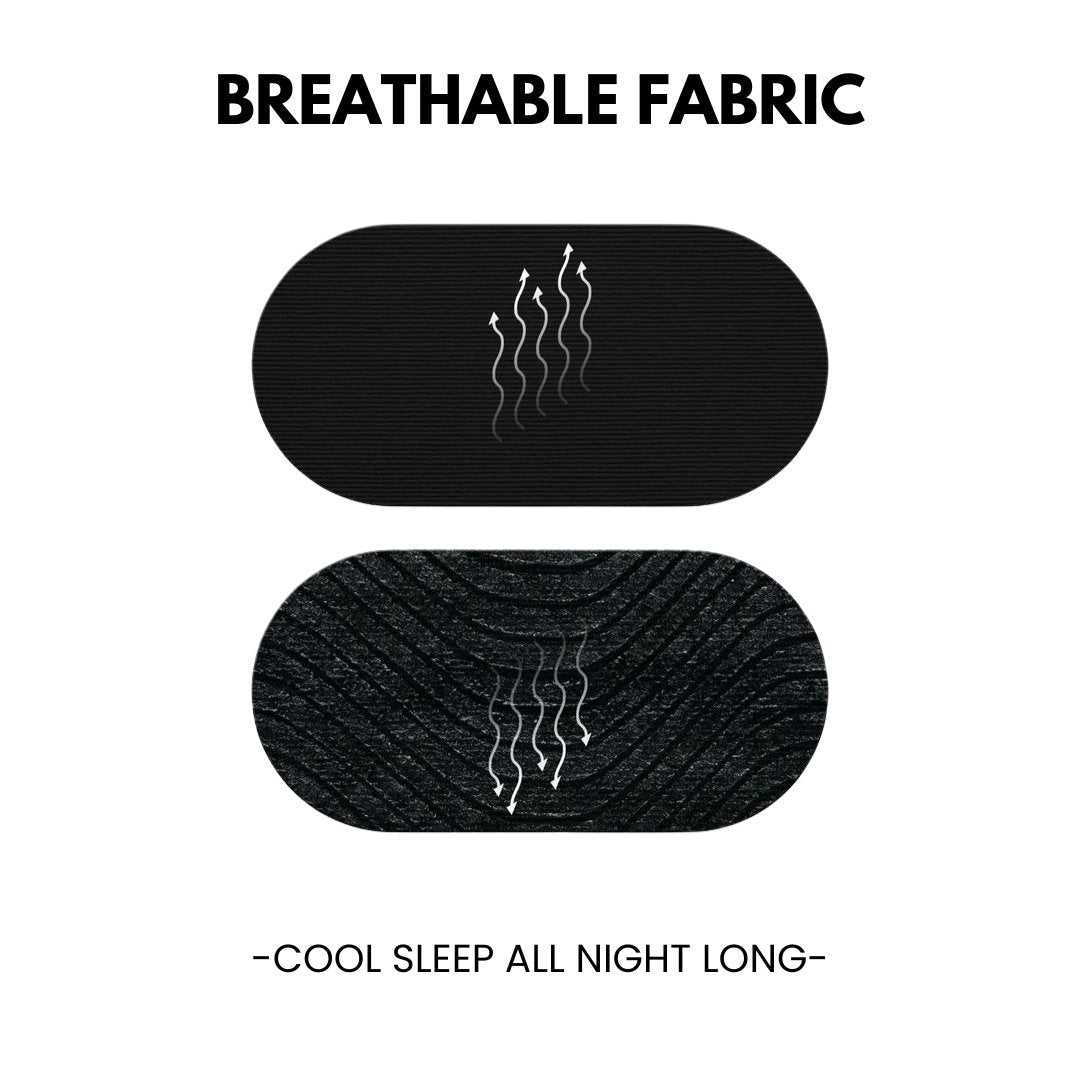
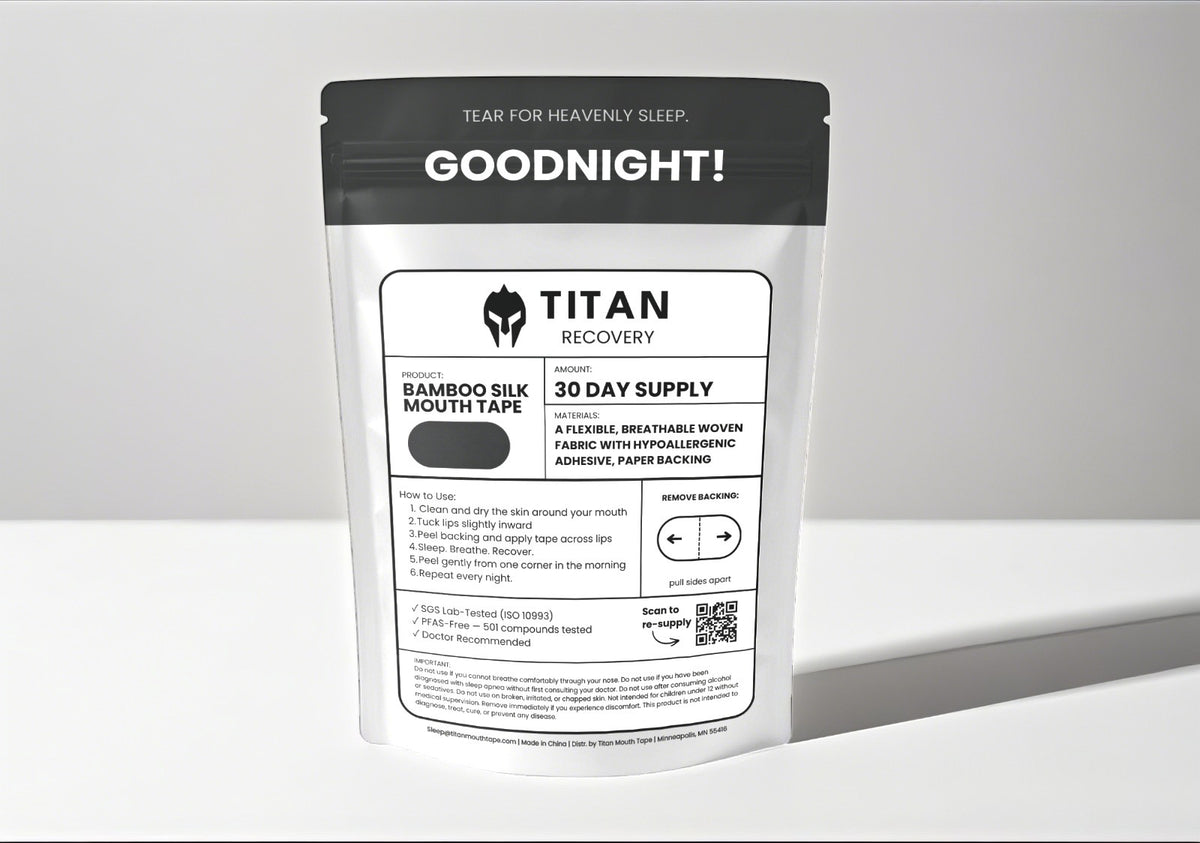
Nasal strips solve one half of the airway equation: they open your nose. But if your mouth falls open during sleep, you'll still breathe through it — snoring, dry mouth, and disrupted sleep continue no matter how clear your nose is. A nasal strip makes nasal breathing easier; mouth tape makes sure it's the only option by keeping your lips gently closed. The strip clears the runway, the tape keeps you on it. For a deeper comparison, see mouth tape vs. nasal strips — for most people the answer is "both."
Apply the strip first, then the tape — that order keeps you from bumping a freshly placed strip while you tape your mouth. If you're new to taping, our step-by-step mouth taping guide walks through the adjustment period. The Titan Deep Sleep Bundle packages TitanAir strips and mouth tape together — the simplest way to run the complete setup.
Frequently Asked Questions
Where exactly do you place a nasal strip?
Center it horizontally across the nasal valve — the soft, flexible section on the sides of your nose just above where the nostrils flare out. Not on the hard bony bridge near your eyes (too high to open anything) and not on the nostril tips (nothing flat to grip). If placement is right, you'll feel a gentle pull the moment the strip is seated.
How long does a nasal strip last?
One strip lasts a single night. A quality strip holds its adhesion and spring tension for eight or more hours; cheaper strips often lose tension before morning. Unopened strips keep for a year or more sealed in a cool, dry place — it's only once applied to skin that a strip's life is limited to one night.
Can nasal strips be reused?
No. After one night the adhesive has lost its grip and the spring ribs have lost their snap, so a reused strip won't hold or open your nose. Use a fresh strip every night. If cost is a concern, larger bundles and Subscribe and Save lower the per-strip price.
Why aren't my nasal strips working?
Usually placement — the strip is too high on the bony bridge instead of over the flexible valve. Move it lower and press firmly. Also check that the size matches your nose width, and remember strips open the external airway, not deep congestion. If you breathe fine without one, or a blockage persists no matter what, a strip may not be the right tool.
Do nasal strips hurt to remove?
Not if you wet them first. Splash warm water on your nose or hold a warm, damp cloth against the strip to soften the adhesive, then peel slowly from the ends inward. Ripping a dry strip off quickly is what causes discomfort — warm water and a slow peel make removal painless.
The Bottom Line
Using nasal strips well comes down to three things: place them over the soft nasal valve (not the bony bridge), apply to clean, dry skin, and use a fresh strip every night. Remove them gently with warm water, and never reuse one. When strips seem to fail, the fix is almost always placement. For the complete setup, pair TitanAir Nasal Strips with mouth tape so your breathing stays where it should be — through your nose, all night long.
Doctor Recommended: "As a maxillofacial surgeon and dentist, I recommend Titan Mouth Tape. Nasal breathing during sleep is essential for airway health and deep restorative rest. Titan's bamboo silk design is the most comfortable and effective mouth tape I have tested. If you struggle with snoring, dry mouth, or poor sleep quality, this is the simplest change you can make for your health." — Dr. Francois P., MD, DDS — Maxillofacial Surgeon
Lab-Tested Safety: Titan's adhesive is independently tested to ISO 10993 medical device standards. Non-toxic (95% cell viability). Non-allergenic (0% reaction rate). Non-irritating (score 0.0/8.0). PFAS-free — 501 compounds tested, zero detected. See full test results →
Try the complete system tonight. Titan Mouth Tape (bamboo silk, SilkSeal™ adhesive) + TitanAir Nasal Strips. Free shipping. 30-night Better Sleep Guarantee. Shop Titan Mouth Tape → · Shop TitanAir Nasal Strips →