Who Should Not Use Mouth Tape?
Share
You should not use mouth tape if you have untreated or suspected obstructive sleep apnea, severe nasal obstruction that prevents nose breathing, a recent facial or nasal surgery, a serious respiratory illness, or an adhesive allergy. Very young children, and anyone who is intoxicated or sedated, should also avoid it. If you can't breathe comfortably through your nose lying down, mouth tape isn't for you yet.
Mouth tape is a small, removable strip placed over the lips at night to encourage nasal breathing during sleep. For most healthy adults with a clear nose, it's a low-risk habit. But it isn't universal. This guide covers exactly who should skip it, who should ask a doctor first, and what to use instead when congestion is the only thing standing in your way.
What is mouth tape and how does it work?
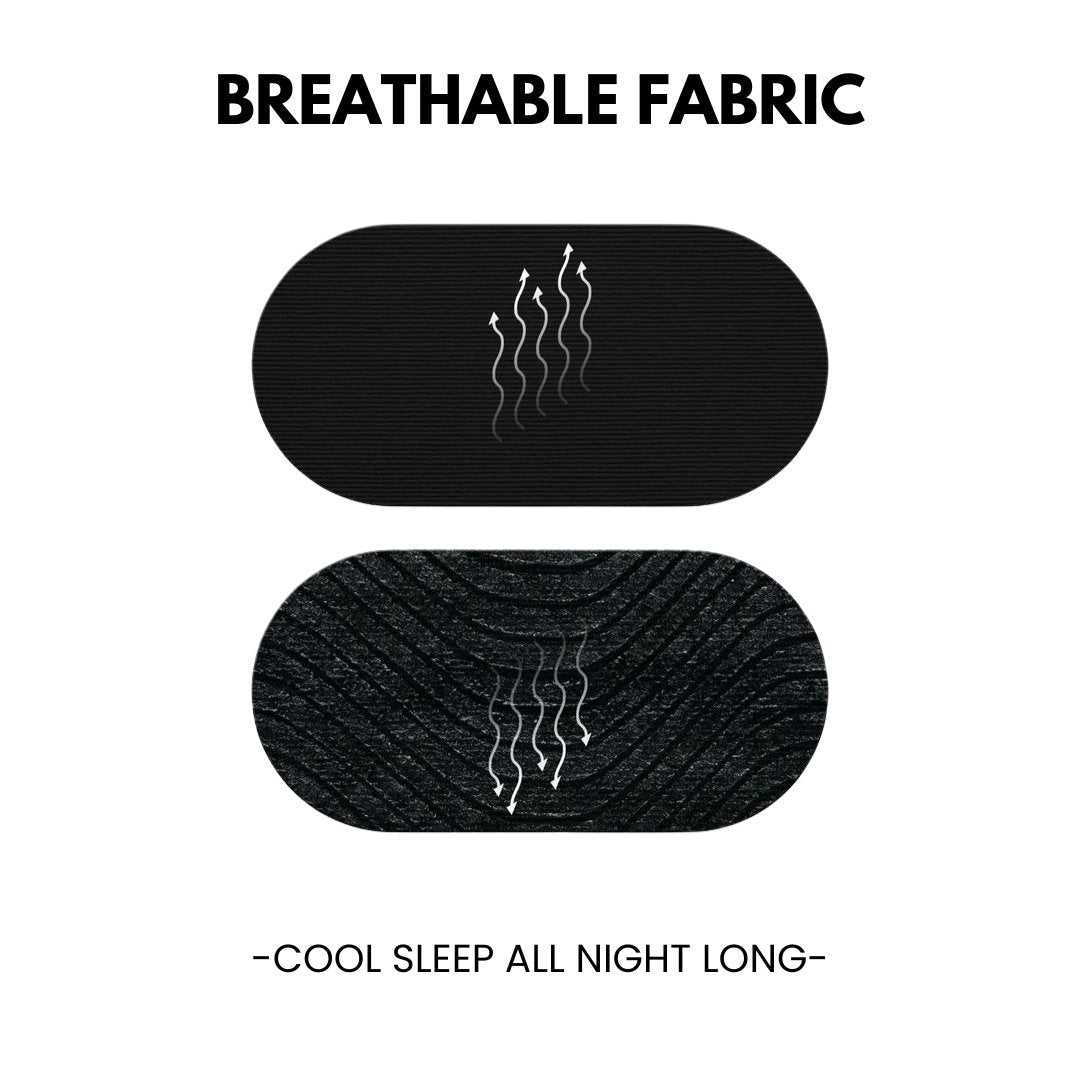
Mouth tape keeps the lips gently closed during sleep so airflow routes through the nose. Nasal breathing filters, warms, and humidifies incoming air and supports steadier, more restorative sleep. The tape doesn't seal the mouth shut like a lock; quality tape is designed to peel away easily and, on many designs, to leave a small gap or vent. The goal is a nudge toward nasal breathing, not a forced seal.
That distinction matters for safety. Mouth tape works only when your nose can actually handle a full night of breathing on its own. When it can't, closing the mouth removes a backup airway you may need. That's the thread running through every situation below.
Who should not use mouth tape?
Some people should avoid mouth tape entirely, and others should clear it with a clinician first. Here is the short list, followed by the reasons.
- Anyone with untreated or suspected obstructive sleep apnea
- People with severe nasal obstruction or chronic congestion that blocks nose breathing
- People with a severe deviated septum or structural nasal blockage
- Anyone recovering from recent facial, nasal, oral, or sinus surgery
- People with a serious respiratory illness or acute breathing difficulty
- Very young children (defer to a pediatrician)
- Anyone intoxicated, heavily sedated, or on strong sleep or muscle-relaxant medication
- People with chapped, broken, or irritated lip skin, or a known adhesive allergy
Why should people with sleep apnea avoid mouth tape?
Mouth tape does not treat sleep apnea and can mask a serious condition. Obstructive sleep apnea causes the airway to collapse repeatedly during sleep, cutting off breathing regardless of whether your mouth is open or closed. Taping the mouth doesn't hold the throat open, and it may create a false sense that the problem is handled.
If you snore loudly, gasp or choke awake, or feel exhausted after a full night, get evaluated before taping. Learn to tell ordinary snoring apart from sleep apnea, and read more on mouth tape and sleep apnea before making a decision. Mouth tape is not a substitute for diagnosis or CPAP therapy.
Can you use mouth tape with a blocked or stuffy nose?
No. If your nose is blocked, closing your mouth leaves you without a reliable airway. Severe nasal obstruction, chronic congestion, or a significant deviated septum can make full-night nasal breathing impossible. Forcing it with tape means fragmented sleep at best and air hunger at worst.
There's a simple test: lie down, close your mouth, and breathe only through your nose for 60 seconds. If it feels comfortable, your nose can likely do the job. If it feels effortful or you sense air hunger building, skip the tape. A severe structural blockage that never clears is a reason to see an ENT rather than tape over the problem.
Should you tape after surgery or during a respiratory illness?
Avoid mouth tape after recent facial, nasal, oral, or sinus surgery, and during any serious respiratory illness. Healing tissue, surgical swelling, and post-operative congestion all reduce the airflow your nose can manage, and adhesive over healing skin or incisions can interfere with recovery. Wait until you're fully healed and your surgeon clears you.
The same caution applies to pneumonia, bronchitis, severe asthma flares, or any illness that makes breathing labored. When your respiratory system is already working hard, it needs full flexibility in how you breathe. Adding a constraint to the airway isn't worth it. A short break of a few nights won't undo an established habit.
Is mouth tape safe for children?
Mouth tape is not appropriate for very young children, and any use in kids should be directed by a pediatrician. Children have smaller airways, and a young child may not be able to remove tape or communicate distress if their nose becomes blocked overnight. Mouth breathing in children can also signal underlying issues, such as enlarged tonsils or adenoids, that need medical evaluation rather than a taping workaround.
If your child mouth-breathes at night, talk to their pediatrician first. Our guide on whether kids can use mouth tape covers this in more detail. For adults, the calculus is different, but a clinician's input is always the right call when there's any doubt.
Why you should never tape while intoxicated or sedated
Alcohol, sedatives, and strong sleep medications blunt the arousal reflexes that would normally wake you if breathing became difficult. They also relax the airway muscles and worsen snoring. Combining any of these with mouth tape removes both a backup airway and the alertness you'd rely on to respond to a problem.
If you've been drinking or have taken a sedating medication, sleep without tape that night. The habit will still be there tomorrow. This is one of the clearest cases where mouth tape and impaired breathing awareness simply don't mix.
What about sensitive skin, chapped lips, or adhesive allergies?
Broken or irritated skin and known adhesive allergies are reasons to avoid tape or choose a gentle, hypoallergenic option. Applying adhesive to chapped, cracked, or inflamed lips can worsen irritation, and anyone with a history of reactions to medical adhesives or bandages may react to mouth tape too.
If your skin is simply sensitive rather than broken, a gentle formulation and correct technique often solve it. But active irritation, a rash, or a diagnosed adhesive allergy means you should hold off and, if reactions persist, ask a dermatologist. Skin that's healthy and intact is a prerequisite, not an afterthought.
Who is mouth tape actually good for?
Mouth tape suits healthy adults who breathe well through the nose but drift into mouth breathing while asleep. If you wake with a dry mouth, snore lightly, or feel your sleep could be deeper despite decent hours, and your nose is clear, you're a strong candidate. Many people in this group notice reduced snoring, less morning dryness, and steadier sleep within a couple of weeks.
If that's you, start gradually and safely. Our step-by-step guide to starting mouth taping and our overview of whether mouth taping is safe walk you through the first nights. A quality mouth tape designed to peel away easily makes the transition comfortable.
What to use when congestion is the only barrier
If a clear nose is the one thing standing between you and mouth tape, nasal strips are often the fix. When your nasal passages are simply narrow or mildly congested, rather than structurally blocked, an external strip lifts and widens the nostrils mechanically, no medication involved, opening enough airway to make nasal breathing comfortable.
TitanAir nasal strips can be used on their own or as a bridge that makes mouth tape workable on borderline nights. If you want both tools together, the Deep Sleep Bundle pairs them. Just remember: nasal strips help mild, mechanical narrowing. They don't fix true obstruction, apnea, or illness, and they don't replace a doctor's evaluation.
Frequently Asked Questions
Can everyone use mouth tape?
No. Most healthy adults with a clear nose can use it safely, but people with untreated sleep apnea, severe congestion or nasal obstruction, recent facial surgery, serious respiratory illness, adhesive allergies, or intoxication should not. Very young children should only use it under a pediatrician's direction.
Is mouth tape safe for me if I snore?
Light snoring with a clear nose is often a good fit for mouth tape. But loud snoring paired with gasping, choking, or daytime exhaustion can signal sleep apnea, which mouth tape does not treat. Get evaluated before taping if those signs are present.
Can you mouth tape with a cold?
Only if you can still breathe comfortably through your nose lying down. During a cold, congestion often makes that impossible, so it's usually best to skip tape on your worst days. A saline rinse or nasal strip before bed can help on milder nights.
Does mouth tape treat sleep apnea?
No. Mouth tape does not hold the airway open and cannot treat obstructive sleep apnea. Relying on it can delay proper diagnosis and treatment. If you suspect apnea, see a clinician rather than using tape as a workaround.
Can I use mouth tape if I have a deviated septum?
It depends on severity. A mild deviation that still allows comfortable nose breathing may be fine, often with a nasal strip. A severe septum that blocks airflow is a reason to avoid tape and consult an ENT.
What are the signs I should stop using mouth tape?
Stop and reassess if you wake gasping or anxious, feel air hunger, develop persistent lip or skin irritation, or notice no benefit after several weeks. Ongoing exhaustion despite taping may point to an underlying issue worth a medical check.
The Bottom Line
Mouth tape is a helpful, low-risk habit for healthy adults who breathe well through the nose but slip into mouth breathing overnight. It is not for everyone. Skip it, or check with a doctor first, if you have untreated or suspected sleep apnea, severe congestion or nasal obstruction, recent facial surgery, serious respiratory illness, an adhesive allergy, or broken skin, and never tape while intoxicated or sedated or on a very young child without a pediatrician's guidance. When a stuffy nose is the only obstacle, nasal strips often open the door. Above all, mouth tape is a sleep aid, not medical care: when breathing is the concern, a clinician comes first.
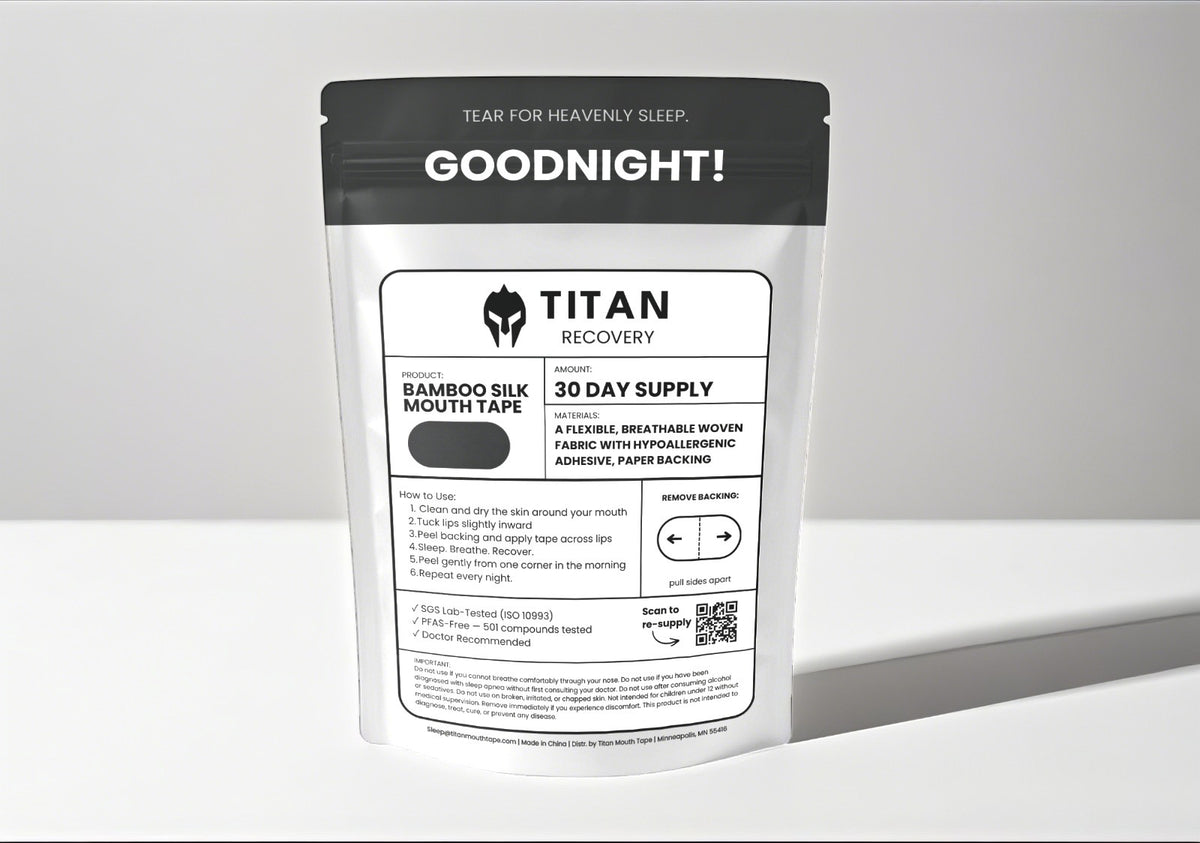
Doctor Recommended: "As a maxillofacial surgeon and dentist, I recommend Titan Mouth Tape. Nasal breathing during sleep is essential for airway health and deep restorative rest. Titan's bamboo silk design is the most comfortable and effective mouth tape I have tested. If you struggle with snoring, dry mouth, or poor sleep quality, this is the simplest change you can make for your health." — Dr. Francois P., MD, DDS — Maxillofacial Surgeon
Lab-Tested Safety: Titan's adhesive is independently tested to ISO 10993 medical device standards. Non-toxic (95% cell viability). Non-allergenic (0% reaction rate). Non-irritating (score 0.0/8.0). PFAS-free — 501 compounds tested, zero detected. See full test results →
Try the complete system tonight. Titan Mouth Tape (bamboo silk, SilkSeal™ adhesive) + TitanAir Nasal Strips. Free shipping. 30-night Better Sleep Guarantee. Shop Titan Mouth Tape → · Shop TitanAir Nasal Strips →