CPAP Alternatives: 7 Natural Ways to Breathe Better While You Sleep
Share
CPAP works. For moderate-to-severe obstructive sleep apnea, continuous positive airway pressure remains the most effective treatment available. No honest discussion of CPAP alternatives should begin without acknowledging that. But here's the reality: studies consistently show that roughly half of CPAP users abandon their machines within the first year. The mask is uncomfortable. The noise disrupts partners. The hose tangles. Travel becomes a logistics problem. Dry mouth, skin irritation, claustrophobia, and aerophagia (swallowing air) are common complaints. Being prescribed the best treatment doesn't help if you can't tolerate it.
If you have mild sleep apnea, upper airway resistance syndrome, or snoring without apnea, you may not need CPAP at all. And if you have moderate-to-severe OSA but genuinely cannot use your machine, doing nothing isn't the only other option. There are evidence-based alternatives worth considering — with your doctor's guidance.
Here are seven of them.
1. Mouth Taping
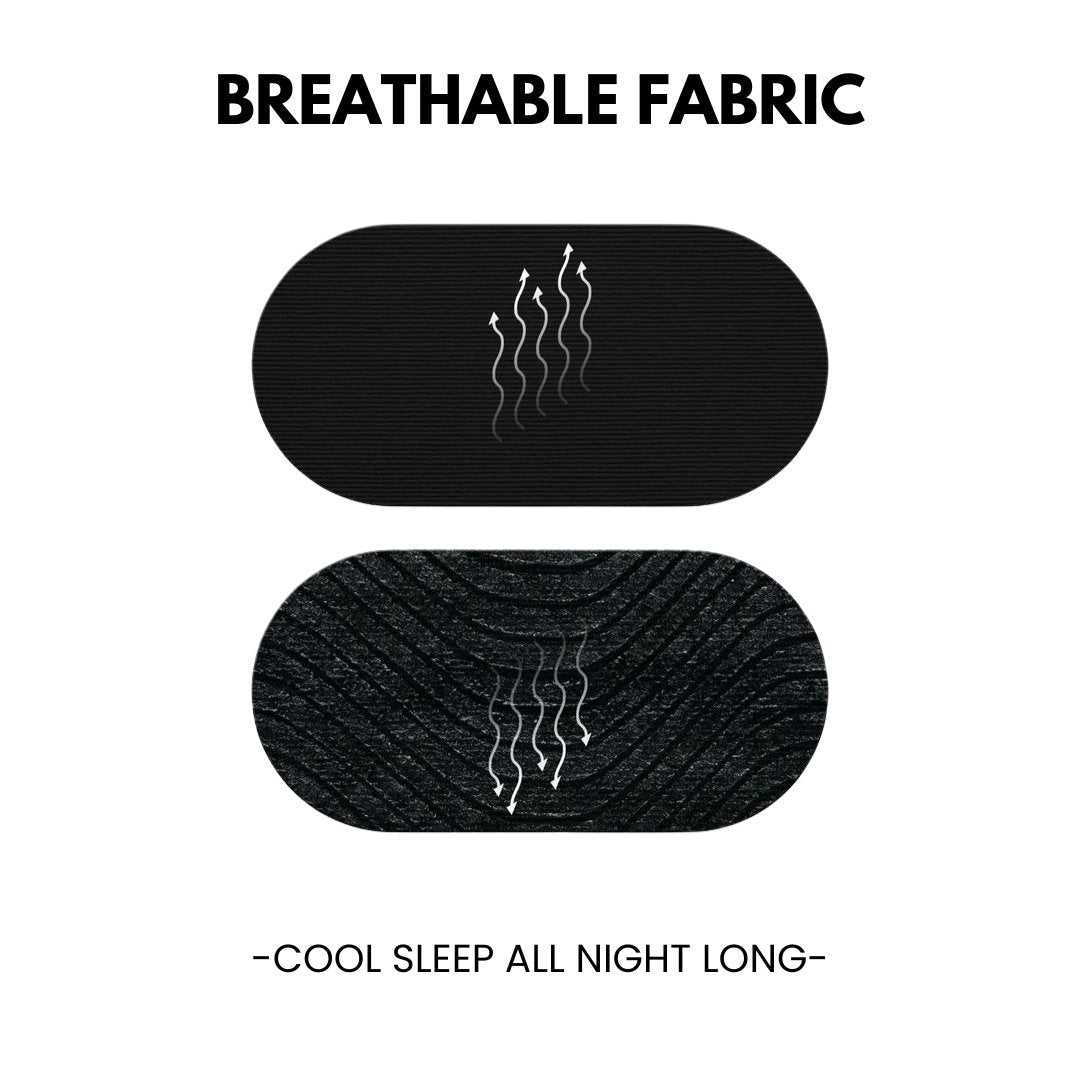
What it is: A gentle adhesive strip worn across the lips during sleep that holds the mouth closed and promotes nasal breathing. When your mouth stays shut, air routes through the nose, the tongue rests against the palate instead of falling backward, and the jaw stays in a more forward position — all of which help keep the upper airway open.
Who it's for: People with mild sleep-disordered breathing, habitual snoring, or CPAP users dealing with mouth leaks that undermine their treatment. Mouth taping is not a replacement for CPAP in moderate-to-severe OSA, but it addresses the mouth-breathing component that worsens airway collapse during sleep.
What the research says: A 2022 study published in the journal Healthcare found that mouth taping reduced snoring severity and improved AHI (apnea-hypopnea index) scores in participants with mild obstructive sleep apnea. Separate research has confirmed that nasal breathing produces nitric oxide — a vasodilator that improves oxygen uptake — while mouth breathing bypasses this entirely.
Mouth taping also eliminates one of the most common CPAP complaints: dry mouth. CPAP users who breathe through their mouths around the mask lose humidified air pressure, which causes the exact dryness and irritation they were told the machine would fix. Some CPAP users add mouth tape alongside their machine to seal the mouth and improve mask effectiveness.
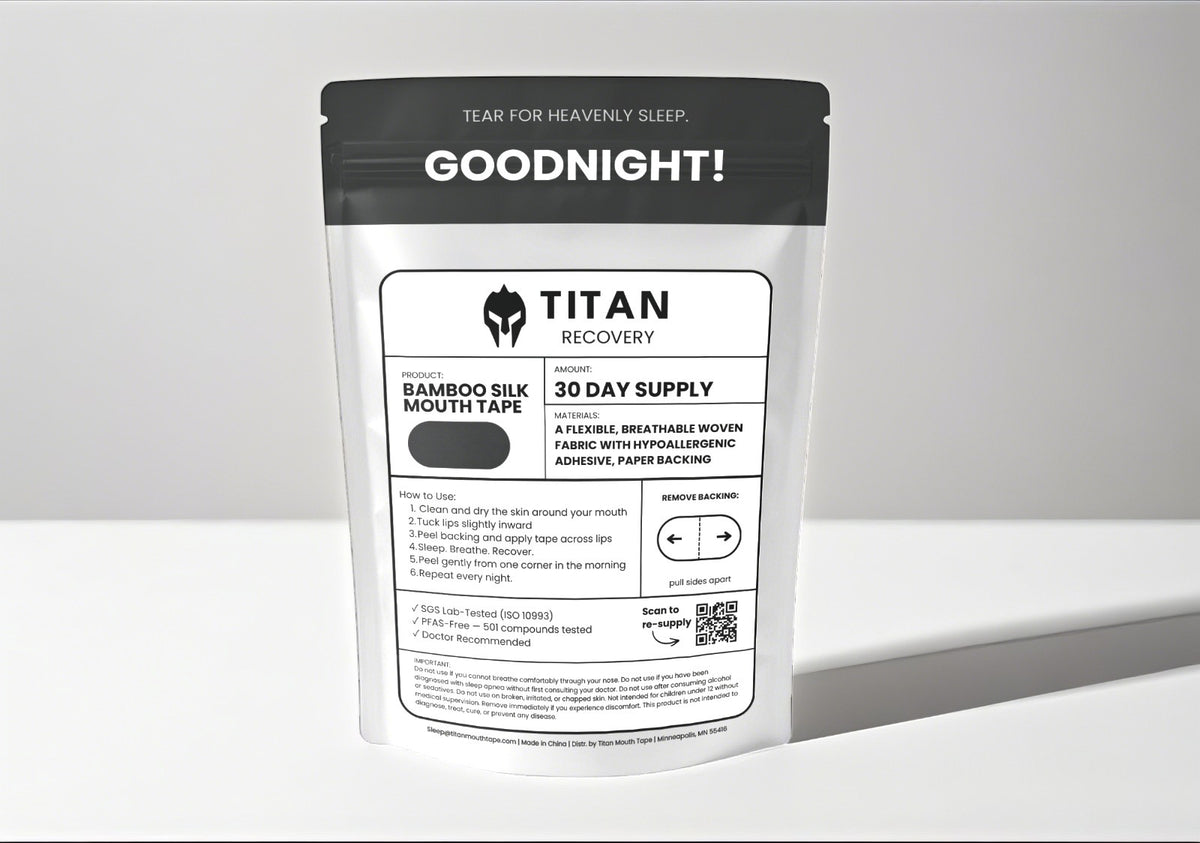
Titan Recovery Mouth Tape is designed specifically for sleep — medical-grade adhesive, comfortable enough for nightly use, and easy to remove. It's one tool in the breathing toolkit, not a miracle cure, and that's exactly how we think about it.
2. Positional Therapy
What it is: Training yourself to sleep on your side instead of your back. Supine (back) sleeping allows gravity to pull the tongue and soft palate backward into the airway. Lateral (side) sleeping keeps these structures from collapsing as easily.
Who it's for: People with position-dependent sleep apnea — meaning their AHI is significantly worse when sleeping on their back compared to their side. Research suggests this describes roughly 50-60% of OSA patients.
What the research says: A systematic review in the Journal of Clinical Sleep Medicine found that positional therapy reduced AHI by an average of 54% in positional OSA patients. That's a meaningful improvement from something that costs nothing and has no side effects.
Methods range from simple (a tennis ball sewn into the back of a sleep shirt) to purpose-built devices that vibrate when you roll onto your back. The challenge is adherence — people tend to stop using positional devices after a few months. But for those who stick with it, the results are real.
Positional therapy pairs well with mouth taping. Side sleeping reduces gravitational airway collapse. Mouth tape prevents the compensatory mouth breathing that happens even in the side position. Together, they address two different mechanisms of airway compromise.
3. Weight Management
What it is: Reducing excess body weight, particularly around the neck and upper airway. Fat deposits in the pharyngeal area narrow the airway and increase its collapsibility during sleep.
Who it's for: Anyone with OSA who is above a healthy weight. This is not about body shaming — it's about physics. A narrower airway collapses more easily under the reduced muscle tone of sleep.
What the research says: The Sleep AHEAD study (a large, multi-center trial) found that a 10% reduction in body weight reduced AHI by approximately 26%. Some patients with mild OSA achieved complete resolution. The AASM (American Academy of Sleep Medicine) lists weight loss as a recommended treatment for overweight and obese patients with OSA.
Weight loss is the only CPAP alternative that can actually address the underlying structural cause of many cases of obstructive sleep apnea. It's also the hardest to achieve and maintain, which is why it's rarely prescribed as a standalone treatment. But even modest weight loss (5-10%) can meaningfully reduce apnea severity and may allow someone to step down from CPAP to a less invasive option.
4. Oral Appliances (Mandibular Advancement Devices)
What it is: A custom-fitted dental device worn during sleep that advances the lower jaw forward, which pulls the tongue base forward and opens the retroglossal space — the area behind the tongue where most obstructive events occur.
Who it's for: Patients with mild-to-moderate OSA who cannot tolerate CPAP, or patients with severe OSA who refuse CPAP entirely (an oral appliance providing partial treatment is better than no treatment). These devices require fitting by a dentist trained in dental sleep medicine.
What the research says: The AASM recommends oral appliances as a first-line alternative to CPAP for mild-to-moderate OSA. A Cochrane review found that while CPAP is more effective at reducing AHI, oral appliances achieve similar improvements in daytime sleepiness, blood pressure, and quality of life — likely because people actually wear them consistently. Adherence rates for oral appliances are significantly higher than for CPAP.
The downsides: they can cause jaw pain, tooth movement, and bite changes over time. They require regular dental follow-up. Over-the-counter versions exist but are far less effective than custom-fitted devices, and the fit matters enormously for both effectiveness and comfort.
5. Nasal Strips and Nasal Dilators
What it is: External adhesive strips or internal silicone inserts that mechanically widen the nasal passages, reducing airflow resistance and making nasal breathing easier.
Who it's for: People whose breathing issues originate partly at the nose — narrow nostrils, mild congestion, or nasal valve collapse. Nasal strips are not a standalone treatment for sleep apnea (which occurs at the throat, not the nose), but they can be a useful adjunct that makes other therapies work better.
What the research says: Studies in the journal Rhinology have confirmed that external nasal dilators significantly reduce nasal resistance and improve subjective breathing quality. While they don't directly treat OSA, reducing nasal resistance can improve CPAP tolerance (lower pressures needed) and improve the effectiveness of mouth taping by ensuring the nasal pathway is fully open.
Titan Air Nasal Strips are designed to pair with mouth tape as part of a complete nasal breathing system. Open the nose, close the mouth — two mechanical interventions that complement each other and require no prescription, no electricity, and no maintenance.
6. Myofunctional Therapy
What it is: A program of exercises that strengthen the muscles of the tongue, soft palate, and throat. Think of it as physical therapy for the upper airway. Exercises might include tongue presses against the palate, cheek exercises, and specific swallowing patterns practiced daily for several months.
Who it's for: People with mild-to-moderate OSA, particularly those with poor tongue posture or weak oropharyngeal muscles. It's also used in children with sleep-disordered breathing related to mouth breathing and tongue thrust.
What the research says: A meta-analysis published in the journal Sleep found that myofunctional therapy reduced AHI by approximately 50% in adults and 62% in children. It also reduced snoring intensity and improved oxygen saturation. The effects take weeks to months to develop (muscle strengthening isn't instant), and the exercises need to be done consistently.
Myofunctional therapy is typically delivered by a trained speech-language pathologist or myofunctional therapist. It requires commitment — daily exercises for 3-6 months, typically — but the results can be lasting because you're building actual structural support for the airway. It works well as a complement to other approaches, including mouth taping, which reinforces the correct tongue-to-palate resting position that myofunctional therapy is training.
7. Lifestyle and Sleep Hygiene Changes
What it is: A collection of behavioral modifications that reduce the severity of sleep-disordered breathing. No single lifestyle change is a treatment for sleep apnea, but in combination, they can meaningfully reduce symptoms — especially for mild cases.
The evidence-supported changes:
Alcohol avoidance before bed. Alcohol relaxes the muscles of the upper airway more than normal sleep does. Studies show that alcohol consumption within 3-4 hours of bedtime increases the frequency and duration of apneic events, even in people who don't normally have sleep apnea. Cutting evening alcohol is one of the fastest ways to reduce nighttime breathing disruption.
Avoiding sedatives and certain medications. Benzodiazepines, opioids, and some antihistamines relax upper airway muscles and suppress the respiratory drive that triggers arousal during an apneic event. If you have OSA, discuss your medications with your prescriber.
Smoking cessation. Smoking causes inflammation and fluid retention in the upper airway, which narrows the passage and increases collapsibility. Current smokers have roughly three times the risk of OSA compared to non-smokers.
Elevating the head of the bed. Sleeping with the head elevated 30-60 degrees (using a wedge pillow or adjustable bed frame, not just extra pillows) reduces gravitational pressure on the upper airway. Studies have shown this can reduce AHI by 20-30% in some patients.
Nasal hygiene. Saline rinses, treating allergies, and managing chronic congestion ensure the nasal pathway is as open as possible. When the nose is blocked, the mouth opens — and mouth breathing worsens every form of sleep-disordered breathing.
What About Surgery?
Surgical options exist — UPPP (uvulopalatopharyngoplasty), maxillomandibular advancement, hypoglossal nerve stimulation — but they're not "natural" alternatives, and they carry real risks, recovery time, and variable success rates. Surgery is typically reserved for patients with specific anatomical obstructions who have failed both CPAP and oral appliance therapy. If you're exploring surgical options, that's a conversation for a board-certified sleep medicine physician and a sleep surgeon, not a blog post.
Hypoglossal nerve stimulation (an implanted device that stimulates the tongue to move forward during sleep) has shown strong results in clinical trials and is growing in popularity, but it requires a surgical procedure and is currently approved only for patients with moderate-to-severe OSA who have failed CPAP.
Combining Approaches
The most effective alternative to CPAP is rarely a single intervention. It's usually a combination: positional therapy plus mouth taping. Weight loss plus an oral appliance. Myofunctional therapy plus nasal strips plus lifestyle changes. Each approach addresses a different piece of the puzzle — nasal patency, mouth posture, tongue position, airway muscle tone, gravitational collapse, body weight.
A practical starting point for someone looking to reduce snoring or manage mild sleep-disordered breathing without CPAP: open the nose (nasal strips or saline rinse), close the mouth (mouth tape), sleep on your side, skip the nightcap, and elevate your head slightly. These are free or nearly free, have no side effects, and can be started tonight.
The Bottom Line
CPAP is the gold standard for a reason. If you have moderate-to-severe obstructive sleep apnea, don't abandon your machine without talking to your sleep physician. The consequences of untreated OSA — cardiovascular disease, stroke, cognitive decline, daytime fatigue — are serious.
But if you have mild sleep apnea, CPAP intolerance, or snoring that doesn't rise to the level of apnea, you have real options. Mouth taping, positional therapy, weight management, oral appliances, nasal strips, myofunctional therapy, and lifestyle modifications all have research behind them. Most work best in combination. None of them require a machine, a mask, or a power outlet.
Start with what's simplest. Mouth tape and nasal strips are low-cost, low-risk, and available tonight. Add positional therapy and lifestyle changes. If symptoms persist, talk to your doctor about an oral appliance or myofunctional therapy. Build your own breathing system — one layer at a time. Not sure which mouth tape to try? See our comparison of the 7 best mouth tapes for sleeping.
Doctor Recommended: "As a maxillofacial surgeon and dentist, I recommend Titan Mouth Tape. Nasal breathing during sleep is essential for airway health and deep restorative rest. Titan's bamboo silk design is the most comfortable and effective mouth tape I have tested. If you struggle with snoring, dry mouth, or poor sleep quality, this is the simplest change you can make for your health." — Dr. Francois P., MD, DDS — Maxillofacial Surgeon
Lab-Tested Safety: Titan's adhesive is independently tested to ISO 10993 medical device standards. Non-toxic (95% cell viability). Non-allergenic (0% reaction rate). Non-irritating (score 0.0/8.0). PFAS-free — 501 compounds tested, zero detected. See full test results →
Try the complete system tonight. Titan Mouth Tape (bamboo silk, SilkSeal™ adhesive) + TitanAir Nasal Strips. Free shipping. 30-night Better Sleep Guarantee. Shop Titan Mouth Tape → · Shop TitanAir Nasal Strips →
This article is for informational purposes only and does not constitute medical advice. If you have or suspect a sleep disorder or other medical condition, consult a qualified healthcare provider before making changes to your routine.