First Night Mouth Taping: What to Expect
Share
Your first night mouth taping will probably feel weird -- and that's the honest answer. The tape on your lips is unfamiliar, your brain will notice it, and you might wake up at 2 AM wondering if this was a good idea. But here's what most people don't expect: it's far less dramatic than the anxiety leading up to it. The vast majority of first-time mouth tapers wake up the next morning surprised by how uneventful the experience actually was.
Some nervousness is natural when you're changing a lifelong breathing habit during sleep. Knowing what to expect won't eliminate that, but it takes enough of the edge off that you can approach night one with realistic expectations rather than worst-case scenarios.
What Actually Happens on Night One
The first five minutes are the hardest part. You apply the tape, lie down, and your brain starts paying attention to your mouth. You'll feel the adhesive on your lips and notice yourself breathing through your nose more deliberately than usual. This hyper-awareness is normal and temporary. Within about ten minutes, you either get absorbed in pre-sleep thoughts and the tape fades into the background, or you fall asleep without noticing the transition.
The middle-of-the-night wake-up. About half of first-time mouth tapers wake up at some point during the night. Usually between the two- and four-hour mark, during a transition between sleep cycles. You'll become aware of the tape, maybe feel a brief flash of "I need to open my mouth," and then either settle back down or remove the tape. Both outcomes are fine. If you remove it, you got several hours of nasal breathing that you wouldn't have gotten otherwise. That counts.
Some people find the tape on their pillow in the morning with no memory of removing it. That's normal too -- your body handled it on autopilot without waking you into full consciousness.
Common Fears vs. What Really Happens
"What if I can't breathe?" This is the number one fear, and the most overblown. If you can breathe through your nose right now, you can breathe through your nose while sleeping. The tape seals your mouth -- it doesn't affect your nose. And if your nose gets congested during the night, your body will wake you up. You'll remove the tape, breathe normally, and that's the end of it.
"What if I panic?" You might. And if you do, you'll peel the tape off in half a second and breathe normally. It's a gentle adhesive that comes off with minimal effort. The fact that panic removal is instant and painless is the built-in safety mechanism. If you wake up and remove it -- even in a moment of half-asleep alarm -- nothing went wrong.
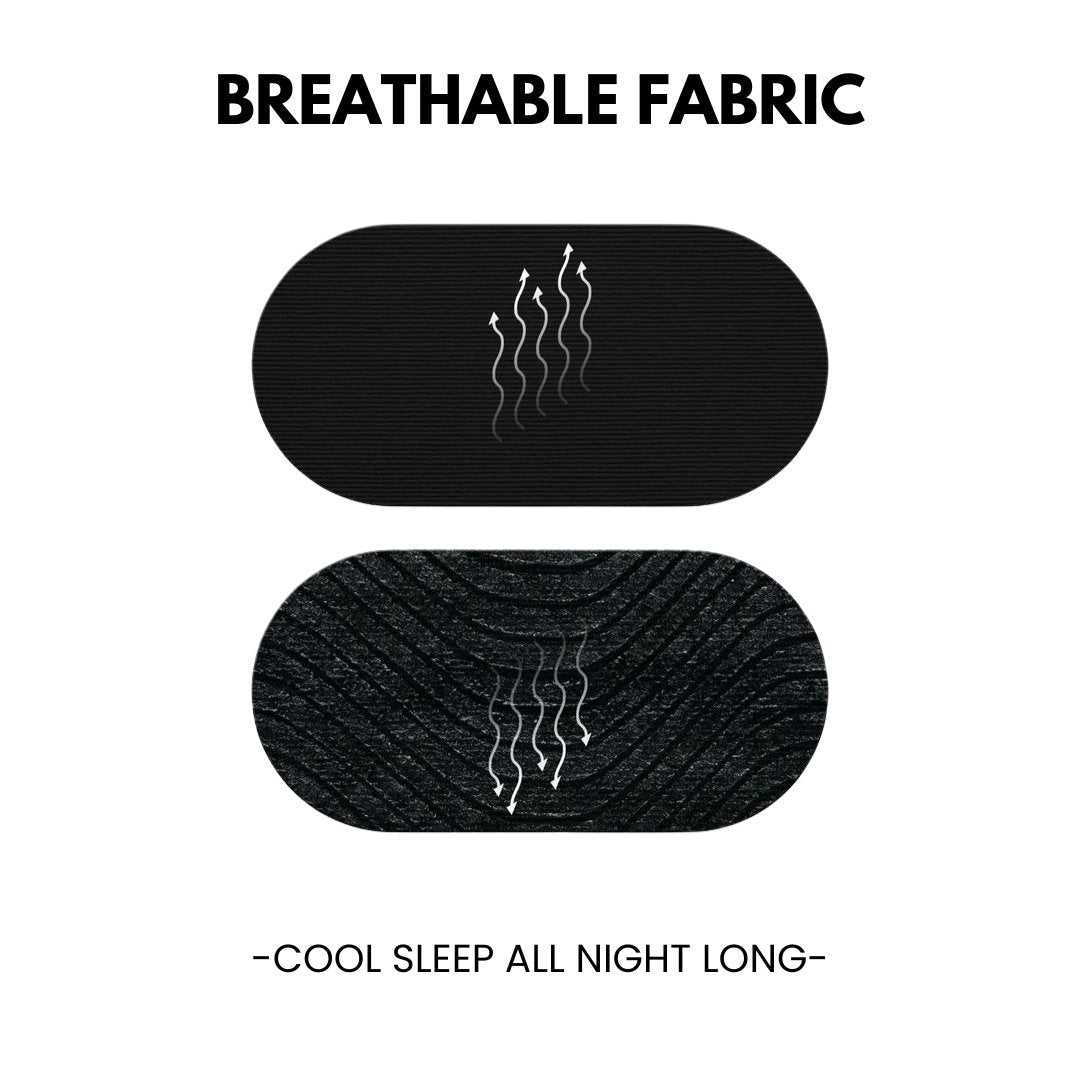
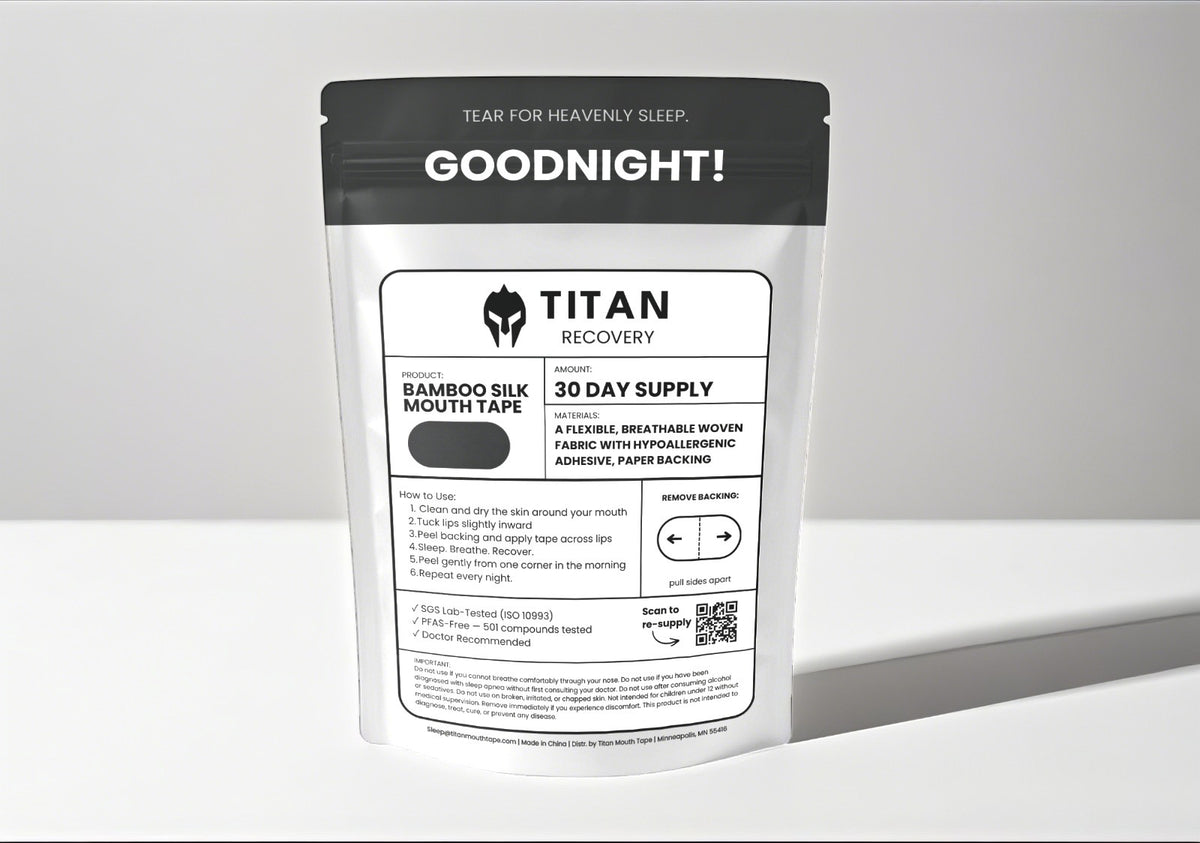
"What if it hurts to remove?" Titan Mouth Tape uses a medical-grade adhesive designed for sensitive facial skin. It peels off cleanly without pulling or leaving residue -- closer to removing a bandage than ripping off athletic tape.
"What if it falls off?" It can, especially the first night when you might unconsciously lick your lips or shift your jaw. Clean, dry skin is the fix. If the tape keeps falling off, skip moisturizers and lip balm around your mouth before bed.
How to Prepare for Your First Night
Clear your nose. Nasal congestion is the single biggest obstacle to comfortable mouth taping. Before bed, use a saline rinse to flush your nasal passages. If you tend toward stuffiness, add TitanAir Nasal Strips to physically open your nostrils. The combination of mouth tape and nasal strips -- what we call the Deep Sleep Bundle -- gives you the best possible airflow for your first night.
Practice during the day first. Even 20 to 30 minutes of wearing mouth tape while watching TV or reading normalizes the sensation. You learn what it feels like, confirm that you can breathe fine, and give your nervous system a low-stakes rehearsal. Our step-by-step guide to starting mouth taping covers daytime practice in detail.
Prep your skin. Wash your face and dry your lips and the surrounding skin thoroughly. Oil, balm, and moisturizer are the top reasons tape doesn't stick. You want clean, dry skin for the best seal.
Skip the alcohol. Drinking before bed increases nasal congestion and fragments sleep. Give yourself the easiest possible conditions.
Set a cool room. Keep the bedroom between 65 and 68 degrees. Deeper sleep means fewer wake-ups where you'd notice the tape and react to it.
What You'll Notice the Next Morning
The morning after your first night of mouth taping is when things click for most people. Even if you removed the tape partway through the night, you'll likely notice at least one of these differences.
Your mouth and throat won't feel like a desert. This is the most immediate change. If you've been mouth breathing at night -- and most people don't realize they do -- you've been waking up with a dry mouth, sticky teeth, and a raw throat. After even a few hours of nasal breathing, your mouth stays closed and saliva does its job all night. That scratchy morning throat you've been blaming on dry air or allergies is often just mouth breathing. The difference is striking even after one night.
You might feel more rested than expected. This one varies. Some people report noticeably better sleep quality after just one night. Others don't feel a dramatic shift until later in the first week. Wearable data tends to show the story more clearly than subjective feel -- lower resting heart rate, fewer nighttime wake-ups, and more time in deep sleep stages are common even on night one.
Nights 2 Through 7: The Progression
One night gives you a data point. The first week gives you a pattern. Here's how the progression typically looks.
Nights 2-3: The novelty wears off quickly. Applying the tape feels less like an experiment and more like a routine step. You'll likely sleep longer stretches before waking, if you wake at all. The anxiety drops significantly because you've already survived night one and nothing bad happened.
Nights 4-5: Most people stop thinking about the tape. It goes on, the lights go off, and sleep happens without the tape factoring into the process. Sleep tracker data starts showing consistent improvements rather than occasional good nights.
Nights 6-7: The tape is part of your routine. The idea of sleeping without it starts to feel like the strange option.
If you're still struggling by the end of the first week, that's useful information. It may mean your nasal breathing needs support (nasal strips, a humidifier, addressing allergies), or that a more gradual approach would serve you better. A longer ramp doesn't mean mouth taping isn't for you.
Tips That Actually Help
- Give yourself permission to remove the tape. Telling yourself "I have to keep this on all night" creates pressure that makes sleep worse. Paradoxically, people who give themselves permission to remove it are less likely to actually do so.
- Don't check the clock. If you wake up during the night, don't look at the time. Clock-checking amplifies the "I'm not sleeping" anxiety and makes it harder to fall back asleep.
- Pair with nasal strips for the first week. Even if your nasal breathing feels fine during the day, lying down changes the equation. Gravity shifts blood flow to your nasal tissues, and what felt clear at 10 PM can feel restricted at 2 AM. TitanAir Nasal Strips provide a buffer against positional congestion.
- Keep your routine otherwise identical. Don't change your sleep time, pillow, or temperature during the first week. Isolate mouth tape as the only variable so you can clearly attribute any changes to it.
Frequently Asked Questions
Is it normal to remove mouth tape in my sleep the first night?
Yes. Roughly half of first-time mouth tapers remove the tape at some point during their first night, often without remembering it. Your body removes the tape if it feels it needs to mouth breathe -- that's the safety mechanism working as intended. This typically resolves within 3 to 5 nights.
Should I try mouth taping if I snore?
Mouth taping addresses one of the most common causes of snoring -- sleeping with your mouth open. When your mouth falls open, your tongue drops back and your airway narrows, producing the vibration you hear as snoring. Keeping the mouth closed encourages nasal breathing and better tongue posture. If snoring persists with consistent mouth taping, talk to your doctor about a sleep study to rule out obstructive sleep apnea.
Can I mouth tape if I have a stuffy nose?
If you can breathe through your nose while sitting upright with your mouth closed, you can generally mouth tape. But lying down makes congestion worse, so pairing mouth tape with nasal strips is strongly recommended for anyone prone to stuffiness. If you cannot breathe through your nose at all -- even while upright -- resolve the congestion first before attempting mouth taping.
How do I know if mouth taping is working?
The most immediate sign is waking up without a dry mouth. Beyond that, reduced snoring, fewer nighttime wake-ups, and feeling more rested are the markers people notice first. Sleep trackers that measure heart rate variability and sleep stages often show changes within the first few nights. For a detailed look at what consistent use delivers, read about whether Titan Recovery actually works.
What if I still feel anxious after several nights?
Extended anxiety usually means you need a more gradual approach rather than jumping straight to overnight use. Go back to daytime practice -- 30 to 60 minutes while distracted with a show or book -- and add naps before attempting another full night. Some people need two weeks of gradual exposure before overnight taping feels comfortable. That timeline is perfectly normal and doesn't mean the practice isn't for you.
The Bottom Line
Your first night mouth taping will feel unfamiliar, and that's the worst thing about it. The tape goes on, you breathe through your nose, and you sleep. You might wake up once. You might remove the tape without remembering it. You might also wake up the next morning with the tape still on, your mouth feeling better than it has in years, and wonder why you waited so long to try this.
Prepare by clearing your nose, practicing with the tape during the day, and giving yourself unconditional permission to remove it during the night. Use Titan Mouth Tape for a medical-grade adhesive that holds comfortably and peels off cleanly, and consider adding TitanAir Nasal Strips for maximum nasal airflow during the first week. The adjustment takes most people 3 to 7 nights. By the end of that first week, the tape isn't something you think about -- it's just how you sleep.
Doctor Recommended: "As a maxillofacial surgeon and dentist, I recommend Titan Mouth Tape. Nasal breathing during sleep is essential for airway health and deep restorative rest. Titan's bamboo silk design is the most comfortable and effective mouth tape I have tested. If you struggle with snoring, dry mouth, or poor sleep quality, this is the simplest change you can make for your health." — Dr. Francois P., MD, DDS — Maxillofacial Surgeon
Lab-Tested Safety: Titan's adhesive is independently tested to ISO 10993 medical device standards. Non-toxic (95% cell viability). Non-allergenic (0% reaction rate). Non-irritating (score 0.0/8.0). PFAS-free — 501 compounds tested, zero detected. See full test results →
Try the complete system tonight. Titan Mouth Tape (bamboo silk, SilkSeal™ adhesive) + TitanAir Nasal Strips. Free shipping. 30-night Better Sleep Guarantee. Shop Titan Mouth Tape → · Shop TitanAir Nasal Strips →
Related reading
- How to Start Mouth Taping: A Step-by-Step Guide
- How to Pick the Right Mouth Tape: A 9-Step Buyer's Guide
- How to Breathe Better During Sleep (The Complete Nasal Breathing Gu...
- Common Mistakes People Make with Mouth Taping (And How to Avoid Them)
Want the tape built for this? Try mouth tape from Titan — bamboo silk, beard-friendly, PFAS-free, with a 30-Night Better Sleep Guarantee.