The College Student's Guide to Better Sleep
Share
If your sleep is a mess right now, you're not broken and you're not lazy. College student sleep is genuinely harder than sleep at almost any other point in life: your schedule changes every day, your roommate goes to bed at 2 a.m., the dorm never fully goes quiet, and the whole culture treats sleeping less as some kind of flex. The single highest-impact move you can make is simple: anchor one consistent wake time and defend it, even when your bedtime is all over the place. Everything else in this guide is built on top of that one habit.
This isn't a lecture about getting eight hours — most weeks in college, that isn't realistic. It's about getting more out of the hours you actually get, so you can function on a schedule that would flatten most adults twice your age.
Why College Sleep Is Uniquely Brutal
The problems stack. It helps to name them, because most students blame themselves when the real issue is the environment.
Your schedule has no anchor. An 8 a.m. lecture Monday, nothing until noon Tuesday, a night lab Wednesday. Your body never learns when to be tired because you never give it a consistent signal.
The room isn't yours alone. Roommates, thin walls, hallway noise, a light that clicks on when someone stumbles in late. You don't control your sleep environment the way you would at home.
Stress runs hot and screens never stop. Deadlines, money, relationships — all peaking at once — plus a phone full of group chats and notifications keeping your brain switched on. A racing mind is one of the fastest ways to wreck sleep onset.
Caffeine and all-nighter culture. The 4 p.m. energy drink quietly destroys that night's deep sleep, and pulling an all-nighter before an exam is treated as normal. It's one of the worst academic moves you can make, and the research is not close.
Sleep Is the Highest-ROI Study Tool You Have
Here's the part nobody frames correctly: sleep isn't the thing you sacrifice to study more. Sleep is what makes studying stick. Skipping it to cram is like withdrawing from the exact account you're trying to build.
Memory consolidation happens while you sleep. Everything you studied gets moved from short-term into long-term storage overnight, mostly during deep sleep and REM. Study hard and then skip sleep, and you throw away a chunk of the work you just did — it never fully locks in.
Focus and attention collapse without it. One night of short sleep measurably drops your working memory, reaction time, and concentration — the exact things you need in a lecture or exam room. A sleep-deprived brain performs a lot like a mildly intoxicated one.
Mood and stress tolerance depend on it. Poor sleep makes anxiety worse, makes small problems feel enormous, and shortens your fuse. If college already feels overwhelming, sleep debt is pouring fuel on it.
The all-nighter math never works. You gain a few hours of low-quality cramming and hand back the memory consolidation, focus, and emotional regulation you need for the exam itself. Students who sleep before a test consistently outperform students who stayed up studying for it. Learn the material across several days and then sleep on it — that's the cheat code.
The One Habit That Fixes the Most: A Fixed Wake Time
You cannot control your bedtime in college. Some nights you're up late studying, some nights you're out. What you can control is when you get up — and that's the lever that actually resets your body clock.
Pick a wake time you can hit most days and hold it within about an hour — weekends included. Sleeping until 1 p.m. Saturday feels amazing and then guarantees you can't fall asleep Sunday night, which wrecks Monday. That's basically self-inflicted jet lag from an inconsistent college sleep schedule.
A consistent wake time does the heavy lifting because morning light and a steady rhythm are what tell your brain when to release melatonin at night. Get up, get light in your eyes, and your body starts to predict its own bedtime again. This is the foundation of good sleep hygiene, and a few small environmental changes make it far easier to stick to.
Strategic Caffeine: Keep It, Just Time It
Nobody's telling you to quit caffeine in college. That's not happening. The move is timing, because caffeine has a half-life of five to six hours — the energy drink you slam at 5 p.m. is still half-active in your system near midnight.
The rule: hard caffeine cutoff by early-to-mid afternoon, roughly 2 p.m. if you want to be asleep by 11 or 12. This is the trap most students miss — you can absolutely fall asleep after a late energy drink, but the sleep you get is shallower and less restorative. You wake up tired, assume you need more caffeine, and the cycle locks in.
Watch the hidden sources too: energy drinks (often 150-300mg per can), pre-workout, and the big afternoon iced coffee that reads as "just a drink." If you're relying on a late-day hit to survive, that's usually a sleep-debt problem, not a caffeine-deficiency one. Fix the sleep and the 5 p.m. crash shrinks on its own.
Surviving a Shared, Noisy Room
You don't need a private suite to sleep well. You need to control the two senses that keep you awake: sound and light. Almost all of this is budget-friendly.
Block the noise and light. Cheap foam earplugs block a shocking amount of dorm chaos; if you'd rather not wear them, a white noise app or small fan masks door slams and hallway conversations with a steady sound floor. And when your roommate needs the light on, a contoured sleep mask ends that argument for a few dollars.
Set loose quiet hours. You won't get silence, but a basic agreement about headphones after a certain hour goes a long way. Most roommate conflicts come from never having the conversation.
Protect the bed for sleep. Studying in bed trains your brain to treat it as an alert zone. Keep the bed for sleep and study at a desk or the library — it genuinely helps you fall asleep faster.
A Five-Minute Wind-Down That Fits a Real Schedule
You don't need an elaborate hour-long routine. You need a short, repeatable signal that tells your brain the day is over — even if "over" is 1 a.m.
Get off the phone. It's not only blue light — it's the content. Group chats, notifications, and doomscrolling keep your brain in problem-solving mode when you need it winding down. Put the phone across the room on its charger so checking it takes effort. Bonus: it doubles as an alarm you can't snooze from bed.
Dim the lights for the last stretch. Bright overhead light tells your brain it's still daytime. A small lamp for the last 20-30 minutes helps melatonin do its job.
Do the same two or three things every night. Brush teeth, set out tomorrow's stuff, a few minutes of reading or slow breathing. Repetition matters more than the specifics — a predictable sequence becomes a trigger your body recognizes.
Offload the racing mind. If stress is keeping you up, keep a notepad by the bed and dump tomorrow's to-do list onto it. Getting the loop out of your head and onto paper is one of the fastest ways to stop mentally rehearsing everything you have to do.
Get More Out of Fewer Hours: Breathe Through Your Nose
Here's the leverage point most students never hear about. When your nights are short and interrupted, the quality of every hour matters more, not less — and one of the biggest quiet killers of sleep quality is mouth breathing.
Sleeping with your mouth open — which happens to most people when they're exhausted, stressed, or a little congested — gives you dry mouth, more snoring, and more time in lighter, fragmented sleep. Nasal breathing does the opposite: it keeps your airway more stable, engages the calm (parasympathetic) side of your nervous system, and helps you drop into the deeper stages where actual recovery happens. If you've ever slept a full night and still woken up wrecked, how you were breathing is often the missing variable.
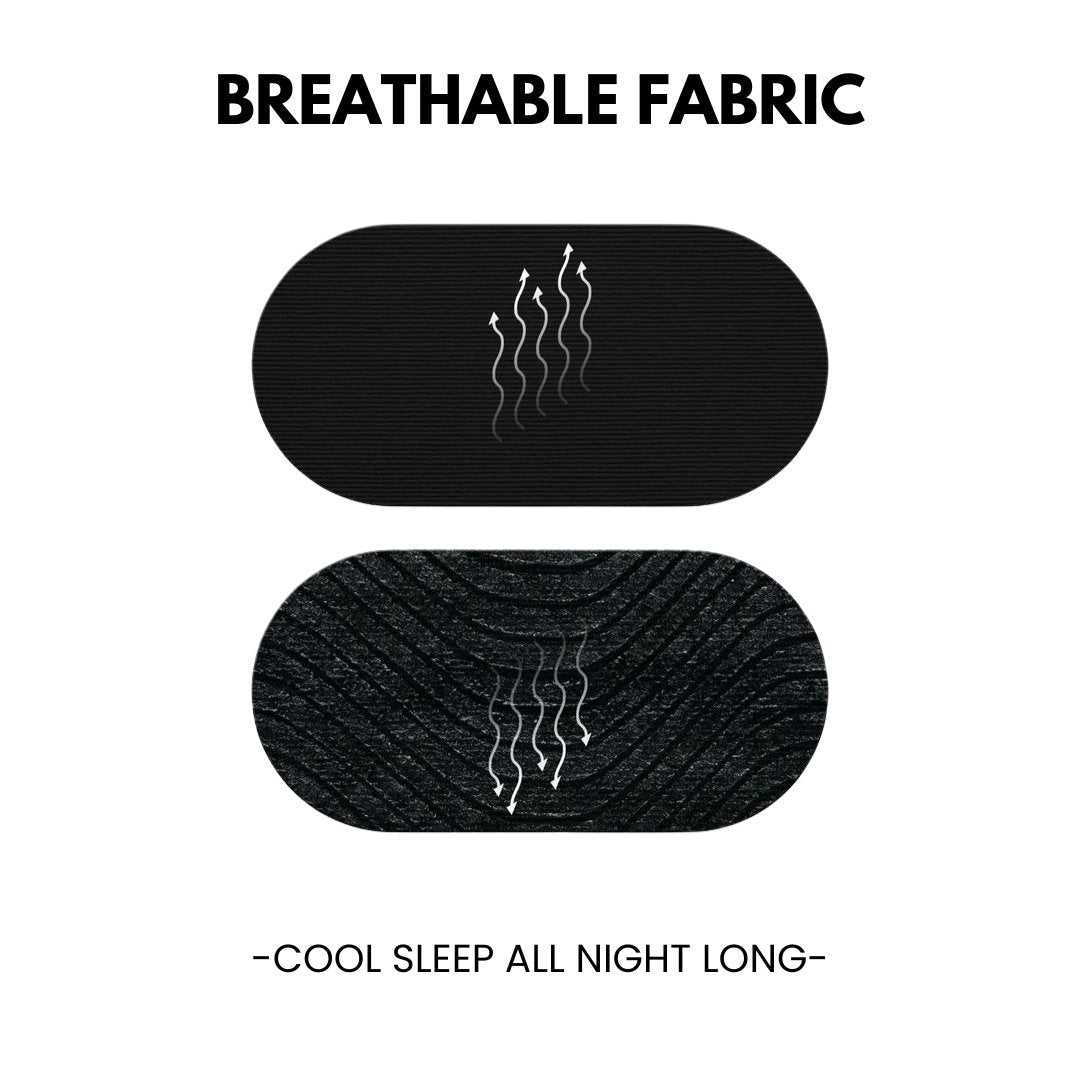
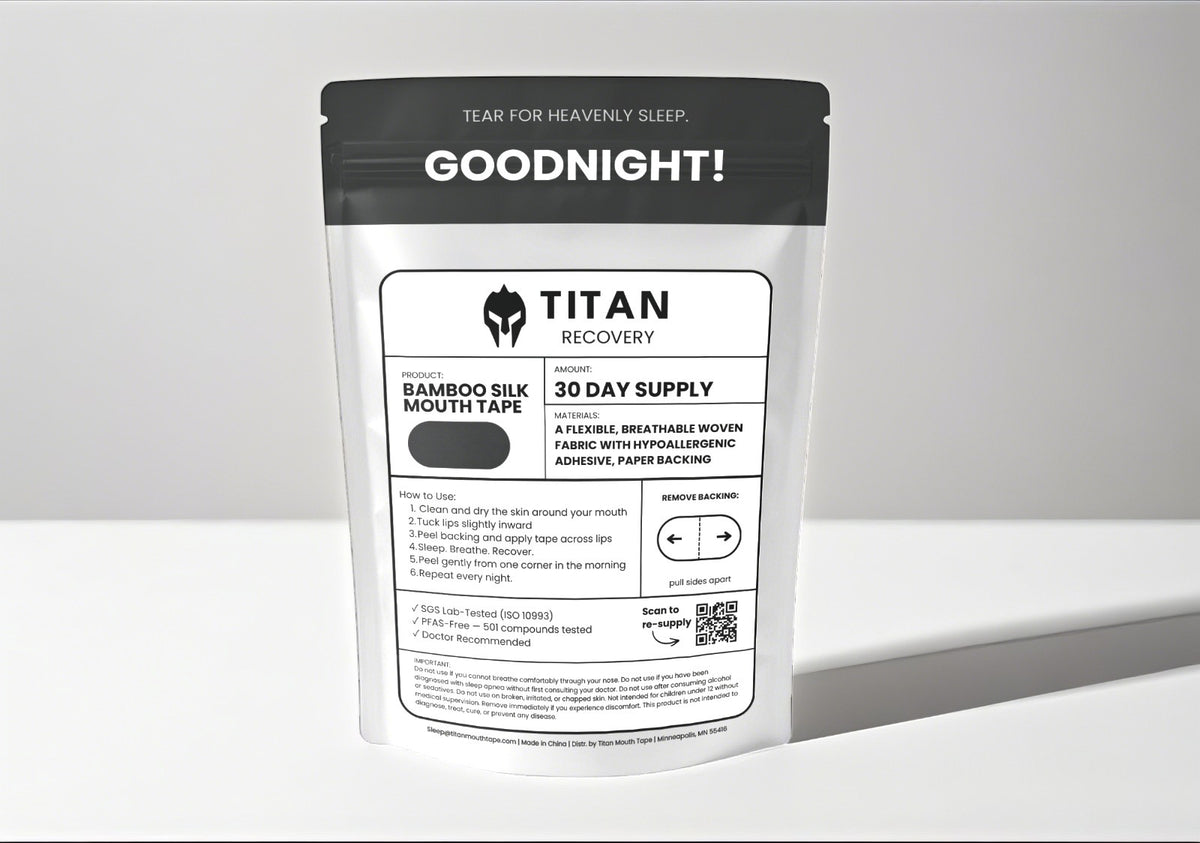
This is where mouth tape earns its spot in a student's kit. It's a small strip that holds your lips gently closed so you default to nasal breathing all night — cheap, reusable night after night, and it takes two seconds to apply. For a broke college student, it's one of the highest-value sleep upgrades per dollar you can make, precisely because it makes limited, interrupted sleep count for more. If your nose tends to get stuffy — allergies, dorm dust, a cold going around the floor — pairing it with nasal strips keeps the nasal passage open so nose breathing stays easy. The deep sleep bundle packages both if you want the full setup. To understand why this matters so much, it's worth knowing how nasal breathing feeds deeper sleep in the first place.
Frequently Asked Questions
How many hours of sleep do college students actually need?
Most young adults need seven to nine hours, and college students biologically need the higher end. You won't hit that every night, and that's okay — the goal is to protect quality and consistency where you can. Chronic sleep deprivation college life is common, but it's a cost, not a badge.
Are naps good or bad for a college sleep schedule?
Naps are fine and useful — if you keep them short and early. A 20-minute nap before mid-afternoon restores focus without touching your nighttime sleep. The problem is the two-hour 5 p.m. nap that leaves you unable to fall asleep that night. If you nap, set an alarm and keep it brief.
Do all-nighters ever make sense before an exam?
Almost never. An all-nighter trades your memory consolidation, focus, and emotional control — the exact abilities you need in the exam room — for a few hours of low-quality cramming. Students who sleep before a test consistently outperform those who stay up for it. Spread studying across several days and sleep the night before.
Is mouth tape safe and worth it for a student on a budget?
For healthy people who can breathe through their nose, mouth tape is a low-cost, reusable way to keep nasal breathing going all night, which improves sleep quality on limited hours. It's one of the cheapest upgrades per night you can make. If you're heavily congested, have sleep apnea, or can't breathe through your nose, sort that out first — and if you're unsure, check with a doctor before starting.
The Bottom Line
You can't build a perfect sleep routine in college, and you don't need one. Anchor a consistent wake time and defend it, cut caffeine off by early afternoon, block the noise and light in your room with a few cheap tools, and give yourself a five-minute wind-down that gets the phone out of your hand. Then make every hour count by breathing through your nose — the single upgrade that turns short, interrupted student sleep into something actually restorative. Do the boring, budget-friendly things consistently and you'll out-think, out-focus, and out-last the people running on energy drinks and all-nighters. Sleep isn't the thing you cut to get ahead — it's the thing that gets you ahead. For the deeper playbook, start with the fundamentals of sleeping better and what actually happens across your sleep stages.
Doctor Recommended: "As a maxillofacial surgeon and dentist, I recommend Titan Mouth Tape. Nasal breathing during sleep is essential for airway health and deep restorative rest. Titan's bamboo silk design is the most comfortable and effective mouth tape I have tested. If you struggle with snoring, dry mouth, or poor sleep quality, this is the simplest change you can make for your health." — Dr. Francois P., MD, DDS — Maxillofacial Surgeon
Lab-Tested Safety: Titan's adhesive is independently tested to ISO 10993 medical device standards. Non-toxic (95% cell viability). Non-allergenic (0% reaction rate). Non-irritating (score 0.0/8.0). PFAS-free — 501 compounds tested, zero detected. See full test results →
Try the complete system tonight. Titan Mouth Tape (bamboo silk, SilkSeal™ adhesive) + TitanAir Nasal Strips. Free shipping. 30-night Better Sleep Guarantee. Shop Titan Mouth Tape → · Shop TitanAir Nasal Strips →