Acid Reflux at Night: Mouth Breathing Makes It Worse
Share
If your acid reflux at night feels worse than it does during the day, you're not imagining it. Lying down removes the one thing that keeps stomach acid in your stomach all day long — gravity. But there's a second factor that most people never connect to their reflux: mouth breathing. When your mouth falls open during sleep, you swallow more air, produce less saliva, and create conditions that make nighttime acid reflux measurably worse. Understanding both sides — why reflux intensifies at night and how your breathing pattern either helps or hurts — opens up practical steps that go beyond avoiding spicy food before bed.
Why Acid Reflux Gets Worse at Night
During the day, three natural defenses keep stomach acid from causing problems. All three weaken or disappear when you lie down to sleep.
Gravity stops working for you. When you're upright, gravity pulls stomach contents downward and away from the lower esophageal sphincter (LES) — the muscular valve between your esophagus and stomach. The moment you lie flat, that gravitational advantage disappears. Acid can pool near the LES and, if the valve relaxes even slightly, travel up the esophagus. This is the most basic reason acid reflux is worse at night, and it's why elevation is one of the first things gastroenterologists recommend.
The lower esophageal sphincter relaxes during sleep. The LES isn't a passive door — it's a ring of muscle that actively contracts to stay closed. During sleep, your body's overall muscle tone decreases as part of the normal transition into deeper stages. The LES relaxes along with everything else, and these transient relaxations are the primary mechanism by which acid escapes the stomach. Research shows they're more frequent during lighter sleep stages and during transitions between sleep cycles.
Swallowing frequency drops dramatically. When you're awake, you swallow about once per minute. Each swallow pushes any acid that has crept into the esophagus back down into the stomach. During sleep, swallowing frequency drops to almost nothing — sometimes just a few swallows per hour during deep sleep. This means that when acid does enter the esophagus at night, it sits there longer, causing more irritation and more damage to the esophageal lining than the same amount of acid would during the day.
Saliva production slows down. Saliva is naturally alkaline, with a pH around 7.0 to 7.4. During the day, saliva continuously washes down the esophagus, neutralizing small amounts of acid on contact. Saliva production drops significantly during sleep — by some estimates to about 10 percent of daytime levels. With less saliva, any acid that reaches the esophagus stays acidic longer, prolonging the exposure and the damage.
The Mouth Breathing Connection Most People Miss
Here is where GERD and sleep problems intersect with something most reflux sufferers have never considered: how they breathe while they're sleeping.
Mouth breathing causes aerophagia — air swallowing. When you breathe through your mouth during sleep, you inevitably swallow air. This is called aerophagia, and it's a well-documented consequence of oral breathing. The swallowed air enters the stomach, increasing gastric volume and internal pressure. That added pressure pushes against the LES from below, making it more likely that acid escapes into the esophagus. In people who already have a weakened LES — which includes most people with GERD — the extra pressure from swallowed air is often enough to trigger a reflux episode that wouldn't have occurred with nasal breathing alone.
Mouth breathing dries out the esophagus. When you breathe through your mouth, airflow passes directly over the oral and pharyngeal tissues, drying them out. This drying effect extends to the upper esophagus. A dry esophageal lining has less mucosal protection and less buffering capacity against acid. The result is that even small amounts of reflux cause more irritation, more inflammation, and more of the burning sensation that wakes people up at 2 AM.
Less saliva means less acid neutralization. Mouth breathing compounds the already-reduced saliva production during sleep. Breathing through your mouth evaporates the saliva you do produce more quickly, reducing the volume available to wash and neutralize acid in the esophagus. Nasal breathing, by contrast, keeps the oral cavity closed and moist, preserving whatever saliva your glands produce during sleep. That saliva — alkaline and full of bicarbonate — is one of your body's primary defenses against esophageal acid damage.
It becomes a cycle. Reflux irritates the throat, which triggers mucus production and mild swelling. The swelling increases nasal and pharyngeal resistance, making nasal breathing harder. Your body defaults to the easier path — mouth breathing. Which increases air swallowing, dries the esophagus, and worsens the next reflux episode. Many people with nighttime acid reflux are caught in this cycle without knowing it. They wake up with a dry mouth, a sore throat, and the assumption that their reflux medication isn't working — when the real issue is that their breathing pattern is amplifying the problem.
Practical Tips for Sleeping with Acid Reflux
Addressing nighttime reflux requires working on multiple fronts at once. No single change fixes everything, but each one removes a contributing factor.
Elevate the head of your bed six to eight inches. This is the most evidence-backed positional change for nocturnal reflux. Elevate the entire head of your bed — not just stack pillows, which only bends your neck — so your esophagus stays above your stomach. Use bed risers under the headboard legs or a wedge pillow designed to elevate your entire torso.
Sleep on your left side. The anatomy of the stomach makes left-side sleeping naturally protective against reflux. When you lie on your left side, the LES sits above the level of stomach acid due to the stomach's curvature. On your right side, the LES sits below the acid level, making reflux more likely. Multiple studies have confirmed that right-side sleeping produces significantly more reflux episodes than left-side sleeping. This is one of the simplest and most effective adjustments for how to sleep with acid reflux.
Finish your last meal three hours before bed. Give your stomach time to empty before you lie down. Most meals clear the stomach within two to four hours, depending on size and fat content. A three-hour buffer ensures that the most active phase of digestion — and the highest volume of stomach acid — has passed before you're horizontal. If you need a snack closer to bed, keep it small and low-fat.
Identify and avoid your trigger foods. Common triggers include fatty and fried foods, citrus, tomato-based sauces, chocolate, mint, and carbonated drinks. Alcohol relaxes the LES and should be avoided close to bedtime. A food diary for a few weeks can help you identify which foods consistently precede your worst nights.
Where Mouth Tape Fits In
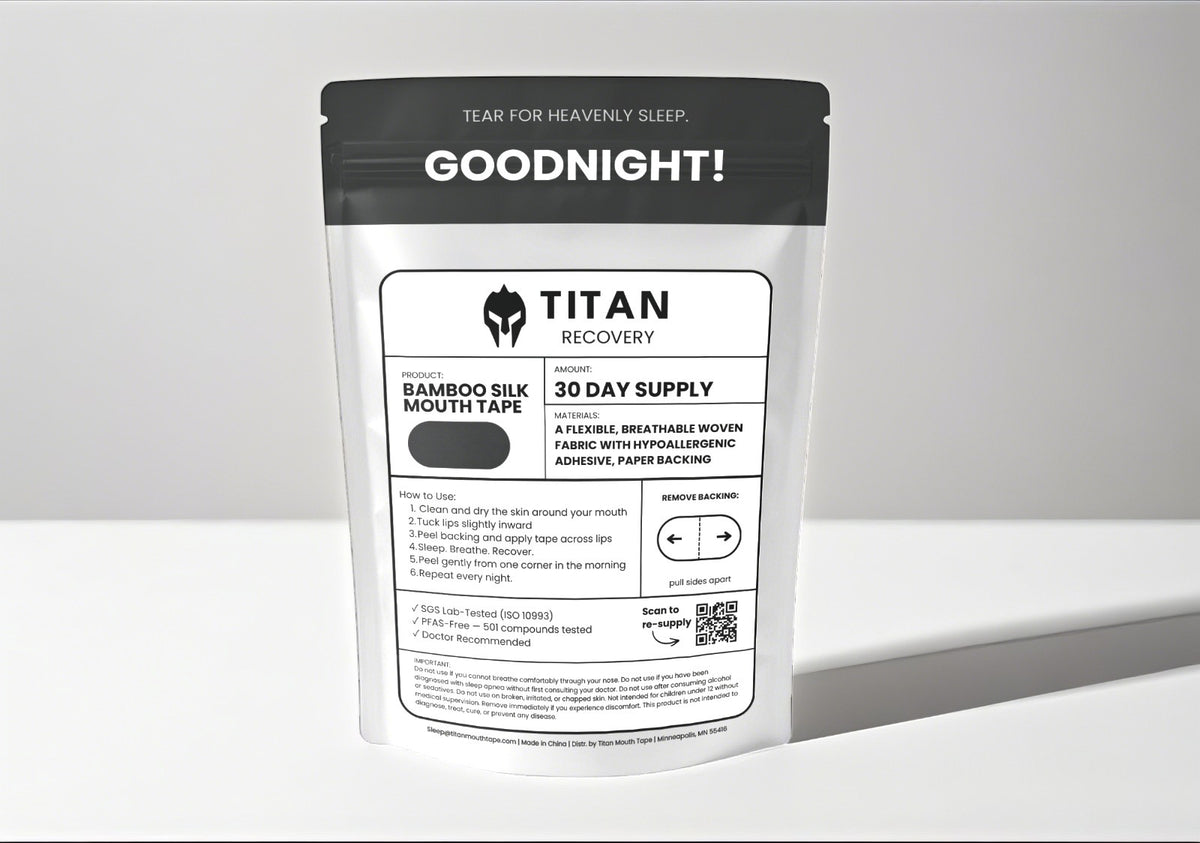
Mouth tape is not a treatment for GERD. It won't reduce acid production, strengthen a weak LES, or replace medications prescribed by your doctor. What it does is address one specific contributing factor — the air swallowing and esophageal drying caused by mouth breathing during sleep.
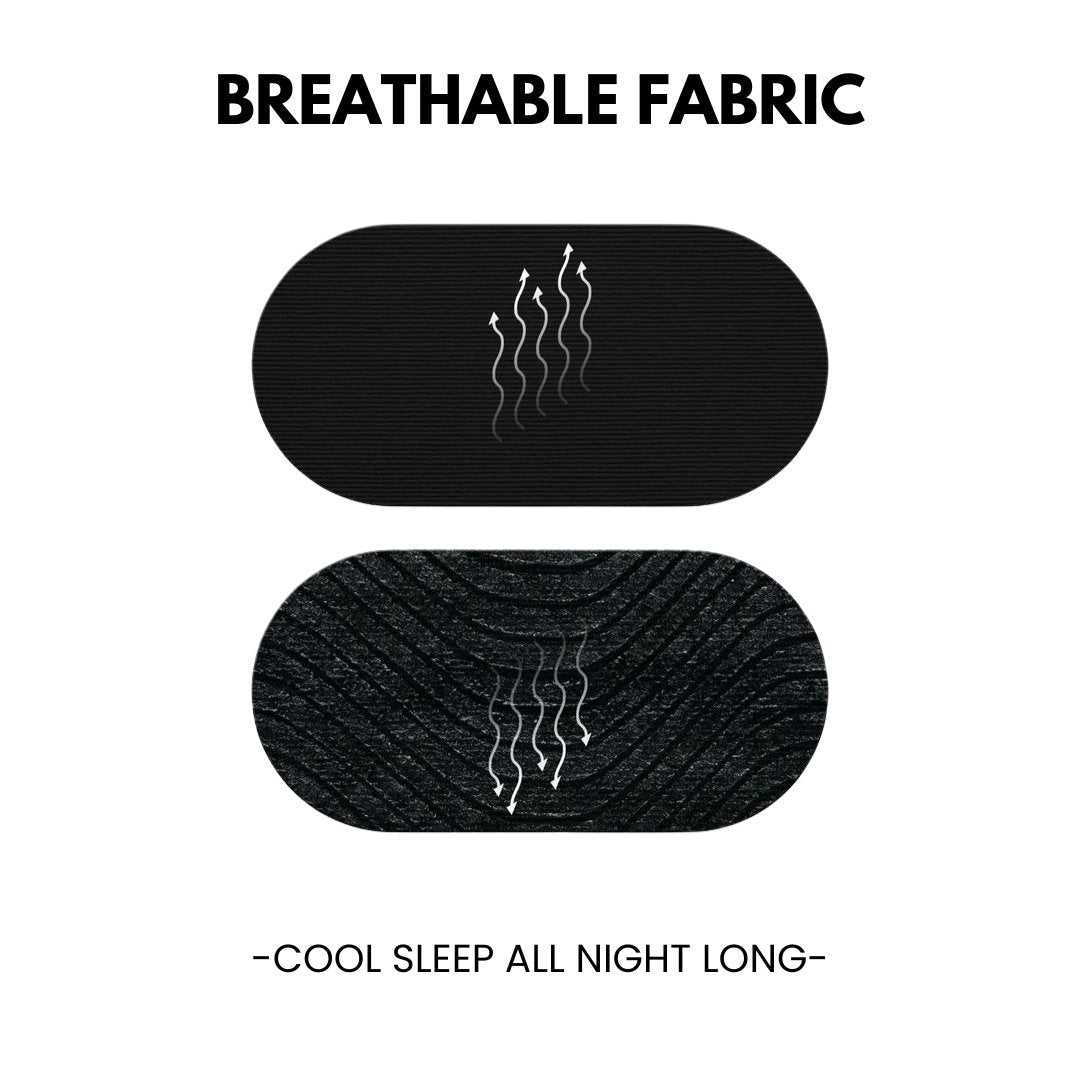
By keeping your lips gently sealed, mouth tape ensures that you breathe through your nose throughout the night. This eliminates aerophagia, preserves saliva, and keeps the oral and pharyngeal tissues moist. For people whose reflux is being amplified by mouth breathing — which is more common than most people realize — this can meaningfully reduce the severity and frequency of nighttime episodes.
If nasal congestion makes it hard to breathe through your nose, pairing mouth tape with TitanAir Nasal Strips opens the nasal valve mechanically so your body doesn't default to mouth breathing when resistance builds. The Deep Sleep Bundle combines both, which is useful for anyone dealing with reflux alongside nasal congestion or general nighttime stuffiness.
The important framing: mouth tape is one tool in a larger toolkit. It works alongside elevation, left-side sleeping, meal timing, and whatever medical treatment your doctor recommends. It addresses the breathing side of the equation — a side that most reflux management plans ignore entirely.
When to See a Doctor
Occasional acid reflux is manageable with lifestyle adjustments. But chronic reflux — symptoms two or more times per week over several weeks — qualifies as GERD and warrants a medical evaluation. See your doctor if you experience difficulty swallowing, persistent hoarseness, unexplained weight loss, chest pain, or reflux that doesn't respond to over-the-counter antacids. Nothing in this article replaces medical advice.
Frequently Asked Questions
Can mouth breathing actually cause acid reflux?
Mouth breathing doesn't cause the underlying condition, but it worsens reflux episodes through aerophagia (air swallowing). The swallowed air increases stomach pressure, pushing acid upward through the LES. Mouth breathing also dries the esophagus and reduces saliva available to neutralize acid. It's not the root cause, but it's a significant amplifier.
Why is my acid reflux worse when I lie down?
Three things change when you go horizontal: gravity no longer keeps acid in the stomach, the LES relaxes as part of normal sleep muscle relaxation, and swallowing frequency drops from about once per minute to a few times per hour. Acid escapes more easily and sits in the esophagus longer, causing more irritation and more disrupted sleep.
Does sleeping on the left side really help with reflux?
Yes. The stomach's natural shape curves so that when you lie on your left side, the LES sits above the pool of stomach acid. On your right side, the LES sits below it, making reflux mechanically more likely. Studies have consistently shown fewer reflux episodes and faster acid clearance in left-side sleepers. It's one of the most effective positional changes for managing nighttime reflux.
Is mouth tape safe to use if I have GERD?
For most people, yes. Mouth tape doesn't affect acid production or LES function — it simply keeps your lips closed so you breathe through your nose. If reflux causes you to vomit during sleep (which is rare but possible in severe cases), you should talk to your doctor before using any product that keeps the mouth closed. For typical GERD that produces heartburn and throat irritation, mouth tape addresses the mouth-breathing component without interfering with other treatments.
Will nasal strips help with acid reflux?
Nasal strips don't treat reflux directly, but they support nasal breathing by opening the nasal valve. If congestion or narrow passages cause you to mouth breathe — and that mouth breathing worsens your reflux through air swallowing — nasal strips remove a barrier to the nasal breathing that helps. They're most effective combined with mouth tape so the nasal airway is open and the mouth stays closed.
The Bottom Line
Acid reflux at night is worse than daytime reflux because gravity, muscle tone, swallowing frequency, and saliva production all work against you during sleep. Mouth breathing adds fuel to the fire by introducing air into the stomach and drying out the very tissues that acid is irritating. The combination is what makes so many reflux sufferers wake up with a sore throat, a dry mouth, and the sense that their sleep did nothing restorative.
The practical fixes layer on top of each other: elevate your bed, sleep on your left side, move your last meal earlier, and address the mouth-breathing piece with mouth tape. None of these replaces medical treatment for chronic GERD, but together they remove the factors that make nighttime reflux worse than it needs to be. Most people who implement all four notice a difference within the first few nights.
Doctor Recommended: "As a maxillofacial surgeon and dentist, I recommend Titan Mouth Tape. Nasal breathing during sleep is essential for airway health and deep restorative rest. Titan's bamboo silk design is the most comfortable and effective mouth tape I have tested. If you struggle with snoring, dry mouth, or poor sleep quality, this is the simplest change you can make for your health." — Dr. Francois P., MD, DDS — Maxillofacial Surgeon
Lab-Tested Safety: Titan's adhesive is independently tested to ISO 10993 medical device standards. Non-toxic (95% cell viability). Non-allergenic (0% reaction rate). Non-irritating (score 0.0/8.0). PFAS-free — 501 compounds tested, zero detected. See full test results →
Try the complete system tonight. Titan Mouth Tape (bamboo silk, SilkSeal™ adhesive) + TitanAir Nasal Strips. Free shipping. 30-night Better Sleep Guarantee. Shop Titan Mouth Tape → · Shop TitanAir Nasal Strips →