Why Your City Is Ruining Your Sleep (And What to Do About It)
Share
You moisturize. You wear sunscreen. You drink water. You've invested in serums with ingredients you can't pronounce. You're doing everything the skincare world tells you to do.
But every night, you undo a significant portion of that work by sleeping with your mouth open.
Mouth breathing during sleep isn't just uncomfortable. Research suggests it may actively accelerate the visible signs of aging — through mechanisms that no skincare product can counteract, because they're happening from the inside out.
How Mouth Breathing May Age Your Face
1. Chronic dehydration of skin and lips
When your mouth is open during sleep, you lose moisture through evaporation — from saliva, from the mucosal lining of your throat, and from exhaled air that bypasses the humidification your nasal passages normally provide.
This moisture loss doesn't just cause dry mouth. It may contribute to systemic overnight dehydration that affects your skin. Dehydrated skin appears thinner, more lined, and less elastic. Fine lines that aren't visible when the skin is properly hydrated become visible when it's dry.
Your lips take the worst of it. Eight hours of dry air flowing directly across them every night leads to chronic cracking, peeling, and the perpetually dried-out appearance that no lip balm seems to fix during the day — because the damage is being repeated every night.
2. Facial puffiness and fluid retention
Research published in Neuroreport found that mouth breathing is associated with sympathetic nervous system activation — the stress response. Chronic sympathetic activation is associated with fluid retention and impaired lymphatic drainage.
The result: you wake up puffy. Under-eye bags. Swollen cheeks. A soft, undefined jawline. The face in the mirror looks tired and inflamed — because it is. The fluid that should have been drained during sleep stayed in the facial tissues because the lymphatic system wasn't operating efficiently in the sympathetic state that mouth breathing may promote.
This puffiness resolves partially during the day as you stand upright and breathe through your nose. But 8 hours of nightly fluid retention, repeated every night for years, may contribute to chronic facial swelling that becomes increasingly difficult to resolve.
3. Under-eye darkness
Dark circles have multiple causes — genetics, pigmentation, thin skin. But one of the most modifiable contributors is poor sleep quality.
When deep sleep is fragmented or shortened — as research suggests may happen with mouth breathing — blood vessels beneath the thin under-eye skin dilate, creating the dark, shadowed appearance. Fluid also pools in the under-eye area from impaired lymphatic drainage.
No eye cream addresses vascular dilation caused by poor sleep quality. No concealer prevents the fluid pooling. The under-eye appearance is downstream of sleep quality — and sleep quality may be downstream of how you're breathing.
4. Accelerated collagen breakdown
Sleep is when your body produces the most collagen — the protein responsible for skin firmness and elasticity. Collagen synthesis is driven by growth hormone, approximately 70% of which is released during deep sleep.
If mouth breathing is keeping your nervous system in sympathetic mode and preventing full access to deep sleep stages, growth hormone release may be reduced — and with it, the nightly collagen production your skin depends on to maintain its structure.
This is a slow process. You won't notice it in a week. But over years, the difference between someone who gets consistent deep sleep and someone whose deep sleep is chronically fragmented by mouth breathing may be visible in skin firmness, elasticity, and fine line progression.
5. Forward head posture
Chronic mouth breathing is associated with forward head posture — the head drifts forward to open the airway as a compensatory mechanism. This postural adaptation changes how the face and neck look from the side: the chin appears recessed, the neck looks shorter, and the jawline loses definition.
Research in the orthodontic literature documents this relationship in both children and adults. The forward head position also creates tension in the platysma muscle (the muscle that runs from the chest to the jaw), which over time may contribute to the appearance of neck bands and a less defined jaw-neck angle.
This isn't a bone change — it's a postural change. But posture affects appearance as much as structure does, and chronic mouth breathing may be driving a posture that makes you look older.
6. Changes in facial muscle tone
When your mouth hangs open during sleep, the muscles that hold the jaw closed — the masseter, temporalis, and medial pterygoid — disengage for 7-8 hours every night. Over months and years, this chronic disengagement may reduce the resting tone of these muscles.
Reduced jaw muscle tone contributes to a softer, less defined lower face — the opposite of the angular, defined jawline associated with youth. When the mouth stays closed during sleep, these muscles maintain low-level engagement all night, which may help preserve their tone and the facial definition they support.
7. Oral health decline
This one is indirect but visible. Mouth breathing dries out the oral cavity, disrupting saliva flow and dropping oral pH below the threshold where enamel demineralization occurs (Journal of Oral Rehabilitation). Over years, this may contribute to enamel erosion, gum recession, tooth discoloration, and the overall dental deterioration that visibly ages a person's appearance.
Dentists increasingly recognize nighttime mouth breathing as a contributing factor to accelerated dental aging — but most patients never connect their breathing pattern to their dental health.
What Nasal Breathing May Do Differently
Research suggests nasal breathing during sleep is associated with parasympathetic nervous system activation — the recovery state. This is the state where:
Growth hormone is released, driving collagen production and tissue repair. Lymphatic drainage may function more efficiently, reducing facial puffiness. Deep sleep stages are accessible, supporting the recovery processes that maintain skin health. Blood vessels under the eyes return to normal caliber, reducing dark circles. Saliva flow is preserved, protecting teeth and gums.
Nasal breathing doesn't reverse aging. Nothing does. But switching from 8 hours of sympathetic-dominant mouth breathing to 8 hours of parasympathetic-supported nasal breathing may slow several of the mechanisms that are accelerating it.
What You Can Do Tonight
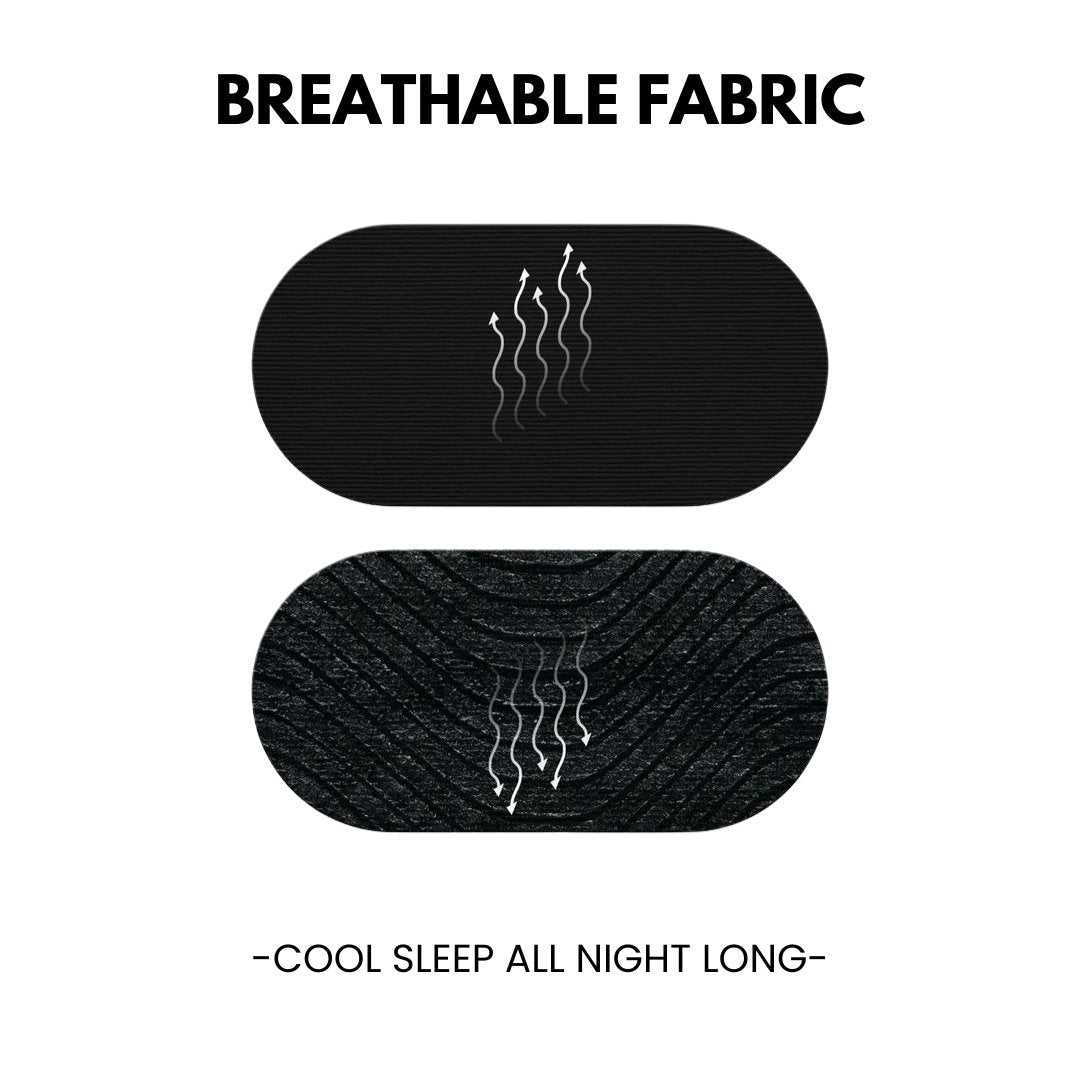
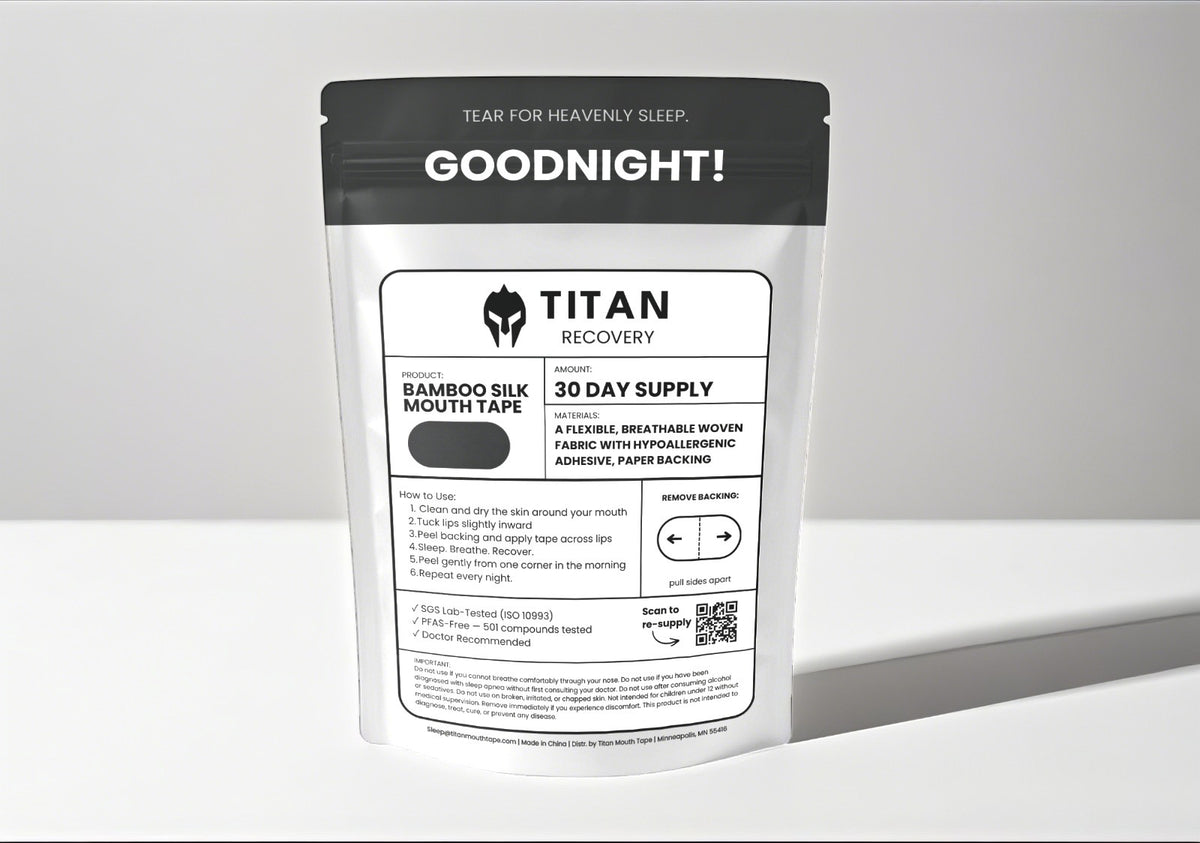
A strip of mouth tape before bed holds your mouth gently closed during sleep. Your lips stay hydrated. Your saliva stays intact. Your tongue stays against the palate. Your nervous system may shift into recovery mode. And your skin gets 8 hours of the restorative sleep it needs to produce collagen, drain fluid, and repair the damage from the day.
This isn't a skincare product. It's a sleep intervention that may protect the investment you're already making in skincare by ensuring the overnight recovery your skin depends on actually happens.
If nasal congestion makes nose breathing difficult, pair mouth tape with a nasal strip — one opens the nose, one closes the mouth.
Many users report visible changes within the first two weeks: reduced morning puffiness, less under-eye darkness, more hydrated lips, and a more defined appearance — not from a new serum or procedure, but from closing their mouth.
For a complete guide on how mouth tape fits into a nighttime skincare routine, read this →
The Uncomfortable Truth
You can spend $200 a month on skincare. You can get facials, peels, and LED treatments. You can hydrate perfectly, eat clean, and wear SPF 50 every day.
And if your mouth is open for 8 hours every night — dehydrating your skin, suppressing collagen production, pooling fluid in your face, and keeping your nervous system in stress mode — you may be fighting a battle that mouth breathing ensures you lose.
The most effective anti-aging intervention might not be on your bathroom shelf. It might be a strip of tape across your lips.
Doctor Recommended: "As a maxillofacial surgeon and dentist, I recommend Titan Mouth Tape. Nasal breathing during sleep is essential for airway health and deep restorative rest. Titan's bamboo silk design is the most comfortable and effective mouth tape I have tested. If you struggle with snoring, dry mouth, or poor sleep quality, this is the simplest change you can make for your health." — Dr. Francois P., MD, DDS — Maxillofacial Surgeon
Lab-Tested Safety: Titan's adhesive is independently tested to ISO 10993 medical device standards. Non-toxic (95% cell viability). Non-allergenic (0% reaction rate). Non-irritating (score 0.0/8.0). PFAS-free — 501 compounds tested, zero detected. See full test results →
Try it tonight. Bamboo silk. SilkSeal™ adhesive. Beard-friendly. No logo on the tape. Free shipping. 30-night Better Sleep Guarantee. Shop Titan Mouth Tape → · Shop TitanAir →