Mouth Tape for Back Sleepers (2026 Guide)
Share
If you sleep on your back and wake up with a dry mouth, sore throat, or a partner complaining about snoring, you're not imagining things. Back sleepers are the most likely to mouth breathe during sleep — and gravity is the reason. When you're lying supine, your lower jaw naturally falls open and your tongue slides backward toward the airway. Mouth tape for back sleepers isn't just helpful. It's more necessary for you than for any other sleep position.
The quick answer: back sleeping is one of the healthiest positions for your body, and you don't need to change it. You just need to keep your mouth closed while you do it. That's exactly what mouth tape does.
Why Back Sleepers Are Most Likely to Mouth Breathe
It comes down to basic physics. When you lie on your back, gravity acts directly on your jaw and tongue in a way it doesn't in other positions.
The jaw drops open. Your lower jaw is a hinged weight. During sleep, the muscles that hold it closed relax. Side sleepers have lateral support from the pillow — the jaw has nowhere to fall. On your back, gravity pulls it straight down. The mouth opens, and air starts flowing through the mouth instead of the nose.
The tongue falls backward. When you're supine, gravity pulls the tongue toward the back of the throat, partially narrowing the upper airway. Your body's response is to bypass the nose and breathe through the wider oral airway. It happens without you ever waking up.
The soft palate collapses. The soft tissue at the back of the roof of your mouth relaxes and drops during sleep. In a supine position, this tissue vibrates as air passes over it. That vibration is snoring — and it's why sleeping on your back with your mouth open is such a common combination.
None of this means back sleeping is bad. It means back sleeping requires one specific fix: keeping the mouth sealed so nasal breathing stays the default pathway all night. That's where mouth tape comes in.
Why Back Sleeping Is Worth Keeping
Before you consider switching to your side to solve the snoring problem, recognize what you'd be giving up. Back sleeping has real structural advantages that other positions can't match.
Spinal alignment. When you sleep on your back with a proper pillow, your spine maintains its natural curvature from skull to sacrum. There's no lateral bending, no rotational stress on the neck. Chiropractors and physical therapists consistently recommend supine sleeping for people with back and neck issues.
No facial compression. Side and stomach sleepers press their face into the pillow for hours, which contributes to sleep wrinkles over time. Back sleepers avoid this entirely because the face isn't in contact with the pillow surface.
Even weight distribution. Your body weight spreads across the largest possible surface area, which means less pressure on any single joint, less hip strain, and fewer pressure points.
The fix isn't to abandon the position — it's to fix the breathing while keeping the position. You get the spinal alignment, the wrinkle prevention, and the joint relief without the dry mouth and snoring that mouth breathing causes. For more on how mouth tape helps with snoring, that link covers the mechanics in detail.
How Mouth Tape Solves the Gravity Problem
Mouth tape works for back sleepers by doing the one thing gravity is fighting against: holding the jaw closed. When the muscles relax and the jaw wants to fall open, the tape provides a gentle physical barrier that keeps the lips sealed.
With the mouth sealed, the tongue can't fall as far backward because the closed jaw maintains the tongue's resting position against the palate. Nasal breathing stays active. The soft palate vibrates less, so snoring decreases or stops. Oxygen saturation stays more consistent because nasal breathing is slower, more filtered, and more regulated than mouth breathing.
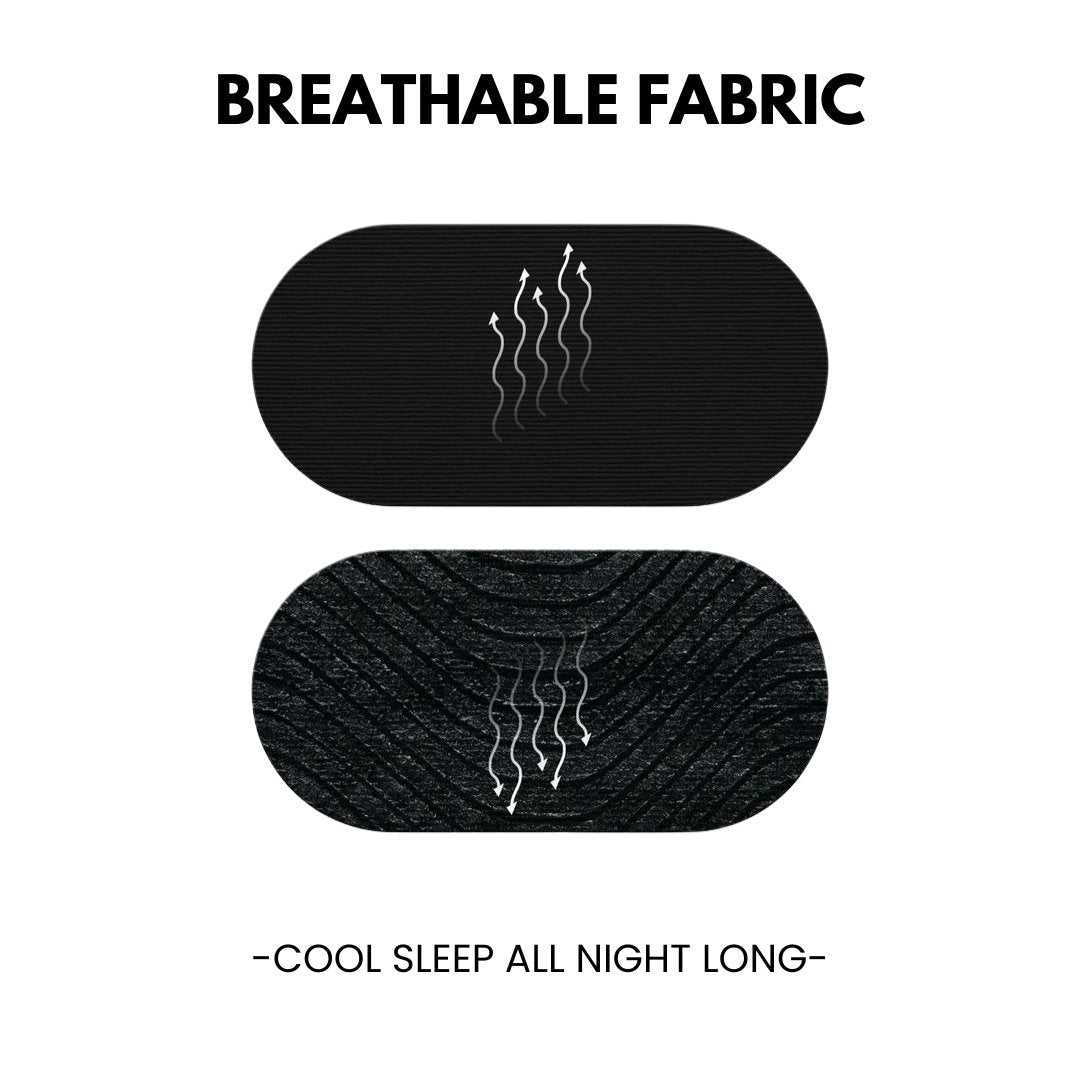
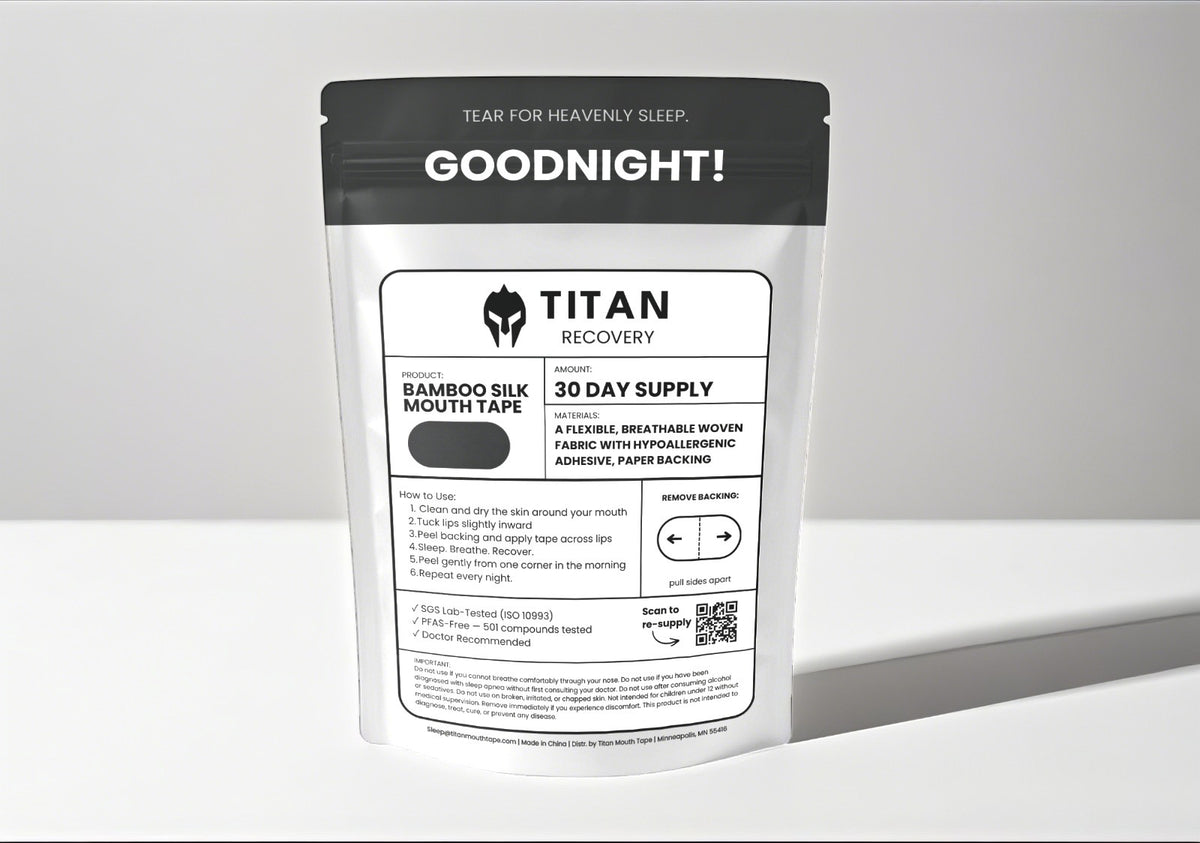
This isn't about forcing anything. Titan Mouth Tape uses medical-grade adhesive and a flexible bamboo silk material that holds the lips closed without feeling restrictive. You can still open your mouth if you need to — the tape provides enough resistance to prevent the unconscious drift that happens when muscles relax and gravity takes over, not a rigid lock.
If you've never taped before, the step-by-step mouth taping guide walks you through the full process from skin prep to first night.
Pairing Tape with Nasal Strips for Back Sleepers
Back sleeping has one nasal advantage over side sleeping: neither nostril is compressed by a pillow, so both stay open. But there's a trade-off — post-nasal drip. When you're supine, mucus drains backward down the throat rather than forward. This can create a sensation of congestion even when the nasal passages are clear, and the body's instinct is to open the mouth to compensate.
A nasal strip helps by mechanically widening the nasal valve — the narrowest point of the nasal airway. TitanAir Nasal Strips increase airflow through the nose, reducing the perceived need to mouth breathe even when post-nasal drip is present. The wider passages handle the same volume of air with less resistance, so the body doesn't trigger that open-mouth backup plan.
The combination is especially effective for back sleepers because it addresses both halves of the problem: the tape keeps the mouth closed, and the strip keeps the nasal airway wide open. The Titan Sleep System bundle includes both, and Subscribe and Save locks in 11% off every delivery.
Application Tips Specific to Back Sleepers
Back sleepers have the simplest application process because there's no pillow friction to worry about. But the gravity challenge means the adhesive bond matters even more.
Clean and dry the skin thoroughly. Any residual lip balm, moisturizer, or facial oil weakens the adhesive bond. When gravity is pulling the jaw open all night, every bit of adhesive strength counts. Wash the area, pat completely dry, and skip products on or near the lips before bed.
Press firmly for at least ten seconds. The adhesive is pressure-activated. Press from the center outward along the entire tape surface, including the edges. This creates a stronger initial bond that holds against the constant gentle pull of gravity on the jaw.
Apply after you lie down. This is specific to back sleepers. If you apply the tape while standing, your jaw is in a different position than it will be supine. Applying after you've settled into your sleeping position means the tape bonds with your face in the exact position it will hold all night — no gap, no slack.
Start with lips lightly closed, not pressed tight. You want a natural, comfortable seal. If you press your lips together hard while applying, the tape will be under tension once your muscles relax. That tension works against the adhesive all night. Light contact, natural lip position, then apply.
For the full beginner walkthrough, including how to get comfortable with the sensation, read how to stop sleeping with your mouth open.
What About Pillows and Elevation
Your pillow setup matters more for back sleepers than for any other position, and it directly affects how well mouth tape performs.
Pillow height and jaw position. A pillow that's too flat lets your head tilt backward, which opens the jaw further and encourages mouth breathing. A pillow that's too high pushes your chin toward your chest, partially compressing the airway. The sweet spot is a medium-loft pillow that keeps your head level — ears roughly in line with your shoulders — so the jaw rests in a neutral position where the tape has less gravitational force to resist.
Slight elevation helps. Raising the head of your bed by a few inches, or using a wedge pillow, can reduce both post-nasal drip and the degree to which the tongue falls backward. Even 10 to 15 degrees changes the gravity equation enough to make a noticeable difference. This isn't a replacement for mouth tape — it's a complement that makes the tape's job easier.
Avoid stacking pillows. Multiple pillows create an unstable surface that shifts during the night. A single pillow or a purpose-built wedge provides consistent support. If your head drops off a stack at 2 AM, the jaw angle changes and the tape has to work harder.
Frequently Asked Questions
Is mouth tape safe for back sleepers who snore?
Yes. Mouth tape is a back sleeper snoring solution that works by keeping the airway in nasal-breathing mode, which reduces the soft palate vibration that causes snoring. If you snore because of mouth breathing — the most common cause in back sleepers — taping addresses the root issue. If you suspect obstructive sleep apnea, talk with your doctor before starting. For the broader picture, see how to stop snoring.
Will I be able to breathe if my nose gets congested during the night?
Titan Mouth Tape is flexible enough that you can open your mouth and break the seal if you need to. Most people find that nasal passages actually stay clearer through the night once nasal breathing is established, because the nose self-regulates moisture and airflow as the primary pathway. Pairing with a nasal strip reduces the chance of congestion becoming an issue.
How is mouth tape for back sleepers different from side sleepers?
The tape itself is the same — the difference is what it's working against. For side sleepers, the main challenge is pillow friction peeling the tape. For back sleepers, the challenge is gravity pulling the jaw open. Proper application — clean skin, firm pressing, applied while lying down — ensures the adhesive bond resists that constant downward jaw pressure all night.
Can mouth tape replace a chin strap for back sleeping?
For many back sleepers, yes. Chin straps wrap around the head to hold the jaw closed, but they're bulky, uncomfortable, and tend to shift during the night. Mouth tape achieves the same goal with a small, lightweight strip that sits directly on the lips — less intrusive and more comfortable. See our why Titan Recovery breakdown for the full comparison.
The Bottom Line
Back sleeping is one of the best positions for your spine, your skin, and your joints. The one drawback — gravity pulling the jaw open and the tongue backward — is fixable without changing how you sleep. Mouth tape for back sleepers holds the jaw closed, maintains nasal breathing, and eliminates the snoring and dry mouth that come with supine mouth breathing.
Titan Mouth Tape handles the gravity challenge with medical-grade adhesive on a flexible bamboo silk strip. Apply it after you lie down, press firmly, and let it work all night. Pair it with TitanAir Nasal Strips to keep both nasal passages wide open — the Titan Sleep System bundle includes both, with 11% off through Subscribe and Save.
Doctor Recommended: "As a maxillofacial surgeon and dentist, I recommend Titan Mouth Tape. Nasal breathing during sleep is essential for airway health and deep restorative rest. Titan's bamboo silk design is the most comfortable and effective mouth tape I have tested. If you struggle with snoring, dry mouth, or poor sleep quality, this is the simplest change you can make for your health." — Dr. Francois P., MD, DDS — Maxillofacial Surgeon
Lab-Tested Safety: Titan's adhesive is independently tested to ISO 10993 medical device standards. Non-toxic (95% cell viability). Non-allergenic (0% reaction rate). Non-irritating (score 0.0/8.0). PFAS-free — 501 compounds tested, zero detected. See full test results →
Try the complete system tonight. Titan Mouth Tape (bamboo silk, SilkSeal™ adhesive) + TitanAir Nasal Strips. Free shipping. 30-night Better Sleep Guarantee. Shop Titan Mouth Tape → · Shop TitanAir Nasal Strips →