Titan Recovery for Snoring: Does It Help?
Share
Snoring is the number one reason people find Titan Recovery. A partner complains, a sleep app picks up the rumbling, or you wake yourself up with a snore loud enough to jolt you out of deep sleep. So the question is straightforward: does Titan Recovery mouth tape actually reduce snoring? For the majority of snorers — yes. But the answer depends on why you snore, so let's break that down honestly.
Mouth-breathing snoring — where the mouth falls open and the airway narrows — is the type Titan Recovery targets directly. And for that type, the results are fast and consistent.
Why You Snore in the First Place
Snoring happens when air passes through a narrowed airway and vibrates the soft tissue in the throat. But what narrows the airway varies from person to person, and the cause determines whether mouth taping will help.
Mouth-breathing snoring (most common). When your mouth falls open during sleep, the jaw drops, the tongue slides backward, and the airway at the back of the throat gets significantly narrower. Air rushes through that narrow gap and vibrates the soft palate and uvula — that's the snoring sound. This is the most common type and the one Titan Mouth Tape directly addresses. Close the mouth, the jaw stays forward, the tongue stays against the palate, and the airway stays wider. Less turbulence, less vibration, less snoring.
Nasal obstruction snoring. If your nasal passages are partially blocked — from a deviated septum, swollen turbinates, allergies, or congestion — the air that does get through the nose is turbulent, which can cause vibration in the nasal passages or the upper airway. Mouth tape alone won't fix this because the obstruction is upstream. But combining mouth tape with TitanAir Nasal Strips addresses both problems — the strips physically open the nasal passages, the tape keeps the mouth closed, and you get clean airflow through a wider channel.
Obstructive sleep apnea (OSA). In sleep apnea, the airway doesn't just narrow — it collapses completely, blocking breathing for seconds at a time. The loud snoring associated with sleep apnea often includes pauses in breathing followed by gasps or choking sounds. Mouth tape is not a treatment for sleep apnea. If you or your partner observe these patterns, get a sleep study. Mouth tape can complement CPAP therapy by preventing mouth leak, but it doesn't treat the underlying obstruction.
Positional snoring. Some people only snore on their back because gravity pulls the tongue and soft tissue backward. Mouth tape can reduce this by keeping the tongue positioned against the palate, but sleep position also matters — side sleeping combined with mouth taping is the most effective combination for positional snorers.
How Titan Recovery Reduces Snoring
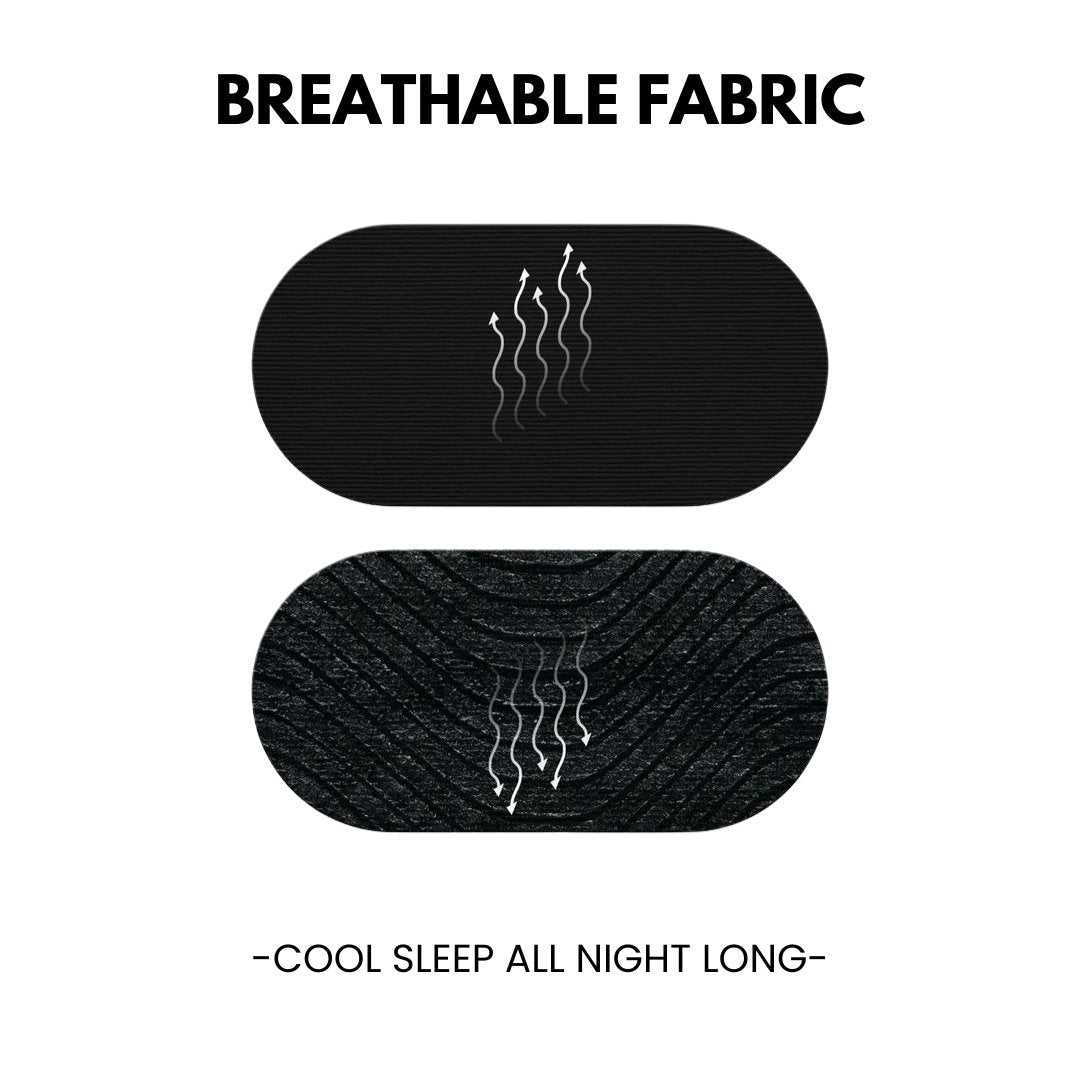
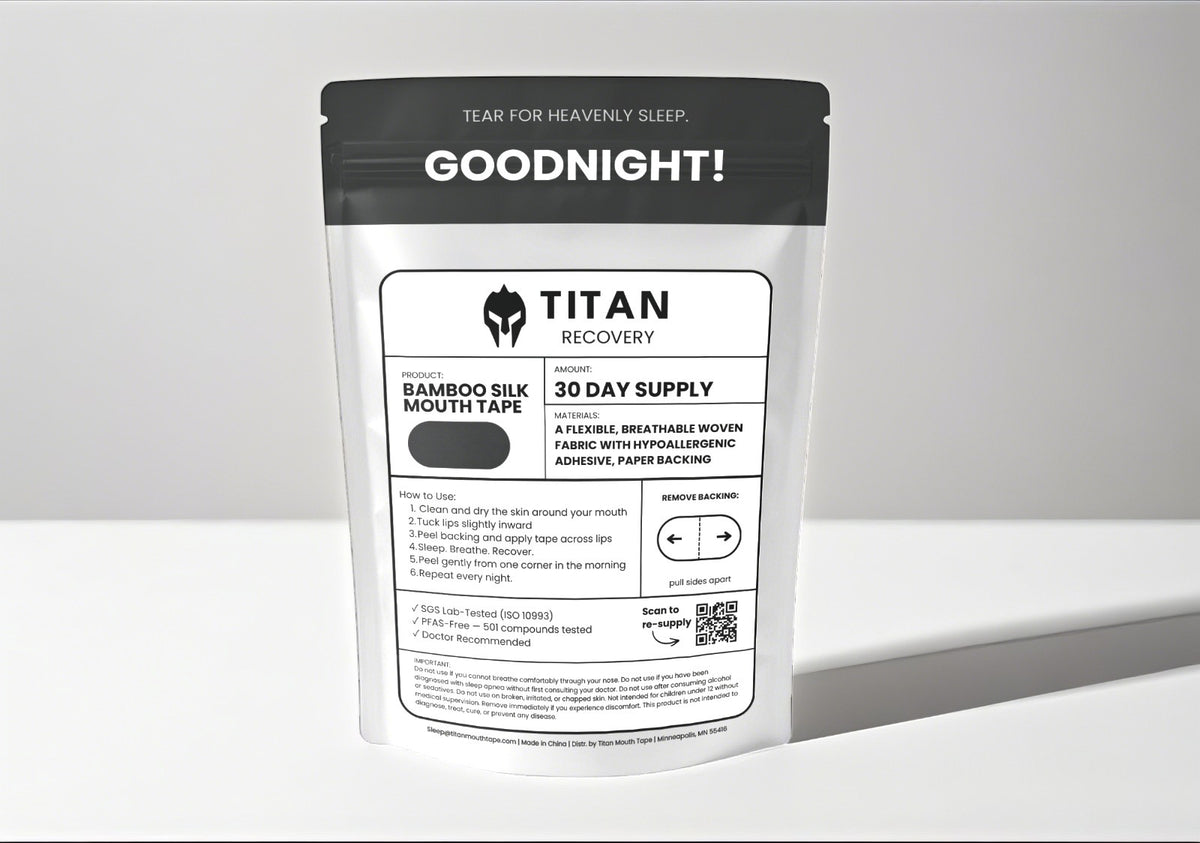
The mechanism is simple and purely physical. There are no drugs, no sprays, no devices — just a piece of bamboo silk tape that holds your lips gently closed.
When your mouth stays closed during sleep:
- Your jaw maintains a forward position instead of dropping open
- Your tongue presses naturally against the roof of your mouth (the palate) instead of falling backward into the airway
- The airway at the back of your throat stays at its maximum diameter
- All breathing routes through the nose, which is specifically designed to regulate airflow, humidity, and pressure
The result: air moves through a wider, more controlled pathway. Less turbulence means less vibration. Less vibration means less — or no — snoring.
It's the same reason dentists sometimes prescribe mandibular advancement devices (MADs) for snoring — they push the jaw forward to open the airway. Mouth taping achieves a similar airway position without a bulky, expensive dental appliance. The jaw stays forward because the mouth stays closed.
How Fast Does It Work for Snoring
Based on consistent user feedback, here's the realistic timeline:
Night one to three. Many partners report an immediate reduction in snoring volume and frequency. This isn't always elimination — sometimes snoring decreases from "wake the whole house" to "quiet rumble that doesn't disturb anyone." The tape stays on for most of the night, though some users pull it off unconsciously during the first few nights while their body adjusts.
Week one to two. As the tape stays on more consistently through the entire night, snoring reduction becomes more consistent. Partners who were sleeping with earplugs or in separate rooms start noticing the silence. By the end of two weeks, most mouth-breathing snorers have seen a dramatic reduction.
Month one and beyond. For chronic mouth-breathing snorers, consistent nightly use produces the most reliable results. Some users report complete elimination of snoring. Others see an 80-90% reduction — occasional positional snoring or congestion-related snoring might persist, but the thunderous mouth-breathing snoring is gone.
The speed and completeness of results depends heavily on the type of snoring. Pure mouth-breathing snoring responds the fastest and most completely. Mixed-cause snoring (mouth breathing plus nasal obstruction plus positional factors) responds best to the combination approach — tape plus nasal strips plus side sleeping.
When Mouth Tape Isn't Enough for Snoring
Mouth taping isn't a universal snoring solution. Here are the situations where Titan Recovery alone won't get the job done:
Significant nasal obstruction. If you can't breathe comfortably through your nose — from polyps, a severely deviated septum, or chronic sinusitis — closing your mouth creates a problem instead of solving one. Try the Titan Sleep System (mouth tape plus nasal strips) first. If nasal strips don't provide enough airflow, see an ENT for evaluation.
Obstructive sleep apnea. If your snoring includes breathing pauses, gasping, choking, or if you have excessive daytime sleepiness despite adequate time in bed, get a sleep study. Mouth tape can reduce the noise of snoring without addressing the airway collapse that defines apnea. That's a medical condition that needs medical treatment.
Excess weight around the neck and throat. Carrying significant weight in the neck area compresses the airway structurally. Mouth taping helps with the mouth-breathing component, but the mechanical compression may still cause snoring. Weight loss combined with mouth taping produces the best results in this scenario.
Alcohol or sedative use. Alcohol and sedatives relax the throat muscles beyond what they'd normally relax during sleep, increasing snoring regardless of mouth position. Mouth taping can help, but if you're drinking before bed, the most effective snoring intervention is not the tape — it's the timing of your last drink.
What Users Report About Snoring Reduction
The feedback from Titan Recovery customers on snoring follows a consistent pattern:
Partners notice first. The snorer is asleep — they don't hear themselves. Almost every snoring-related review mentions a partner's reaction. "My wife asked what changed." "He stopped snoring on the first night." "We're back in the same bedroom." The partner's experience often drives the initial purchase and definitely drives the repeat purchase.
Sleep apps confirm it. Users who track with apps like SnoreLab, Sleep Cycle, or the snoring detection built into Apple Watch and Samsung Health see quantifiable drops in snoring duration and intensity. The data backs up what the partner is hearing.
The combination works best. Users who pair Titan Mouth Tape with TitanAir Nasal Strips report the most complete snoring elimination. The nasal strips handle the airflow supply (opening the passages), the mouth tape handles the airflow routing (keeping it nasal), and together they address the two most common snoring contributors simultaneously.
Frequently Asked Questions
Will Titan Recovery stop my snoring completely?
For mouth-breathing snoring — the most common type — most users see dramatic reduction or complete elimination within two weeks. For mixed-cause snoring, pairing with TitanAir Nasal Strips improves results. For sleep apnea-related snoring, mouth tape is not a substitute for medical treatment.
What if I snore through my nose?
Nasal snoring — vibration in the nasal passages themselves — is less common but does happen, usually from turbinate swelling, polyps, or a deviated septum. Mouth tape won't affect nasal snoring directly. TitanAir Nasal Strips can help by physically widening the nasal passages. If nasal snoring persists, consult an ENT.
How is Titan Recovery different from other mouth tapes for snoring?
The bamboo silk material and SilkSeal adhesive are designed for nightly use — comfortable enough to wear consistently, strong enough to stay on through beard hair and active sleep, and gentle enough to remove without pain. Consistency is what produces snoring results, and comfort is what drives consistency. A tape that hurts to remove or feels uncomfortable doesn't get used every night.
Should I use mouth tape or a chin strap for snoring?
Chin straps wrap around the head and hold the jaw closed mechanically, but they often shift during sleep, apply uneven pressure, and are uncomfortable enough that compliance drops quickly. Mouth tape is lighter, more comfortable, stays in place better, and directly seals the lips — which is the actual goal. Most people who've tried both end up with tape.
The Bottom Line
Titan Recovery mouth tape reduces snoring by keeping the mouth closed, the jaw forward, the tongue positioned against the palate, and all airflow routed through the nose. For mouth-breathing snoring — the most common type — the results are fast, consistent, and dramatic. Pair with TitanAir Nasal Strips for nasal obstruction, and see a doctor if your snoring includes breathing pauses or gasping. Free shipping, a Better Sleep Guarantee, and under $1 per night. Your partner will thank you by the end of the first week.
Doctor Recommended: "As a maxillofacial surgeon and dentist, I recommend Titan Mouth Tape. Nasal breathing during sleep is essential for airway health and deep restorative rest. Titan's bamboo silk design is the most comfortable and effective mouth tape I have tested. If you struggle with snoring, dry mouth, or poor sleep quality, this is the simplest change you can make for your health." — Dr. Francois P., MD, DDS — Maxillofacial Surgeon
Lab-Tested Safety: Titan's adhesive is independently tested to ISO 10993 medical device standards. Non-toxic (95% cell viability). Non-allergenic (0% reaction rate). Non-irritating (score 0.0/8.0). PFAS-free — 501 compounds tested, zero detected. See full test results →
Try the complete system tonight. Titan Mouth Tape (bamboo silk, SilkSeal™ adhesive) + TitanAir Nasal Strips. Free shipping. 30-night Better Sleep Guarantee. Shop Titan Mouth Tape → · Shop TitanAir Nasal Strips →