Teeth Grinding at Night? Your Breathing Might Be the Cause Your Dentist Never Mentioned
Share
You wake up with a sore jaw. Your teeth ache. Your partner says you were grinding all night. Your dentist has been telling you to get a night guard for years — or you already have one, and you still grind through it.
Teeth grinding during sleep — bruxism — affects an estimated 10-15% of adults. But the number is likely higher, because most people who grind don't know they do it until a dentist sees the wear patterns or a partner hears the sound.
The standard solution is a night guard. It protects your enamel from damage, but it doesn't stop the grinding. You still clench. You still tense. You still wake up with a sore jaw and a headache. The guard absorbs the damage — it doesn't address the cause.
Here's what most dentists don't discuss: how you breathe during sleep may be contributing to why you grind in the first place.
The Mouth Breathing–Grinding Connection
Research published in the Journal of Oral Rehabilitation found a significant association between mouth breathing during sleep and bruxism. A 2021 study in Sleep and Breathing found that patients with sleep-disordered breathing were more likely to exhibit bruxism than those who breathed normally during sleep.
The mechanism connects through the nervous system:
When your mouth falls open during sleep, your tongue drops backward toward the throat. This partially narrows the airway. Your brain detects the restriction and responds by activating the jaw muscles — clenching and grinding — in an attempt to reopen the airway and push the tongue forward.
In other words: grinding may be your body's attempt to solve an airway problem.
Research suggests this clenching response is associated with sympathetic nervous system activation — the fight-or-flight stress state. Mouth breathing keeps the nervous system in this elevated state, which increases jaw muscle tension throughout the night. The jaw muscles (masseter, temporalis) are among the strongest in the body — and when they contract involuntarily for hours, the result is the grinding, aching, and tooth damage you experience every morning.
Why Night Guards Don't Fix the Problem
A night guard is a barrier between your upper and lower teeth. It prevents enamel-on-enamel contact, which protects against tooth damage, fractures, and wear. For that purpose, it works.
But a night guard does nothing to address why you're clenching in the first place. The jaw muscles still contract. The tension still builds. The headaches still come. The TMJ still takes the load. You're absorbing the damage with plastic instead of preventing the muscle activation that causes it.
Custom night guards cost $300-700 from a dentist. Over-the-counter boil-and-bite versions are cheaper but fit poorly, can cause bite misalignment, and often make jaw discomfort worse. Either way, you're spending money on symptom management without addressing the root cause.
If the grinding is triggered by airway restriction from mouth breathing, the most logical first intervention isn't a guard for your teeth — it's closing your mouth.
How Nasal Breathing May Reduce Grinding
When your mouth stays closed during sleep, several things change that directly relate to bruxism:
The tongue stays on the palate. This is the natural resting position of the tongue — pressed lightly against the roof of the mouth. In this position, the tongue doesn't fall backward into the airway. The brain doesn't detect an obstruction. The clenching response isn't triggered.
The airway stays more open. With the tongue forward and the jaw supported (mouth closed), the retroglossal space — the airway behind the tongue — stays wider. Less restriction means less compensatory muscle activation.
The nervous system shifts to parasympathetic. Research published in Neuroreport found that nasal breathing is associated with parasympathetic activation — the calm, recovery state. Parasympathetic dominance reduces overall muscle tension, including in the jaw. The muscles that drive grinding may simply be less activated when the nervous system is in recovery mode rather than stress mode.
Cortisol drops. Elevated cortisol — from stress, from sympathetic activation, from poor sleep quality — is associated with increased muscle tension and bruxism. Nasal breathing during sleep may support lower overnight cortisol levels, reducing one of the drivers of nocturnal clenching.
What the Research Says
The connection between breathing and bruxism is an active area of research. Here's what the evidence suggests so far:
A study in the Journal of Clinical Sleep Medicine found that treating sleep-disordered breathing (with CPAP) significantly reduced bruxism episodes. This supports the hypothesis that grinding is often secondary to breathing problems — and that addressing the breathing may reduce the grinding.
A 2022 review in Sleep Medicine Reviews noted that bruxism frequently coexists with sleep-disordered breathing and may serve as a compensatory mechanism to maintain airway patency. The authors suggested that interventions targeting airway management could be beneficial for bruxism patients.
A study in Cranio examined the relationship between tongue posture, mouth breathing, and jaw muscle activity, finding that low tongue posture (tongue on the floor of the mouth rather than the palate) was associated with increased masseter activity — the primary grinding muscle.
None of these studies specifically tested mouth tape for bruxism. But the physiological chain is clear: mouth breathing → tongue drops → airway narrows → brain activates jaw muscles → grinding. Mouth tape addresses the first link in that chain.
How to Test Whether Mouth Breathing Is Contributing to Your Grinding
This is a simple, low-risk test:
Week 1 (baseline): Track your morning symptoms for 7 days without changing anything. Note jaw pain (1-10), headache presence (yes/no), tooth soreness (yes/no), and whether your mouth was dry when you woke up. If you use a night guard, keep using it.
Week 2 (test): Add mouth tape before bed. Keep using your night guard if you have one — the tape goes on your lips, the guard goes on your teeth. They don't conflict. Track the same symptoms.
Compare. If jaw pain, headaches, and tooth soreness decrease during week 2 — and your mouth is moist when you wake up (confirming the tape stayed on and the mouth stayed closed) — mouth breathing was likely contributing to your grinding.
If nasal congestion makes nose breathing difficult, pair mouth tape with a nasal strip to open the nasal passages first.
Can You Use Mouth Tape With a Night Guard?
Yes. Mouth tape goes on the outside of your lips. A night guard goes inside your mouth. They work on different parts of the problem: the tape addresses the breathing route, the guard protects the enamel. Using both is more comprehensive than using either alone.
Some users report that after several weeks of consistent mouth taping, their grinding decreases enough that they no longer need the night guard nightly. Others continue using both indefinitely. The combination gives you airway management (tape) plus damage protection (guard) — covering both the cause and the symptom.
Other Factors in Teeth Grinding
Mouth breathing is not the only cause of bruxism. Other contributing factors include:
Stress and anxiety. Psychological stress is one of the most well-documented risk factors for bruxism. Stress increases sympathetic activation and cortisol — both of which drive jaw muscle tension. Addressing sleep quality broadly may help, but stress management during waking hours matters too.
Caffeine and stimulants. Caffeine increases sympathetic nervous system activity and has been associated with increased bruxism. Research published in the Journal of Clinical Sleep Medicine found that caffeine consumed 6 hours before bed reduced deep sleep quality. Cutting caffeine after noon may reduce grinding for some people.
Alcohol. Alcohol relaxes throat muscles, increasing airway obstruction and mouth breathing during sleep. It also fragments sleep architecture. Both effects may worsen bruxism.
Sleep apnea. Obstructive sleep apnea is strongly associated with bruxism. If you grind AND experience daytime sleepiness, witnessed breathing pauses, or gasping during sleep, a sleep study is warranted. Mouth tape is not a treatment for sleep apnea.
Medication side effects. Certain antidepressants (SSRIs, SNRIs) are associated with increased bruxism. If you started grinding after beginning a new medication, discuss this with your prescribing doctor.
Bite misalignment. Dental malocclusion can contribute to grinding. If your dentist identifies bite issues, orthodontic treatment or occlusal adjustment may be appropriate.
The Grinding Reduction Stack
If you grind your teeth at night, here's the most logical order of interventions — starting with the simplest and cheapest:
1. Mouth tape — address the most common mechanical trigger (mouth breathing, tongue drop, airway narrowing). Under $1/night. Results testable within one week.
2. Night guard — protect your enamel while you work on the underlying cause. Custom-fit from a dentist is better than boil-and-bite.
3. Stress management — if stress is a factor, address it during the day. Exercise, meditation, therapy, or simply a consistent wind-down routine before bed.
4. Cut caffeine and alcohol — both may worsen grinding through different mechanisms. Try eliminating both for two weeks and track whether symptoms improve.
5. Sleep study — if grinding is severe, if you have symptoms of sleep apnea, or if nothing else helps, a sleep study can identify whether sleep-disordered breathing is the underlying driver.
Most people start at step 5. They skip the simple interventions and go straight to the expensive, complex ones. Start at step 1. It takes 5 seconds, costs less than a dollar, and may address the root cause that a $500 night guard never will.
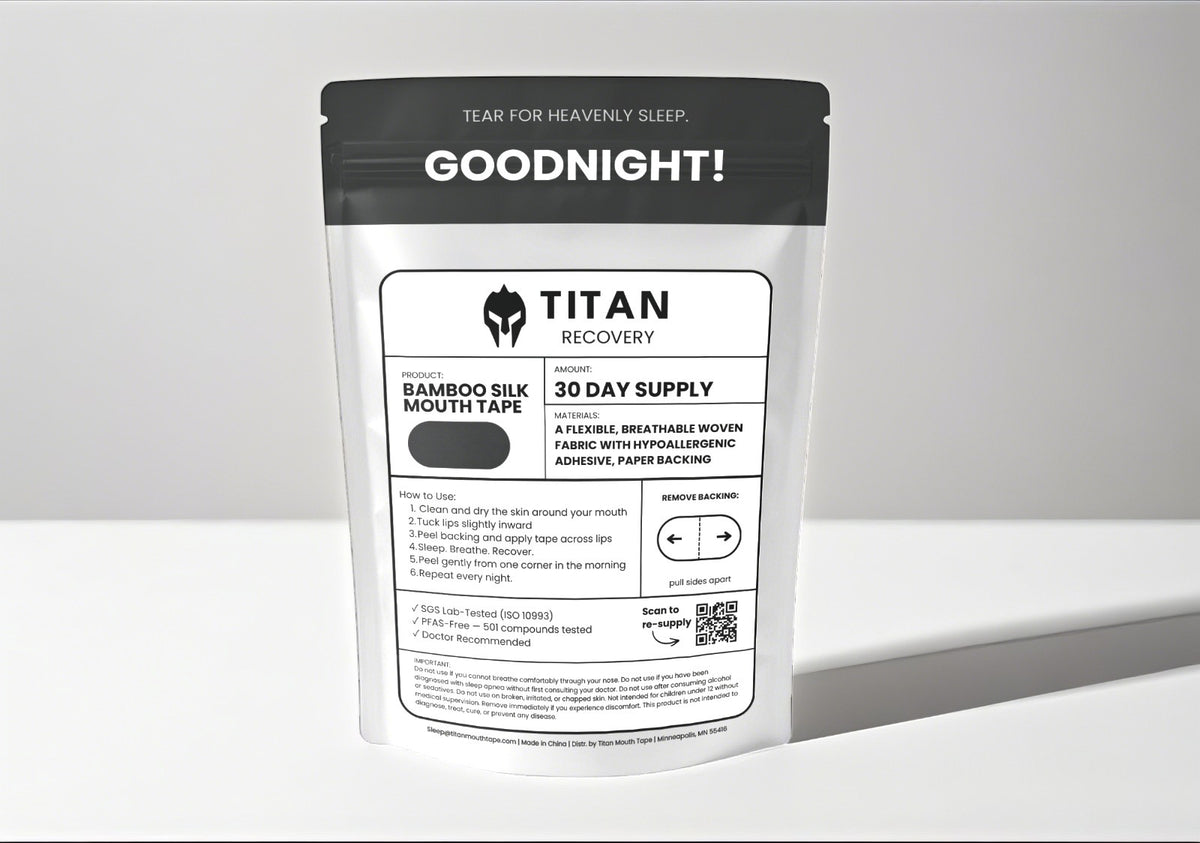
Doctor Recommended: "As a maxillofacial surgeon and dentist, I recommend Titan Mouth Tape. Nasal breathing during sleep is essential for airway health and deep restorative rest. Titan's bamboo silk design is the most comfortable and effective mouth tape I have tested. If you struggle with snoring, dry mouth, or poor sleep quality, this is the simplest change you can make for your health." — Dr. Francois P., MD, DDS — Maxillofacial Surgeon
Lab-Tested Safety: Titan's adhesive is independently tested to ISO 10993 medical device standards. Non-toxic (95% cell viability). Non-allergenic (0% reaction rate). Non-irritating (score 0.0/8.0). PFAS-free — 501 compounds tested, zero detected. See full test results →
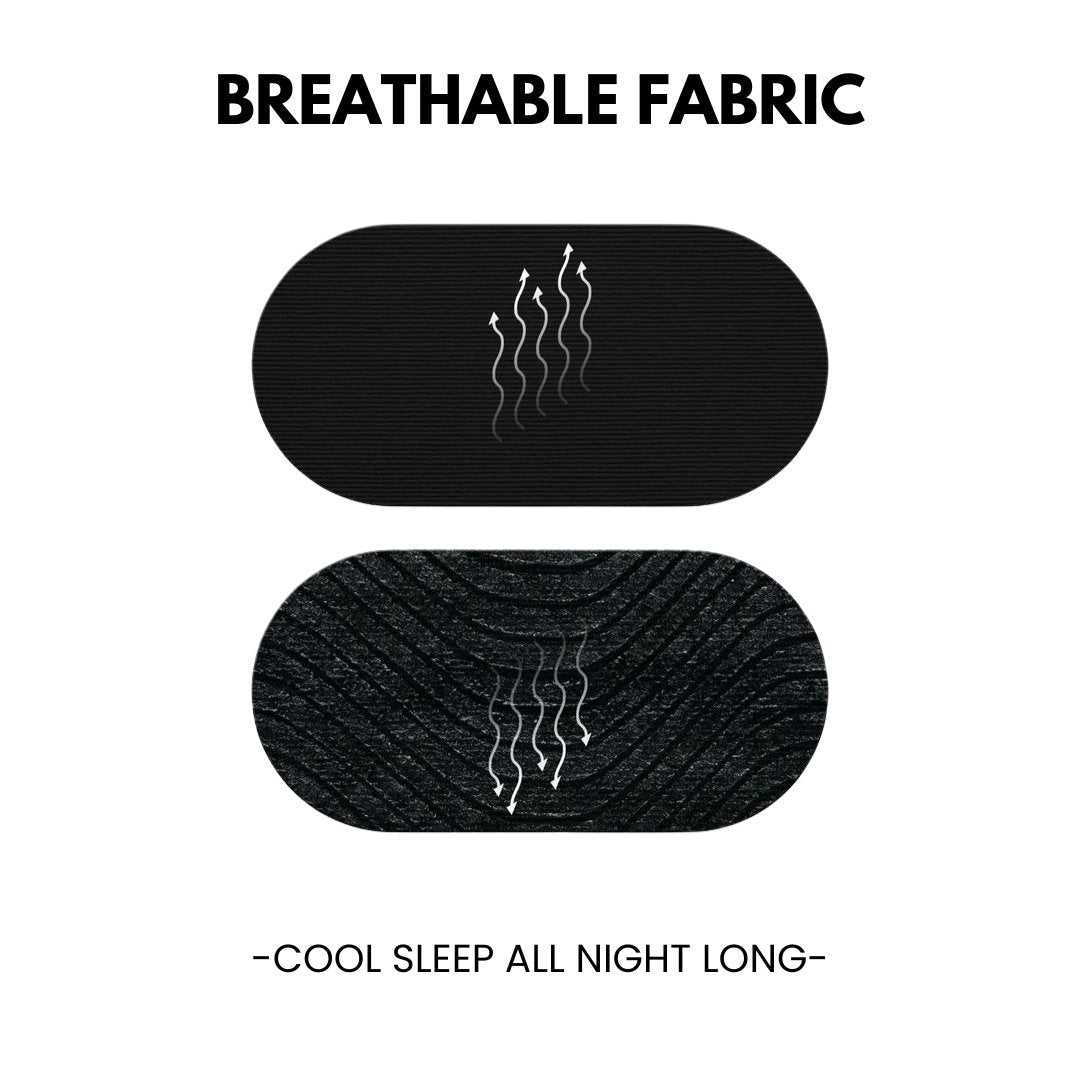
Try it tonight. Bamboo silk. SilkSeal™ adhesive. Beard-friendly. No logo on the tape. Free shipping. 30-night Better Sleep Guarantee. Shop Titan Mouth Tape → · Shop TitanAir →
This article is for informational purposes only and does not constitute medical advice. If you have or suspect a sleep disorder or other medical condition, consult a qualified healthcare provider before making changes to your routine.