Teenage Sleep: Why Teens Struggle and How to Help
Share
If your teenager stays up until midnight and then sleeps until noon on weekends, you are not dealing with a lazy kid — you are dealing with biology. Teenage sleep runs on a genuinely different clock than adult sleep. During puberty, the brain's release of melatonin shifts about two hours later, which means most teens physically cannot fall asleep at the "reasonable" bedtimes that worked when they were younger. Understanding that shift is the first step to helping your teen sleep well instead of fighting a battle neither of you can win.
Here is what is happening inside a teenager's body, why it collides with early school start times, and what parents can do to help.
Why Teenage Sleep Is Biologically Different
The single most important fact about adolescent sleep is that the internal clock moves — not an attitude or discipline problem, but a measurable change in how the brain times sleep.
Melatonin releases later during puberty. In children, the sleep hormone melatonin starts rising in the early evening, which is why an eight-year-old gets sleepy at 8 p.m. During puberty, that release shifts roughly two hours later, so a teenager's brain does not begin the wind-down signal until around 10 or 11 p.m. This circadian phase delay is universal across adolescents. When you tell a 15-year-old to be asleep by 9:30, you are asking them to fall asleep before their body has produced the hormone that makes sleep possible.
The drive to stay awake also lasts longer. On top of the melatonin shift, the pressure that builds in the brain to make us sleepy accumulates more slowly in teens, so a teenager feels alert later into the night than a child or adult would. Both systems push the same direction: later to bed, later to wake.
This is why "why do teenagers sleep so much" has a straightforward answer. Teens are not sleeping more than they need; they are catching up on sleep they never got during the week. An exhausted teen sleeps eleven hours on a free day because they are running a deficit.
How Much Sleep Do Teens Actually Need
Teenagers need 8 to 10 hours of sleep per night. That is the range recommended by sleep researchers for ages 13 to 18, and most teens land closer to the top of it than the bottom. The problem is that surveys consistently find the majority of high schoolers get less than 7 hours on school nights. That gap — an hour or two short, every single night — adds up into what researchers call chronic sleep restriction.
The requirement is so high because of what sleep does during these years. Adolescence is a period of intense brain development, and much of that rewiring happens during deep sleep. Growth, hormone regulation, emotional processing, and memory consolidation all depend on enough hours in the right stages. Understanding how sleep stages work makes it clear why cutting sleep short does more than make a teen tired — it cuts into the deep and REM sleep that support learning and mood.
Chronic sleep restriction shows up as exactly the things parents worry about: irritability, poor concentration, lower grades, moodiness, and a shorter fuse. Before assuming those are purely behavioral, it is worth asking whether the cause is simple sleep debt.
The Collision With Early School Start Times
Here is where biology and scheduling crash into each other. A teenager's body does not want to fall asleep until around 11 p.m. If they need 8 to 10 hours, that means a natural wake time of 7 to 9 a.m. But many high schools start at 7:30 or 8 a.m., which forces a wake time of 6 or 6:30 to get ready and commute.
Do the math and the problem is obvious: a teen who cannot fall asleep before 11 but has to wake at 6:15 is getting around 7 hours at most — and that assumes they fall asleep the instant their head hits the pillow. Every school day, they wake in the middle of their biological night. This is why so many teenagers are genuinely impaired in first period and crash hard on weekends trying to recover.
Major medical organizations recommend that middle and high schools start no earlier than 8:30 a.m. for exactly this reason. You may not control the bell schedule, but understanding the mismatch helps you respond to your teen's exhaustion with strategy instead of frustration.
Screens, Social Media, and the Late-Night Spiral
The biological delay is real, but modern life makes it worse. Two factors turn a manageable shift into a serious teen sleep problem.
Light from screens suppresses melatonin. A teenager's melatonin is already releasing late. Bright light in the evening — especially the blue-heavy light from phones, tablets, and laptops — signals the brain that it is still daytime and pushes that release even later. A teen scrolling in a dark room at 11 p.m. is actively delaying the hormone they are waiting on.
Social media and gaming are engineered to hold attention. The content keeps the brain engaged and emotionally activated at exactly the moment it should be winding down. Notifications, group chats, and the fear of missing something pull teens back to the phone again and again, and a device on the nightstand fragments sleep after lights-out. The combination — a delayed clock, light that delays it further, and content designed to keep them awake — is why so many teens end up in a nightly spiral of "I'll sleep after this one video."
Signs of a Real Sleep Problem
Most teenage tiredness comes down to not enough hours. But some signs point to an underlying issue worth addressing rather than just a schedule to fix.
Snoring and mouth breathing. Loud, regular snoring in a teenager is not normal and is worth attention. So is habitual mouth breathing during sleep — sleeping with the mouth open, waking with a dry mouth, or morning bad breath. Chronic mouth breathing can signal enlarged tonsils or adenoids, allergies, or nasal obstruction, and sometimes points toward sleep-disordered breathing. Even when mild, it tends to make sleep lighter and less restorative.
Other red flags: gasping or pauses in breathing during sleep, extreme difficulty waking after a long night, falling asleep during the day at school, or persistent trouble falling asleep that looks like true insomnia. If you see these, talk to your teen's pediatrician — snoring paired with daytime exhaustion in particular deserves an evaluation to rule out obstructive sleep apnea.
How to Help Your Teen Sleep Better
You cannot override puberty's clock, but you can work with it and remove the things making it worse. These changes have the biggest payoff.
Anchor a consistent wake time. This is the most powerful lever you have. A steady wake time — even on weekends, within an hour or so — is what stabilizes the circadian rhythm. Letting a teen sleep until 1 p.m. on Saturday feels merciful, but it shifts their clock later and makes Monday brutal.
Get morning light early. Bright morning light does the opposite of evening screens — it tells the brain the day has started and nudges the clock earlier. Encourage your teen to open the blinds, eat breakfast near a window, or walk part of the way to school. It is one of the few tools that can actually pull a delayed teenage clock back toward a healthier time.
Set a screen curfew. Phones out of the bedroom, or at least off, 30 to 60 minutes before sleep. This is the hardest rule to enforce and the most effective one. A charging station outside the bedroom removes both the light exposure and the middle-of-the-night interruptions, and it lands better as a household rule that applies to parents too.
Watch caffeine, especially after noon. Energy drinks and large coffees are common among teens, and their effects last far longer than most realize — caffeine has a half-life of five to six hours, so an afternoon energy drink is still active at bedtime and directly undermines an already-delayed clock. Building good sleep hygiene habits around light, screens, and caffeine gives your teen the foundation everything else builds on.
Keep the bedroom cool, dark, and boring. A cool, dark room supports the body-temperature drop that helps sleep begin, and the more the bedroom is associated with sleep rather than homework and gaming, the more easily the brain settles. For the full framework, our guide on how to sleep better covers the fundamentals for teens and adults alike.
When Nasal Breathing and Mouth Taping Fit In
If mouth breathing or light snoring is part of your teen's picture, addressing how they breathe at night can meaningfully improve sleep quality. Nasal breathing filters, warms, and humidifies air, supports a calmer nervous system, and tends to produce deeper, more stable sleep than open-mouth breathing. For a teen who wakes with a dry mouth every morning, the way they breathe is worth looking at.
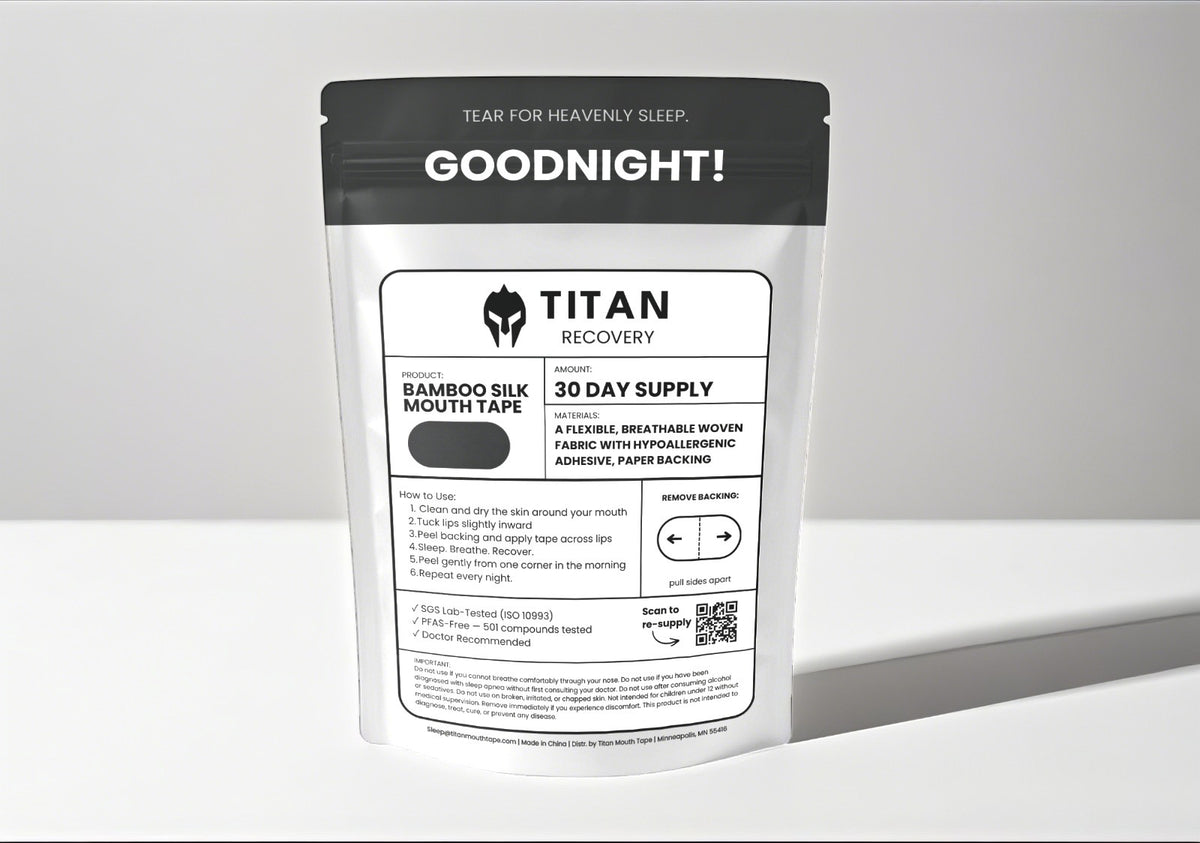
That said, mouth tape is an adult product and the age of the teen matters. It is not appropriate for young children, and for younger or smaller teens the first step is a conversation with a pediatrician about what is causing the mouth breathing — often allergies, congestion, or enlarged tonsils that have their own treatments. Our post on whether kids can use mouth tape lays out the safety reasoning and age considerations; read it before considering tape for anyone under 18.
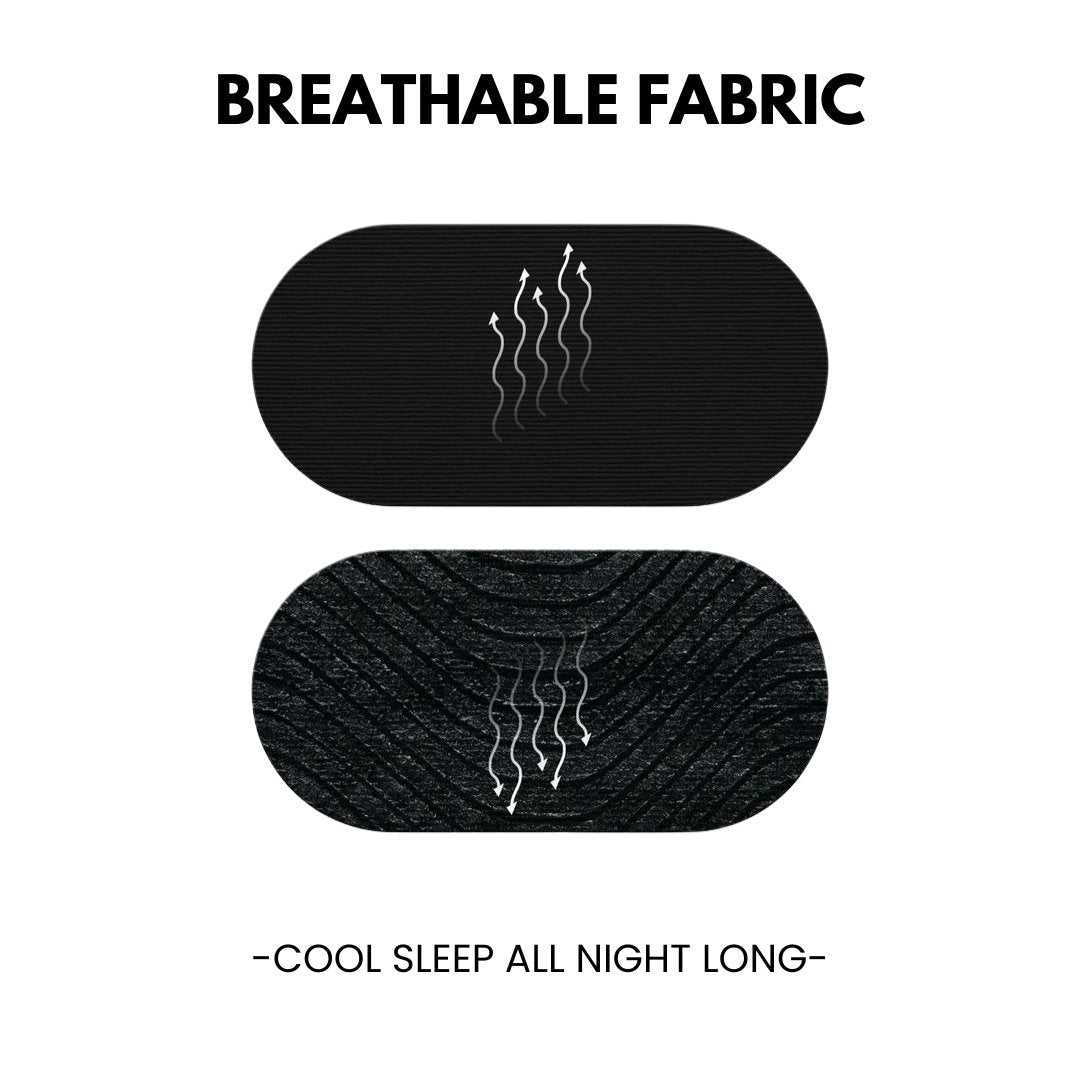
For an older, mature teen who mouth-breathes mainly out of habit — and who understands the product and can remove it easily on their own — mouth tape can be appropriate with a parent's involvement and, ideally, a doctor's okay. If congestion is the real barrier, a nasal strip is the gentler option: it opens the nasal passages from the outside to make nose breathing easier, with none of the considerations that come with taping the mouth. For households addressing both airflow and the mouth-breathing habit, the Deep Sleep Bundle combines the two. In every case with a teen, start with the pediatrician and treat these as a complement to sleep timing and habits, not a replacement.
Frequently Asked Questions
Why do teenagers sleep so much on weekends?
Because they are catching up. Most teens accumulate a sleep debt during the school week — going to bed late because of their delayed clock but still waking early for school — and sleep long on weekends to repay it. The fix is not to restrict weekend sleep but to reduce the weekday deficit. Sleeping until 1 p.m. also shifts their clock later, so cap weekend sleep-ins to an hour or two past the weekday wake time.
What is a healthy teenager sleep schedule?
Given the biological delay, a realistic target is a bedtime around 10 to 11 p.m. and a wake time that allows 8 to 10 hours total. Consistency matters more than the exact times — keeping wake time steady across all seven days is what stabilizes the clock. If school forces an early wake time, protect the bedtime and use morning light to shift the schedule earlier.
Is it normal for a teenager to snore?
Occasional light snoring during a cold is normal; loud, regular snoring is not and deserves attention. In teens it can signal enlarged tonsils or adenoids, allergies, nasal obstruction, or sleep-disordered breathing. If snoring comes with gasping, pauses in breathing, or daytime exhaustion despite enough hours in bed, see a pediatrician to rule out obstructive sleep apnea.
How do I get my teen off their phone at night?
The most effective approach is removing the phone from the bedroom entirely, with a charging station elsewhere. Framing it as a household rule that applies to parents too reduces friction. If a full ban is not realistic, start with a 30-minute screen curfew before sleep and enable night mode to cut blue light — the goal is to stop delaying melatonin and prevent the interruptions that fragment sleep.
The Bottom Line
Teenage sleep struggles are mostly biology, not defiance. Puberty pushes the internal clock about two hours later, teens need 8 to 10 hours a night, and early school start times force them awake in the middle of their biological night. Screens and caffeine take a hard situation and make it worse.
You cannot rewind your teen's clock, but you can work with it: anchor a consistent wake time, flood the morning with light, set a screen curfew, keep caffeine out of the afternoon, and pay attention to snoring or mouth breathing as signs worth investigating. For an older teen where mouth breathing is the issue, nasal breathing support can help — with a pediatrician's guidance and the age considerations in mind. Meet the biology where it is, and both you and your teen will stop losing a fight that was never really about willpower.
Doctor Recommended: "As a maxillofacial surgeon and dentist, I recommend Titan Mouth Tape. Nasal breathing during sleep is essential for airway health and deep restorative rest. Titan's bamboo silk design is the most comfortable and effective mouth tape I have tested. If you struggle with snoring, dry mouth, or poor sleep quality, this is the simplest change you can make for your health." — Dr. Francois P., MD, DDS — Maxillofacial Surgeon
Lab-Tested Safety: Titan's adhesive is independently tested to ISO 10993 medical device standards. Non-toxic (95% cell viability). Non-allergenic (0% reaction rate). Non-irritating (score 0.0/8.0). PFAS-free — 501 compounds tested, zero detected. See full test results →
Try the complete system tonight. Titan Mouth Tape (bamboo silk, SilkSeal™ adhesive) + TitanAir Nasal Strips. Free shipping. 30-night Better Sleep Guarantee. Shop Titan Mouth Tape → · Shop TitanAir Nasal Strips →