The Worst Things About Mouth Tape (Honest Take)
Share
We sell mouth tape, and we're about to tell you everything wrong with it. The worst things about mouth tape are real: it looks ridiculous, the first few nights feel strange, congestion makes it unusable, cheap versions cause skin problems, and it cannot treat serious sleep disorders. None of that is marketing spin or fine print — those are genuine downsides that anyone considering mouth tape deserves to hear upfront.
Most brands won't publish a list like this. We think that's a mistake. If you're going to put tape on your face every night, you should know exactly what you're signing up for — the uncomfortable parts included. So here's our honest accounting of what's bad about mouth taping, why those things are bad, and why people keep doing it anyway.
You Will Look Ridiculous
There is no way around this. You will have tape on your mouth while you sleep. You will look silly. If you share a bed with someone, they will comment on it. If your kids walk into your room in the morning, they will laugh. If you catch your own reflection in the bathroom mirror after applying it, you will briefly question your life choices.
This isn't a problem that better design solves. Even the most minimal, well-shaped strip of mouth tape still reads as "person with tape on their face." Transparent tape, black tape, contoured tape — it doesn't matter. You look like you lost a bet.
The honest calculus here is simple: you decide the results are worth the appearance, or you don't. Most people who stick with mouth taping past the first week stop caring. The vanity cost fades quickly when you start waking up without a dry, sandpaper mouth every morning. But if the look genuinely bothers you, know that the feeling doesn't fully disappear — you just stop prioritizing it.
The First Few Nights Are Genuinely Weird
Having something adhesive over your mouth while you try to fall asleep triggers a reaction in most people. It's not pain — it's a low-level psychological discomfort. Your brain registers something covering your mouth and flags it as unusual. For some people, that means mild anxiety. For others, it's just a persistent awareness that something is there, which makes it harder to relax into sleep.
Night one is the worst. You'll be aware of the tape constantly. You might pull it off in the middle of the night without fully waking up. You might lie there for twenty minutes longer than usual before falling asleep. This is normal, and it's one of the most common concerns people have about mouth taping safety.
Nights two and three are better but not great. The novelty wears off, but you're still conscious of it. You might still wake up and find you've removed it during sleep.
By night four or five, most people adjust. The tape becomes background noise — something you apply as part of your routine and stop thinking about. But those first few nights can be legitimately restless, and anyone who tells you otherwise is either unusually adaptable or not being honest.
The people who quit mouth taping almost always quit during this adjustment window. They try it once, have a rough night, and conclude it doesn't work for them. That's understandable, but it's also like judging a new mattress after one night — the data is too thin to mean anything.
Congestion Makes It Miserable
This one is straightforward: if your nose is stuffed up, do not tape your mouth. Mouth tape works because it redirects breathing through the nasal passages. If those passages are blocked, you've just closed off both airways, which is uncomfortable at best and anxiety-inducing at worst.
During cold and allergy season, this becomes a recurring frustration. You might be on a great streak — two weeks of solid, taped sleep — and then a head cold knocks you out of the routine for five days. Allergies can create a pattern where your nose is clear some nights and congested others, making consistency difficult.
The practical reality: you cannot use mouth tape every single night of the year unless you have perfect nasal health year-round. Most people don't. There will be nights — sometimes stretches of nights — where taping isn't an option. That's not a failure of the product; it's a limitation of the approach. Pairing mouth tape with nasal strips helps on nights where mild congestion is the issue, but when your nose is genuinely blocked from a cold or sinus infection, the right move is to skip the tape entirely and come back to it when you can breathe clearly.
Cheap Tape Is Genuinely Bad
Not all mouth tape is the same, and the low end of the market is rough. This is one of the most common mouth tape problems people run into, and it's entirely avoidable — but it gives the whole category a bad reputation.
Paper medical tape peels off. It's designed for securing gauze, not staying on skin through eight hours of sleep, jaw movement, and moisture from breathing. If you've tried mouth taping with surgical tape from the drugstore and it fell off by 2 AM, that's not a mouth tape problem — that's a wrong-tape problem. There's a reason mouth tape falls off for so many first-timers, and it almost always comes down to material.
Bad adhesive causes breakouts. Cheap adhesives — the kind found on generic tape and some budget mouth tape brands — can irritate the skin around your mouth. Redness, small bumps, and peeling are common complaints from people who used low-quality products for more than a few nights. If you have facial hair, bad adhesive is even worse: it pulls, tugs, and leaves sticky residue that's genuinely unpleasant to clean off.
Rigid materials restrict natural jaw movement. Your jaw shifts during sleep. Good mouth tape has enough flex to allow minor movement without breaking the seal. Stiff, over-adhesive products lock the jaw in place, which can cause soreness and defeats the purpose of comfortable sleep.
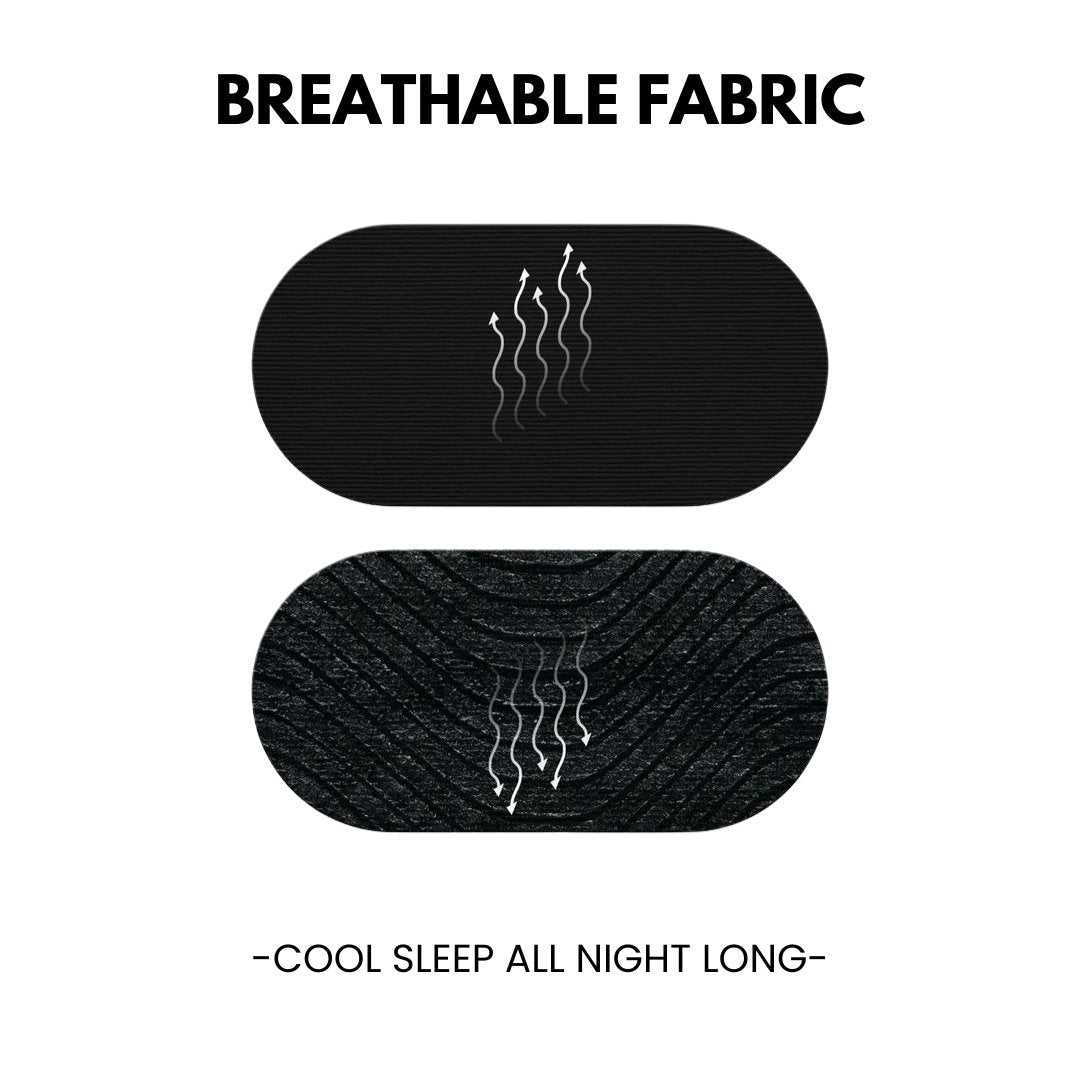
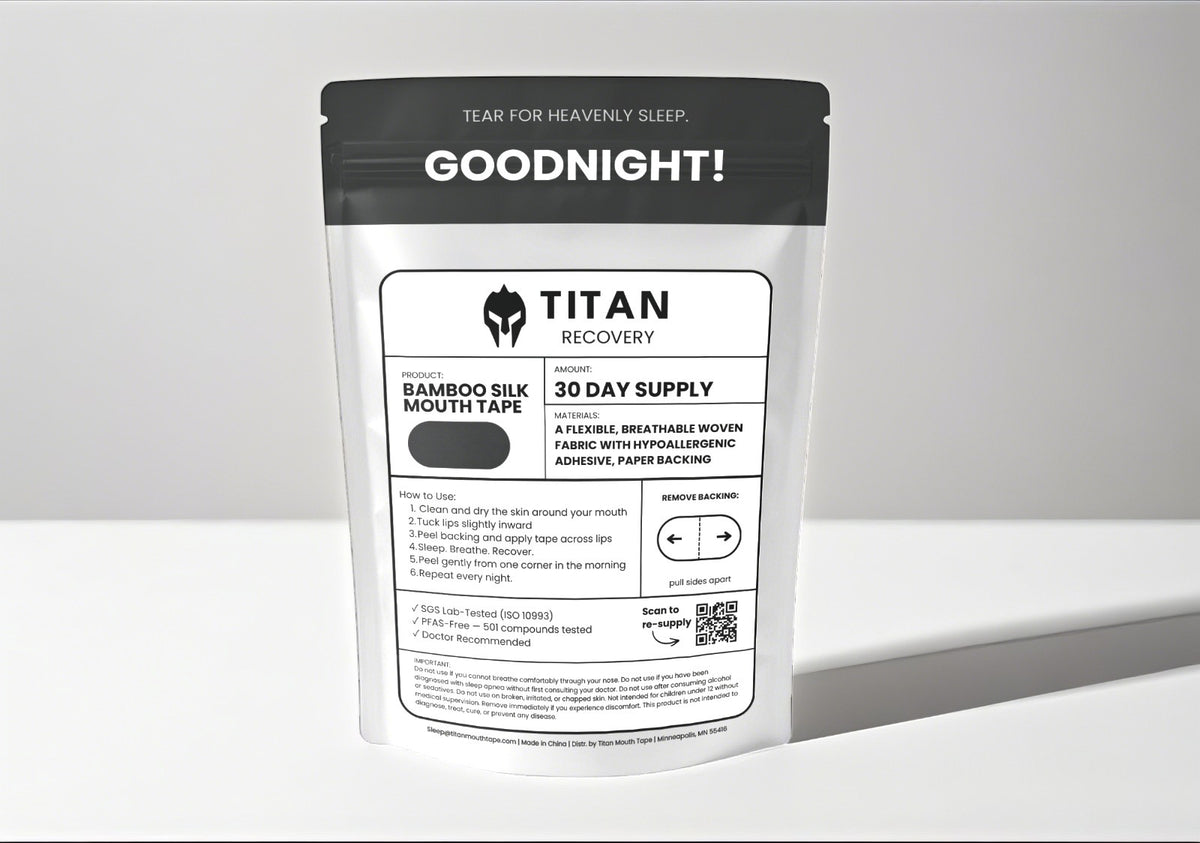
This is one area where the "you get what you pay for" cliche is accurate. The difference between tape made with medical-grade, hypoallergenic adhesive and breathable material versus tape made with the cheapest available components is noticeable from the first night.
It Will Not Fix Sleep Apnea
This needs to be stated clearly, because people get this wrong and the consequences of getting it wrong are serious.
Obstructive sleep apnea (OSA) is a condition where the airway physically collapses during sleep. It's structural. The tissue in the throat relaxes and blocks airflow — partially or completely — dozens or hundreds of times per night. This causes drops in blood oxygen, spikes in stress hormones, fragmented sleep, and over time contributes to cardiovascular disease, cognitive decline, and metabolic problems.
Mouth tape does not treat this. It cannot. Holding the lips closed does not prevent the airway from collapsing further down the throat. If you have moderate to severe OSA, you need medical intervention — typically CPAP therapy, sometimes a dental appliance, occasionally surgery. A strip of tape is not a substitute for any of those treatments.
Where mouth tape sits in the sleep apnea conversation is narrower than some people hope. There's early research suggesting it may help in mild cases where mouth breathing worsens AHI scores, but that's a specific, diagnosed scenario managed with a doctor's involvement — not a DIY fix. If you snore heavily, wake up gasping, or feel exhausted despite spending enough hours in bed, get evaluated for sleep apnea before trying mouth tape. The tape might eventually be part of your toolkit, but it shouldn't be the first thing you reach for when the problem might be medical.
You Have to Be Consistent
Mouth tape is not a one-night intervention. One night of mouth taping tells you almost nothing useful — whether you slept well or poorly that night could be attributed to dozens of other variables. A single data point doesn't distinguish between the tape working and you just having a normal fluctuation in sleep quality.
To actually evaluate whether mouth tape works for you, you need at least five to seven consecutive nights. That's enough time for the psychological adjustment to pass, for your body to settle into nasal breathing as the default, and for patterns to emerge — less dry mouth, reduced snoring, different subjective sleep quality in the morning.
This is a real downside because most people's patience for sleep interventions is short. You try something, it doesn't feel amazing immediately, and you move on. Mouth tape asks for more commitment than that. The people who get the most from it are the ones who gave it a full week even when the first two nights were underwhelming.
Consistency matters after the trial period too. The benefits of nasal breathing during sleep accumulate with regularity. Using mouth tape three nights a week is better than not using it at all, but it's meaningfully less effective than using it every night. Your body defaults to mouth breathing when given the option — the tape is what prevents that default — so the nights you skip are nights you revert.
So Why Do People Keep Using It?
After all of that — the silly appearance, the weird adjustment, the congestion limitations, the quality pitfalls, the medical boundaries, the consistency requirement — why does anyone stick with mouth taping?
Because the results, when they show up, are hard to ignore.
Dry mouth disappears. This is the most immediate and universal change. People who spent years waking up with a parched mouth and reaching for water before their feet hit the floor stop doing that. The mouth stays closed, saliva does its job, and the morning mouth experience changes completely.
Snoring drops significantly. Partners notice before the taper does. The kind of snoring caused by mouth breathing — tongue falling back, soft palate vibrating — often reduces or stops entirely when the mouth stays sealed. This alone keeps a lot of couples on board, because snoring affects both people in the bed.
Sleep feels different. This one is harder to quantify, but it's the most commonly reported long-term observation. People describe their sleep as deeper, calmer, more continuous. They wake up fewer times during the night. Morning grogginess decreases. The physiological explanation — nasal breathing promotes parasympathetic nervous system activity, which supports deeper sleep stages — matches what people report subjectively.
The tradeoff is real. Mouth tape has genuine downsides, and pretending otherwise would be dishonest. But the reason a mouth tape company is comfortable listing every negative is that we've seen what happens when people push through the awkward period: they don't go back. The downsides are front-loaded — concentrated in the first few days — while the benefits accumulate over weeks and months.
If you want to try it with the best shot at success, start with quality materials — a bundle that includes both mouth tape and nasal strips covers both sides of the breathing equation — commit to a full week, and skip any night your nose is too congested. That's the honest protocol. No miracle claims, just a clear-eyed approach to something that works well for the right people.
Frequently Asked Questions
Is mouth tape uncomfortable to wear?
For the first two or three nights, yes — most people feel a mild awareness or low-level discomfort from having adhesive on their lips. It's psychological more than physical. The sensation of something covering your mouth while you try to sleep is unfamiliar, and your brain notices it. By night four or five, most people stop noticing the tape at all. If discomfort persists beyond the first week, the issue is usually the tape material rather than the concept itself — switching to a softer, hypoallergenic product typically resolves it.
Can mouth tape make breathing problems worse?
If you have clear nasal passages, no. Mouth tape redirects breathing through the nose, which is how your body is designed to breathe during sleep. However, if you have significant nasal congestion, a deviated septum that severely limits airflow, or undiagnosed sleep apnea, mouth tape can make the experience worse by closing off the oral airway when the nasal one isn't fully functional. The rule is simple: if you can breathe comfortably through your nose while awake with your mouth closed, you can tape at night. If you can't, address the nasal issue first.
How do I know if my mouth tape is good quality?
Good mouth tape stays on all night without requiring excessive adhesive strength. It uses hypoallergenic adhesive that doesn't cause redness or breakouts. It's flexible enough to allow minor jaw movement. And it removes cleanly in the morning without leaving residue or pulling skin. If your tape is doing any of the opposite — falling off, irritating skin, feeling rigid, or leaving sticky patches — the product is the problem, not the practice.
Should I stop using mouth tape if I get a cold?
Yes. When your nose is significantly congested, skip the tape entirely. There's no benefit to taping your mouth when your nasal passages can't handle the full airflow. Use the tape again once you can breathe comfortably through your nose. Missing a few nights during a cold doesn't reset your progress — your body will pick up the nasal breathing pattern right where you left off.
How long does it take to see results from mouth tape?
Dry mouth improvement is usually noticeable by night two or three. Snoring reduction — often reported by a partner rather than the person taping — typically becomes apparent within the first week. Subjective improvements in sleep depth and morning alertness tend to show up after one to two weeks of consistent use. The key word is consistent: sporadic use stretches the timeline significantly and makes it harder to attribute changes to the tape rather than normal sleep variation.
The Bottom Line
Mouth tape has real downsides. You look strange wearing it. The adjustment period is genuinely uncomfortable. Congestion sidelines you. Cheap products cause legitimate skin issues. It cannot treat sleep apnea. And it requires more patience and consistency than most sleep products ask for.
All of that is true, and none of it is a reason to avoid trying it if you're a mouth breather. The downsides are specific, manageable, and mostly temporary. The benefits — no dry mouth, less snoring, deeper sleep — are lasting and meaningful enough that people who experience them rarely go back to sleeping without tape. The worst things about mouth tape are real, but they're also the kind of tradeoffs that look small in the rearview mirror once the results show up.
Doctor Recommended: "As a maxillofacial surgeon and dentist, I recommend Titan Mouth Tape. Nasal breathing during sleep is essential for airway health and deep restorative rest. Titan's bamboo silk design is the most comfortable and effective mouth tape I have tested. If you struggle with snoring, dry mouth, or poor sleep quality, this is the simplest change you can make for your health." — Dr. Francois P., MD, DDS — Maxillofacial Surgeon
Lab-Tested Safety: Titan's adhesive is independently tested to ISO 10993 medical device standards. Non-toxic (95% cell viability). Non-allergenic (0% reaction rate). Non-irritating (score 0.0/8.0). PFAS-free — 501 compounds tested, zero detected. See full test results →
Try the complete system tonight. Titan Mouth Tape (bamboo silk, SilkSeal™ adhesive) + TitanAir Nasal Strips. Free shipping. 30-night Better Sleep Guarantee. Shop Titan Mouth Tape → · Shop TitanAir Nasal Strips →
This article is for informational purposes only and does not constitute medical advice. If you have or suspect a sleep disorder or other medical condition, consult a qualified healthcare provider before making changes to your routine.