Sleep Divorce: Is Sleeping Apart the Answer?
Share
Sleep divorce — the practice of couples sleeping in separate beds or separate bedrooms — is one of the fastest-growing trends in sleep health. And on the surface, it makes sense. If one partner snores and the other can't sleep, separate rooms solve the immediate problem tonight. But here's the honest answer most articles won't give you: for the majority of couples considering a sleep divorce, the real problem isn't incompatible sleep — it's untreated snoring. Fix the snoring, and the reason for sleeping apart disappears.
That doesn't mean sleep divorce is always wrong. It means most couples are making a permanent lifestyle change to avoid a problem that has a simple fix. Before you rearrange the house, it's worth understanding what's actually driving the decision and whether there's a better path.
The Sleep Divorce Trend by the Numbers
Sleep divorce isn't a fringe idea anymore. The American Academy of Sleep Medicine reported that roughly one in three Americans have tried sleeping in a separate room from their partner. Other surveys place the number between 25% and 40%, depending on the population and how the question is framed — some couples sleep apart every night, others retreat to the guest room a few times a week when the snoring gets bad.
The trend has been boosted by social media normalization — what used to feel like admitting defeat now gets framed as self-care. But the conversation rarely asks the next question: why can't you sleep in the same room? And is that reason fixable?
Why Couples Are Sleeping Separately
Snoring is the number one reason, and it's not even close. Surveys consistently show that snoring drives more couples sleeping separately than all other factors combined. The non-snoring partner lies awake, loses sleep, grows resentful, and eventually moves to the guest room or the couch. The snorer often doesn't realize how loud or disruptive their breathing is because they're asleep through it.
Different schedules come second — one partner works nights, or one is a 5 AM riser while the other stays up past midnight. This is a legitimate reason to sleep apart, and mouth tape won't fix a shift work conflict.
Temperature disagreements rank third. One partner wants the room at 65 degrees under a heavy comforter. The other sleeps hot and wants a fan on with a light sheet. Dual-zone bedding and thermostat compromises exist, but some couples find this genuinely irreconcilable.
Movement and restlessness round out the list — a partner who tosses, kicks, or takes over the bed can fragment the other person's sleep even without snoring.
Notice that only one of these reasons — the dominant one — involves a partner's breathing. The others are environmental or logistical. If your sleep divorce is driven by snoring, you're not dealing with an incompatibility. You're dealing with a solvable problem.
What You Lose When You Sleep Apart
Sleeping in separate beds works for rest. Nobody disputes that. If the snoring stops reaching your ears, you sleep better. But the conversation about sleep divorce tends to skip what you trade away in the process.
Physical proximity matters more than most couples realize. Sharing a bed promotes oxytocin release — the hormone associated with bonding, trust, and stress reduction. Couples who sleep in physical contact or close proximity report feeling more connected, more emotionally secure, and more satisfied in their relationships than couples who sleep apart. This isn't sentimentality. It's physiology.
Bedtime is a relationship touchpoint. For many couples — especially those with demanding jobs, kids, or packed schedules — the twenty minutes between getting into bed and falling asleep is the only uninterrupted time they share all day. It's when real conversations happen, when you debrief the day, when you're physically present without distractions. Once that disappears into separate rooms, couples report feeling more like roommates than partners. Reconnecting during the day doesn't fully replace it.
Sleep divorce tends to escalate. What starts as "just for the nights when the snoring is bad" often becomes the default arrangement. Separate rooms become separate routines. The shared bedroom collects dust or becomes one person's space. Getting back to the same bed feels like a bigger step the longer you've been apart. What was meant to be temporary becomes permanent not because either person decided it should be, but because inertia is powerful.
The Root Cause Most Sleep Divorces Ignore
If snoring is the reason you're considering sleeping in separate beds, here's what's actually happening. During sleep, the muscles of the mouth and throat relax. In mouth breathers, the jaw drops open, the tongue falls backward toward the airway, and the passage narrows. Air forcing through that restricted space vibrates the soft palate — and that vibration is the sound keeping your partner awake at 2 AM.
This means the snoring isn't random noise your partner's body produces. It's a mechanical consequence of breathing through the mouth instead of the nose. And it's addressable without surgery, prescriptions, or rearranging your living situation.
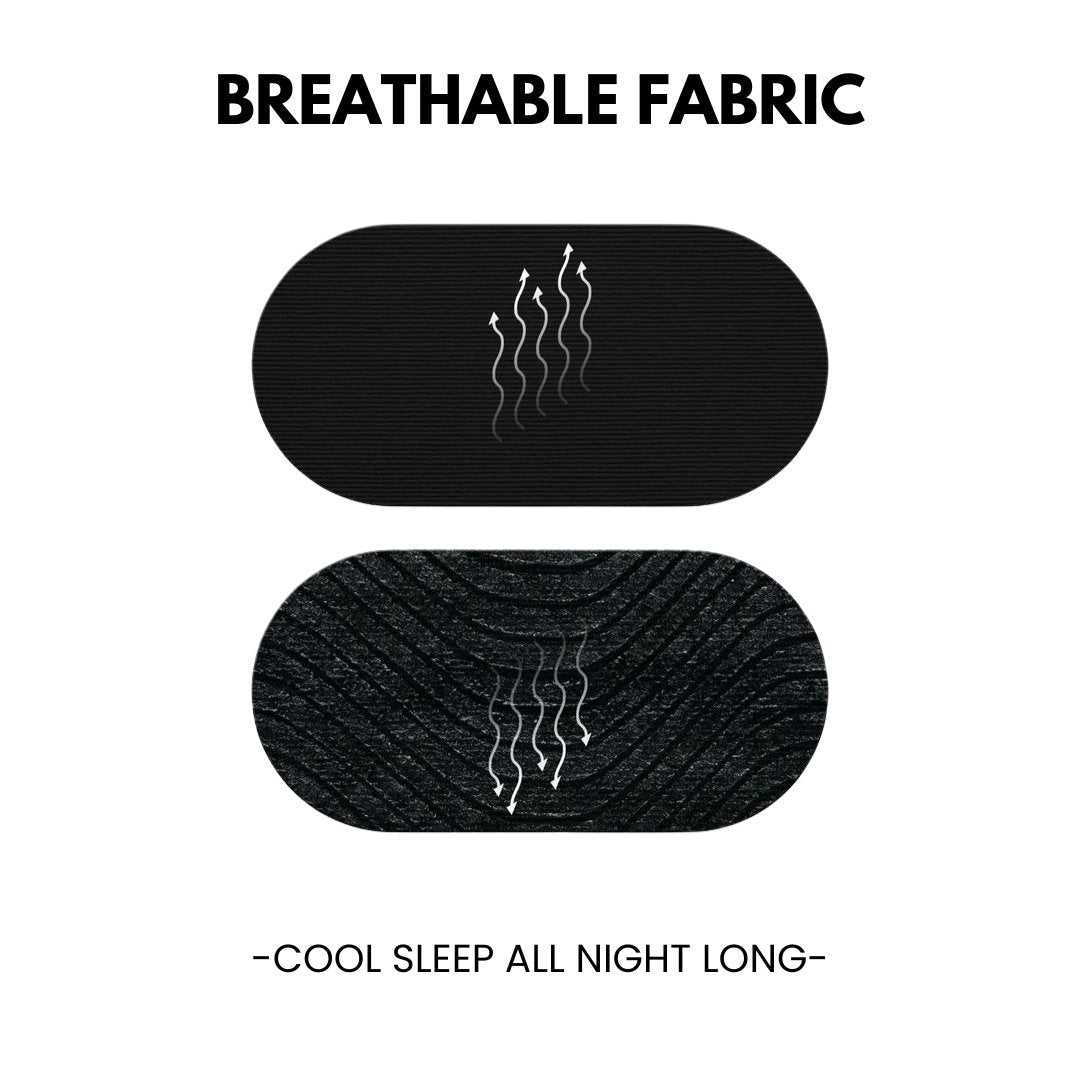
Mouth tape holds the lips together during sleep so breathing routes exclusively through the nose. When the mouth stays closed, the jaw can't drop back, the tongue holds its natural forward position, and the airway stays open. No narrow passage, no tissue vibration, no snoring. The effect is typically immediate — partners of snorers often report the first night as dramatically quieter. For a detailed look at the mechanics, our breakdown of how mouth tape reduces snoring covers the full picture.
For partners who also deal with nasal congestion — allergies, a narrow nasal passage, or seasonal stuffiness — pairing mouth tape with TitanAir Nasal Strips mechanically opens the nasal passages, making nose breathing easier and more comfortable from the first use. The combination addresses both the mouth-breathing habit and any nasal resistance that might make nose breathing feel difficult.
A Solution That Keeps Couples Together
Here's where the math gets interesting for couples. If snoring is the problem, the fix involves both people. The snoring partner tapes to eliminate the noise. The non-snoring partner often benefits from taping too — less dry mouth, deeper sleep, quieter breathing overall. Both partners sleep better. Both wake up more rested. And nobody relocates to the guest room.
The Titan Deep Sleep Bundle includes mouth tape and nasal strips — enough for both partners to run a real trial. The approach works best as a shared commitment rather than something imposed on the snorer, which is why framing it as "let's both try this" tends to produce better results than "you need to fix your snoring." Our step-by-step guide walks through the first few nights so neither person is guessing.
Couples who've tried this after months or years of sleeping apart often describe the return to the same bed as surprisingly emotional. Not because mouth tape is dramatic, but because the distance had become normal, and being back together in the same room — sleeping quietly, waking up next to each other — reminds them what they'd been missing.
When Sleeping Apart Actually Makes Sense
Honesty matters. There are situations where separate sleeping arrangements are the right call, and no amount of mouth tape changes that.
Opposite schedules. If one partner works nights and the other works days, sharing a bed means someone is always being disturbed during their sleep window. Separate rooms protect both people's rest without any emotional cost — you're not avoiding each other, you're just sleeping at different times.
Medical conditions requiring specialized sleep setups. A partner who needs a hospital bed, a specific incline, or medical equipment that takes up space may genuinely need a separate sleep environment. That's a practical decision, not an emotional one.
Mutual preference. Some couples sleep better alone and always have. If both partners prefer it and neither feels rejected, that's a valid arrangement. The concern is when one partner is sleeping apart reluctantly — not by preference, but as a concession to a fixable problem.
Frequently Asked Questions
Is sleep divorce bad for relationships?
It depends on why you're doing it. If both partners prefer sleeping alone and the relationship is otherwise strong, separate beds don't automatically cause harm. But if one partner is sleeping apart because of snoring — and would rather share a bed — the arrangement can create emotional distance and feelings of rejection over time. Research shows that couples who share a bed tend to report higher relationship satisfaction and stronger emotional bonds.
Can mouth tape really prevent a sleep divorce?
If snoring is the reason you're considering separate bedrooms, then yes. Mouth tape keeps the airway routed through the nose, which prevents the soft-palate vibration that causes most snoring. The effect is typically noticeable the first night. Many couples who were sleeping apart due to snoring have returned to the same bed after one or both partners started using Titan Mouth Tape.
Should couples sleep apart if one person snores?
Sleeping apart eliminates the noise but doesn't address the cause. For the majority of snorers, the sound is produced by mouth breathing during sleep — a problem that's fixable without separate rooms. Trying mouth tape and nasal strips before making a permanent change to your sleeping arrangement is a lower-risk first step that preserves the benefits of sharing a bed.
How common is sleep divorce?
Surveys suggest between 25% and 40% of couples sleep in separate beds or rooms at least some of the time. The trend has grown significantly in recent years, driven in part by social media normalization and a broader cultural focus on individual sleep quality. Snoring remains the most commonly cited reason.
What are the benefits of sleeping in the same bed?
Couples who share a bed tend to experience increased oxytocin release, which supports bonding and stress reduction. Shared sleep also provides a daily touchpoint for emotional connection — bedtime conversation, physical closeness, and the simple presence of another person. These benefits are difficult to replicate through daytime interactions alone.
The Bottom Line
Sleep divorce is a real solution to a real problem — but for most couples, it's treating the symptom while the cause goes unaddressed. If snoring is pushing you toward separate bedrooms, you're not facing an incompatibility that requires a lifestyle redesign. You're facing a breathing problem that has a straightforward fix.
Try the simple thing first. Mouth tape keeps the airway routed through the nose, eliminates the vibration that causes snoring, and lets both partners sleep quietly in the same bed. Pair it with nasal strips if congestion is part of the picture. Give it a week. If the snoring stops — and it usually does — the reason for sleeping apart stops with it. And what you get back isn't just quiet nights. It's the closeness that separate bedrooms were quietly taking away.
Doctor Recommended: "As a maxillofacial surgeon and dentist, I recommend Titan Mouth Tape. Nasal breathing during sleep is essential for airway health and deep restorative rest. Titan's bamboo silk design is the most comfortable and effective mouth tape I have tested. If you struggle with snoring, dry mouth, or poor sleep quality, this is the simplest change you can make for your health." — Dr. Francois P., MD, DDS — Maxillofacial Surgeon
Lab-Tested Safety: Titan's adhesive is independently tested to ISO 10993 medical device standards. Non-toxic (95% cell viability). Non-allergenic (0% reaction rate). Non-irritating (score 0.0/8.0). PFAS-free — 501 compounds tested, zero detected. See full test results →
Try the complete system tonight. Titan Mouth Tape (bamboo silk, SilkSeal™ adhesive) + TitanAir Nasal Strips. Free shipping. 30-night Better Sleep Guarantee. Shop Titan Mouth Tape → · Shop TitanAir Nasal Strips →