Does Mouth Taping Really Work?
Share
You have probably seen mouth tape all over social media. Influencers swear by it. Sleep coaches recommend it. Your coworker mentioned it at the coffee machine. But does mouth tape actually work, or is this another wellness trend that sounds better than it performs?
The short answer: yes, mouth tape works for most people, and the mechanism behind it is straightforward science. Mouth taping encourages nasal breathing during sleep by gently holding your lips together. That single change triggers a chain of measurable benefits, from reduced snoring to deeper sleep stages. Here is what the evidence actually shows, what you can realistically expect, and who should skip it.
How mouth tape works
The concept is simple. A small strip of porous tape across your lips keeps your mouth closed while you sleep. This redirects airflow through your nose, which is how your body was designed to breathe in the first place.
Nasal breathing filters, warms, and humidifies incoming air before it reaches your lungs. It also produces nitric oxide in your sinuses, a molecule that dilates blood vessels and improves oxygen absorption by 10 to 15 percent compared to mouth breathing. When you breathe through your mouth, you skip all of that. The result is drier airways, more turbulent airflow that causes snoring, shallower sleep cycles, and reduced oxygen uptake.
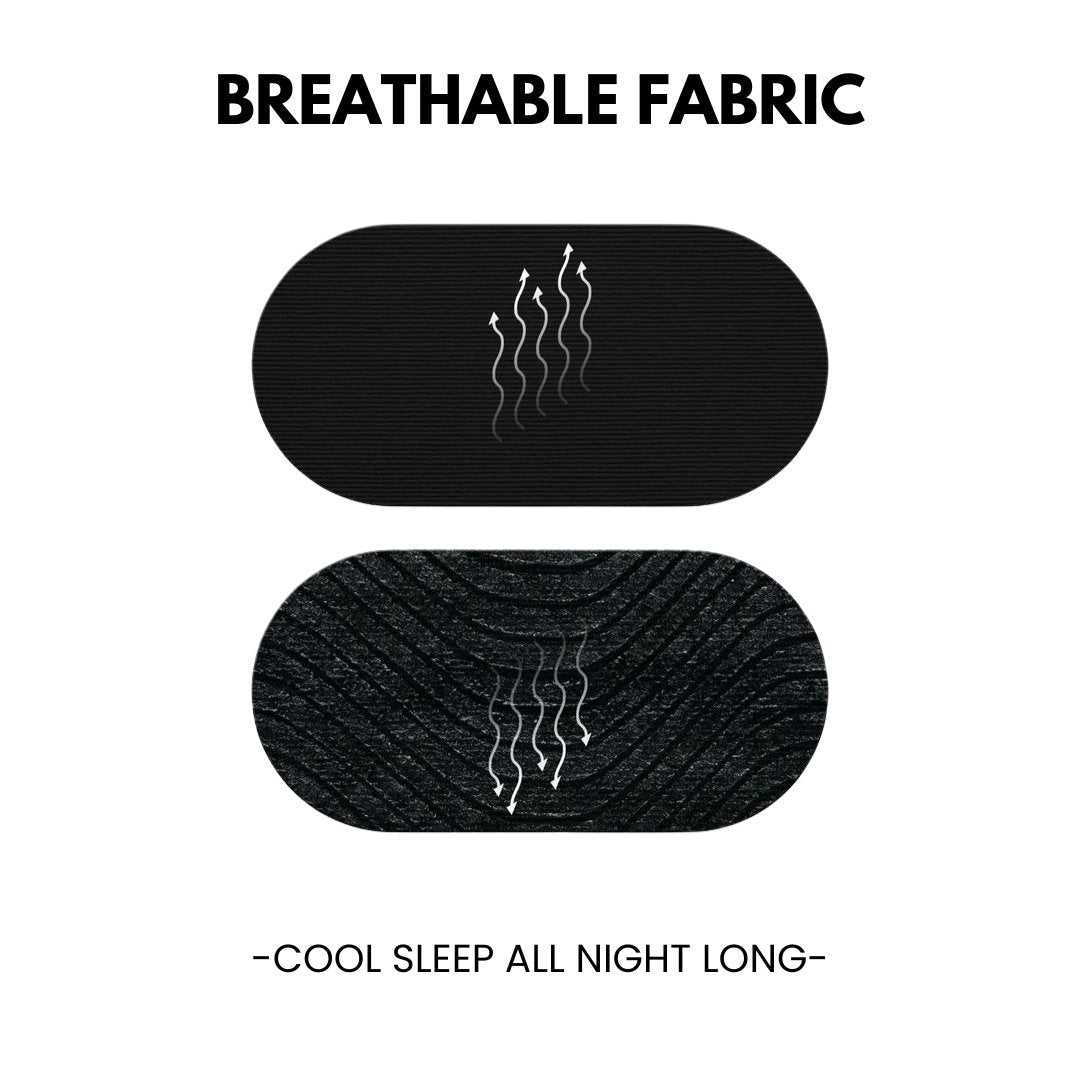
Mouth tape does not force your mouth shut. Quality tapes like Titan Mouth Tape use a gentle adhesive that lets you open your mouth if you need to cough, yawn, or drink water. Think of it as a reminder for your jaw, not a restraint. The tape provides just enough resistance that your relaxed jaw stays closed instead of falling open, which is what happens to most people once they enter deeper sleep stages.
What the research says
A 2022 study published in Healthcare found that mouth taping reduced snoring severity and frequency in participants with mild obstructive sleep apnea. The researchers measured both objective snoring metrics and subjective sleep quality scores, and both improved significantly. Another study in the Journal of Clinical Sleep Medicine documented improvements in sleep-disordered breathing when participants were encouraged to maintain nasal breathing during sleep.
The broader research on nasal versus mouth breathing is even more compelling. Nasal breathing is associated with better blood oxygen saturation, lower cortisol levels, improved heart rate variability, and increased time spent in deep sleep and REM stages. These are the sleep phases where physical recovery, immune function, and memory consolidation happen. Mouth taping is simply the most practical way to maintain nasal breathing while you are unconscious and cannot consciously control your habits.
To be clear, mouth tape is not a medical treatment. If you have been diagnosed with moderate or severe sleep apnea, talk to your doctor before changing anything about your therapy. But for the millions of people who mouth breathe at night without realizing it, taping is a simple intervention with real, measurable results.
What most people notice in the first week
The improvements from mouth taping tend to follow a predictable pattern. The most commonly reported changes are:
- Less snoring, often dramatically — nasal airflow is smoother and quieter than mouth airflow because the nose produces laminar flow while the mouth creates turbulence. Partners tend to notice this before the taper does. Many couples report that snoring drops significantly or disappears entirely within the first few nights.
- No more dry mouth — waking up with a parched throat, cracked lips, and that stale morning taste is almost always caused by sleeping with your mouth open. Taping eliminates the root cause on the first night. If this has been a constant for you, our guide on waking up with dry mouth explains why it matters beyond comfort, including the dental health implications.
- Feeling genuinely rested — nasal breathing supports deeper sleep stages through parasympathetic nervous system activation. This is where your body does its real recovery work. Many tapers report waking up feeling like they slept more hours than they actually did.
- Fewer nighttime wake-ups — mouth breathing dries out your throat and nasal passages, which triggers micro-arousals you do not consciously remember but that fragment your sleep architecture. Eliminating these micro-arousals means more consolidated, uninterrupted sleep cycles.
- Better morning breath — when your mouth stays closed, saliva continues to do its job neutralizing bacteria and washing away food particles. Mouth breathers lose this protection, which is why morning breath is often worse for them regardless of how well they brush before bed.
Most people notice the dry mouth and snoring improvements within the first two or three nights. The sleep quality gains tend to build over a week or two as your body adjusts to consistent nasal breathing patterns.
Does the type of tape matter?
Yes, significantly. This is where many people try mouth taping once, have a bad experience, and dismiss the entire concept. Hardware store tape, surgical tape, and even some products marketed specifically as sleep tape use adhesives that irritate skin, leave sticky residue, or seal your lips so aggressively that the experience feels claustrophobic.
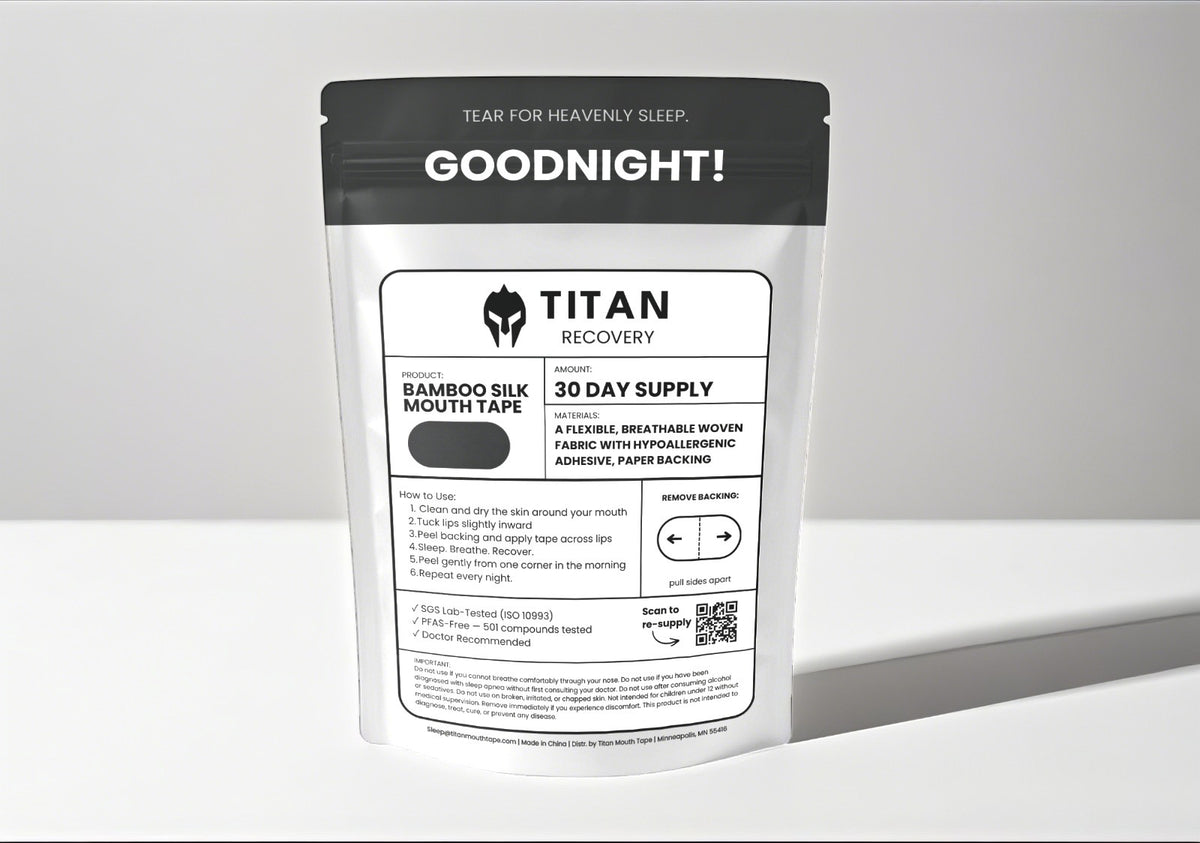
The material and adhesive design make the difference between something you forget you are wearing and something you rip off at 2 AM. Titan Mouth Tape is made from bamboo silk with a medical-grade SilkSeal adhesive that is independently tested to ISO 10993 standards. It is hypoallergenic, PFAS-free (501 compounds tested, zero detected), and designed specifically for overnight wear on sensitive facial skin. The bamboo silk material breathes, which means no moisture buildup under the tape even in humid conditions. It also works well with facial hair, which is one of the most common complaints about other tapes. For details on that, see our guide to mouth taping with a beard.
If you want to pair taping with even better airflow, adding TitanAir Nasal Strips opens the nasal passages mechanically. This combination is especially helpful if you deal with any level of nighttime congestion, seasonal allergies, or a slightly deviated septum. Our guide on using mouth tape and nasal strips together covers how to get the most out of the pairing.
Who should not use mouth tape
Mouth tape is safe for most healthy adults, but it is not appropriate for everyone. You should skip mouth taping if you have severe nasal obstruction that prevents comfortable nose breathing even when awake, active nasal infections or significant congestion from illness, moderate to severe untreated obstructive sleep apnea (use your prescribed CPAP therapy instead), or if you are a child under 12 years old.
If you are unsure whether your nasal passages are clear enough for comfortable overnight breathing, try a simple test: close your mouth and breathe exclusively through your nose for two to three minutes while sitting quietly. If that feels restricted or uncomfortable, address the congestion first with a saline rinse, nasal strips, or by consulting your doctor. Once nasal breathing feels natural while awake, it will work while you sleep. For a deeper look at safety considerations, read our comprehensive guide on mouth taping safety.
The Bottom Line
Mouth tape works by doing one thing well: keeping your mouth closed so your nose does what it was built to do. The science behind nasal breathing is solid and well-documented, and mouth taping is the simplest, lowest-effort way to get that benefit during the eight hours you spend unconscious every night. Most people notice less snoring, no dry mouth, and genuinely better rest within the first week.
Titan Mouth Tape starts at under $0.75 per night. For something that takes two seconds to apply and can meaningfully change how you feel every morning, it is one of the highest-return sleep improvements available. Try it for a week and see what your mornings feel like.
Doctor Recommended: “As a maxillofacial surgeon and dentist, I recommend Titan Mouth Tape. Nasal breathing during sleep is essential for airway health and deep restorative rest. Titan’s bamboo silk design is the most comfortable and effective mouth tape I have tested. If you struggle with snoring, dry mouth, or poor sleep quality, this is the simplest change you can make for your health.” — Dr. Francois P., MD, DDS — Maxillofacial Surgeon
Lab-Tested Safety: Titan’s SilkSeal™ adhesive is independently tested to ISO 10993 medical device standards. Non-toxic (95% cell viability). Non-allergenic (0% reaction rate). Non-irritating (score 0.0/8.0). PFAS-free — 501 compounds tested, zero detected. See full test results →
Try it tonight. Bamboo silk. SilkSeal™ adhesive. Beard-friendly. No logo on the tape. Free shipping. 30-night Better Sleep Guarantee. Shop Titan Mouth Tape → · Shop TitanAir →
Related reading
- How Does Mouth Tape Work? The Mechanism Explained
- What Is Mewing? Tongue Posture & Nasal Breathing
- Alcohol Before Bed: Why Your Nightcap Ruins Sleep
- Why Mouth Tapers Choose Titan Mouth Tape
Want the tape built for this? Try mouth tape from Titan — bamboo silk, beard-friendly, PFAS-free, with a 30-Night Better Sleep Guarantee.