The Complete Nighttime Routine for Deep Sleep (That Actually Works)
Share
Most sleep advice is a list of disconnected tips — "keep your room cool," "avoid screens," "try magnesium" — without any structure for when to do what or why the sequence matters. A nighttime routine for deep sleep isn't just a collection of good habits. It's a timed sequence that works with your body's own sleep architecture, stacking each step so that by the time your head hits the pillow, the physiological conditions for deep sleep are already in place. Here's the routine, organized by timing, with the reasoning behind each step so you can adapt it to your own life without losing what makes it work.
Deep sleep — stages 3 and 4 of non-REM sleep — is where the body does its heaviest repair work. Growth hormone release peaks during deep sleep. Memory consolidation, immune function, and metabolic regulation all depend on spending enough time in these stages. Most adults get less deep sleep than they should, and the culprit is rarely one big problem. It's a series of small environmental and behavioral signals that keep the body from dropping fully into restorative sleep. A structured routine addresses those signals systematically.
Two Hours Before Bed: Set the Stage
The foundation of deep sleep is laid well before you get into bed. Two hours out is when the most impactful changes happen — the ones that shift your core body temperature and light exposure in ways that prime your circadian system for sleep.
Drop the room temperature. Your core body temperature needs to fall by roughly 1-2 degrees Fahrenheit to initiate sleep. Set your thermostat to 65-68 degrees. If you don't have central air, a fan pointed at your bed or a window cracked open works. The goal isn't to make the room uncomfortably cold — it's to create an environment where your body doesn't have to work to cool itself down. Research consistently shows that ambient temperature is one of the strongest environmental predictors of deep sleep duration.
Take a warm shower or bath. This sounds counterintuitive, but warming the skin's surface causes vasodilation — blood vessels near the skin expand, releasing heat from the core outward. When you step out into a cooler room, your core temperature drops faster than it would on its own. A 10-minute warm shower about 90 minutes before bed has been shown in multiple studies to improve sleep onset latency and increase time spent in deep sleep. Not hot enough to be uncomfortable. Just warm enough to flush the skin.
Finish your last meal. Digestion is a metabolically active process. Eating a large meal within two hours of bed keeps your core temperature elevated and your digestive system working when it should be winding down. Finish eating at least two hours before your target bedtime. If you need something closer to bed, keep it small — a handful of nuts, a small portion of cottage cheese, something that won't spike blood sugar or require significant digestion. High-glycemic foods close to bed are particularly disruptive to deep sleep architecture.
Dim the overhead lights. This is the beginning of the light transition, not the end. Two hours before bed, switch from bright overhead lighting to lamps, dimmed fixtures, or warm-toned bulbs. Your brain tracks light intensity and color temperature as a proxy for time of day. Bright, cool-white overhead lights at 10 PM send the same signal as midday sun — they suppress melatonin production and delay your circadian clock. You don't need to sit in the dark. You need to stop simulating noon.
One Hour Before Bed: Shift Into Wind-Down
The hour before bed is where the routine shifts from environmental setup to behavioral wind-down. Your body is already cooling. Light levels are already lower. Now you're reducing stimulation and giving your nervous system permission to decelerate.
Cut the screens — or make them boring. The blue light conversation is real but slightly overblown. Yes, blue wavelengths suppress melatonin. But the bigger issue with screens is stimulation. Social media, news, work emails, and anything that triggers a stress or reward response keeps your sympathetic nervous system engaged. If you're going to use a screen in the last hour, put it in night mode and make the content genuinely passive — nothing that requires decisions, generates anxiety, or makes you scroll. Better yet, put the phone in another room. The people who sleep best tend to be the ones who create a hard boundary between their phone and their bed.
Pick a wind-down activity with low cognitive load. Reading a physical book, light stretching, journaling, or listening to calm music — these aren't luxuries. They're functional. They give the prefrontal cortex something low-stakes to do while the rest of the brain transitions toward sleep. The activity matters less than the consistency. If you read every night before bed, your brain starts to associate the act of opening a book with sleep onset. That conditioning is powerful and it builds over weeks of repetition.
Take magnesium if it's part of your stack. Magnesium glycinate or magnesium threonate taken about 30-60 minutes before bed can support sleep quality — particularly deep sleep — by activating the parasympathetic nervous system and regulating GABA, the neurotransmitter responsible for calming neural activity. The research is genuine but modest: magnesium seems to help most in people who are deficient, which is a surprisingly large percentage of the population. It's not a sedative. It's a mineral that many people don't get enough of, and correcting the deficit tends to improve sleep. Here's a deeper look at what the evidence says about magnesium and sleep. Start with 200-400mg of glycinate and see how you respond.
Thirty Minutes Before Bed: Lock In the Environment
At this point, the routine is mostly set. Thirty minutes out is about eliminating the last sources of disruption and making your bedroom a place that signals sleep and nothing else.
Make the room dark — actually dark. Not dim. Dark. Blackout curtains or a sleep mask are worth the investment. Even small amounts of ambient light — a charging LED, streetlight through thin curtains, a hallway light under the door — register through closed eyelids and can reduce time spent in deep sleep without ever waking you up. You don't know it's happening. Your sleep tracker does. Cover or remove every light source in the bedroom.
Handle noise. If you live in a noisy environment, white noise or brown noise from a fan or a dedicated machine is more effective than earplugs for most people. The goal is consistent ambient sound that masks sudden noise spikes — a dog barking, a car horn, a partner getting up — that would otherwise trigger a micro-arousal and pull you out of deep sleep. Silence is ideal if you have it. Consistent low-frequency noise is the next best thing.
Do a short breathing exercise. This isn't meditation. It's a practical tool for shifting your autonomic nervous system from sympathetic to parasympathetic dominance. Try the 4-7-8 pattern: inhale through the nose for 4 counts, hold for 7, exhale slowly through the mouth for 8. Four to six cycles is enough. Box breathing works too — 4 counts in, 4 hold, 4 out, 4 hold. The mechanism is straightforward: extended exhalation activates the vagus nerve, which slows heart rate and drops cortisol. You're not trying to achieve a spiritual state. You're mechanically downregulating your stress response so your body can enter deep sleep faster once you're horizontal.
In Bed: The Final Step Most People Skip
Everything up to this point is preparation. The actual moment of getting into bed is where one final variable determines whether all that preparation translates into deep sleep or gets undermined by eight hours of mouth breathing.
Close your mouth. Nasal breathing during sleep activates the diaphragm more fully, produces nitric oxide in the sinuses that supports oxygen delivery, keeps airways humidified, and maintains the parasympathetic state you just spent two hours building. Mouth breathing does the opposite — it dries the airways, positions the tongue where it can partially obstruct the throat, and keeps the nervous system in a slightly more activated state throughout the night. It's one of the highest-impact items on any sleep quality checklist, and it's the one most people overlook because they don't realize they're doing it.
The problem is that you can't consciously control your breathing while you're unconscious. Jaw muscles relax. The mouth opens. And every benefit of the routine you just followed gets partially offset by six or seven hours of dry, shallow, oral breathing.
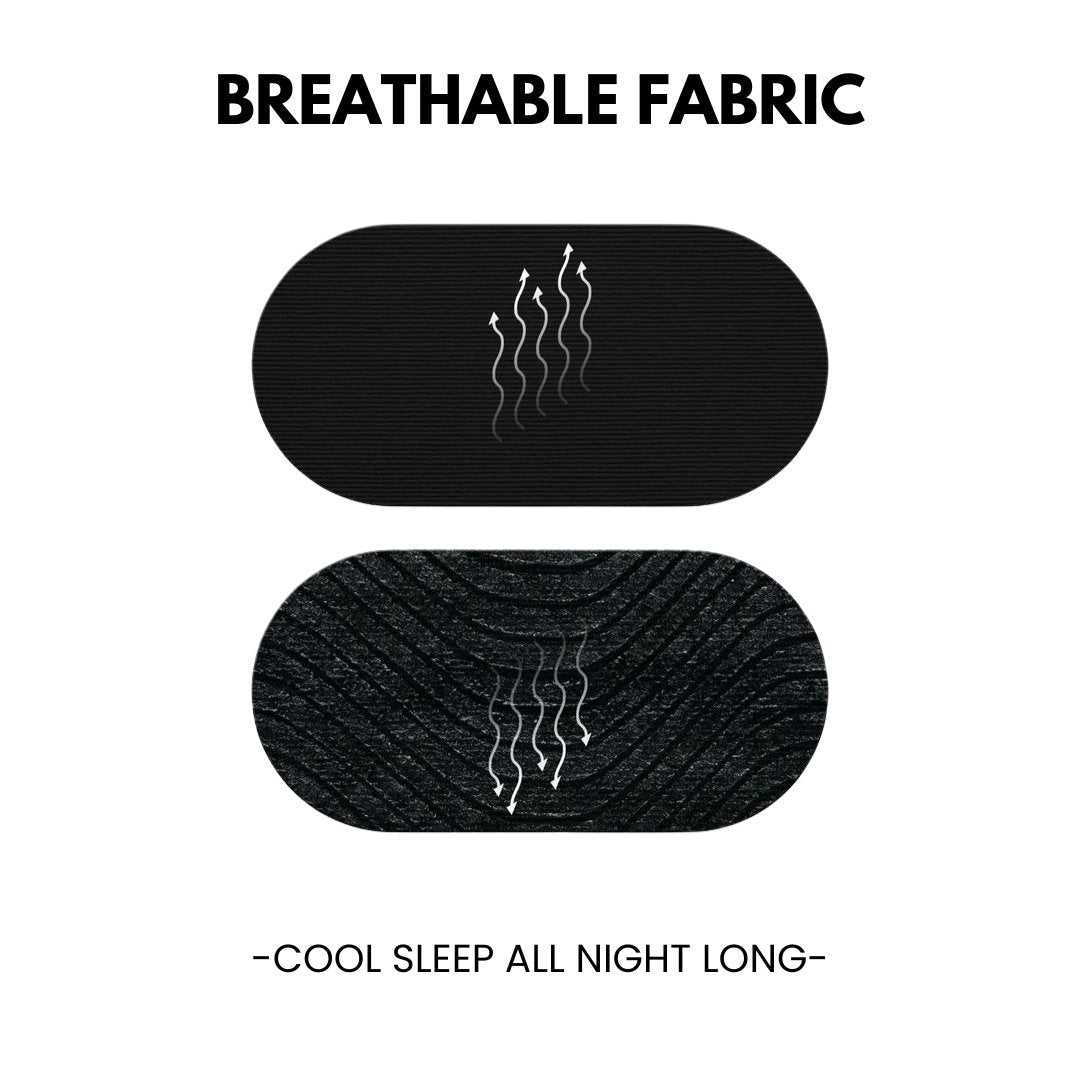
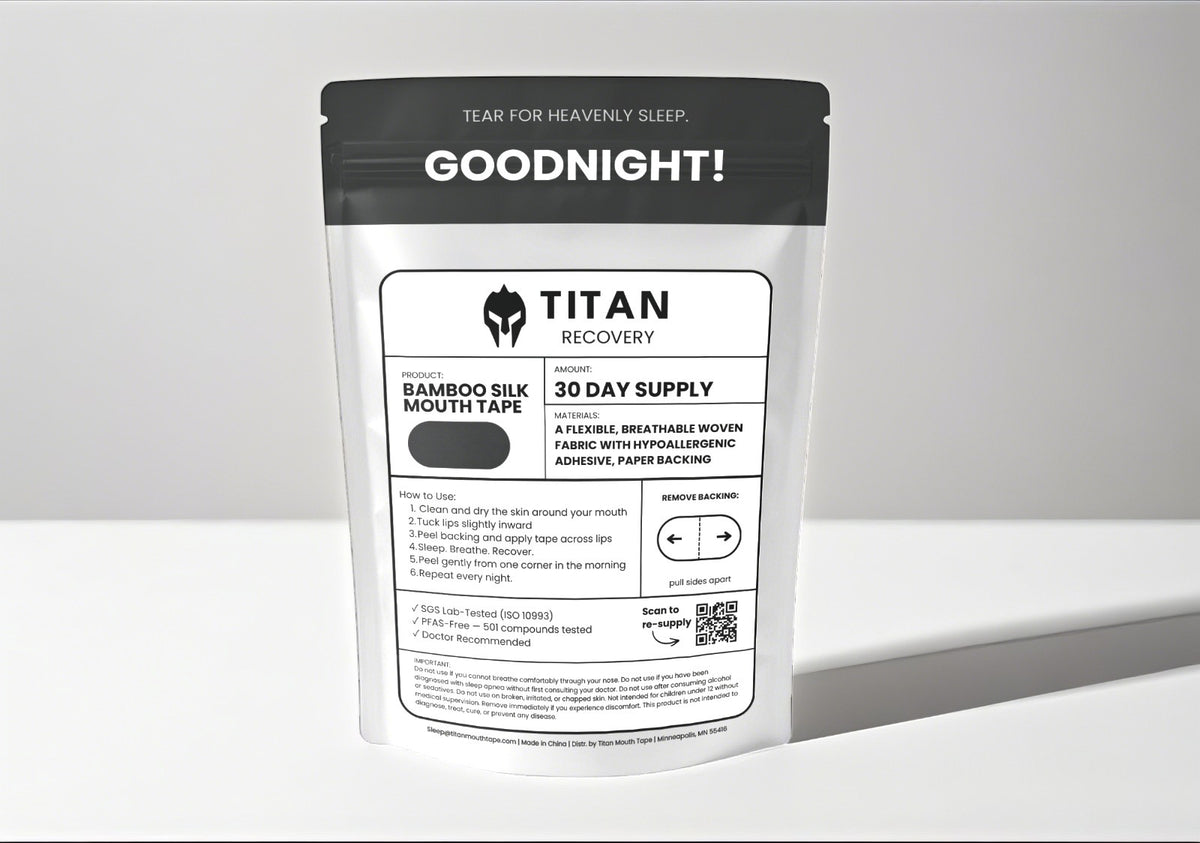
Mouth tape solves this mechanically. It holds the lips gently closed, routing all airflow through the nose for the entire night. It's the last step of the routine — applied after you've done your breathing exercise, after the room is dark and cool, after everything else is in place. The tape doesn't do anything magical on its own. What it does is protect the sleep environment you built by ensuring nasal breathing continues from lights-out to morning.
If you tend toward nasal congestion — seasonal allergies, a narrow airway, or a mildly deviated septum — pair mouth tape with nasal strips to open the nasal passages mechanically. The combination addresses both sides of the breathing equation: the mouth stays closed, and the nose stays open. The Deep Sleep Bundle includes both for this reason.
Why the Sequence Matters
You could do any of these individual steps and get some benefit. But the reason a timed routine works better than isolated habits is that sleep architecture responds to accumulated signals. Temperature drop plus dimmed light plus reduced stimulation plus parasympathetic breathing creates a cascade that no single intervention can replicate on its own.
Think of it as a series of gates. Each step opens the next one. Cooling the room allows your core temperature to fall. Dimming lights allows melatonin to rise. Reducing stimulation allows your prefrontal cortex to quiet down. Breathing through your nose allows your nervous system to stay in the parasympathetic state that deep sleep requires. Skip one gate and the ones after it still work — but not as well. Hit all of them in sequence and the effect compounds.
The research on sleep hygiene is clear on this point: the people who see the biggest improvements in deep sleep aren't doing one thing perfectly. They're doing several things consistently, in the right order, night after night. The routine becomes automatic within about two weeks. After that, it doesn't feel like work — it feels like winding down.
The Bottom Line
A nighttime routine for deep sleep doesn't require expensive gadgets or radical lifestyle changes. It requires understanding what your body needs in the two hours before sleep — a temperature drop, reduced light, lower stimulation, the right mineral support, and nasal breathing — and providing those things in a consistent sequence.
Start with the steps that are easiest to implement. Set a thermostat schedule. Move your last meal earlier. Put your phone in another room an hour before bed. Add mouth tape as the final step. You don't need to overhaul your entire evening on night one. Build the routine one layer at a time, keep what works, and let the habit compound. The deep sleep will follow.
Doctor Recommended: "As a maxillofacial surgeon and dentist, I recommend Titan Mouth Tape. Nasal breathing during sleep is essential for airway health and deep restorative rest. Titan's bamboo silk design is the most comfortable and effective mouth tape I have tested. If you struggle with snoring, dry mouth, or poor sleep quality, this is the simplest change you can make for your health." — Dr. Francois P., MD, DDS — Maxillofacial Surgeon
Lab-Tested Safety: Titan's adhesive is independently tested to ISO 10993 medical device standards. Non-toxic (95% cell viability). Non-allergenic (0% reaction rate). Non-irritating (score 0.0/8.0). PFAS-free — 501 compounds tested, zero detected. See full test results →
Try the complete system tonight. Titan Mouth Tape (bamboo silk, SilkSeal™ adhesive) + TitanAir Nasal Strips. Free shipping. 30-night Better Sleep Guarantee. Shop Titan Mouth Tape → · Shop TitanAir Nasal Strips →